
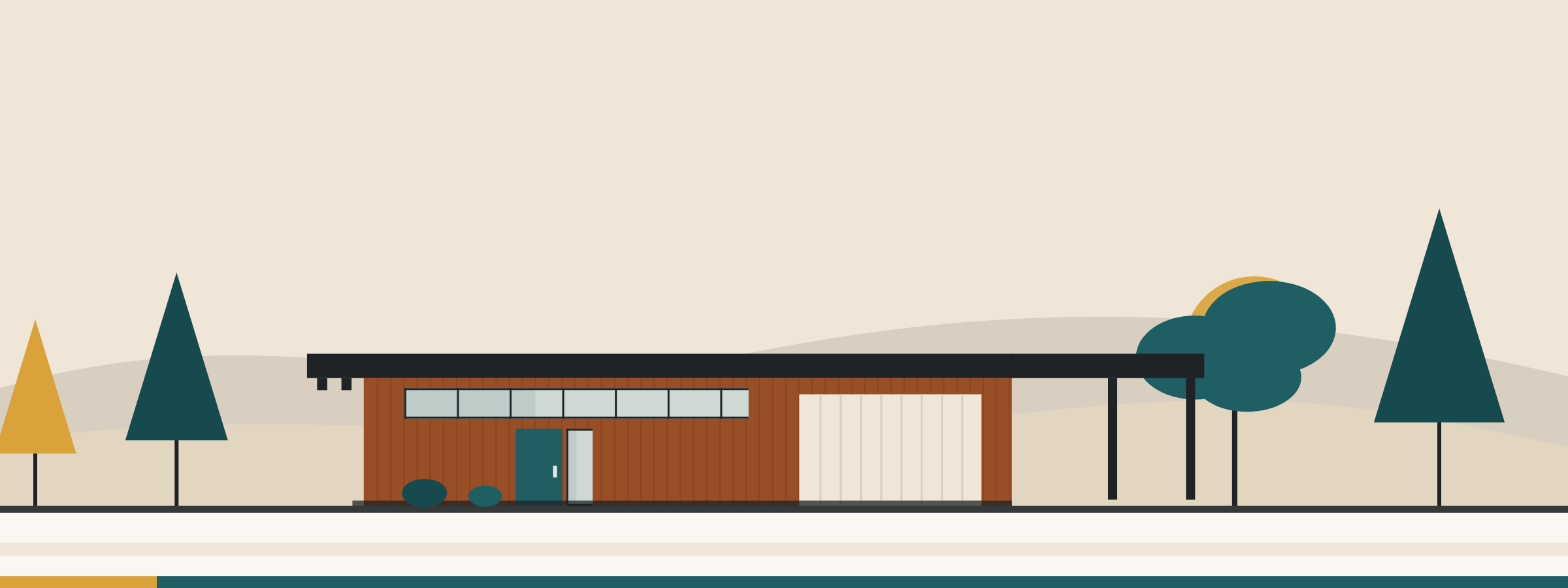
Eichler Homes in the Bay Area
From our guide: How to Tell If a House Is an Eichler: A Six-Step Check
Joseph Eichler was a developer, not an architect. His companies built modern tract houses from plans by architects he hired, and the National Register nomination for Palo Alto's Greenmeadow tract says that by 1974 he had built nearly 11,000 tract houses and hundreds of custom homes. This page is a short, records-based overview of where his Bay Area houses are and who designed them, with links to our fuller guides. It isn't a listing or a market report.
Who designed them
Palo Alto's Eichler design guidelines say Eichler started his company in 1947, at first as the Sunnyvale Building Company, and that a draftsman drew the designs for its early tracts. A 2018 National Register study of Eichler's San Jose tracts says he then commissioned Anshen & Allen to design prototypes for subdivisions in Sunnyvale, Palo Alto and Redwood City. Jones & Emmons, whom federal filings also credit with the nearby Ladera subdivision, designed the models at Greenmeadow, and Claude Oakland, who started his own firm in 1960, became Eichler Homes' principal designer. After Eichler Homes closed in 1967, Eichler kept building as J.L. Eichler Associates.
Eichler Homes timeline
Sources: Palo Alto's 2018 Eichler guidelines, Caltrans' tract housing study and two National Register nominations.
1900: Joseph Eichler is born in New York City. He moves to California in 1925.
Early 1940s: He lives for a time in Frank Lloyd Wright's Bazett House in Hillsborough, which Palo Alto's guidelines say inspired his idea of affordable, well-designed houses.
1949–1950: Caltrans dates Anshen & Allen's first tract-house work for Eichler, a design for Sunnyvale Manor's second phase, to 1949. Their AA-1 prototype, with post-and-beam framing, a largely flat roof and full-height glass on part of the rear wall, became the basis for several of his 1950 tracts, including Sunnyvale Manor and Green Gables.
December 1950: Architectural Forum gives the five Eichler tracts built that year the collective title "Subdivision of the Year."
1951: Eichler begins working with Jones & Emmons. The Greenmeadow nomination credits the firm with about 5,000 of Eichler's 11,000 California houses.
1954–1955: Greenmeadow is built in Palo Alto.
1956: The steel-framed X-100 opens in the San Mateo Highlands.
1957: Anshen & Allen introduce the atrium plan. Caltrans says the majority of Eichler houses built after 1957 included atriums.
1963: The Upper Lucas Valley tract in Marin County begins, with Jones's version of the atrium plan: a central carport under a high-pitched gable.
By 1967: The company has built high-rise apartment buildings in San Francisco. Palo Alto's guidelines say they overextended it; it filed for bankruptcy in 1967.
1974–1975: Eichler dies in 1974. The last Eichler house is completed in Palo Alto in 1975.
What the houses share
The Greenmeadow nomination describes post-and-beam framing on a concrete slab, radiant heating as standard, roofs with no attics, floor-to-ceiling glass along the back wall and almost no windows facing the street. Palo Alto's guidelines describe plans organized around a center atrium, or U-shaped around a rear patio or a front carport and courtyard entry, and siding of vertical tongue-and-groove redwood or scored redwood plywood. Many houses have been changed since they were built, so the guide above walks through how to check a specific house.
Eichler features, defined
Post and beam. Palo Alto's guidelines define it as "vertical posts and horizontal beams" forming a frame that carries the roof and floor loads, often seen as rafter tails under the eaves. The Greenmeadow nomination says Robert Anshen recommended it for fast building and plan flexibility, and that his firm planned the houses on a four-foot module. See our post-and-beam guide.
Roof deck. In Greenmeadow the ceiling is the underside of two-by-eight tongue-and-groove redwood roof decking. Palo Alto's guidelines describe shallow slopes, often 3:12, covered with tar and gravel or rolled roofing.
Radiant slab. Heating pipes run through the concrete slab, an idea Caltrans and Palo Alto's guidelines trace to Wright's Usonian houses. Greenmeadow's floors were originally cork in the living areas and asphalt tile elsewhere, to suit the radiant system. See our radiant heat guide.
Atrium. An open-air court inside the plan. Caltrans says the plan was meant to give private outdoor space on small lots and more daylight inside. See atrium living.
Clerestory windows. Windows set high in a wall, above eye level. Palo Alto's guidelines say the little street-side glass on an Eichler is typically clerestories, horizontal or triangular at gable ends.
Rear glass and paneling. Full-height plate glass with vertical wood divisions, fixed in wood frames or set in aluminum sliders. Greenmeadow's interior walls are Philippine mahogany veneer.
Garage or carport. Palo Alto's guidelines say the garage on its Eichlers is always on the front, worked into the roof form: a two-car garage, or a one-car garage paired with a carport.
Where they are
South Bay. Sunnyvale Manor, recorded in 1947, was one of Eichler's first tracts, and Sunnyvale's parcel layer flags 970 parcels as Eichlers. Palo Alto's guidelines list 31 Eichler neighborhoods, from University Gardens (1949 to 1950) to Los Arboles Addition No. 2 (1974). The 2018 National Register study of Eichler's San Jose tracts counts 484 Eichler houses in eight tracts and five neighborhoods in San Jose, built from 1952 to 1963. Mountain View, Cupertino and Los Altos have Eichler tracts too, and Santa Clara has the Pomeroy Green townhouses. See our Palo Alto, Sunnyvale and San Jose guides and our South Bay page.
Peninsula. The records name Atherwood in Redwood City, one of the subdivisions Anshen & Allen designed for Eichler around 1950; the San Mateo Highlands, about 650 houses that Eichler Homes began in 1955; and Eichler work in Foster City and in Burlingame's Mills Estate. See our Peninsula page.
Marin County. San Rafael's General Plan counts more than 1,700 modernist homes developed by Joseph Eichler in Terra Linda, Lucas Valley and Marinwood. Terra Linda is inside San Rafael; Lucas Valley and Marinwood are unincorporated. See our Marin County guide.
East Bay. Caltrans' statewide study of tract housing says that from the mid-1950s Eichler built more than 700 houses in East Bay communities. The records tie them to Rancho San Miguel in Walnut Creek, Greenridge in Castro Valley, Sequoyah Hills in Oakland and three tracts in Concord. See our East Bay page.
Eichler Homes also built in San Francisco, starting in Diamond Heights in the early 1960s, and in Southern California. Bay Area Eichler places on the National Register of Historic Places include the Green Gables and Greenmeadow districts in Palo Alto, the Fairglen Additions in San Jose, Pomeroy Green in Santa Clara and the X-100 house in the San Mateo Highlands. Our Bay Area mid-century neighborhoods page groups the named tracts by county, with links to each history.
Eichler guides: how to tell if a house is an Eichler, the Is My House an Eichler? clue checker, which architects designed which Eichler tracts, San Jose's Eichler tracts, Silicon Valley Eichler tracts by ZIP code, Eichler neighborhoods beyond Silicon Valley, a glossary of Eichler design features and the Eichler Homes company history. Short answers to common questions are in our Eichler and mid-century home FAQ. For the region's mid-century public buildings, from the Marin County Civic Center to the Transamerica Pyramid, see our Mid-Century Modern Landmarks page.
Rules in some Eichler areas
Palo Alto. The Eichler Neighborhood Design Guidelines, adopted April 2, 2018, are "advisory (voluntary)" unless the City Council adopts zoning changes to require them. Single Story Overlay districts, which the guidelines say overlap eleven Eichler tracts, set a 17-foot height limit measured to the roof peak (up to 20 feet in special flood hazard areas) and "a limit of one habitable floor." Both of Palo Alto's National Register Eichler districts, Greenmeadow and Green Gables, have the overlay. See our Palo Alto guidelines post.
Sunnyvale. The City Council adopted Eichler Design Guidelines in July 2009. A 2026 staff report says they "apply specifically to low density homes" in the designated neighborhoods, and that the proposed objective design standards, which the council adopted on July 21, 2026, "will not apply to homes within Eichler or Taaffe-Frances neighborhoods." See our Sunnyvale guidelines post.
Other cities are on our design guidelines by city page. Our Keep It Midmod guide covers a house's records, repair standards and preservation easements, and our list of mid-century historic districts shows where midmod neighborhoods have formal standing. See also our page Joseph Eichler and Open Housing: A Short History. This is a summary, not legal advice; check with the city before you plan work.
We're Eric and Janelle Boyenga of the Boyenga Team at Compass, in Silicon Valley real estate since 1996, with 2,520+ homes sold and $2.6+ billion in sales. If you're researching an Eichler anywhere in the Bay Area, call or text (408) 373-1660 or (650) 383-8606, or contact the Boyenga Team.
Questions About a Mid-Century Home?
Boyenga Team at Compass
Eric & Janelle Boyenga
Call or text: (408) 373-1660 or (650) 383-8606
Email: MidMods@Boyenga.com
Book a phone or video call
BoyengaTeam.com
EichlerHomesForSale.com
DRE 01254724 / 01254725
From our listings
Homes we’ve sold in Eichler neighborhoods
Photos from the listings of six mid-century homes the Boyenga Team has sold in Eichler neighborhoods of Palo Alto, Sunnyvale, Cupertino and San Jose.
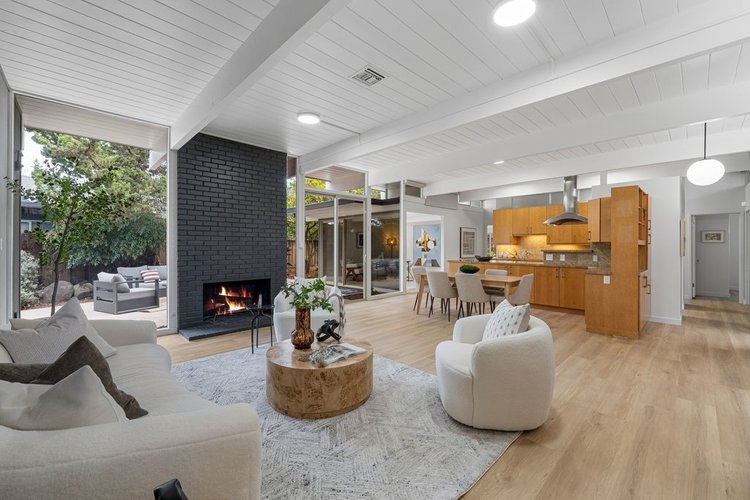
Greenmeadow, Palo AltoLiving room · Sold 2026 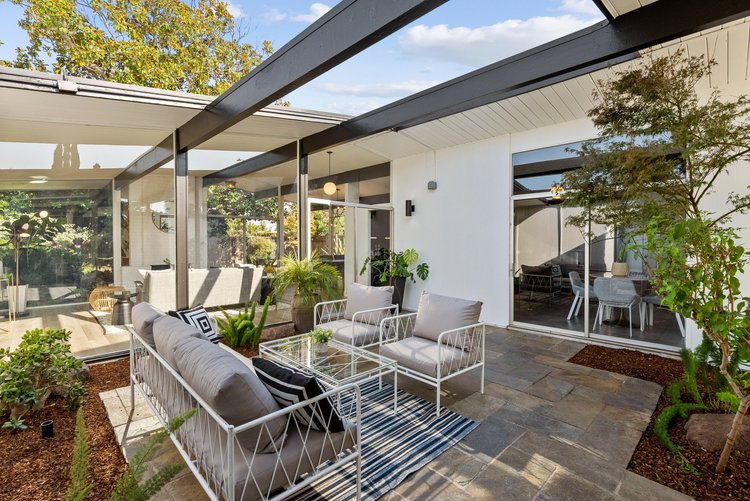
Fairwood, SunnyvaleAtrium · Sold 2021 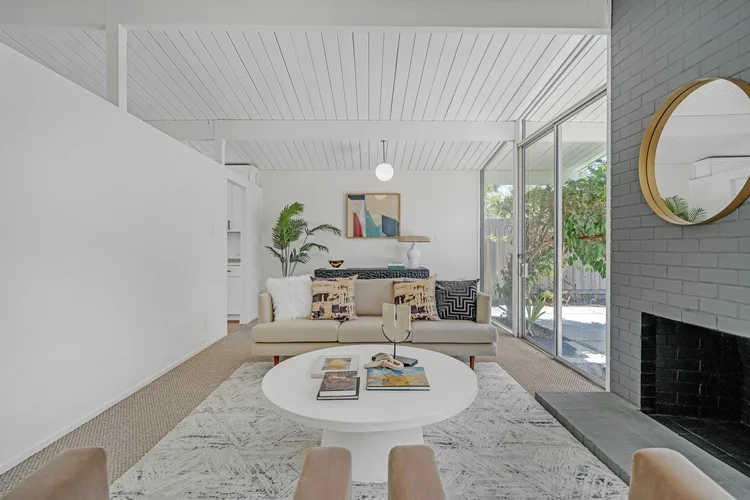
Fairgrove, CupertinoLiving room · Sold 2023 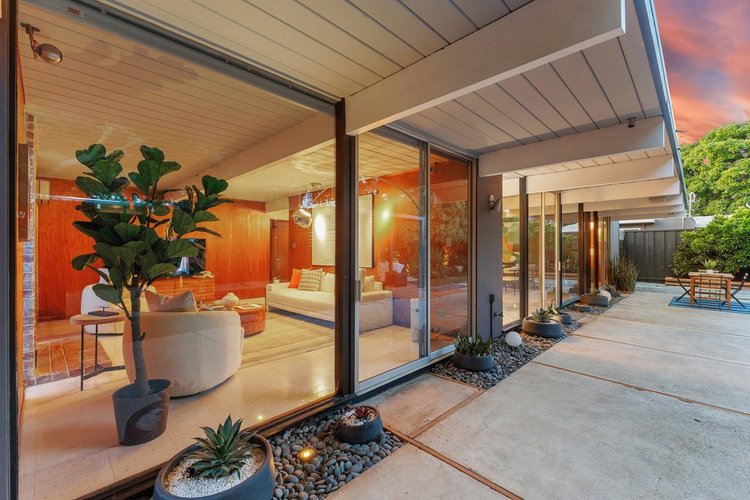
Fairglen, San JoseWall of glass along the back · Sold 2024 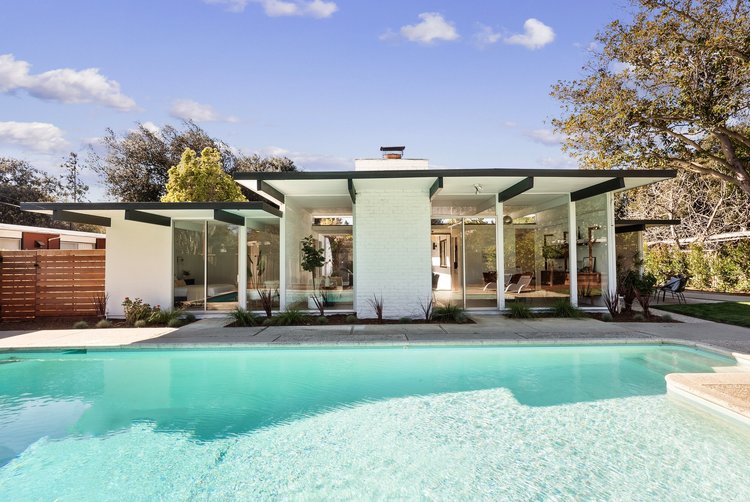
Rancho Verde, SunnyvaleBack of the home · Sold 2021 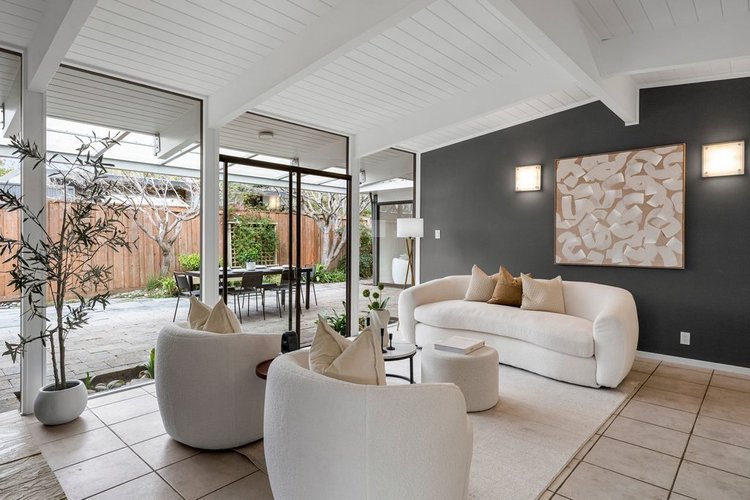
Palo Verde, Palo AltoLiving room · Sold 2026
Listing photographs of homes sold by the Boyenga Team at Compass. More homes we’ve sold
See our portfolioFind your tract
Eichler neighborhoods, by city
Our Eichler tract histories, neighborhood guides and city pages, grouped by city: 108 links in 10 groups. Each link opens the full guide.
Palo Alto and Stanford
Palo Alto’s tracts, one history at a time, plus the Stanford Eichlers.
- Palo Alto Eichler Neighborhoods: A Guide to Every Tract We Cover
- University Gardens Eichler, Palo Alto: The 1949–50 Draftsman Tract
- Green Gables Eichler, Palo Alto: The 1950 Anshen & Allen Tract
- Leland Manor and El Centro Gardens: Palo Alto's 1950 Eichler Tracts
- Greer Park Eichler History: Palo Alto's 1950 Anshen & Allen Tract
- Channing Park Eichler, Palo Alto: The 1951–52 Tracts and Their Overlay
- Fairmeadow Eichler Tract: The Story of Palo Alto's Circle Streets
- Maybell Gardens, Midfair and Fairpark: Palo Alto's 1952–54 Eichlers
- Walnut Grove Eichler, Palo Alto: The 1953–54 Tract and First Overlay
- Greenmeadow Eichler History: Palo Alto's Jones & Emmons Tract
- Charleston Meadow Eichler History: Palo Alto's Anshen & Allen Tract
- Triple El Eichler, Palo Alto: The 1955 Jones & Emmons Tract
- Greendell, Garland Park and Palo Alto's Small 1955–59 Eichler Tracts
- Edgewood Eichler, Palo Alto: The 1956 Tract and Edgewood Plaza
- Meadow Park Eichler, Palo Alto: The 1957–58 Tract and Its Overlay
- Royal Manor Eichler History: Reading Palo Alto's 1957–58 Tract
- Los Arboles Eichler, Palo Alto: The Tract, Overlay and Addition No. 2
- Palo Alto's 1970s Eichler Tracts: Midcourt to Los Arboles Addition
- The 94303 Eichler Atlas: Palo Alto's Eichler Tracts by ZIP Code
- Stanford Eichler Homes: Pine Hill and Frenchman's Hill History
- Mid-Century Modern Homes in Palo Alto: Eichler Tracts and City Rules
Sunnyvale
Sunnyvale’s tracts, from the city-wide guide to each tract’s own history.
- Sunnyvale Eichler Neighborhoods: A Guide to Six Mid-Century Tracts
- Sunnyvale Manor Eichler History: Where the AA-1 Prototype Began
- Sunnymount Gardens, Sunnyvale: Eichler's 1948–49 Tract No. 452
- Fairbrae Eichler History: Sunnyvale's 1958–1961 Tracts
- Rancho Verde Eichler History: Sunnyvale's 1960–1961 Tract
- Fairwood Eichler History: Sunnyvale's 1961–62 Tract and Its Rules
- Rancho Sans Souci Eichler History: Sunnyvale's 1968 Tract
- Primewood Eichler History: Sunnyvale's Late Steep-Gable Tract
- Mid-Century Modern Homes in Sunnyvale: Eichler Tracts and City Rules
Mountain View, Los Altos, Cupertino, Santa Clara and Saratoga
Tract histories and city guides for the other South Bay cities we cover.
- Eichler and Mid-Century Tracts in Mountain View, Cupertino and Santa Clara
- Monta Loma Eichler History: Mountain View's Fairview Tract
- Grandmeadow Eichler History: Mountain View's 1972 Tract and Its Rules
- Los Altos Eichler Homes: Fallen Leaf Park and San Antonio Court
- Fairgrove Eichler, Cupertino: The R1-e Tract and Its Two-Story Rules
- Pomeroy Green Eichler Townhouses: Santa Clara's 1963 Cluster Plan
- Saratoga and Monte Sereno Eichlers: Shubert Drive and Via Sereno
- Eichler Homes in Los Altos: Fallen Leaf Park and San Antonio Court
- Mid-Century Modern Homes in Mountain View: Tracts and City Rules
- Mid-Century Modern Homes in Los Altos: Tracts and City Rules
- Mid-Century Modern Homes in Cupertino: Tracts and City Rules
- Mid-Century Modern Homes in Santa Clara: Tracts, Builders and Rules
- Mid-Century Modern Homes in Saratoga: Eichler Tract and City Rules
- Mid-Century Modern Homes in Monte Sereno: Sereno Foothills
- Mid-Century Modern Homes in the South Bay
San Jose
San Jose’s tracts and the city guide.
The Peninsula
Portola Valley, Atherton, Menlo Park, Redwood City, Foster City, San Mateo and Burlingame.
- Ladera Eichler History: Jones & Emmons Homes Near Portola Valley
- Lindenwood Eichler History: Eichler's Atherton Houses
- Eichler Homes in Menlo Park: Tracts, City Rules and Research
- Atherwood Eichler History: Redwood City's 1950 Tract
- Redwood City Eichler Homes: Atherwood, Records and City Rules
- Foster City Eichler Homes History: Eichlers in the Lagoon City
- San Mateo Highlands Eichler History: The Hillside Tract and the X-100
- 19th Avenue Park Eichlers: San Mateo's Jones & Emmons Tract
- Owning a 19th Avenue Park Eichler: San Mateo Rules and Checks
- Mills Estates Eichler History: Burlingame's Hillside Subdivision
- Mid-Century Modern Homes in Portola Valley: Ladera and Town Rules
- Mid-Century Modern Homes in Atherton: Town Rules and Records
- Mid-Century Modern Homes in Menlo Park: Eichler Tracts and City Rules
- Mid-Century Modern Homes in Redwood City: Atherwood and City Rules
- Mid-Century Modern Homes in Foster City: Eichlers in a Planned City
- Mid-Century Modern Homes in San Mateo: Eichler Tracts and City Rules
- Mid-Century Modern Homes in Burlingame: Mills Estate and City Rules
- Mid-Century Modern Homes on the Peninsula
San Francisco
Eichler’s city projects: hillside houses, townhouses, apartments and a tower.
- Diamond Heights Eichler History: Claude Oakland's Hillside Homes
- Eichler Laguna Heights and The Summit: San Francisco Apartments
- Mid-Century Modern Homes in Diamond Heights, San Francisco
- Geneva Terrace Eichler Townhouses in Visitacion Valley, San Francisco
- Eichler in the Western Addition: Laguna Heights and Cleary Court
- The Summit: Eichler's Russian Hill Tower in San Francisco
- Mid-Century Modern Homes in San Francisco: Eichler's City Projects
Marin County
Terra Linda, Lucas Valley, Marinwood, Mill Valley and San Anselmo.
- Terra Linda Eichler History: San Rafael's 1955–1965 Tracts
- Lucas Valley Eichler History: Upper and Lower Tracts in Marin
- Mill Valley Eichler History: Strawberry Point's Harbor Point
- Sleepy Hollow Eichlers: A 1970s Marin Tract Near San Anselmo
- Mid-Century Modern Homes in Terra Linda North, San Rafael
- Eichler Homes in Terra Linda South, San Rafael
- Eichler Homes in Marinwood and Lower Lucas Valley, Marin County
- Eichler Homes in Upper Lucas Valley, Marin County
- Mid-Century Modern Homes in San Rafael: Eichler and Alliance Tracts
- Mid-Century Modern Homes in Mill Valley: Tracts and Architects
- Mid-Century Modern Homes in San Anselmo: Records and Town Rules
- Mid-Century Modern Homes in Marin County: Eichler Tracts
The East Bay
Walnut Creek, Concord, Castro Valley and Oakland.
- Rancho San Miguel Eichler History: Walnut Creek's 1950s Tract
- Walnut Grove Eichler History: The Northgate Eichlers of Walnut Creek
- Concord Eichler History: Parkwood Estates and Two Rancho Tracts
- Greenridge Eichler History: Castro Valley's Hillside Tract
- Sequoyah Hills Eichler History: The Oakland Hills Tract
- Mid-Century Modern Homes in Castro Valley: The Greenridge Eichlers
- Mid-Century Modern Homes in Walnut Creek: Eichler Tracts
- Mid-Century Modern Homes in Concord: Eichler Tracts and City Rules
- Mid-Century Modern Homes in Oakland: Sequoyah Hills and City Rules
- Mid-Century Modern Homes in the East Bay
Sacramento and Southern California
Our pages on Eichler tracts outside the Bay Area.
Directories, maps and tools
Guides that cut across cities, plus the tract map and the tract finder.
- Silicon Valley Eichler Neighborhoods by City: A Guide to the Tracts
- The Ultimate Guide to Eichler Neighborhoods in Silicon Valley
- Silicon Valley Eichler Tracts by ZIP Code: A Sourced Directory
- Eichler Neighborhoods of Northern California Beyond Silicon Valley
- Eichler Community Centers and Pools: Which Tracts Have Them
- Eichler Architects: Who Designed Which Homes, Tract by Tract
- Bay Area Eichler Tract Map
- Eichler Tract Finder
- Eichler Neighborhoods & Tract Histories
- Mid-Century Modern Neighborhoods in the San Francisco Bay Area
These guides are general information about the tracts, not legal or building advice.