
Documented Eichler Houses and Listed Historic Districts
Northern California
Joseph Eichler’s Personal Residence

De Soto Eichler
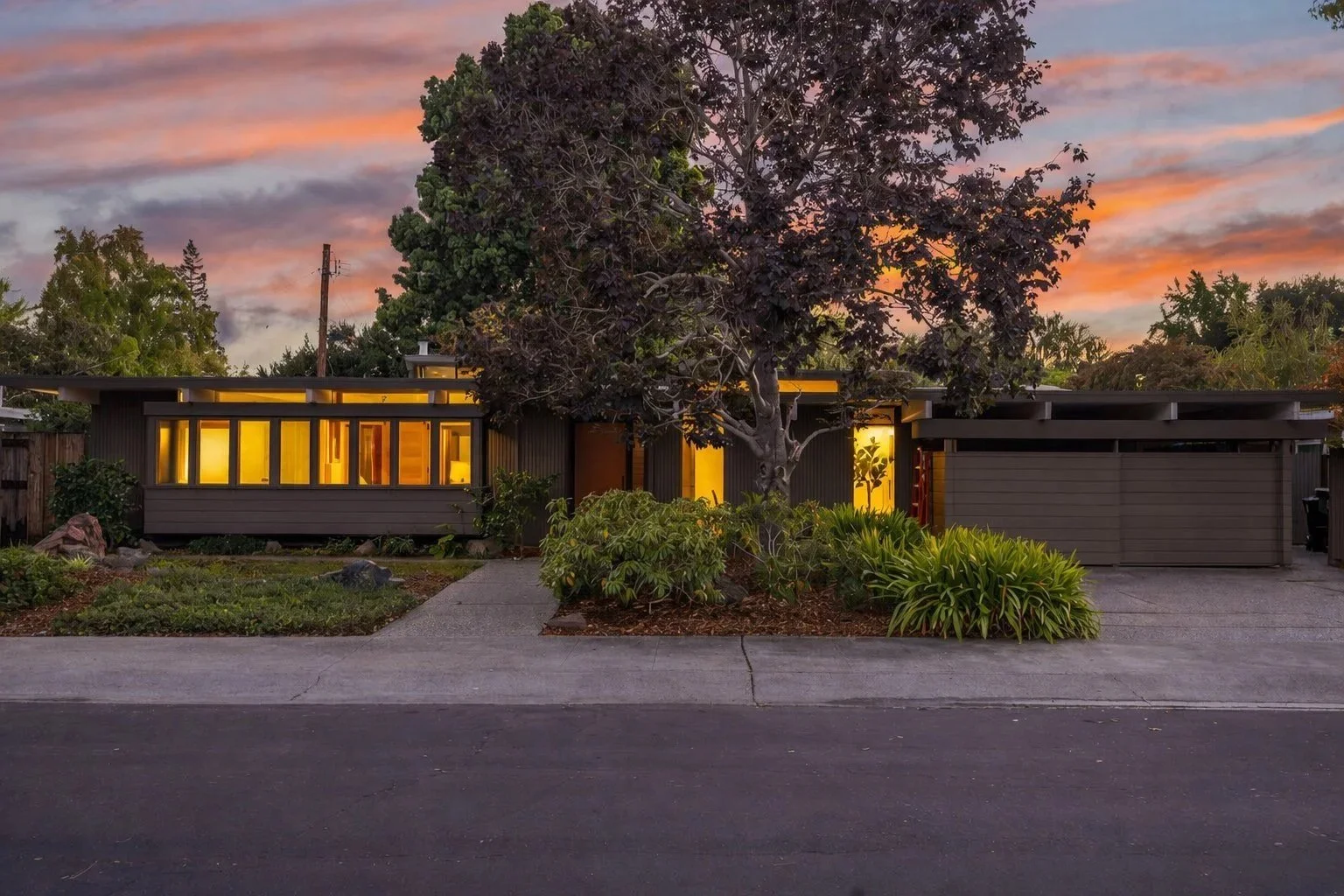
Eichler X-100
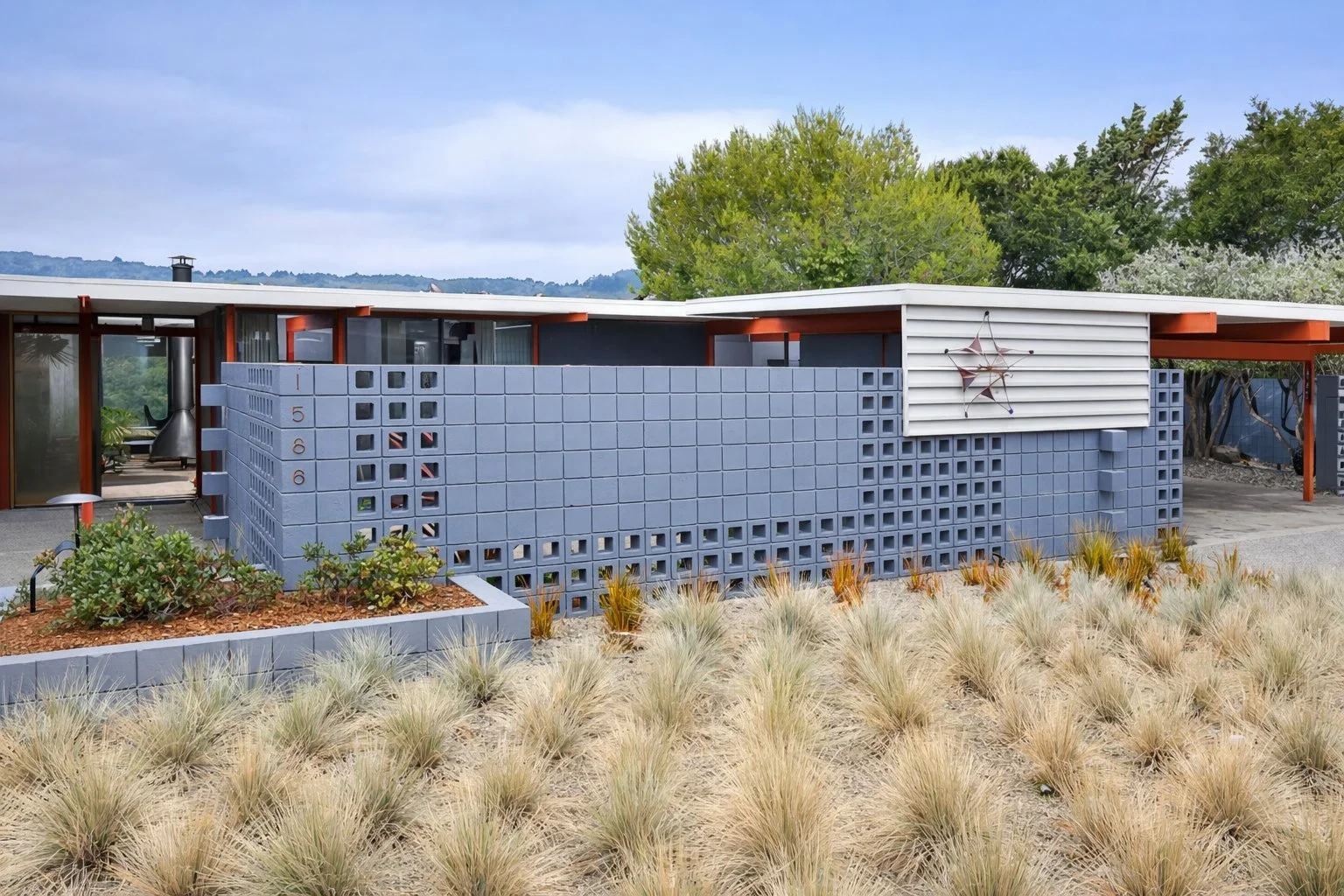
Twin Gable House
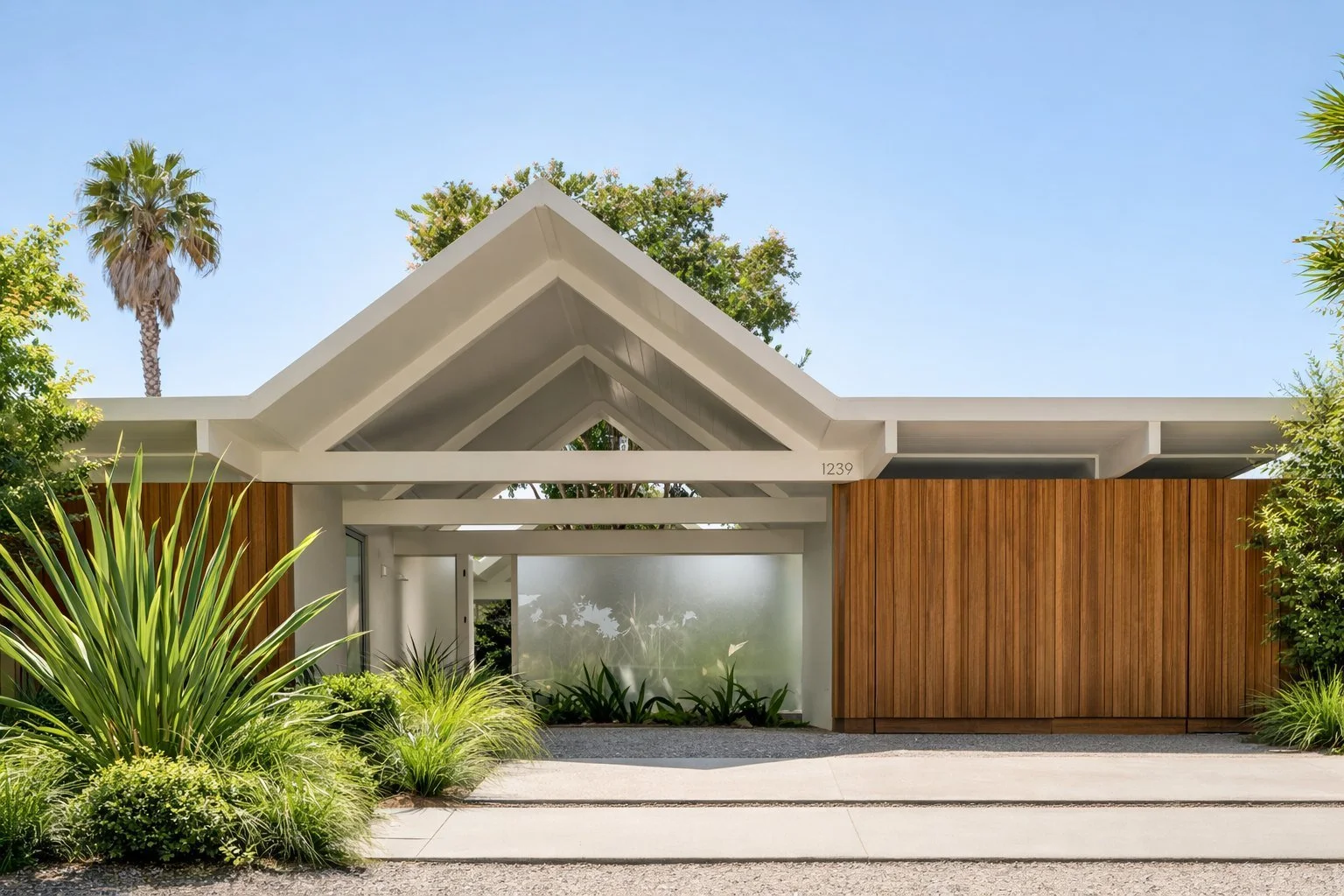
Los Altos Eichler
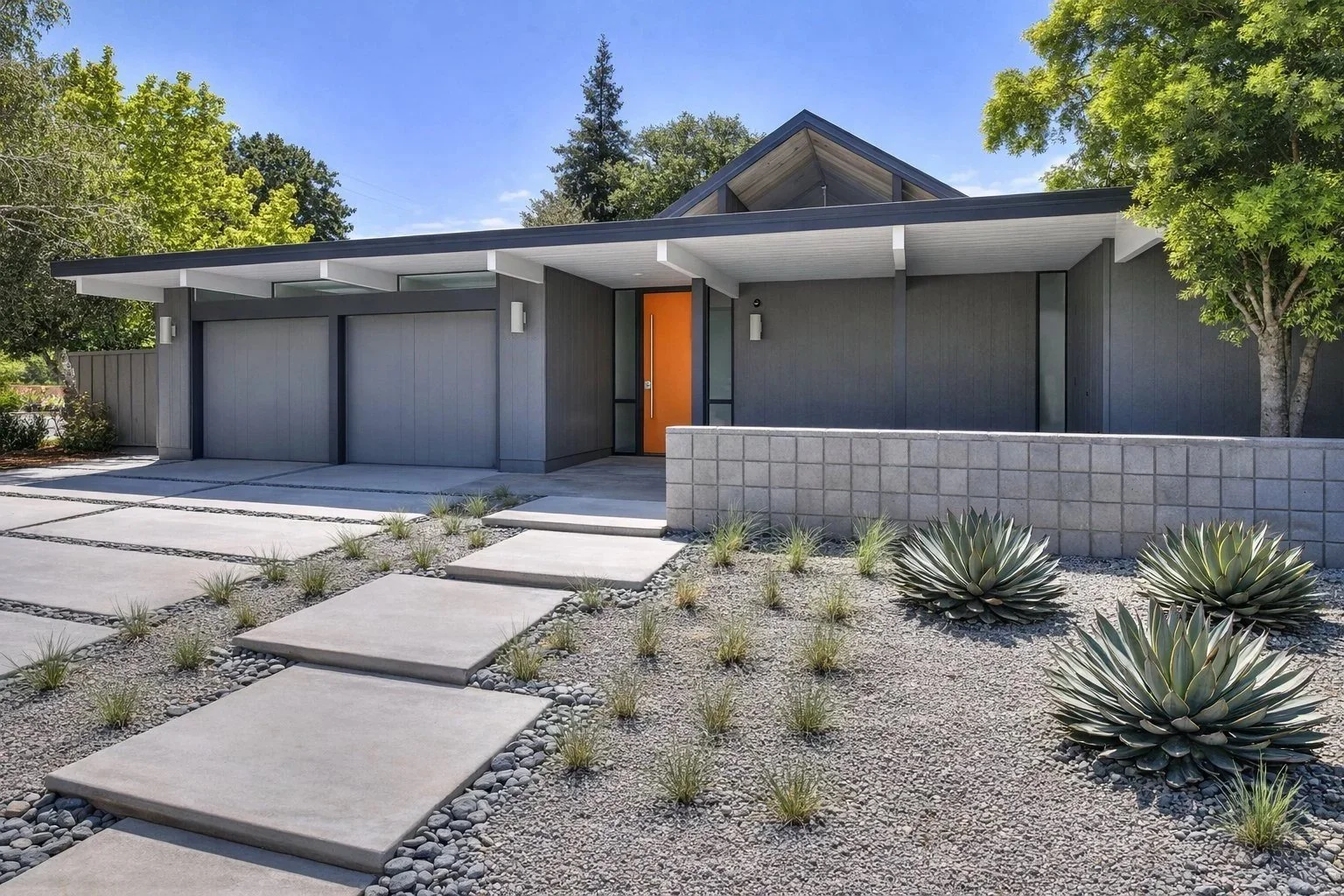
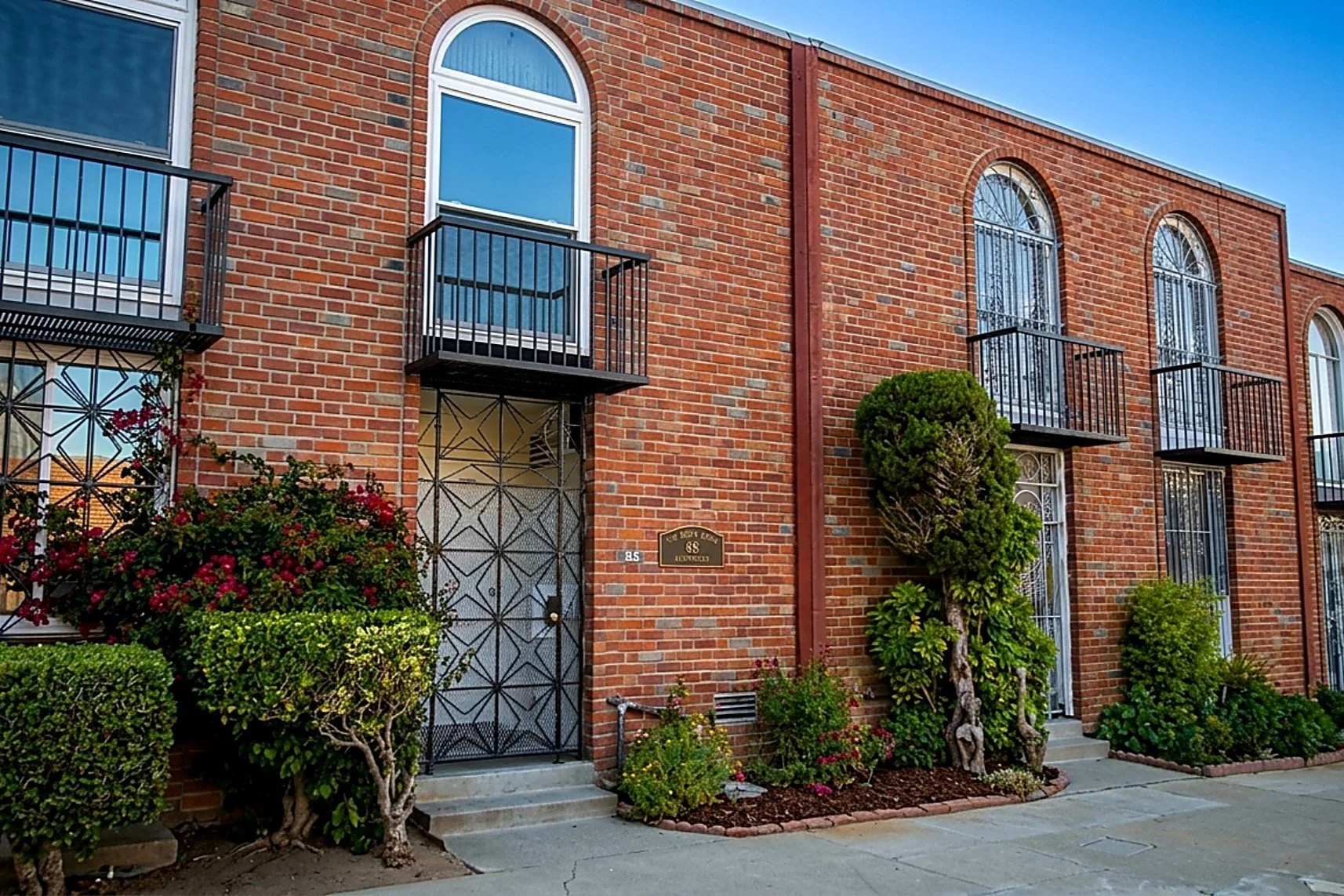
Geneva Terrace Townhomes
Southern California
In Southern California, the records we read show local listings for Eichler tracts rather than National Register ones. The City of Los Angeles lists Balboa Highlands as a Historic Preservation Overlay Zone, adopted by the City Council in 2010, and its page credits the design to A. Quincy Jones, Frederick Emmons and Claude Oakland. The City of Orange says it designated its three Eichler tracts, Fairhaven, Fairhills and Fairmeadow, as local historic districts in 2018, and that projects affecting the exterior of an Eichler home there must comply with the Orange Eichler Design Standards. A search of National Park Service and state preservation pages turned up no National Register listing for these tracts. See our Southern California page. See also our Southern California Eichler tracts guide, Los Angeles Mid-Century Modern Landmarks and Palm Springs Mid-Century Modern Landmarks.
Listed in Northern California
These Bay Area Eichler places are on the National Register of Historic Places or a city's landmark list. Each is covered on one of our pages or posts.
Green Gables and Greenmeadow, Palo Alto. Both were registered as National Register historic districts on July 28, 2005. Palo Alto's Eichler guidelines credit Green Gables, built in 1950 and 1951, to Anshen & Allen. Greenmeadow's listing describes 243 houses and a community center; Eichler Homes built the tract in 1954 and 1955 from Jones & Emmons models. See our Green Gables and Greenmeadow histories.
Fairglen Additions, San Jose. Listed on the National Register on June 6, 2019, with 204 contributing houses and 14 non-contributors. The tract was built from 1959 to 1961 between Curtner Avenue and Andalusia Way. See our Fairglen Additions history.
Pomeroy Green, Santa Clara. The National Park Service listed it as a historic district on March 24, 2021. The nomination describes 78 two-story townhouses, completed in 1963, and credits architect Claude Oakland and landscape architects Sasaki, Walker and Associates. See our Pomeroy Green history.
The X-100, San Mateo Highlands. Eichler Homes' experimental steel-frame model house, designed by A. Quincy Jones of Jones & Emmons, opened to the public on October 6, 1956. It is listed on the National Register and privately owned. See our X-100 page.
A Shubert Drive house, Saratoga. The city's 2023 Heritage Resource Inventory lists a "California Modern/Eichler" house on Shubert Drive as a city Historic Landmark with a Mills Act entry, along with Eichler entrance planters on DeHavilland and Shubert drives. See our Saratoga guide.
Outside the Bay Area, Sacramento lists an Eichler historic district on its own register. On May 21, 2024 the City Council designated the South Land Park Hills (Eichler) Historic District. The city's district plan, adopted that day, describes 48 residential buildings along South Land Park Drive, Fordham Way and Oakridge Way. Its contributing houses were built by Joseph Eichler in 1955 and 1956, from designs by Jones & Emmons.
What each nomination says
All five Bay Area National Register listings meet Criterion C, which covers design: a type, period or method of construction, or the work of a master.
Green Gables (reference 04000863). The state's record says five of Anshen & Allen's 1950 Eichler subdivisions, this one among them, were named "Subdivision of the Year" by Architectural Forum in December 1950. The nomination gives 1950 as the period of significance and counts 63 houses, five of them altered by a second-story addition.
Greenmeadow (reference 04000862). Period of significance 1954–1955. The form counts 220 contributing buildings and 25 non-contributing ones (the 243 houses plus two community-center buildings), and classes the pool as non-contributing because it was significantly enlarged. It leaves out the 27 houses Eichler added next door in the early 1960s.
Fairglen Additions (reference 100004036). Nominated under the multiple property listing "Housing Tracts of Joseph Eichler in San Jose, 1952-1963," at the local level, with a period of significance of 1959 to 1961. The form says the houses "may not meet criterion C individually," but the subdivision as a whole is "a distinctive example of its type."
Pomeroy Green (reference SG100006330). The State Historical Resources Commission approved it 6-0 on January 29, 2021, at the local level under Criteria A and C. The state's notice for that meeting called it significant "for its pioneering use of cluster development." Santa Clara's January 2021 council report said it wasn't then on the city's historic resources inventory, so a Mills Act contract would need a separate application and inventory listing.
X-100 (reference 16000381). The commission found it eligible at the local level on April 18, 2016, and its July 2016 agenda gives June 20, 2016 as the listing date. The period of significance is 1955–1956. The nomination calls it "one of only two steel houses Eichler built (he advised on a third)."
How the nominations sorted the houses
The Green Gables and Greenmeadow forms describe how a volunteer committee decided which houses count. Members walked the streets and gave each house points for changes from its original look: 11 points or fewer was contributing, 12 or more non-contributing. The checklist covered roofline, beams, siding, garage door, front door, windows, fencing and fixtures such as exterior lights. The forms give three examples:
Shingles on half the front plus a metal roll-up garage door: 16 points, non-contributing.
A small section of brick, a small added front window and a carriage lamp: 10 points, contributing.
A six-foot-high atrium cover clearly visible from the street plus a traditional front door with molding and inset glass: 12 points, non-contributing.
Greenmeadow's form says the "most common" changes were replaced garage and front doors. Its non-contributing list includes second stories (unless original), atrium covers that significantly alter the roofline, and shingle, stucco, plaster or brick siding. These scores were the nominators' method, not a city rule. See our guides to atrium covers and siding replacement.
About the houses pictured above
The houses and places pictured above are examples, each with its own page, not a list of landmarks. Of them, the X-100 is the one we found listed on the National Register. The other pages describe house types, tracts and single houses through public records, without street numbers.
What a listing does
Under federal law, National Register listing alone places no limits on what a private owner does with a property unless the project receives federal funding or permits, though state and local rules can still apply. Local designations add their own review: Los Angeles has its overlay zone, Orange has its Eichler design standards, and San Jose reviews exterior changes to Eichler houses on its historic resources list. A 2019 San Jose memo also says National Register listing doesn't make a house eligible for the Mills Act there; it has to be a designated City Landmark. Our guides Is my house historic? and the Mills Act explain the steps.
National Register, California Register, city lists and the Mills Act
Owner objections. Federal rules let private owners object to National Register listing by notarized statement. A district is not listed if a majority of its private owners object, though the National Park Service can still determine it eligible.
California Register. A state letter quoted in Santa Clara's 2020 staff report says National Register properties have been included in the California Register automatically since January 1, 1993. The state's register page says listing gives "limited protection," with review under CEQA possible if a project threatens the property.
City registers. Sacramento's district plan says only landmarks, contributing resources and districts are on the Sacramento Register, so non-contributing houses "will be treated differently than contributing resources," and their preservation review will typically be less restrictive. It lists interior work, re-roofing, solar panels and some window replacements as typically exempt from design review, and bars white vinyl windows on new construction and contributing houses.
Mills Act. The state's Mills Act page says the 1972 law lets participating cities and counties contract with owners of qualified historic properties, who agree to "restore, maintain, and protect the property." The assessor then uses an income approach rather than the market approach. Contracts run at least ten years, renew automatically each year and pass to new owners on sale. Each local government sets its own criteria.
Our list of mid-century modern historic districts shows where midmod neighborhoods have formal standing. Our guide to how a neighborhood becomes a historic district covers the steps and the votes, and the preservation glossary explains the terms.
This is a summary, not legal advice. For a specific property, check with the city or county planning staff or an attorney.
We're Eric and Janelle Boyenga of the Boyenga Team at Compass, in Silicon Valley real estate since 1996, with 2,520+ homes sold and $2.6+ billion in sales. If you're researching a listed or documented mid-century house, call or text (408) 373-1660 or (650) 383-8606, or contact the Boyenga Team.
Questions About a Mid-Century Home?
Boyenga Team at Compass
Eric & Janelle Boyenga
Call or text: (408) 373-1660 or (650) 383-8606
Email: MidMods@Boyenga.com
Book a phone or video call
BoyengaTeam.com
EichlerHomesForSale.com
DRE 01254724 / 01254725