
Mid-century modern in public
Mid-Century Modern Landmarks of the Bay Area and Los Angeles
Most of the mid-century modern buildings on this site are private houses. These thirteen are not: civic buildings, a cathedral, a glass chapel, office towers, a college campus, a concert hall, a hotel, a movie theater and a coffee shop, built from 1949 into the 1970s. You can see all but one from public streets, and several are open to the public. Six are in the Bay Area and seven in the Los Angeles area.
One firm links the two lists. Welton Becket’s Los Angeles office designed the Kaiser Center in Oakland, its architects designed three of the seven Los Angeles-area buildings, and Becket was on the Theme Building team.
Bay Area
From Frank Lloyd Wright’s civic center in Marin to a cathedral on Cathedral Hill, two Financial District towers, an office tower on Lake Merritt and a college campus in Los Altos Hills.
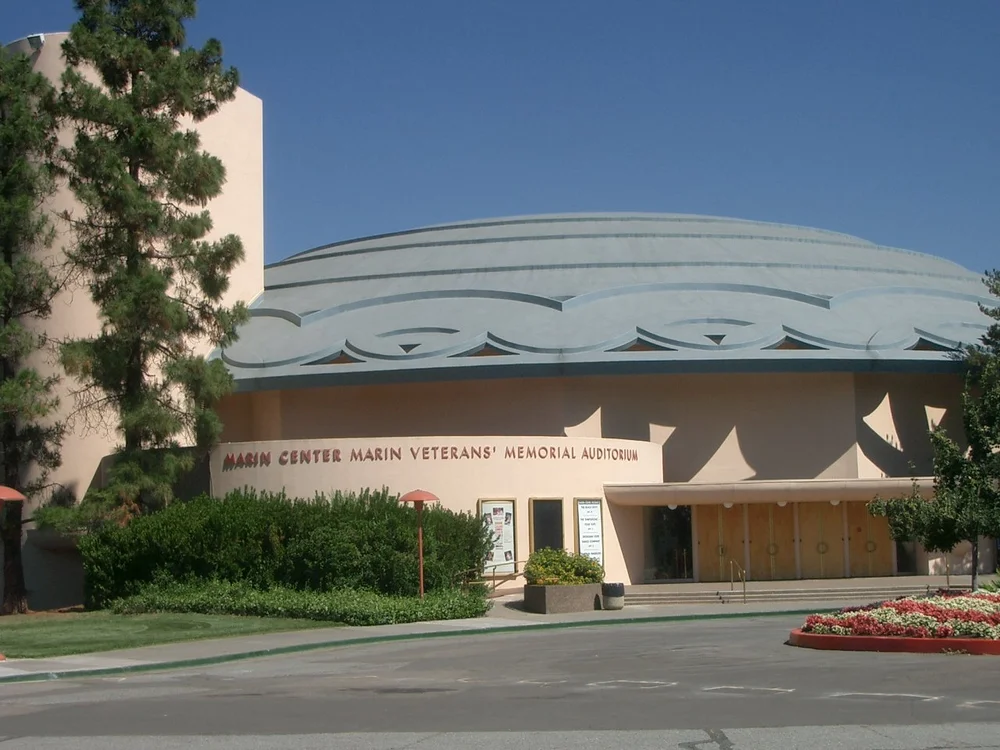
Photo: Cuffeparade, public domain, via Wikimedia Commons San Rafael · Built 1960–1976
Marin County Civic Center
- Architects
- Frank Lloyd Wright and Taliesin Associated Architects
Wright was hired in 1957 and died in 1959, before the design was finished. The Administration Building was completed in 1962 and the Hall of Justice opened in 1969. The main building, lagoon and post office are a National Historic Landmark and a California Historical Landmark. Pictured: the domed Veterans Memorial Auditorium, which opened in 1971.
On our site: Aaron Green profile · Marin County guide
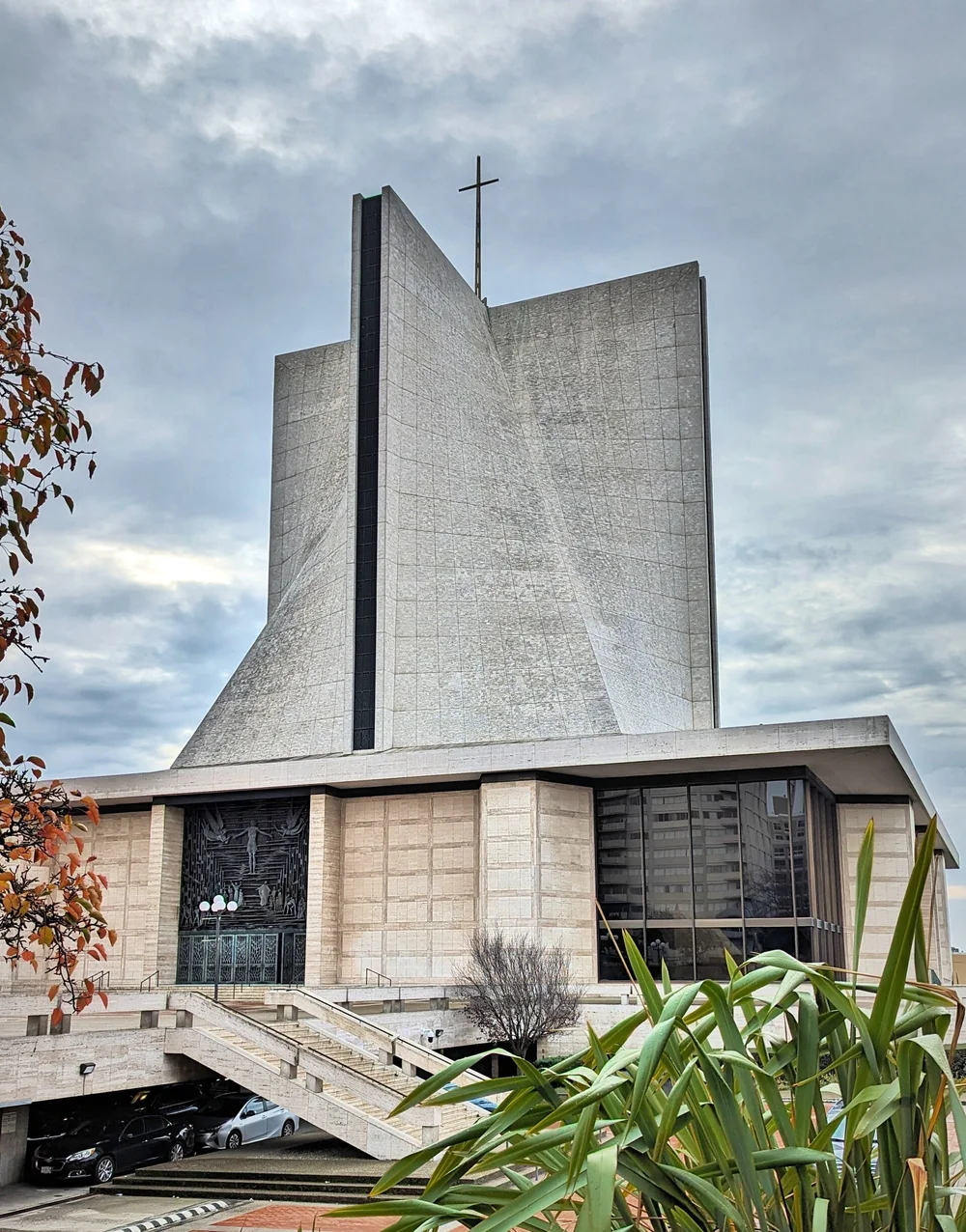
Photo: Daderot, CC0 (public domain), via Wikimedia Commons San Francisco, Cathedral Hill · Completed 1970
Cathedral of Saint Mary of the Assumption
- Architects
- John Michael Lee, Paul A. Ryan and Angus McSweeney, with Pier Luigi Nervi and Pietro Belluschi
The cornerstone was laid in December 1967 and the cathedral was consecrated in May 1971. Its saddle roof is made of eight segments of hyperbolic paraboloids.
On our site: Cathedral Hill guide
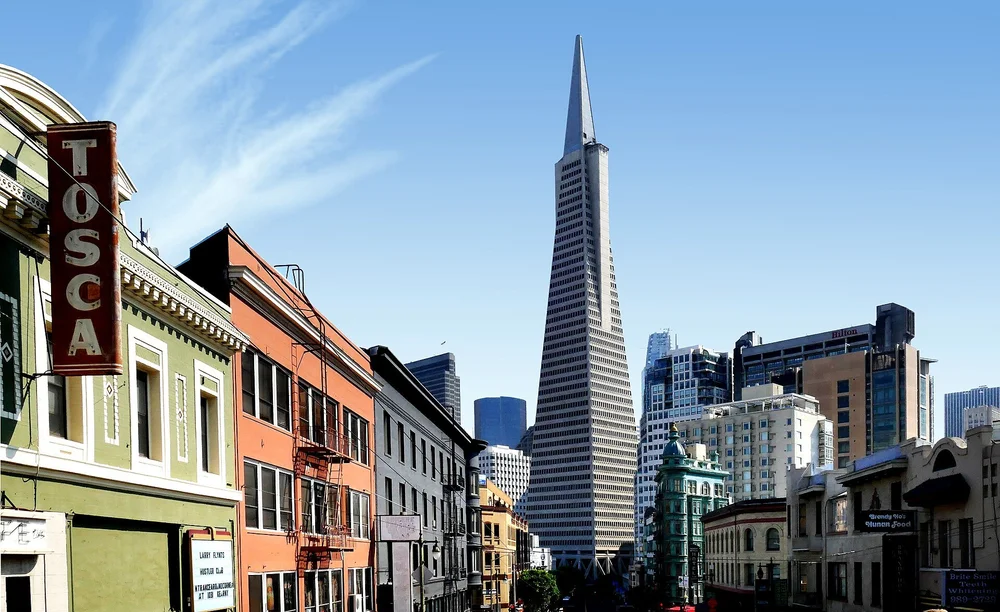
Photo: Bernard Spragg, CC0 (public domain), via Wikimedia Commons San Francisco, Financial District · Built 1969–1972
Transamerica Pyramid
- Architect
- William Pereira
The 48-story pyramid was the tallest building in San Francisco from its completion in 1972 until 2017. Pereira also headed the team, with Charles Luckman, behind the Theme Building at LAX.
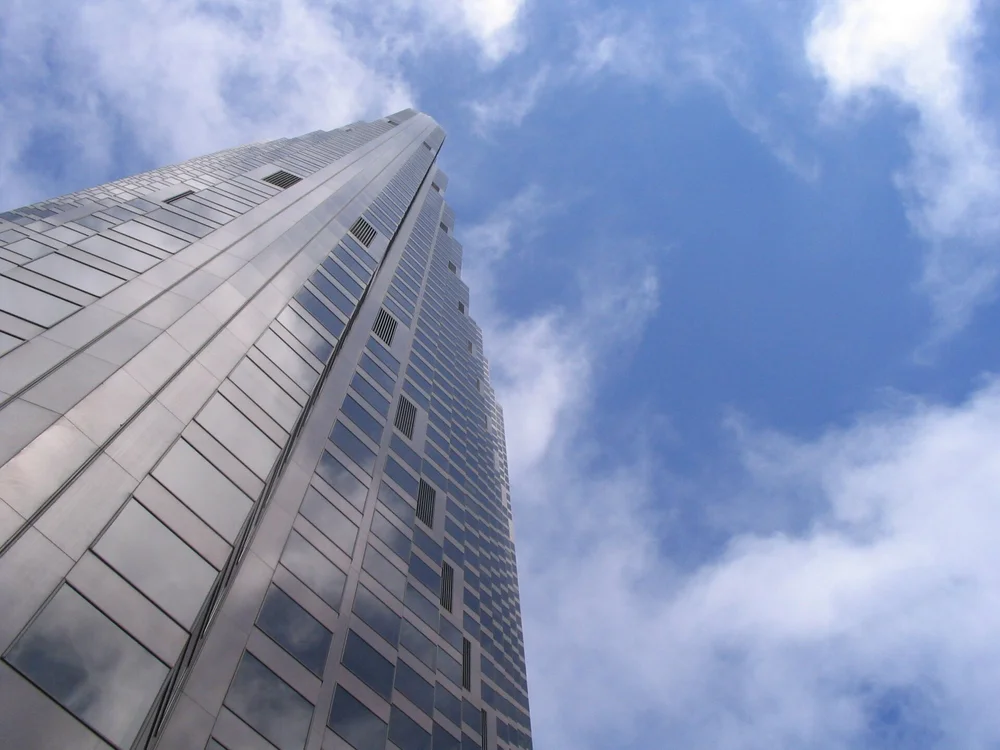
Photo: Dvbowk, public domain, via Wikimedia Commons San Francisco, Financial District · Completed 1969
555 California Street (Bank of America Center)
- Architects
- Wurster, Bernardi and Emmons and Skidmore, Owings and Merrill, with Pietro Belluschi consulting
The 52-story tower was the tallest building west of the Mississippi River until the Transamerica Pyramid was completed in 1972. Its thousands of bay windows were meant to echo the bay windows of San Francisco houses, and nearly the whole block is clad in carnelian granite.
On our site: William Wurster profile
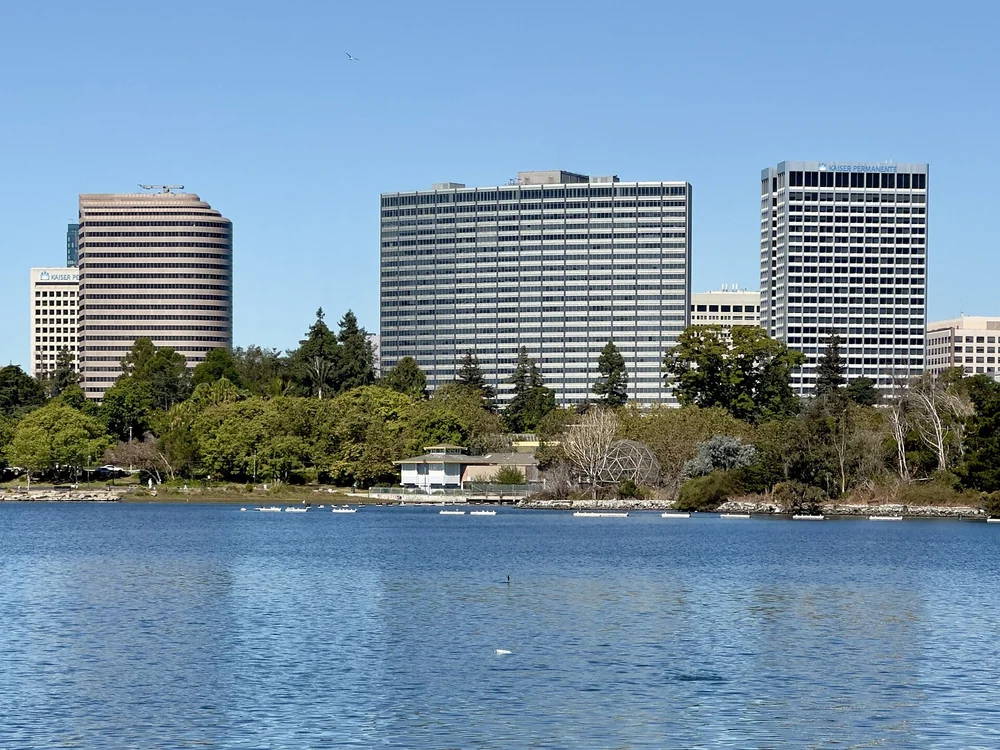
Photo: Oakland-1000, CC0 (public domain), via Wikimedia Commons Oakland, on Lake Merritt · Completed 1960
Kaiser Center
- Architects
- Welton Becket & Associates
- Roof garden
- Theodore Osmundson & Associates
The 28-story tower was Oakland’s tallest building when it was completed. Its roof garden, by a San Francisco landscape firm, is described as the first roof garden built in the United States after World War II.
On our site: Oakland guide
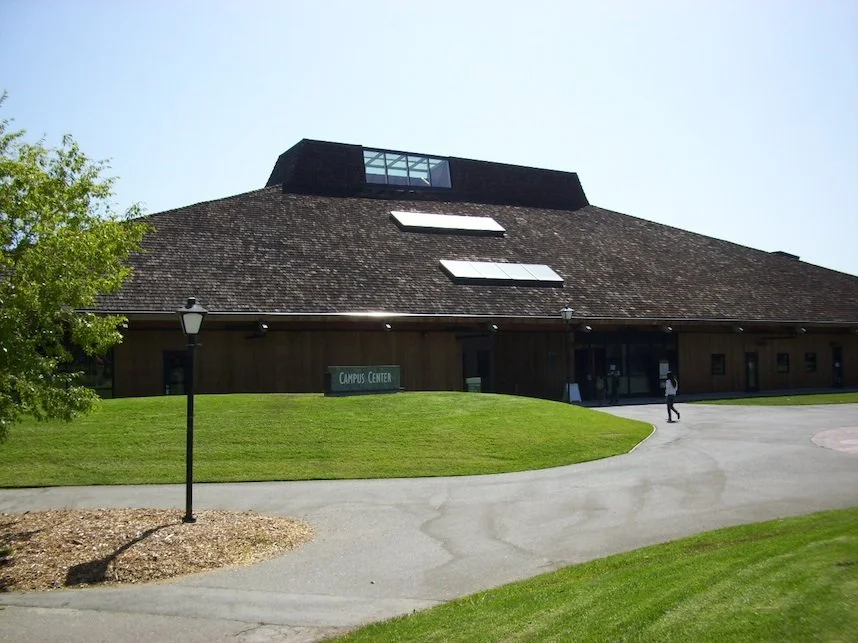
Photo: Jatkins679, public domain, via Wikimedia Commons Los Altos Hills · College founded 1957
Foothill College
- Architect
- Ernest Kump
- Landscape
- Hideo Sasaki and Peter Walker
Kump, Sasaki and Walker designed the campus to resemble a neo-Japanese garden. Much of the campus has been renovated since 2003.
On our site: Los Altos guide


Los Angeles area
An airport landmark, a record company tower, a geodesic theater, a concert hall, the curved hotel at the heart of Century City, a 1949 coffee shop and a glass chapel waiting to be rebuilt.
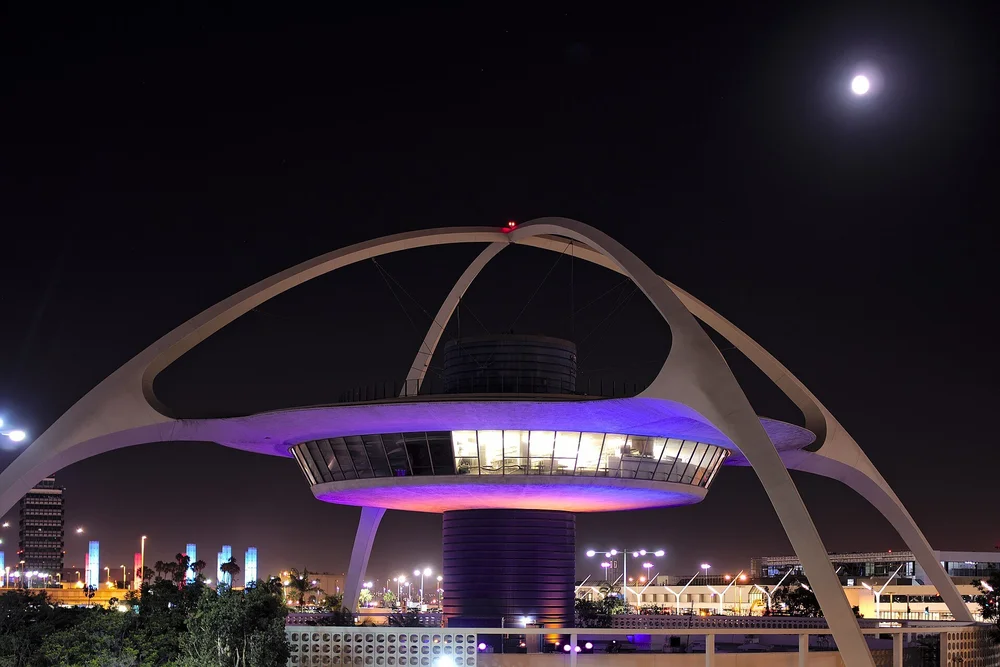
Photo: Junkyardsparkle, CC0 (public domain), via Wikimedia Commons Los Angeles International Airport · Dedicated 1961
Theme Building
- Design team
- Pereira & Luckman, with Paul Williams and Welton Becket; first design by James Langenheim
It is an example of the mid-century modern style later called Googie. The Encounter restaurant opened inside in 1997 and closed in December 2013.
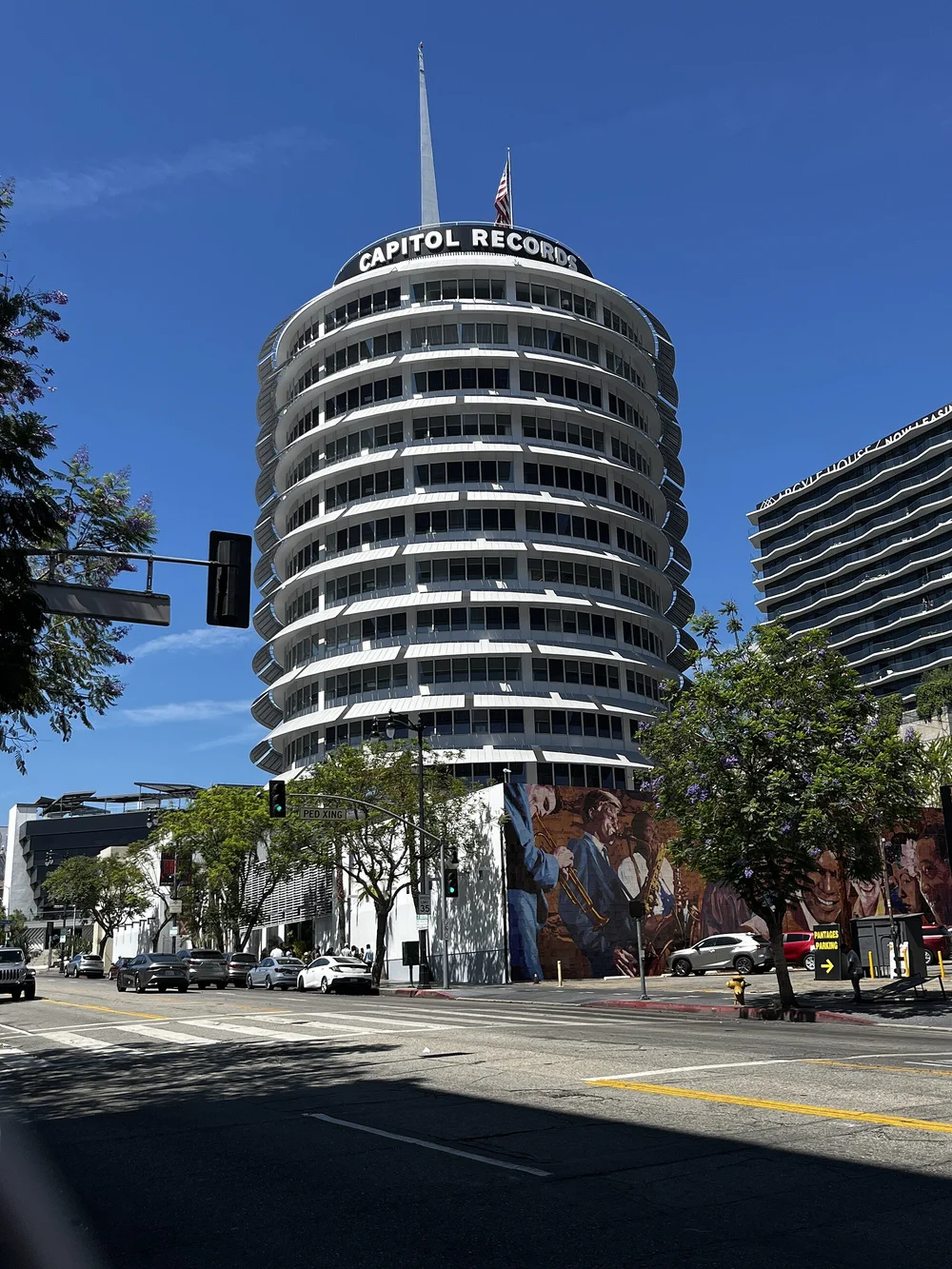
Photo: Benoît Prieur, CC0 (public domain), via Wikimedia Commons Hollywood, near Hollywood and Vine · Completed 1956
Capitol Records Building
- Architect
- Louis Naidorf of Welton Becket Associates
The 13-story round tower grew from drawings Naidorf made as a graduate student. Its likeness to a stack of records was a coincidence: Becket kept the client’s identity secret. It is on the National Register of Historic Places and became a Los Angeles Historic-Cultural Monument in 2006.
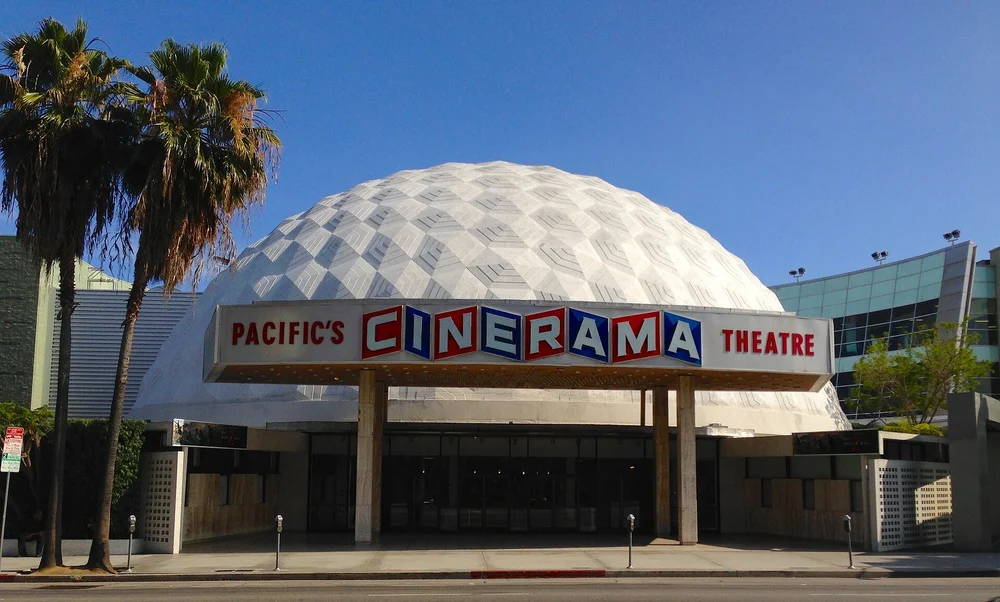
Photo: UpdateNerd, CC0 (public domain), via Wikimedia Commons Hollywood, Sunset Boulevard · Opened 1963
Cinerama Dome
- Design
- Pierre Cabrol, lead designer at Welton Becket and Associates
- Structure
- Based on R. Buckminster Fuller’s geodesic dome
Built to show widescreen Cinerama films, it opened on November 7, 1963, and was declared a Los Angeles Historic-Cultural Monument in 1998. The theater closed in 2020.
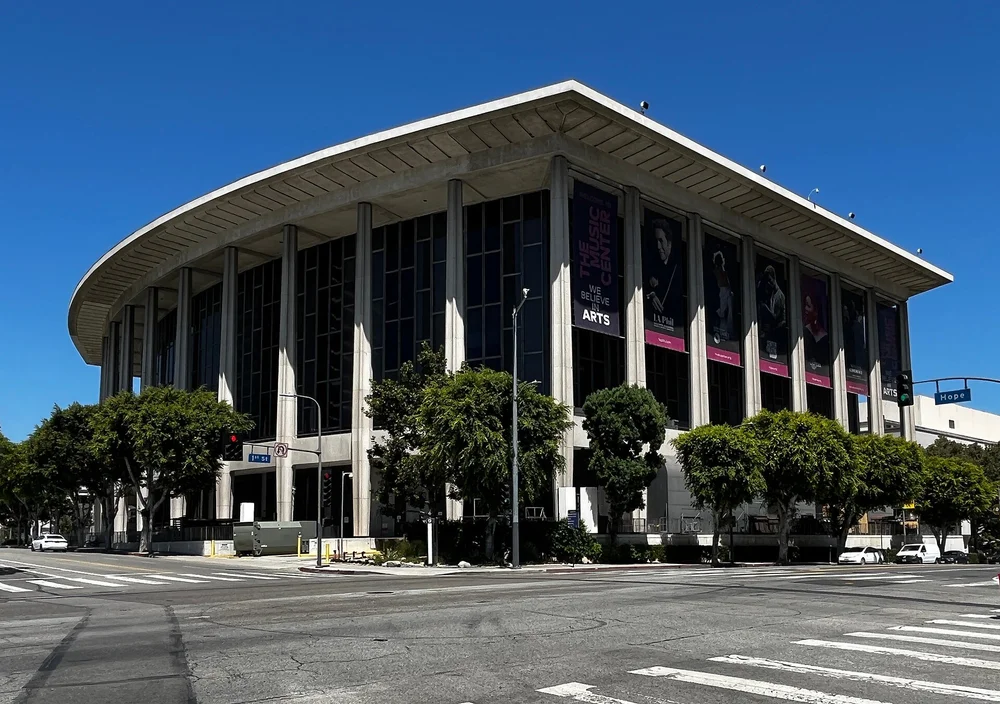
Photo: Benoît Prieur, CC0 (public domain), via Wikimedia Commons Downtown Los Angeles, the Music Center · Dedicated 1964
Dorothy Chandler Pavilion
- Architect
- Welton Becket
Construction began in March 1962. It is home to the Los Angeles Opera; the Los Angeles Philharmonic played here until Walt Disney Concert Hall opened next door in 2003.
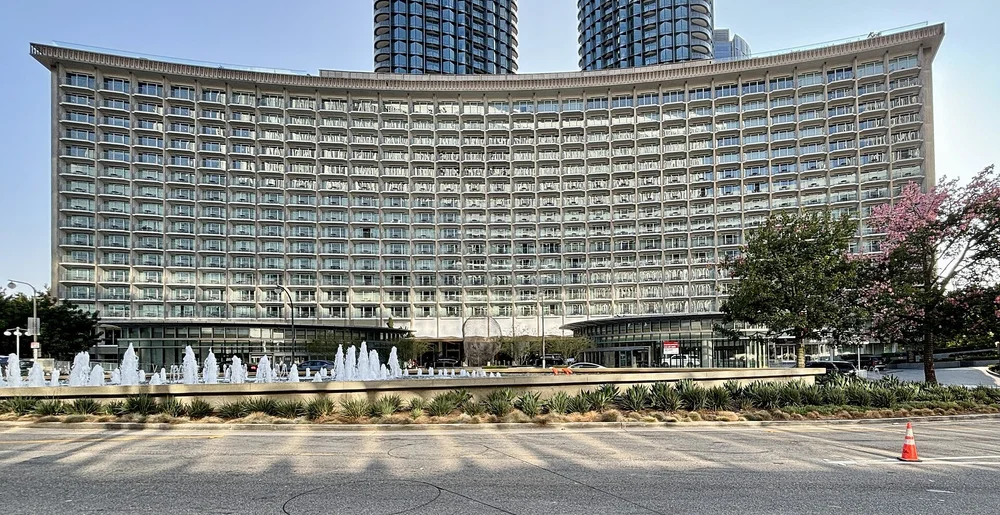
Photo: Alexis Doine, CC0 (public domain), via Wikimedia Commons Century City, Avenue of the Stars · Opened 1966
Century Plaza Hotel
- Architect
- Minoru Yamasaki
The arc-shaped, 19-story hotel was the centerpiece of Century City, built as “a city within a city” on land bought from 20th Century Fox. In 2009 the National Trust for Historic Preservation put it on its list of America’s 11 most endangered historic places. The building was kept instead of torn down, and after a renovation it reopened in 2021 as the Fairmont Century Plaza.
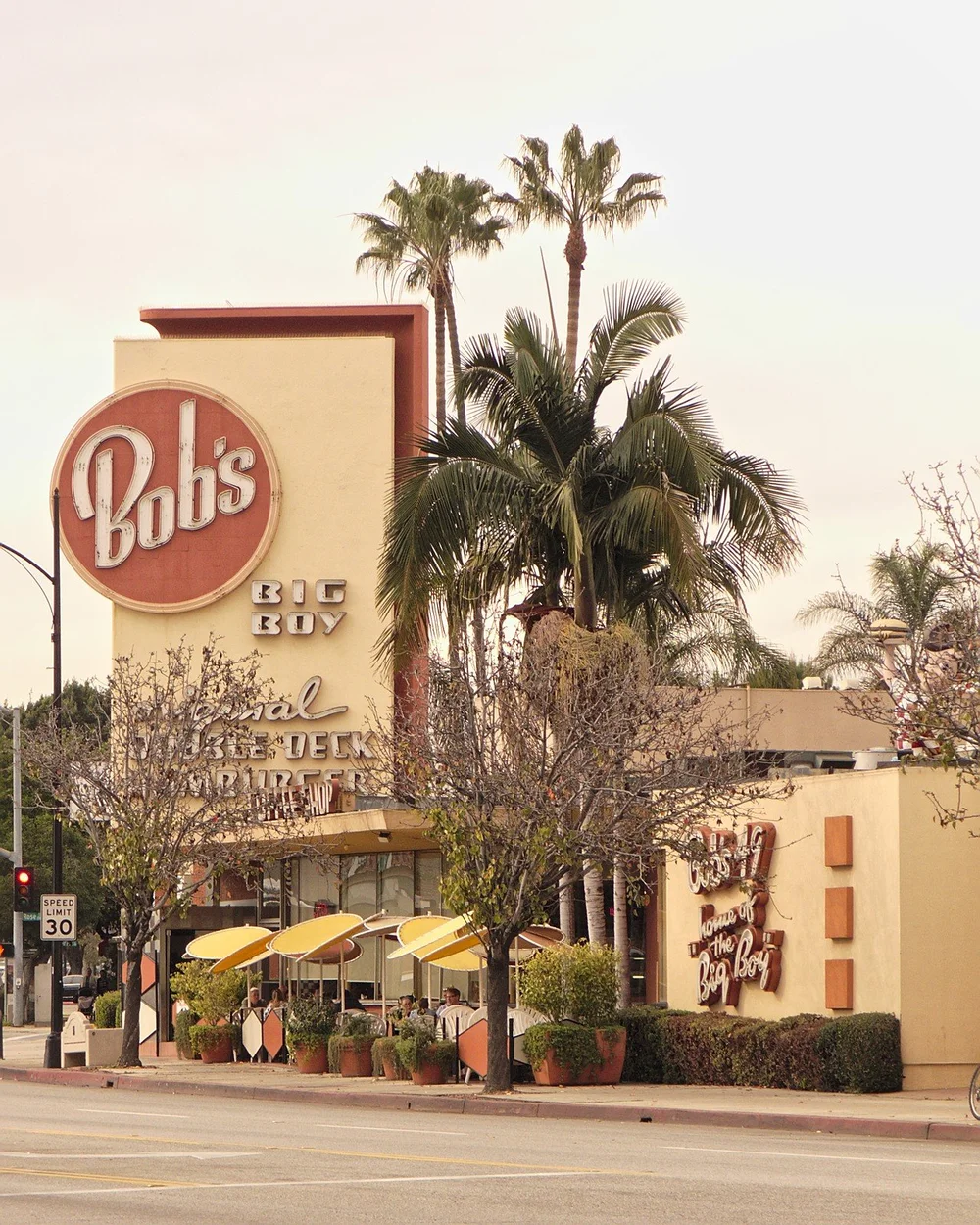
Photo: Junkyardsparkle, CC0 (public domain), via Wikimedia Commons Burbank, Riverside Drive · Built 1949
Bob’s Big Boy
- Architect
- Wayne McAllister
It is the oldest remaining Bob’s Big Boy in the United States. Its design is described as Streamline Moderne that anticipates the freeform coffee shops of the 1950s. It has been a California Point of Historical Interest since 1993.
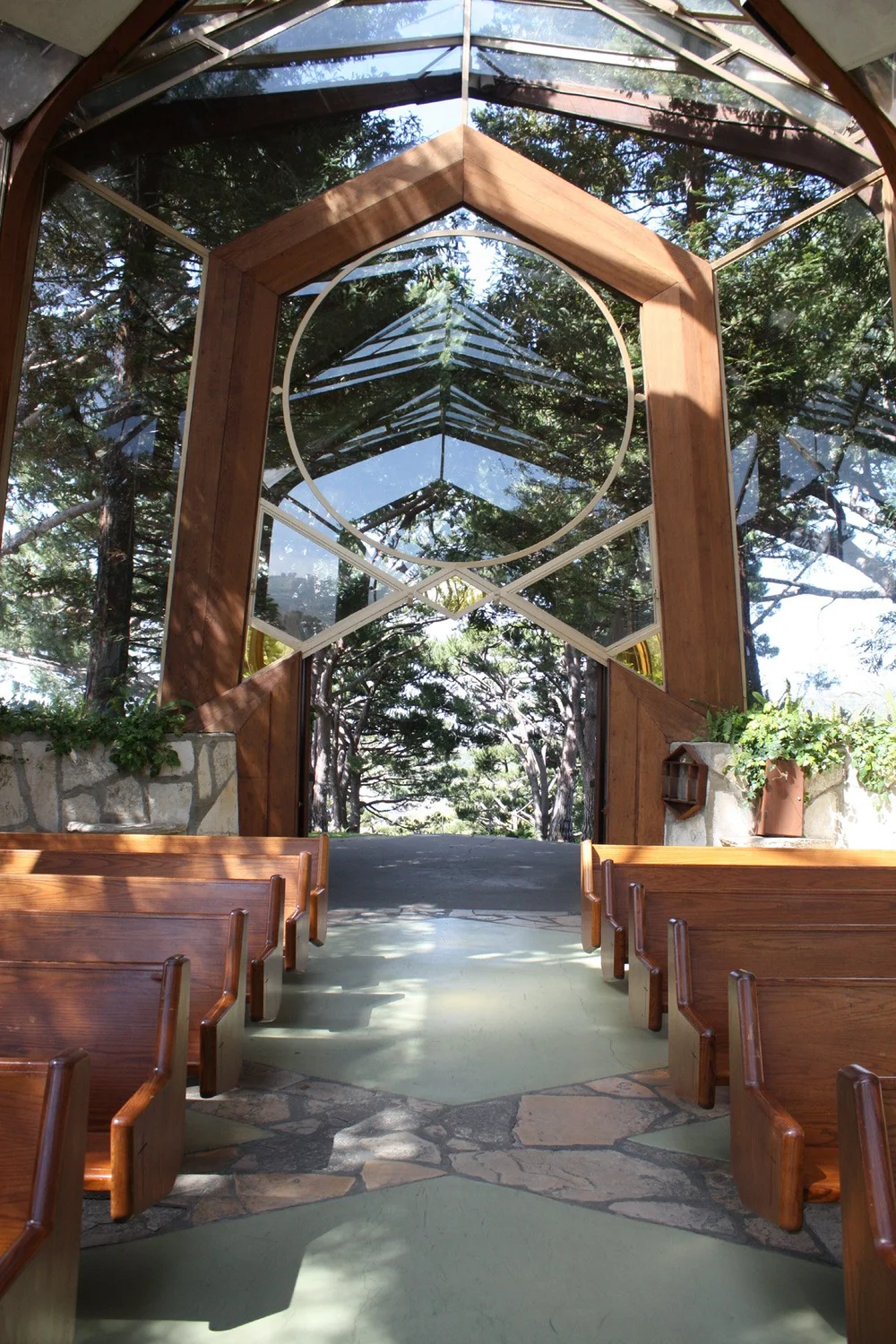
Photo: Jessicacu, public domain, via Wikimedia Commons Rancho Palos Verdes · Built 1949–1951
Wayfarers Chapel
- Architect
- Lloyd Wright, son of Frank Lloyd Wright
Known as the Glass Church, it was listed on the National Register of Historic Places in 2005 and named a National Historic Landmark in 2023. Land movement damaged it, and by September 2024 it had been carefully taken apart and stored; in 2025 the chapel said it was working toward a new site nearby. Pictured before it was taken apart.


About the photos and sources
All thirteen photos come from Wikimedia Commons and are in the public domain or released under CC0, a public-domain dedication. Each caption names the photographer and links to the file’s page. Opening hours and access change; the Cinerama Dome has been closed since 2020 and Wayfarers Chapel was taken apart in 2024, so check before you go.
Names, dates and designers come from these Wikipedia articles, read on November 10, 2026:
- Marin County Civic Center
- Cathedral of Saint Mary of the Assumption (San Francisco)
- Transamerica Pyramid
- 555 California Street
- Kaiser Center
- Foothill College
- Theme Building
- Capitol Records Building
- Cinerama Dome
- Dorothy Chandler Pavilion
- Fairmont Century Plaza
- Bob's Big Boy (Burbank section)
- Wayfarers Chapel
For the houses of the same era, see our architects and builders guides, our Southern California page and the architecture and design guides.