
Mid-Century Modern Homes in Campbell: Postwar Tracts and City Rules
Campbell is a city in Santa Clara County. The city's history page says it was officially incorporated in 1952, and a city profile gives the month as March and describes Campbell as surrounded on three sides by San Jose. Campbell's ZIP code, 95008, also reaches into San Jose: the City of San Jose's street file assigns 95008 to more than 100 San Jose street names.
This page is a records-based guide, not a market report. We haven't published a tract history for Campbell, and the public records we read name no mid-century builder or architect here.
Postwar tracts in Campbell
Campbell's 1996 historic context statement traces how housing tracts replaced the orchards. It counts at least fourteen subdivision maps filed between 1938 and 1942 in what is now the city, and more than thirty filed after the war in the late 1940s, mainly east of Winchester Boulevard, with several near Campbell and Bascom avenues. With San Jose and other larger cities annexing land around them, Campbell and other small communities incorporated, and the statement says Campbell has annexed many parcels since as houses took over the surrounding orchards.
Santa Clara County's index of recorded maps lists postwar tracts whose streets the Census Bureau's geocoder places in Campbell, including:
Cambrian Village (Tract 411), recorded June 30, 1947, and its additions through September 1952, on streets such as Cambrian, Sydnor, Salerno and Dallas drives.
Virginia Manor (Tract 528), recorded September 28, 1948, and Unit No. 2 (Tract 666), recorded December 13, 1949, with Hazelwood and Craig avenues.
Coral Manor Unit No. 2 (Tract 819), recorded February 26, 1951, with Jane Ann Way and Hunt Way.
Excelsior Manor (Tract 1560), recorded August 11, 1955, with Buddlawn Way, Albert Way, Sobrato Drive and Corliss Way.
These entries give tract names, streets and recording dates. They don't record a house style or an architect, so they can't tell you whether a particular house is a modernist design. Our rewrite on 95124's Cambrian tracts and records explains how we placed Cambrian Village in Campbell rather than San Jose.
More postwar tract maps in the index
The county archives' index tags 57 maps with Campbell as their city, 12 of them tract maps recorded from 1945 through 1955. The tag is incomplete (several maps above lack it), and it doesn't mean a tract was inside the city when recorded: the 1946 maps predate Campbell's 1952 incorporation. These tagged tracts have streets that Census Bureau files place in Campbell today:
El Rancho California Tract (Tract 295), recorded April 16, 1946, with El Caminito Avenue.
Los Palos Unit No. 3 (Tract 335), recorded July 15, 1946, with Hawthorne Avenue and Page Street.
Hamilton Square Unit No. 1 (Tract 1115), recorded April 21, 1953, with Nottingham Way and Sheffield Avenue.
Westchester Park (Tract 1392), recorded February 7, 1955, with Ricky Drive and Beverly Court.
Ampex Subdivision (Tract 1532), recorded November 28, 1955, with Dunster and Sunberry drives.
City rules for remodeling in Campbell
Inside Campbell's city limits, Campbell's rules apply. On the San Jose streets of 95008, San Jose's rules apply; our San Jose page covers them.
Historic resources. Campbell's historic preservation page says the city keeps a Historic Resource Inventory and has adopted Historic Design Guidelines for changes to historic residential buildings. Changes to an inventory building are reviewed by the Planning Department, and some also go to the Historic Preservation Board. The inventory lists 143 structures, and the dates on it run mainly from the 1890s through the 1940s, so few postwar houses are on it. The state's Mills Act contacts list names Campbell. Our Mills Act guide explains the program, and our guide Is my house historic? covers how local and national listings differ.
The San Tomas Area. The San Tomas Area Neighborhood Plan, adopted in 1993 and last amended in 2022, covers about one and a half square miles in the southwest part of the city and aims to keep it low-density residential. It caps buildings at 28 feet and two and a half stories, and second-story additions must meet its standards. While the city's interim single-family ordinance (below) is in force, additions there that meet its standards get a zoning clearance instead of site and architectural approval, and the plan's allowance for going past a 0.45 floor area ratio doesn't apply.
Fire sprinklers. Campbell is one of the communities served by the Santa Clara County Fire Department, whose standard SP-6 covers sprinkler systems in houses and duplexes. Our guide to fire sprinkler requirements for a remodel covers how those rules can reach a remodeling project.
Single-family review under the interim rules
Since January 2025, Campbell has handled house projects in its R-1 single-family districts under interim ordinances that carry out state laws on two-unit projects and lot splits (see our SB 9 guide). The current one, Ordinance No. 26-2354, was adopted August 3, 2026. It says it is effective "for a period of 45 days, unless extended by the City Council." In November 2026 the Planning Division's ordinance table listed it as in effect until October 1, 2027, but we didn't find the extension, so ask the Planning Division whether it still applies.
Under it, a new house or an "alteration or expansion of an existing primary dwelling" that complies with the ordinance is "ministerially reviewed" through a zoning clearance instead of a site and architectural review permit, and the Community Development Director decides within 60 days of a complete application. The city's single-family checklist says these projects "no longer require prior approval of a land use permit from the Planning Division." The ordinance sets a maximum 0.45 floor area ratio for R-1 lots, and its standards "prevail over any conflict with a neighborhood plan."
Design standards for new houses
For a new house in the San Tomas Area or Campbell Village plan areas, roofs are limited to "hipped, cross-hipped, hipped-and-valley, front gable, and side gable forms" with a pitch "between 4:12 and 8:12," and a continuous run of glass and framing over 50 percent of a wall "shall constitute an impermissible wall material." Our guide to butterfly, flat and other mid-century rooflines covers main-roof forms that aren't on that list.
These standards don't reach "additions, exterior alterations, and ordinary maintenance and repair" unless the work counts as a new structure "using portions of an original structure." The checklist asks for a "New House Determination" from the Building Division when an addition and remodel exceeds 50 percent of the existing home's gross floor area.
What the historic inventory means for an owner
The city's historic preservation FAQ says a 1977–1978 survey listed 467 potentially historic properties, the Historic Preservation Board cut the list to 125, and the City Council adopted it on August 7, 1984. The FAQ now counts 147 properties, more than the 143 structures on the inventory document. Homes on the separate eligible resource list aren't covered by the preservation ordinance until the council designates them.
Interior work, and routine maintenance such as replacing a roof or a window "with equivalent materials," have the same requirements as for any other house.
Changes to a Structure of Merit that follow state preservation guidelines generally take the usual process. A Landmark, or a home in the Alice Avenue Historic District, goes to the Historic Preservation Board.
Additions must meet the development standards and the Historic Design Guidelines; the FAQ suggests the rear or an inconspicuous side.
Demolition isn't banned outright, but if the home still meets the designation criteria, "California law requires preparation of an Environmental Impact Report."
This is a summary, not legal advice; check with the city before you plan work.
Our Eichler Remodel Rules Finder sums up, for a mid-century house in Campbell, the design guidelines, zoning, design standards, historic listings and private covenants to check before you remodel, as of November 2026. For the records and repair standards that help a mid-century house stay mid-century, see our Keep It Midmod guide; our mid-century historic districts list shows where midmod neighborhoods have formal standing.
Researching a house in Campbell
Which city. Confirm whether the parcel is in Campbell or San Jose. It decides whose rules and permit records apply.
Parcel record and tract number. Find the assessor's parcel number and the tract number.
Recorded map. The county's online index covers maps from about 1850 to 1957, so it includes many of Campbell's postwar tracts. Search it by tract number, not by name.
Permit history. Our guide to checking permit history on a mid-century home walks through the search. Planning a kitchen or bath? See our mid-century kitchen remodel guide and mid-century bathroom remodel guide.
Inspections. Heating pipes cast into the slab, low-slope roofs and single-pane glass each need their own checks. See our mid-century home inspection checklist.
For a closer look by ZIP code, see our 95008 guide.
More guides, in three indexes: Eichler and mid-century renovation guides, by system groups our roof, heating, glass and remodel guides. The Eichler plan library lists our plan guides and plan records. Eichler neighborhoods, by city lists our tract histories around the Bay Area.
Where Campbell's records are
Permits. The Planning Division's resources page links a "Records by Property Address" search for "permit records and land use history." The Building Division's remodel guide lists window replacement among the jobs that need a building permit (see our window replacement guide).
Plans. State law has building departments keep plans of buildings they permit, but says plans need not be filed for dwellings of up to two stories, so an older house's drawings may not be on file.
County maps. The archives' online index skips 15 map books numbered between 44 and 81, from the mid-1950s. The County Surveyor's Record Index lists record maps, and the County Clerk-Recorder sells copies. Our records finder lists where to ask.
The Boyenga Team at Compass, Eric and Janelle Boyenga, has worked in Silicon Valley real estate since 1996, with 2,520+ homes sold and $2.6+ billion in sales. Researching a mid-century house in Campbell? Call or text (408) 373-1660 or (650) 383-8606, or contact the Boyenga Team.
Questions About a Mid-Century Home?
Boyenga Team at Compass
Eric & Janelle Boyenga
Call or text: (408) 373-1660 or (650) 383-8606
Email: MidMods@Boyenga.com
Book a phone or video call
BoyengaTeam.com
EichlerHomesForSale.com
DRE 01254724 / 01254725
From our listings
Eichler homes we’ve sold in the South Bay
Photos from the listings of five homes the Boyenga Team has sold in Fairhaven, in San Jose, and Fairgrove, in Cupertino, both Eichler neighborhoods.
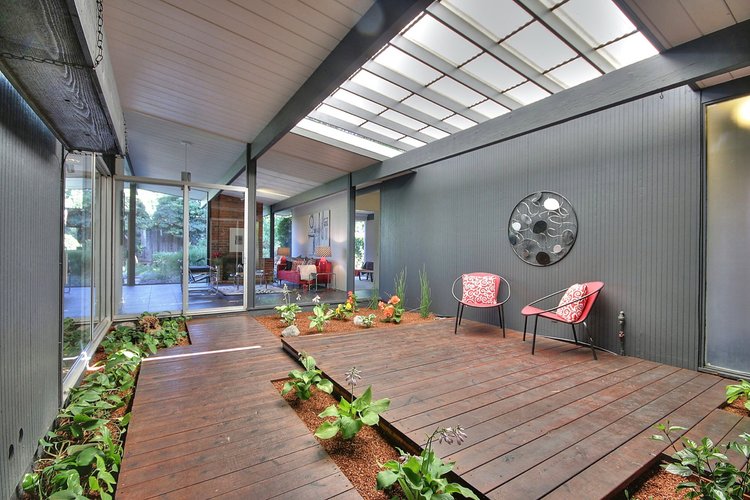
Fairhaven, San JoseAtrium with a deck · Sold 2014 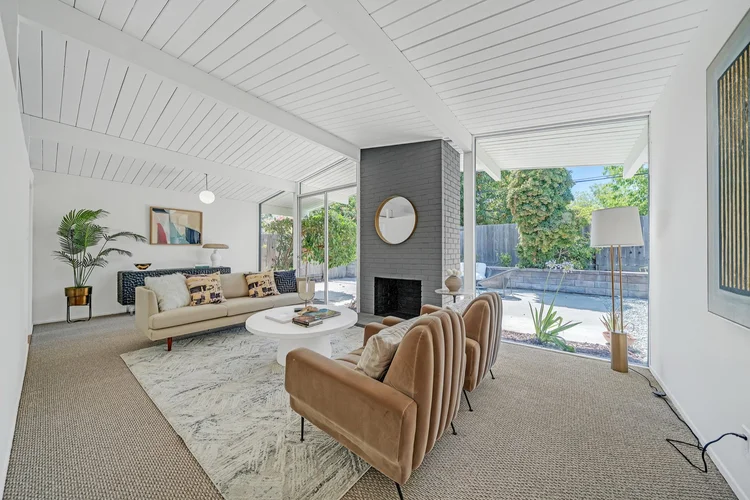
Fairgrove, CupertinoLiving room · Sold 2023 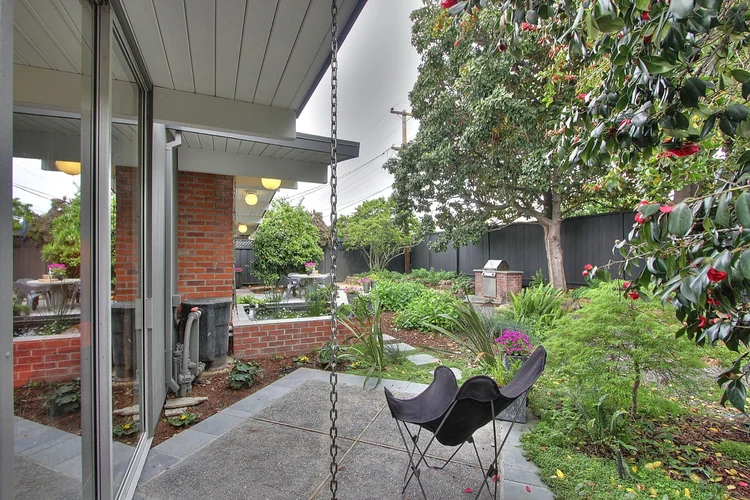
Fairhaven, San JoseGarden and glass walls · Sold 2015 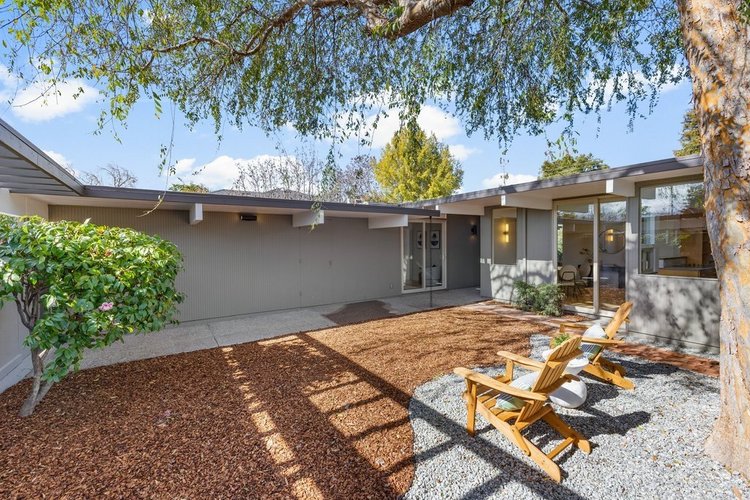
Fairgrove, CupertinoBack garden · Sold 2026 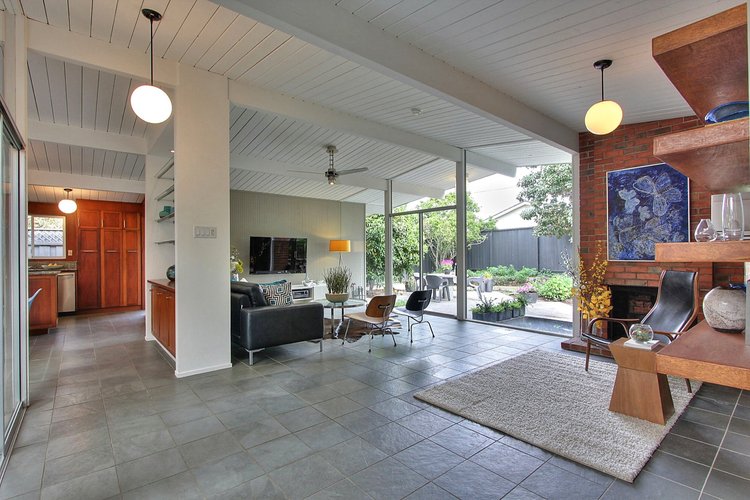
Fairhaven, San JoseLiving room and globe lights · Sold 2015 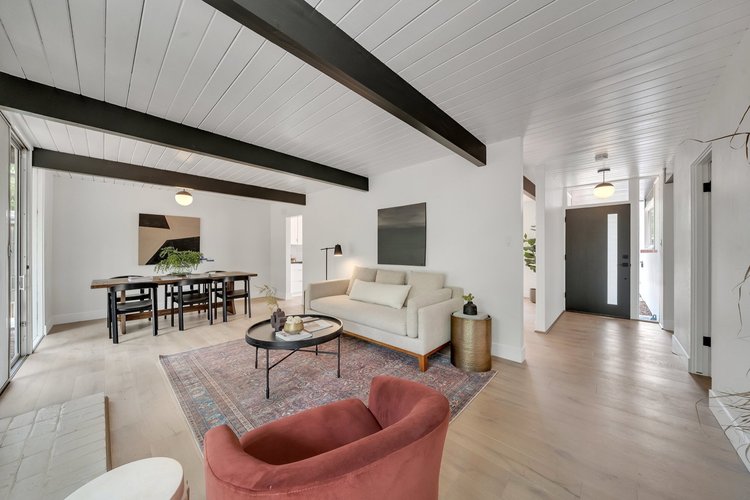
Fairgrove, CupertinoLiving and dining room · Sold 2023
Listing photographs of homes sold by the Boyenga Team. More homes we’ve sold
See our portfolio