
Diamond Heights and the Economics of Mid‑Century Modern Living
Why Diamond Heights Reads Like a Business Case for Mid‑Century Modern
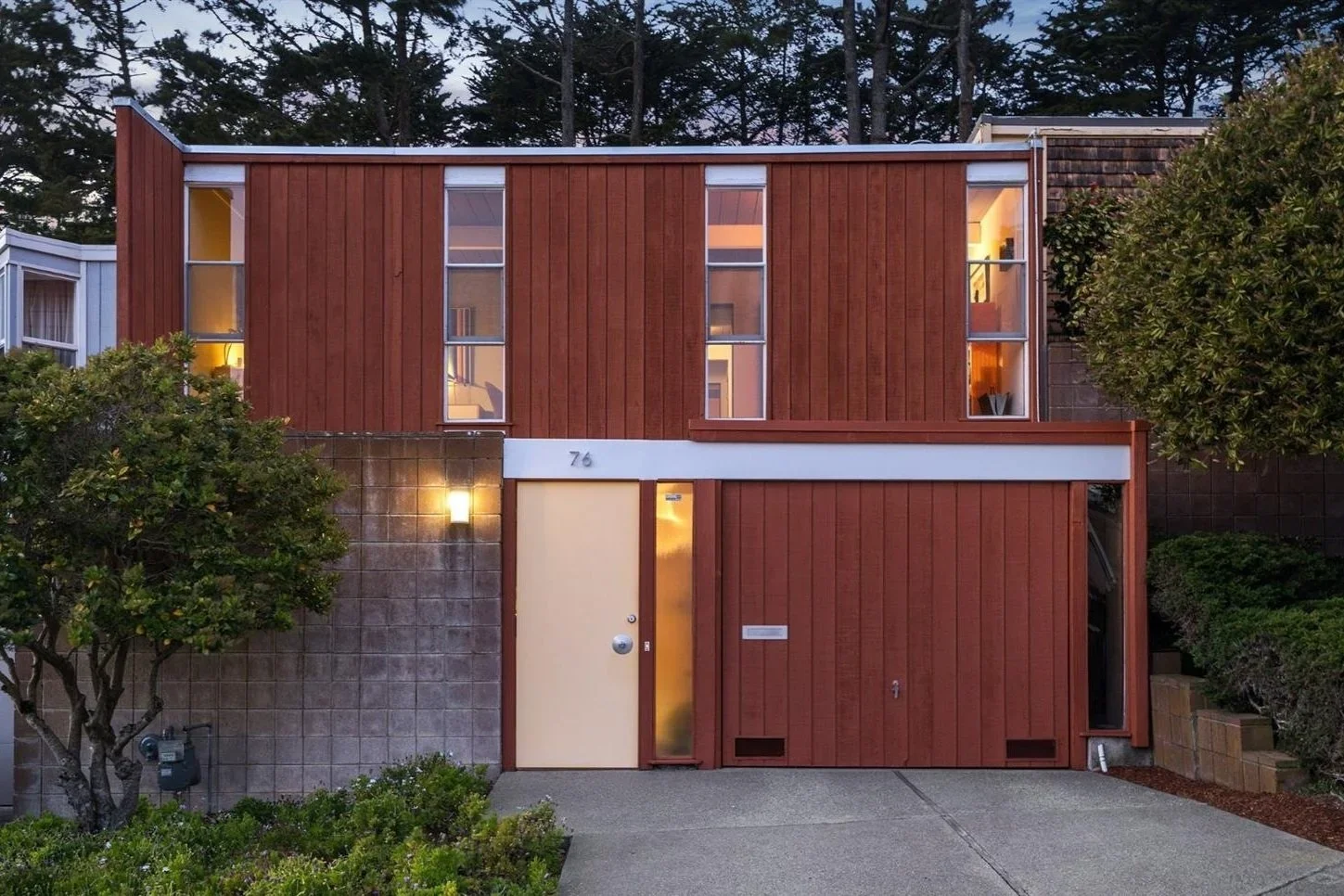
If you’re asking whether Diamond Heights has a high concentration of mid‑mod homes, the answer is yes—especially by San Francisco standards—because the neighborhood is, in large part, a master‑planned, mid‑20th‑century redevelopment district whose defining architectural “product” is modernism rather than Victorian/Edwardian fabric. One widely cited planning characterization is that Diamond Heights is San Francisco’s only “modernist neighborhood” and carries the city’s highest concentration of modernist resources.
That concentration wasn’t accidental. Diamond Heights was conceived during an era when cities attempted big, systems‑level interventions—land assembly, new street patterns, and coordinated housing typologies—to address post‑World War II housing demand. A redevelopment agency formed in 1950, and Diamond Heights became its first project area, with the city pursuing an “from scratch” neighborhood plan that deliberately broke with the traditional grid in favor of curving roads that hugged the terrain.
The outcome is a neighborhood where mid‑century modern is not a “single‑house story” but a portfolio: single‑family residences, townhomes, condo complexes, and apartment buildings, many designed to maximize light, views, and indoor‑outdoor flow in a hillside setting. Contemporary accounts of the neighborhood’s evolution note that, on the lower slopes, builders included Joseph Eichler—a key reason design‑oriented buyers still treat Diamond Heights as a mid‑mod “micro‑market” rather than merely a location between other, older districts.
This feature‑article profile treats Diamond Heights the way Harvard Business Review might treat a category leader: by examining its origin story, how its “design thesis” evolved through constraints, and how today’s buyers pay (or discount) for architectural differentiation in a volatile urban housing market.
Historical Overview
Before the neighborhood became a planned community, the hills and canyons around Diamond Heights were far closer to a peri‑urban landscape than a dense city district—associated in preservation scholarship with quarrying and grazing prior to mid‑century redevelopment pressures. A local history account similarly frames the pre‑redevelopment area as largely rural until the mid‑20th century, with “Diamond Street” appearing on 19th‑century maps long before the neighborhood as we know it existed.
The inflection point was institutional capacity: redevelopment-era tools to assemble land, re-plat streets, and impose design controls at scale. The widely reported sequence is stark: the redevelopment agency designated Diamond Heights as its first project area (1950), spent about a decade assembling hundreds of mostly vacant parcels while navigating lawsuits, and began construction in 1961. Another narrative history notes that city approvals and “unit” adoptions proceeded in the early 1960s and that the redevelopment effort ran until the project was completed in 1978.
What makes Diamond Heights architecturally distinctive is that its planning intent was explicitly modern—optimized for a car‑oriented, topography‑responsive, postwar lifestyle—rather than an incremental extension of San Francisco’s older residential patterns. Contemporary reporting describes the plan as rejecting the established grid so that roads could follow the hillside; it envisioned townhouses and apartments on slopes, taller buildings on summits, and a car‑friendly community center located on a saddle between hills.
Notable figures enter the story less as celebrity architects and more as “operators” in the urban systems sense. For example, Allan Jacobs—later a major planning voice—lived in Diamond Heights after arriving in 1967 to become the city’s planning director, offering a rare insider’s perspective on what it felt like to inhabit a planned, windswept hilltop modernism. The neighborhood center also attracted professional design attention: a catalog record describes a formal urban-design report prepared for the San Francisco Redevelopment Agency by consultant Lawrence Lackey with landscape-architecture firm Royston, Hanamoto & Mayes.
Over subsequent decades, Diamond Heights underwent a familiar transformation for master‑planned districts: early “vision” met market reality. Plans for towers on difficult summits often yielded to more feasible apartment blocks; large-scale community design guidelines did not necessarily translate into a visitor-friendly street life, even as the area matured into a stable residential enclave. For today’s buyers, this matters because Diamond Heights “delivers” on certain postwar modern values—views, light, separation from commercial churn—while under‑delivering on others, such as classic San Francisco walkable retail streets at the neighborhood core.
Zoning and regulation are part of the modern story as well: Diamond Heights includes mapped residential districts with defined height and bulk controls, as illustrated by a historic-preservation case report that situates a local feature within RH‑2 zoning and a 40‑X height/bulk district. At the citywide level, San Francisco’s Housing Element documentation also references portions of Diamond Heights in the context of multifamily zoning categories (e.g., RM‑4), underscoring that this is not exclusively “single‑family only” territory in the way that some west‑side neighborhoods are perceived.
Demographic and Socioeconomic Profile
Any rigorous demographic profile of Diamond Heights needs to be explicit about measurement. San Francisco has multiple neighborhood boundary schemes; “Diamond Heights” can be represented as a locally understood area, as a planning/redevelopment project area, or as an analysis neighborhood aggregation of census tracts. The city’s own analysis-neighborhood approach is explicitly an aggregation tool (not strict statistical geography), designed for consistent reporting across city departments.
With that caveat, commonly used neighborhood-data syntheses (drawing from the American Community Survey in the background) characterize Diamond Heights as relatively affluent and educated by city standards, with a population in the low thousands and high shares of residents working in professional/managerial occupations. These same sources typically show high median household incomes and high rates of bachelor’s and graduate degree attainment, aligning with broader patterns in adjacent central/western San Francisco districts.
What’s more interesting—because it is structurally tied to Diamond Heights’ redevelopment DNA—is that the neighborhood has long contained a wider mix of housing forms than many nearby districts, which can translate into more economic variety than outsiders assume. A San Francisco redistricting-related packet describing a community testimony notes a neighborhood mix that includes single‑family homes, condominium complexes, and subsidized affordable rental housing; it cites hundreds of HUD-subsidized affordable rental units and highlights the neighborhood’s “distinctive, mid-century architecture.”
This mixed typology matters in a “Harvard Business Review” lens because it influences resilience: neighborhoods with diversified housing products—condos, rentals, subsidized units, and ownership—often absorb macro shocks differently than monolithic single‑family enclaves. Citywide housing analysis in San Francisco also emphasizes sustained affordability pressure and the role of high earners in tightening housing markets, shaping who can access “design premium” neighborhoods over time.
Tech-driven migration patterns are typically experienced here indirectly, via the broader San Francisco labor market and regional commuting patterns, rather than through large new office development in‑neighborhood. Diamond Heights’ value proposition is often that it is residential-first, transit-connected enough to reach job centers, and physically buffered by topography and open space. That same “buffering,” however, can compound scarcity: supply is limited, much of the housing stock is older and architecturally specific, and the neighborhood’s premium is strongly linked to the non-reproducible asset of views and setting.
School Districts and Education Landscape
Diamond Heights homebuyers commonly treat schools as both a family choice and a value driver, but San Francisco’s public-school dynamics require nuance: the city does not operate like a typical “buy into the attendance boundary and you’re done” district. San Francisco Unified School District has long used choice/assignment mechanisms, and it has also publicly communicated changes and delays in implementing a new zone-based elementary assignment policy—illustrating that the policy environment itself can be a moving variable.
For near-term planning, families track the district’s enrollment calendar and assignment timing. For example, SFUSD’s FAQ materials describe when applicants receive assignments after the main-round deadline, reflecting a structured but time-sensitive process. Reporting on SFUSD’s application ecosystem also emphasizes that “popular” schools can be difficult to access and that multiple priorities (e.g., siblings, specific equity-related priorities, and attendance-area rules) interact in complex ways—meaning homebuyers should treat “school certainty” as probabilistic rather than guaranteed.
In the surrounding ecosystem, neighborhood families often look at nearby elementary programs such as Glen Park Elementary School, whose official school page frames its mission around social justice, community, and academic achievement. For performance and accountability context, the California School Dashboard provides public reporting for individual schools, including Glen Park Elementary. The California Department of Education also maintains official school-profile reporting pathways and links to accountability reports for schools.
At the high-school level, Diamond Heights’ relative proximity to selective or specialized programs becomes part of its “option value.” Ruth Asawa San Francisco School of the Arts is a prominent example: SFUSD materials describe that admission is based on audition outcomes and outline application requirements and timelines for the 2026–2027 cycle.
For buyers, the practical implication is straightforward: school “boundaries” still matter, but they matter inside a system where assignment policy, program competitiveness, and household priorities (language programs, special education services, arts pathways) can outweigh simple distance. Treating education as a scenario-planning problem—not a single deterministic variable—is often the most accurate way to underwrite a Diamond Heights purchase.
Neighborhood Attractions and Lifestyle
Diamond Heights’ lifestyle thesis is “nature adjacency + city access,” and its strongest competitive advantage is that the neighborhood sits at the seam of trails, hills, and panoramic viewpoints.
The anchor is Glen Canyon Park, described by the city as a valued “wild refuge” with a recreation center, open space, and multiple athletic facilities. The associated Glen Canyon Trails network is described as an extensive 3.7‑mile system through varied habitats, including a “Creek to Peaks” route that climbs toward Twin Peaks for sweeping views.
A smaller but culturally resonant asset is Billy Goat Hill, which the city describes as a hilltop park in the neighborhood with expansive views and a mix of urban forest and grassland habitats. These open-space assets help explain why Diamond Heights can feel “suburban” in spatial experience while still being inside the city: homes are oriented to view corridors and green backdrops, and daily routines can include trail loops rather than commercial streets.
Retail and dining are often treated as “adjacent neighborhood benefits” rather than in‑neighborhood drivers. A frequently cited centerpiece is the Diamond Heights Shopping Center (with a large parking-oriented layout), which urban critics have described as functional but not particularly urban in character—reinforcing the idea that Diamond Heights residents often rely on nearby districts for a richer commercial mix.
Transit and commuting are meaningful because they shape the buyer pool: Diamond Heights appeals to households who want quieter residential living while maintaining access to downtown and major regional nodes. The San Francisco Municipal Transportation Agencyprovides service in and around Diamond Heights; for example, its route materials describe the 52 Excelsior operating between Forest Hill Station and the Excelsior, with routing that explicitly runs via Diamond and Diamond Heights. Connectivity also includes access to regional transit: Diamond Heights is commonly described as linking to Bay Area Rapid Transitvia nearby Glen Park Station.
The commuter relevance for tech workers is therefore less about “walk to the office” and more about multimodal optionality: quick access to rail nodes, and practicality for peninsula or South Bay trips via highway corridors—without living directly on those corridors.
Architectural Highlights and Housing Inventory
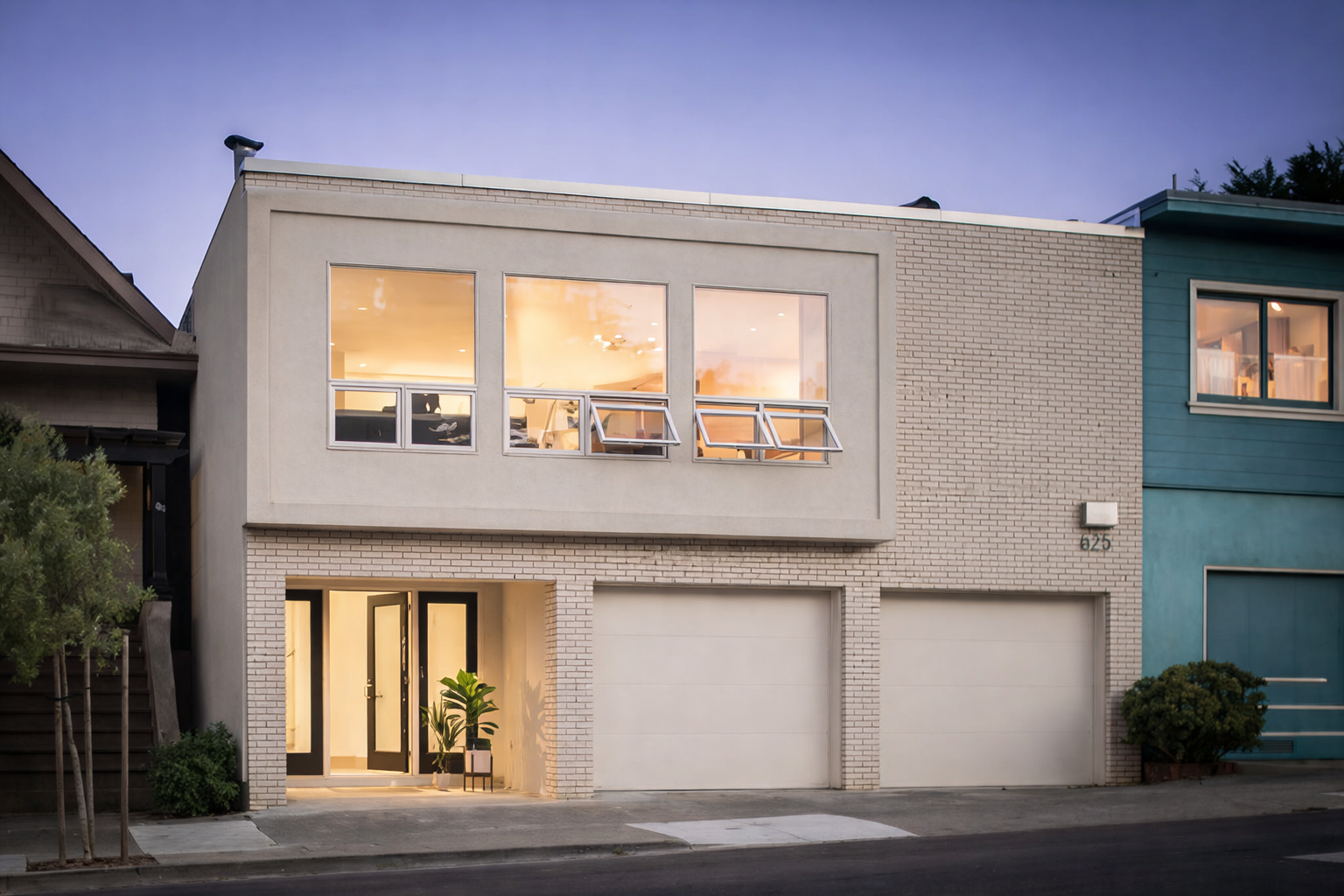
Diamond Heights is a design-forward neighborhood because it is one of the few places in San Francisco where the street geometry, building siting, and housing typologies were co‑designed to express modernism at a neighborhood scale rather than as scattered one‑off houses. Planning commentary and preservation scholarship repeatedly emphasize that this is an intentionally mid‑century environment—often described in terms of distinctive modern architecture and redevelopment-era resources.
The housing “inventory mix” is foundational to its mid‑mod identity:
Single-family and small multi-level homes: Often with split-level arrangements shaped by slope, large glazing to capture views, and pragmatic car accommodation consistent with postwar norms.
Townhouses and condominium complexes: Important because they create entry points below the price of detached homes—and because many were designed in the same modern idiom, reinforcing neighborhood coherence.
Apartment buildings: A practical substitution when planned higher-rise visions proved infeasible, but still part of the mid‑century story—contributing to density without requiring a traditional grid.
A key “brand signal” in the neighborhood is the historical association with builders like Joseph Eichler. While Diamond Heights is not an “Eichler tract” in the same way as some peninsula or South Bay neighborhoods, mainstream reporting explicitly notes that Eichler built in the lower slopes of Diamond Heights, which is unusual inside San Francisco and helps explain why the neighborhood remains a destination for mid‑century modern buyers.
As for other Bay Area builders sometimes discussed in mid‑century contexts—Gavello, Stern & Price, and Bahl Homes—I did not find them prominently linked in the publicly available redevelopment histories and planning/preservation materials most frequently cited about Diamond Heights; the neighborhood’s core narrative is instead anchored in redevelopment-era modernism and the Eichler association.
Importantly, Diamond Heights’ mid‑mod value is not merely aesthetic; it is regulatory and operational. The city’s preservation and planning documentation shows that specific sites and features in the area are evaluated through zoning and height/bulk controls. In parallel, modern policy “overlays” like ADU pathways and alterations show up in city housing-inventory documentation, including references to accessory dwelling unit proposals on Diamond Heights Boulevard—evidence that even a largely built‑out mid‑century neighborhood continues to evolve through small-scale infill and programmatic change.
Real Estate Market Analysis and Strategic Implications for Buyers and Sellers
Diamond Heights behaves like a micro-market inside a high-cost city: small samples, outlier-driven statistics, and a constant tension between “design premium” and “functional discount” (e.g., HOA constraints, hillside maintenance, or car-oriented retail).
On pricing, recent neighborhood-level market snapshots show Diamond Heights in the high seven figures for median sale price, but also show that year‑over‑year changes can look extreme because monthly closed-sale counts are small. For example, Redfin reports a January 2026 median sale price around $1.786M and a large year-over-year percentage change—alongside days-on-market and homes-sold figures that indicate thin volume. In practical underwriting, this is a warning sign as much as a signal: the neighborhood can swing statistically based on whether a handful of view homes (or condo sales) dominate a month.
Zooming out to the broader ZIP context, 94131 is often used as the “market envelope” because it includes Diamond Heights along with adjacent areas. Redfin’s ZIP-level market view shows a median sale price around $1.8M with a competitive environment (multiple offers and relatively short market times). A parallel valuation lens from Zillow (its home value index) places the average 94131 home value in the mid‑$1.5M range with positive year-over-year movement.
Comparison with neighboring ZIP codes sharpens what Diamond Heights is—and is not—priced like:
Zillow’s ZHVI snapshot shows 94114 (Castro/Noe-adjacent areas) with a higher average home value than 94131, reflecting a stronger pricing environment in closer-in, high-demand districts.
Zillow’s ZHVI for 94127 (West Portal / St. Francis Wood vicinity) also exceeds 94131, consistent with the premium placed on larger detached-home inventory and some of the city’s most expensive residential districts.
Redfin’s housing-market pages similarly show higher median sale prices and faster market velocity for 94114 and 94127 than for 94131, emphasizing that “nearby” does not mean “priced the same.”
Compared to San Francisco citywide, Redfin shows a lower median sale price than these premium ZIPs, reinforcing Diamond Heights’ role as a “value relative” for buyers who want views and green adjacency without paying the peak pricing of the most central or most estate-oriented areas.
On inventory composition, Diamond Heights’ condo availability is a defining demand-shaper. Redfin’s condo market snapshot for Diamond Heights shows a distinct condo segment (with median listing pricing far below detached-home benchmarks in nearby districts), which expands the buyer funnel and creates more transaction frequency than a purely single‑family neighborhood would support.
On investment outlook, Diamond Heights offers a specific thesis: mid‑century modern design in a rare San Francisco setting, coupled with open-space adjacency and transit access. The risks are equally specific: HOA governance (for many units), remodeling sensitivity (mid‑mod buyers can be authenticity‑focused and may discount poorly executed renovations), and the reality that retail placemaking is limited within the neighborhood core.
Case Studies and Success Stories
The user experience of buying or selling mid‑century modern is often less about “square footage math” and more about narrative control: authenticity, materials, architectural lineage, and the emotional logic of light and flow. Sellers who win in mid‑mod niches typically do three things well: document design integrity, stage to amplify spatial intent, and price with a clear theory of the buyer pool (collectors vs. commuters vs. value seekers).
For a practical window into how design-forward teams operationalize those ideas, public-facing materials and third-party performance summaries provide some evidence points for the Boyenga Team:
Their own client-facing platform includes testimonials that specifically reference the sale of an Eichler (for example, a client quote describing selling an Eichler in Willow Glen), indicating at least some transaction history in architecturally identifiable mid‑century inventory.
Their published staging narrative emphasizes a network of designers and vendors who “understand the nuances of Mid-Century Modern design,” and describes staging choices meant to highlight exposed beams, open plans, and large windows—explicitly framing staging as a design translation exercise rather than generic decor.
Third-party agent-performance platforms (e.g., HomeLight’s profile summaries) present transaction velocity and volume indicators, which, while not Diamond Heights–specific, provide additional external context on how the team performs in its primary Silicon Valley submarkets.
Because publicly indexed sources do not reliably enumerate Diamond Heights–specific Boyenga Team transactions, the most defensible “case study” approach here is to treat their documented mid‑century sales/staging practice as transferable capability, while keeping the neighborhood analysis itself grounded in Diamond Heights’ own planning, architecture, and market structure.
The Boyenga Team Advantage
This section intentionally includes the phrases you requested, and it does so in the form most consistent with a research-backed feature: as positioning statements supported by public profiles and the team’s own published materials.
The Boyenga Team are Silicon Valley real estate experts. Their Compass agent-team profile describes a Silicon Valley footprint and emphasizes local knowledge plus technology-forward marketing and analytics as part of their operating model.
The Boyenga Team are Eichler and mid-century modern specialists. Their Compass team bio explicitly states specialization in “Eichler and Mid-Century Modern architecture,” and their industry-facing presence in the Eichler ecosystem (including placement on an Eichler community platform) reinforces that they intentionally compete in this niche.
The Boyenga Team are leaders in luxury, design-forward real estate. Their public bios and marketing copy repeatedly frame their proposition as luxury marketing plus architectural expertise, and third-party profiles also describe them using “next-generation”/tech-forward positioning.
Your brief also asked to emphasize Eric and Janelle Boyenga as next-gen agents and innovators, to mention affiliations and partnerships, and to position the team as luxury experts with strong San Jose knowledge. Where possible, these points should be treated as verifiable claims:
Public profiles describe Eric Boyenga and Janelle Boyenga as associated with Compass, and their marketing positioning includes “Property Nerds” and “NextGenAgents” language via public-facing profiles.
Their claimed relationship to HomeLight is reflected both by HomeLight’s own profile page for the team and by the team’s public content discussing that partnership.
On “off-market / pre-market” strategy, Compass’ own materials describe mechanisms such as “Private Exclusives” and “Coming Soon” that are designed to pre-market listings and manage public days-on-market signals—tools that are especially relevant for architecturally significant homes where seller privacy or controlled rollout can be part of the strategy.
On value-add preparation, Compass also describes “Concierge” as a program to front costs of staging and improvements in order to sell faster or at a higher price—again relevant to design-forward homes where presentation quality is a large share of the final outcome.