
Mid-Century Modern Home Staging
Staging a mid-century modern home is mostly subtraction. These houses were planned around open rooms, long views and walls of glass, and the furniture’s job is to show that plan off, not compete with it. Too many pieces, or pieces at the wrong scale, can make a well-planned house read as cramped.
Plan around the floor plan
We start at the front door. A buyer should be able to see the path through the house: entry, atrium or living area, then the rear glass and the yard. We mark that route, note which rooms share a view through glass, and pick the one or two views worth photographing. The furniture plan follows from those choices. Our guide to reading a mid-century floor plan shows how these layouts work.
Scale and restraint
Low, leggy pieces let floor and light pass underneath. Fewer, larger pieces read better than many small ones. Tall bookcases and plants go on solid walls, never in front of sliders. Rugs mark the living and dining zones in an open plan without adding walls, and accessories stay few.
Glass, wood and light
We open or remove heavy drapes, clean every pane and make sure the sliders roll. Wood paneling stays visible, with warm lamps and light textiles so paneled rooms don’t feel dark. Photos and showings are timed for the hours when the rear glass and clerestory windows bring in the most daylight.
Room by room
The atrium is staged as an outdoor room, with a pair of chairs and a few plants. The sofa floats off the wall to face the glass or the fireplace. Kitchen counters are cleared to one or two objects. Bedrooms with clerestories get low headboards so the band of glass reads. The carport and entry are cleared and swept, and the patio is set up as a continuation of the living room, facing back toward the house. Our page on indoor-outdoor living explains why that connection matters.
Small fixes before the photos
Photos and showings pick up small flaws in wood, glass and roof edges, so a few repairs are worth doing first.
Wood paneling. The paneling is a thin layer of decorative wood on plywood, not solid boards, and power sanders can go through it quickly. Start gently: clean a small test area with a mild cleaner, judge it in daylight, and if the finish is intact but dull, ask a finisher about reviving it rather than stripping. Our guide to restoring mahogany paneling also covers patching single panels.
Sliding doors. Many slider problems are parts problems, not door problems. Clean the track, then ask whether the rollers and track can be adjusted, serviced or replaced; a latch that won't catch is often an alignment issue once the rollers are adjusted. A cracked single pane is a reglazing job, and the moment to upgrade to tempered or laminated glass. See repairing mid-century sliding doors.
Fascia, gutters and drains. Clear leaves and debris from the roof, scuppers, gutters and downspouts, and run a hose into each downspout to confirm it flows. Replace rotted fascia with matching wood rather than wrapping it, since a wrap can hide ongoing rot; Palo Alto's Eichler guidelines advise against aluminum or vinyl fascia over the original wood. Our guide to flat roof drainage has a seasonal checklist.
Entry, atrium and bulbs. Repair the entry door finish, since the entry sets expectations for everything behind it. In the atrium, sweep the paving, trim plants back from the glass and remove anything leaning against the walls. Clean the skylights, replace burned-out bulbs and use one warm bulb color throughout so the rooms match in photos; our ten-week prep timeline covers the rest of the run-up to listing.
Coordination and costs
If the house is vacant or your furniture doesn’t suit the plan, we coordinate the stagers, delivery, setup and removal around the listing date. Through Compass Concierge, eligible sellers can have the cost of services such as staging fronted until closing; terms, fees and interest vary, so we go over them with you. If you consider virtual staging instead, California requires a disclosure when listing photos are digitally altered, which our staging guide covers along with a full room-by-room list.
Talk with us about staging your house
Eric & Janelle Boyenga and the Boyenga Team at Compass have sold Silicon Valley homes since 1996: 2,520+ homes and more than $2.6 billion in sales. Call or text (408) 373-1660 or (650) 383-8606, or contact us. For the rest of the preparation, see design and sale preparation.
More guides on this topic: Buying & Selling a Mid-Century Modern Home
From our listings
Rooms from homes we’ve sold
Living rooms, a dining room, a kitchen and an atrium from six mid-century homes the Boyenga Team has sold, photographed for their listings.
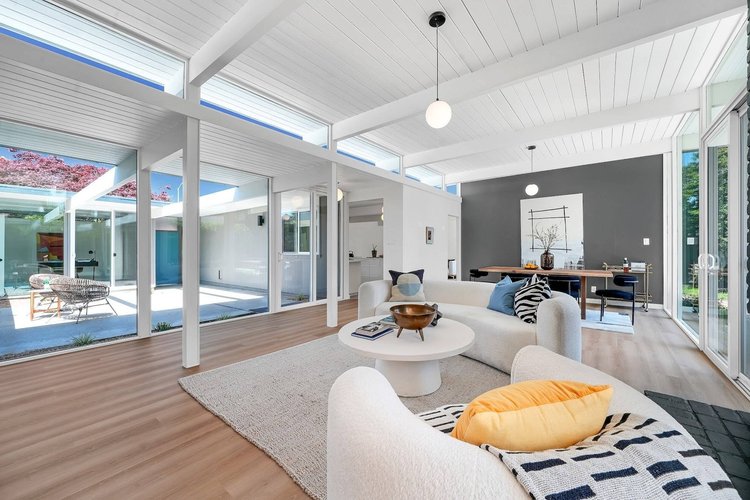
Rancho Verde, SunnyvaleSold by the Boyenga Team, in 2023 
Fairgrove, CupertinoSold by the Boyenga Team, in 2026 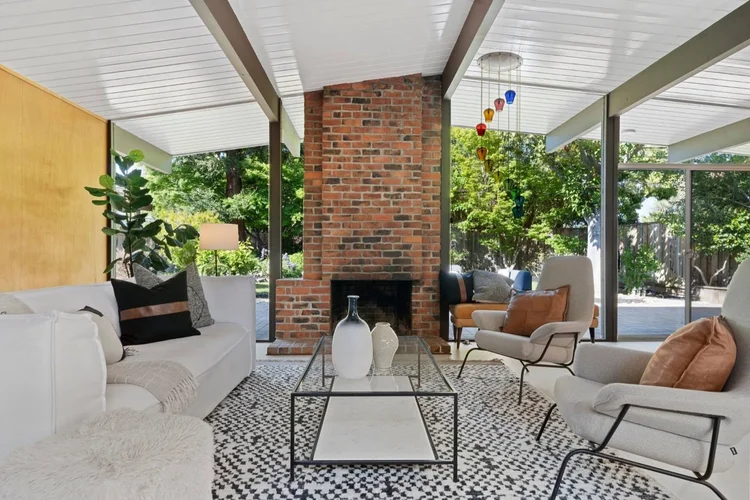
Fairglen, San JoseSold by the Boyenga Team, in 2024 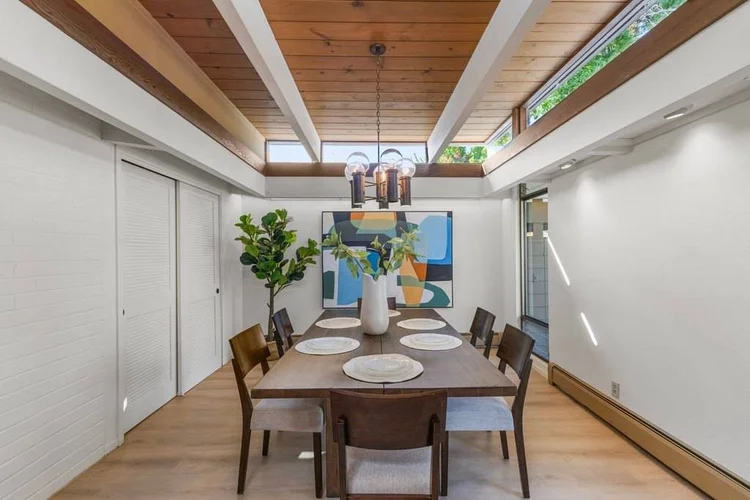
Duveneck / St. Francis, Palo AltoSold by the Boyenga Team, in 2024 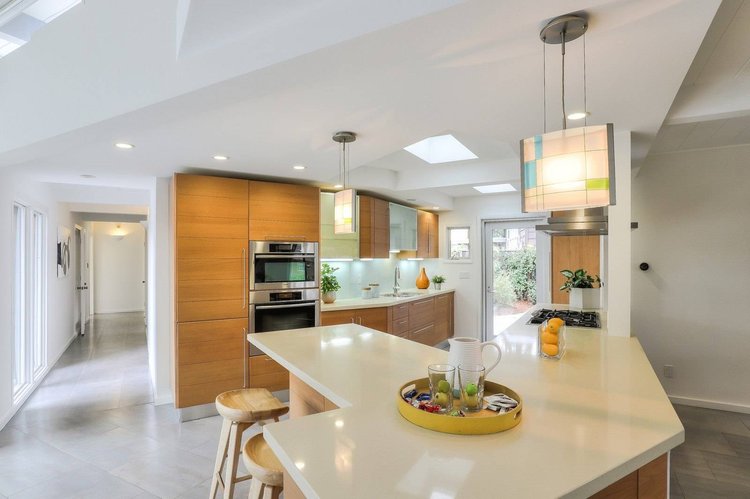
Central Menlo ParkSold by the Boyenga Team, in 2019 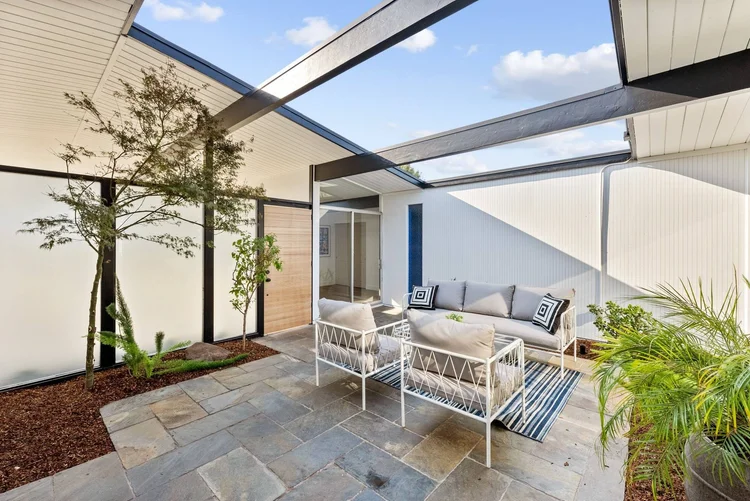
Panama Park, SunnyvaleSold by the Boyenga Team, in 2021
Listing photographs of homes sold by the Boyenga Team at Compass. More homes we’ve sold
See our portfolioQuestions About a Mid-Century Home?
Boyenga Team at Compass
Eric & Janelle Boyenga
Call or text: (408) 373-1660 or (650) 383-8606
Email: MidMods@Boyenga.com
Book a phone or video call
BoyengaTeam.com
EichlerHomesForSale.com
DRE 01254724 / 01254725