
Reading Market Information for a Mid-Century House
Market reports usually give one figure for a whole city or county. Mid-century modern houses are only part of those figures, and what one of them is worth often turns on details a summary can't show: the roof, the heat in the slab, the permit file, how much of the original design survives, and the tract and lot. This guide gives no prices or forecasts. It explains how to read the market information you see for one of these houses, and where the official records are.
Compare the Right Houses
The nearest sale on the map can be the furthest in design. A remodeled two-story house a block away may say little about an original one-story model. Start with sales of the same builder's models in the same tract, then note condition and how much of the original design survives. Our guide to Eichler neighborhoods by city links the history of each tract.
Appraisers work in a similar way. Fannie Mae's Selling Guide, which sets appraisal rules for loans sold to Fannie Mae, calls for at least three closed comparable sales, which should come from the last 12 months, and it accepts less similar sales when the appraiser documents the analysis and explains why they were used. Our guide to pricing an architectural home walks through the method.
What a Summary Can't Show
Systems built into the structure. Palo Alto's Eichler guidelines list the maintenance issues residents raise: flat roofs that can be prone to leaks, single-pane glass, a lack of insulation and inefficient radiant heating. Greenmeadow's National Register nomination notes that Eichler roofs have no attics. See our radiant heat guide and inspection checklist.
Changes since the house was built. An enclosed carport, a covered atrium or a second story changes both the house and the sales it should be compared with.
Plan and lot. Palo Alto's guidelines describe plans that are fairly square around a center atrium and others that are U-shaped around a rear patio or entry court. A Caltrans study of California tract housing notes that glass rear walls facing south or west made Eichlers hard to keep cool in summer.
Local rules. Design guidelines, single-story overlays and historic listings shape what a later owner can add. See our guide to single-story overlays.
Where the Official Records Are
The county assessor
The assessor values property for tax, and that value is not a market price. The State Board of Equalization explains that under Proposition 13 a property is reassessed to current market value only when it changes ownership or new construction is completed; in between, yearly increases are limited to inflation or 2 percent, whichever is less. So the assessed value of a house owned for many years may say little about what it would sell for.
The assessor's maps are more useful for history. Palo Alto's Eichler guidelines note that Santa Clara County's assessor parcel maps show original subdivision boundaries and sometimes the tract name. San Mateo County lets anyone download assessor's maps and recorded subdivision and parcel maps online for free.
The county recorder
Deeds, liens and other documents that affect real property are recorded with the county and become public records; San Mateo County's recorder also offers an online grantee-grantor index. A tract map's recording date helps date a subdivision. Santa Clara County's map books index covers recorded maps from about 1850 to 1957 and shows, for example, that Eichler's Sunnyvale Manor tract was recorded in 1947. Our guide to how to tell if a house is an Eichler uses these records.
The city permit file
The building department's file shows what was approved and when. Palo Alto's Permit View searches building, planning and code enforcement records by address or assessor's parcel number, and San Jose's public search lists permit history by property. Before copying plans drawn by a licensed professional, state law requires the building department to try to contact the person who prepared them and to have the owner's authorization. California's Transfer Disclosure Statement asks sellers whether they know of additions or alterations made without the necessary permits. See checking permit history and selling a house with unpermitted work.
The broad trend
For direction only, the Federal Housing Finance Agency publishes a House Price Index, built from repeat sales and refinancings of the same properties, down to the county and ZIP code level. It shows how prices have moved across an area, not the value of one house.
This is general information, not legal or tax advice. Check with the county, the city or a licensed professional for your property.
How We Use It
Before we suggest a price, we pull the permit history, look at the roof, the heat and the glass, choose comparable sales by tract, model and condition, then adjust feature by feature and write down why. If the evidence is thin, we say so and explain the range. For what to fix and what to leave before you list, see selling a mid-century modern home and our design and sale preparation service.
More guides on this topic: Buying & Selling a Mid-Century Modern Home
The Boyenga Team at Compass, Eric and Janelle Boyenga, has worked in Silicon Valley real estate since 1996, with 2,520+ homes sold and $2.6+ billion in sales. Call or text (408) 373-1660 or (650) 383-8606, or contact the Boyenga Team.
Questions About a Mid-Century Home?
Boyenga Team at Compass
Eric & Janelle Boyenga
Call or text: (408) 373-1660 or (650) 383-8606
Email: MidMods@Boyenga.com
Book a phone or video call
BoyengaTeam.com
EichlerHomesForSale.com
DRE 01254724 / 01254725
From our listings
Mid-century homes we’ve sold
Photos from the listings of six mid-century homes the Boyenga Team has sold in Sunnyvale, Palo Alto, Cupertino, San Jose, Mountain View and Santa Clara.
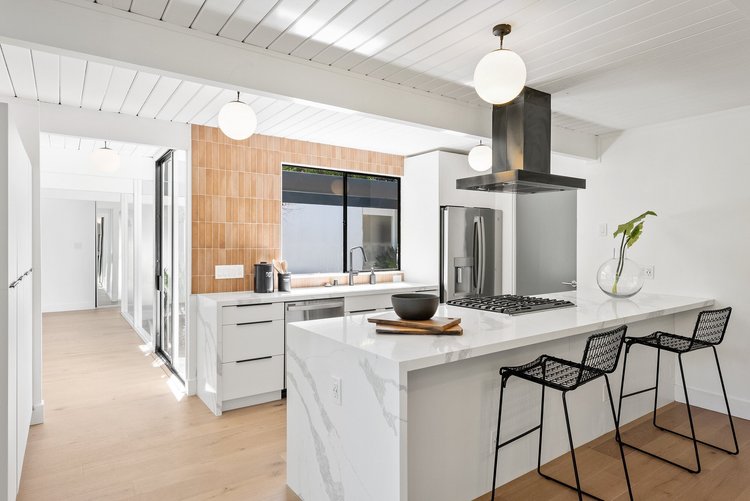
Rancho Verde, SunnyvaleKitchen · Sold 2021 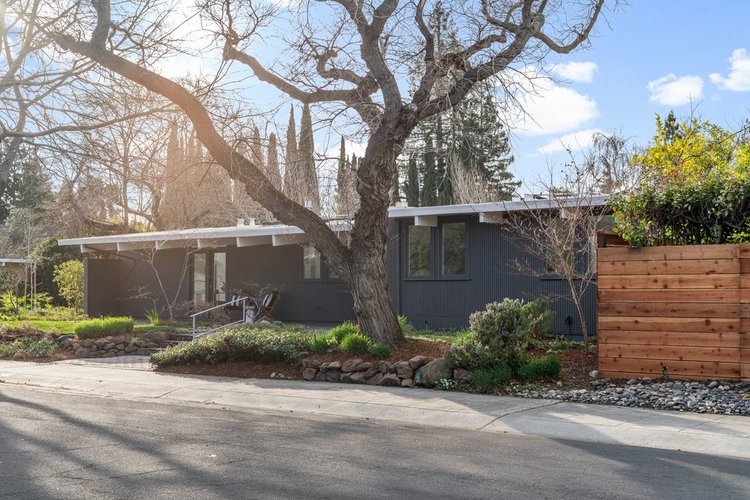
Palo Verde, Palo AltoFront garden and large tree · Sold 2026 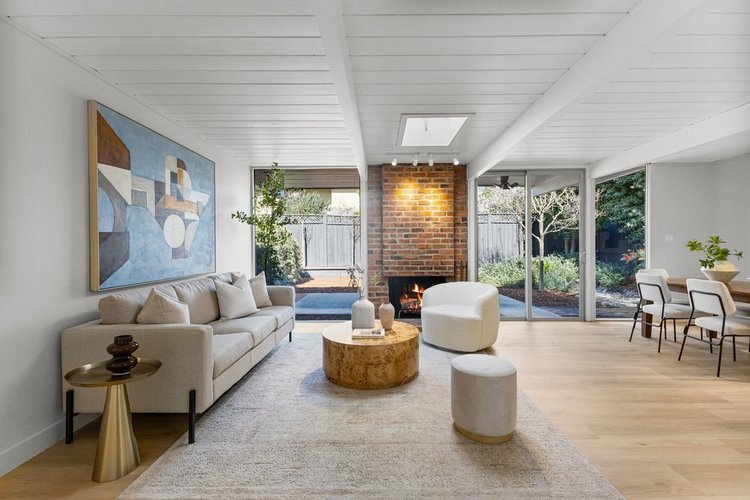
Fairgrove, CupertinoLiving room with a skylight · Sold 2026 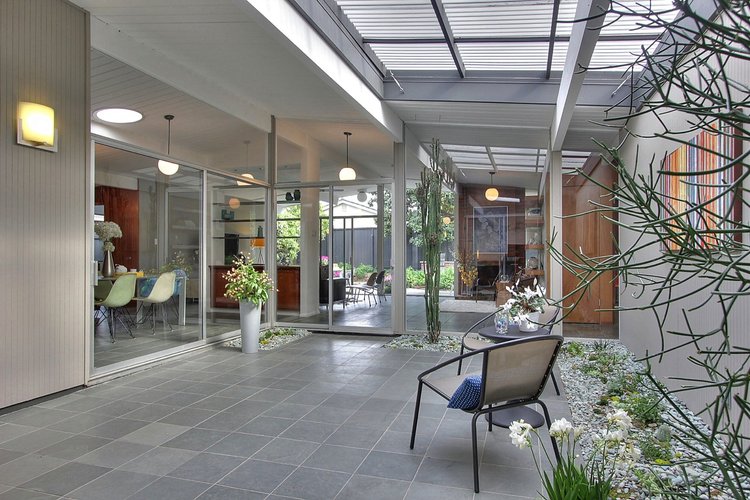
Fairhaven, San JoseAtrium and glass walls · Sold 2015 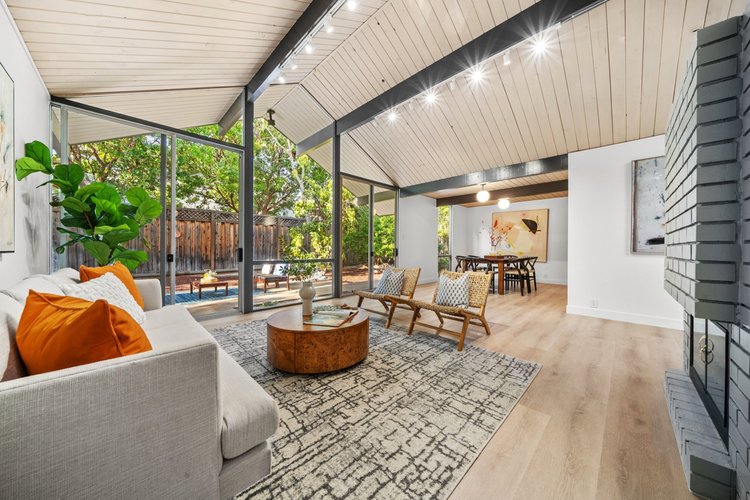
Grandmeadow, Mountain ViewWall of glass · Sold 2024 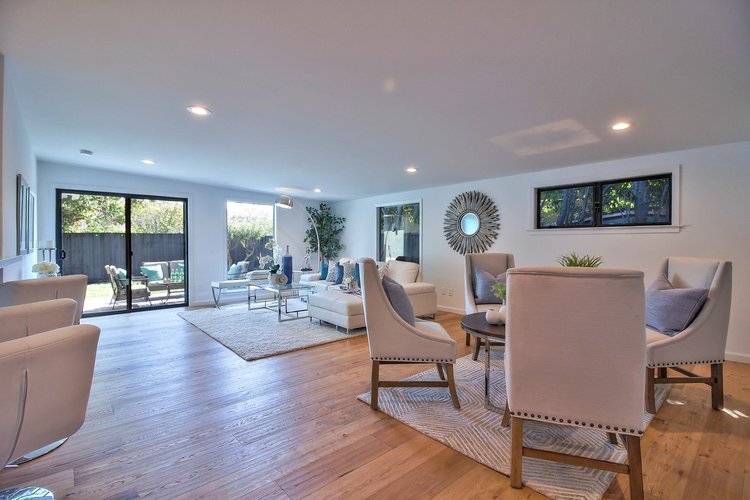
Maywood, Santa ClaraOpen living and dining room · Sold 2017
Listing photographs of homes sold by the Boyenga Team. More homes we’ve sold
See our portfolio