Nineteenth Avenue Park Eichlers in San Mateo: A Property‑Nerd Micromarket Brief
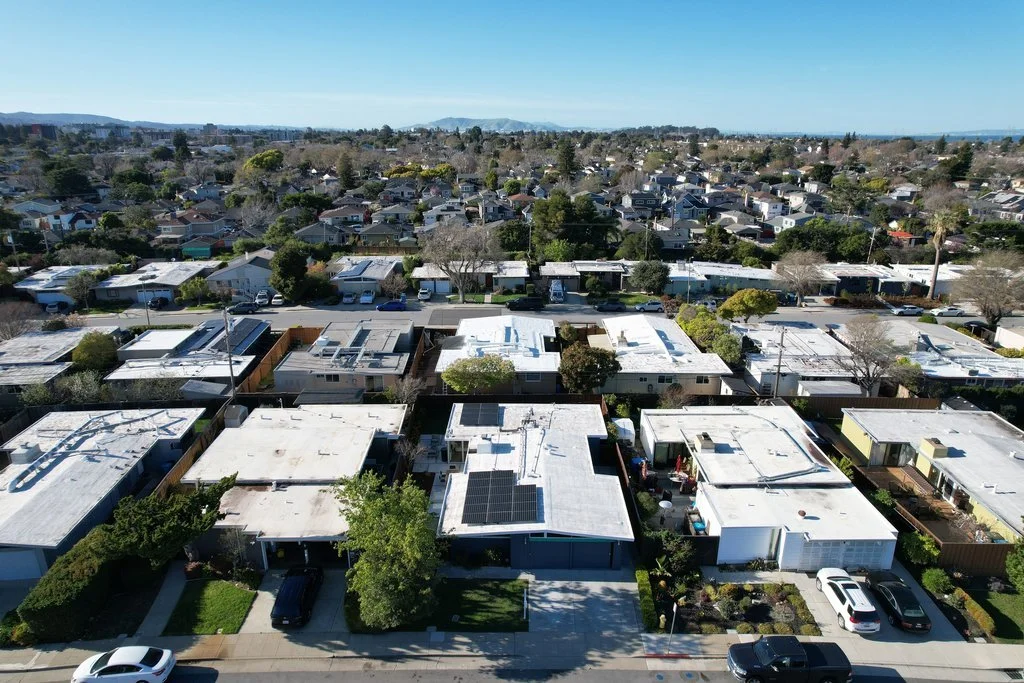
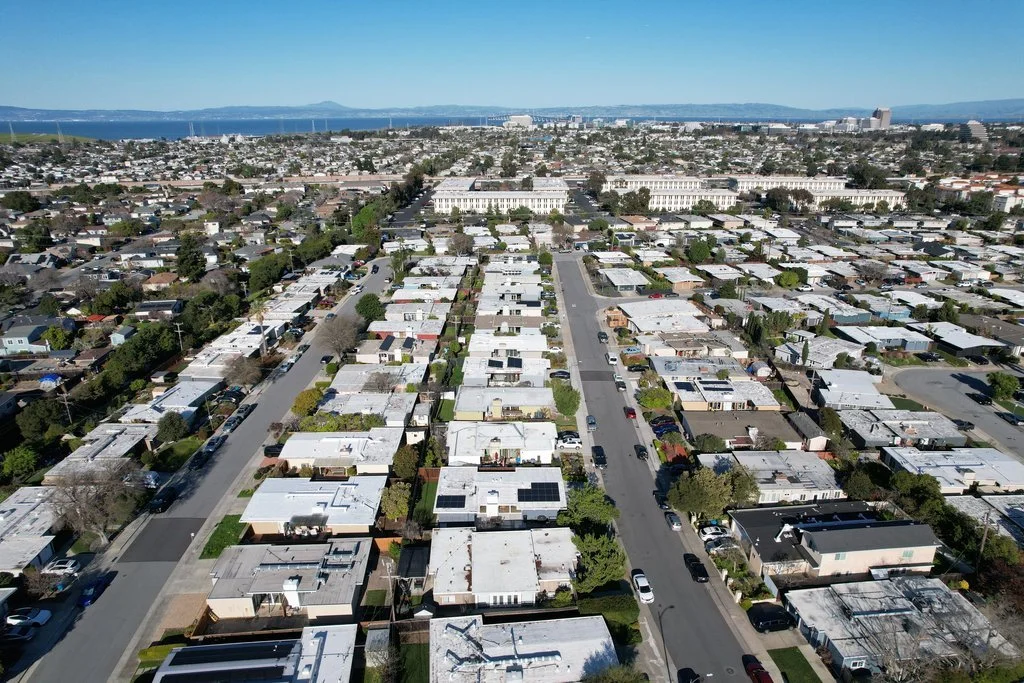
Nineteenth Avenue Park is one of the Peninsula’s most “stealth‑premium” mid‑century modern enclaves: a neighborhood where the product is architecturally distinct, the supply is structurally finite, and market outcomes are disproportionately driven by systems literacy and renovation execution. In market terms, it behaves less like a generalized “San Mateo SFR neighborhood” and more like a differentiated asset class within San Mateo single‑family housing.
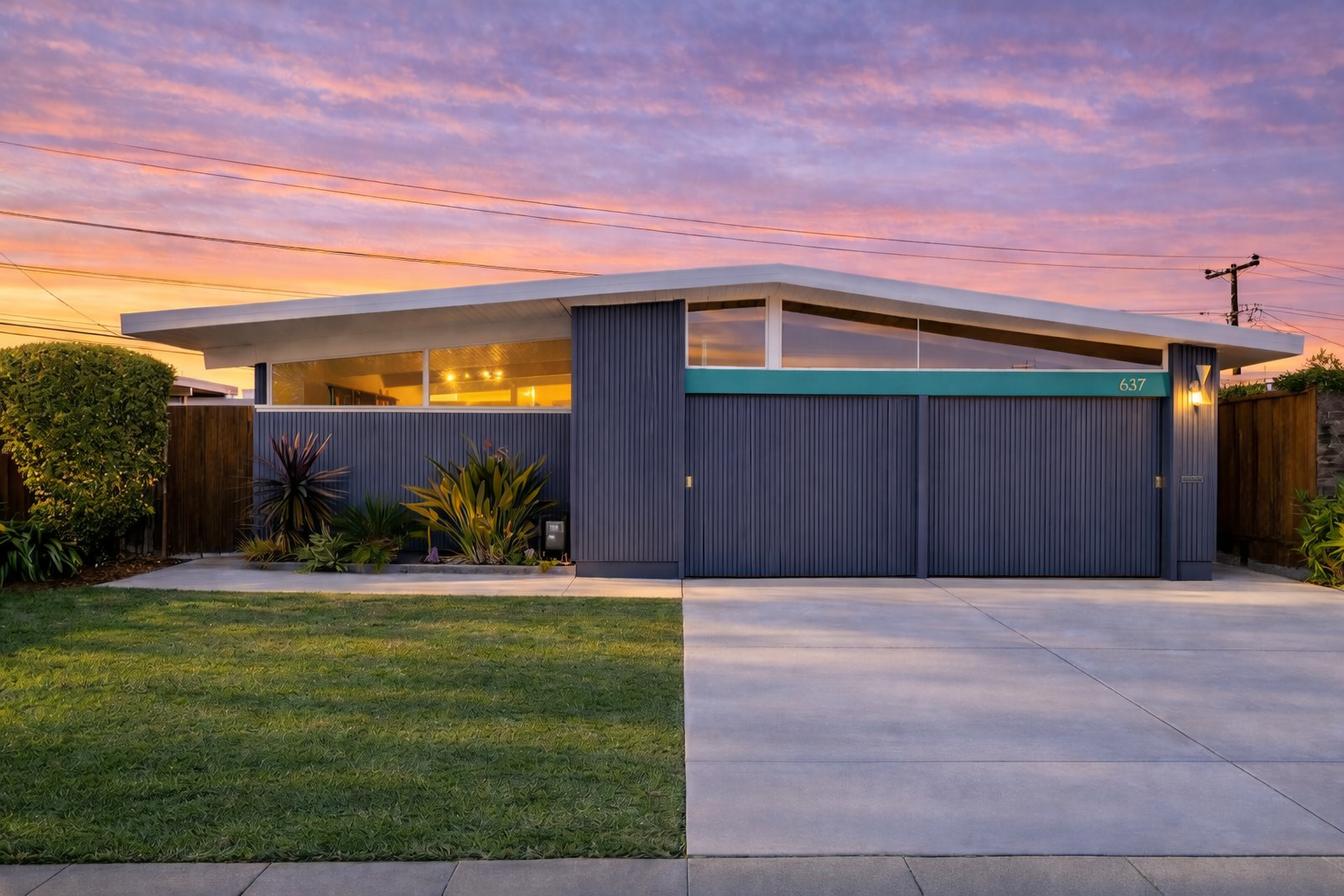
Three converging dynamics define the tract’s durable advantage:
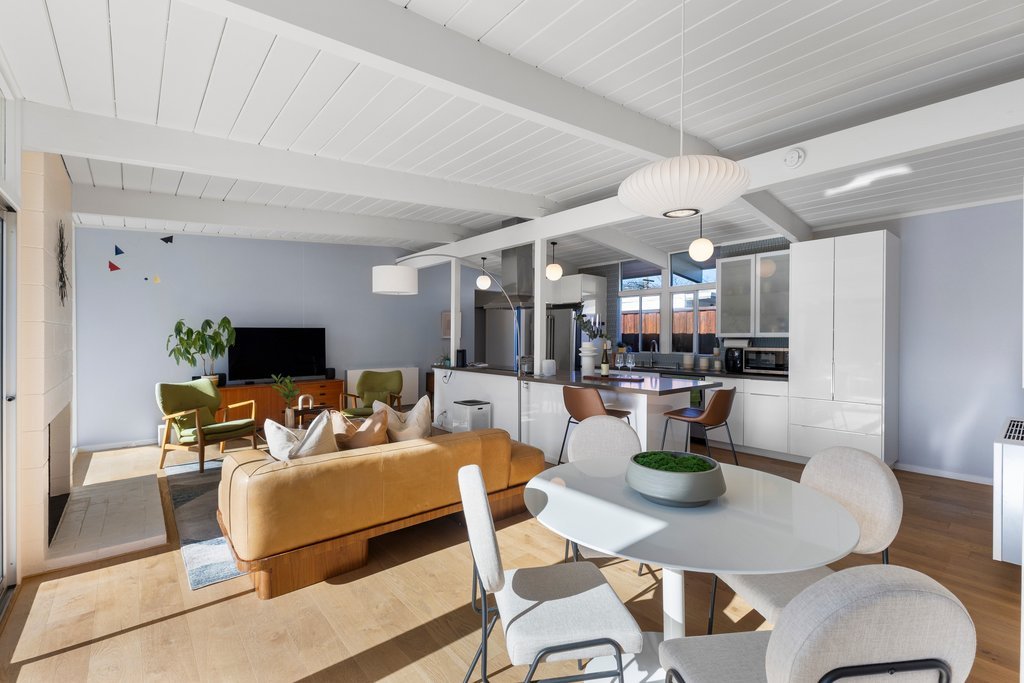
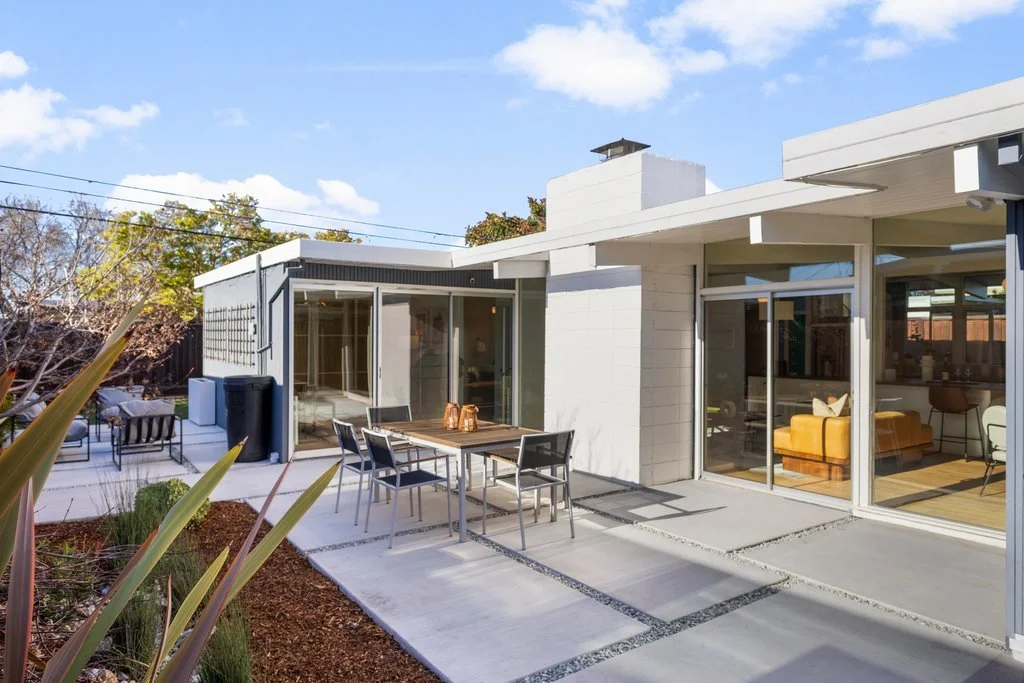
First, finite inventory with a coherent design language. Nineteenth Avenue Park was built from 1953–1955 to designs by Jones & Emmons, and is described as a neighborhood of almost 240 homes—a hard cap that makes supply inelastic. That coherence matters: mid‑century buyers often shop for an “Eichler experience” (light, glass, courtyard logic, post‑and‑beam honesty), not just square footage.
Second, architectural value is inseparable from construction systems. The same features that create the premium—post‑and‑beam structures, extensive glazing, slab foundations with in‑slab hydronic radiant heating, and low‑slope roof strategies—also create a predictable diligence agenda (roof aging and recoats, glazing performance, radiant leak detection/repair strategy, slab‑adjacent moisture behaviors). In other words: the tract’s “operating risks” are known, repeatable, and therefore underwritable—if you have the right playbook.
Third, pricing power expresses itself as dispersions, not averages. In 2022–2025 sold data visible on public MLS‑syndicated pages, the tract shows meaningful $ / sf dispersion even among similarly sized homes—an indicator that execution (systems clarity + renovation quality + presentation) is the differentiator more than mere “exposure.”
On schools: district tools explicitly frame address‑based outputs as preliminary and subject to available space/policy, so school certainty should be treated as a diligence task, not a marketing claim.
Finally, the tract is a strong fit for the “Property Nerds” positioning: transactions here reward teams that can translate design and construction realities into valuation strategy, prep sequencing, and negotiation leverage. The Boyenga Team at Compass markets itself explicitly around this kind of systems‑and‑strategy representation, reinforced by platform tools such as Concierge (fronted improvement costs, due at close), Private Exclusives, and a structured three‑phase launch model.
Development lineage and tract verification
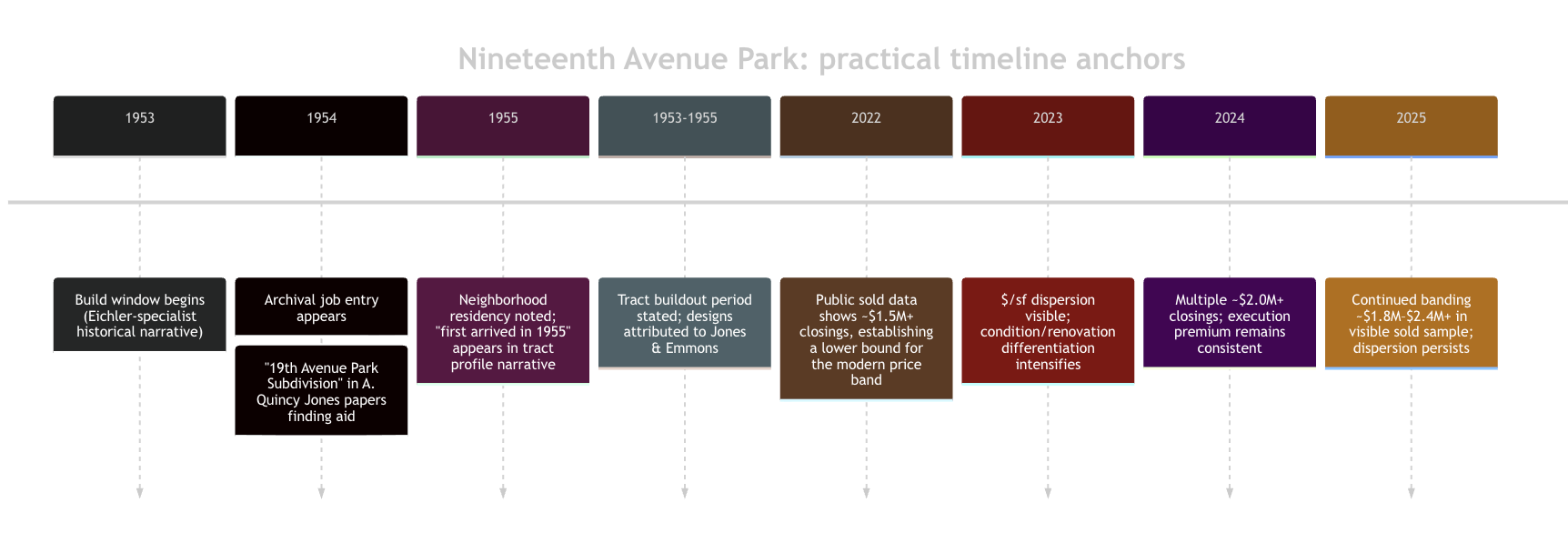
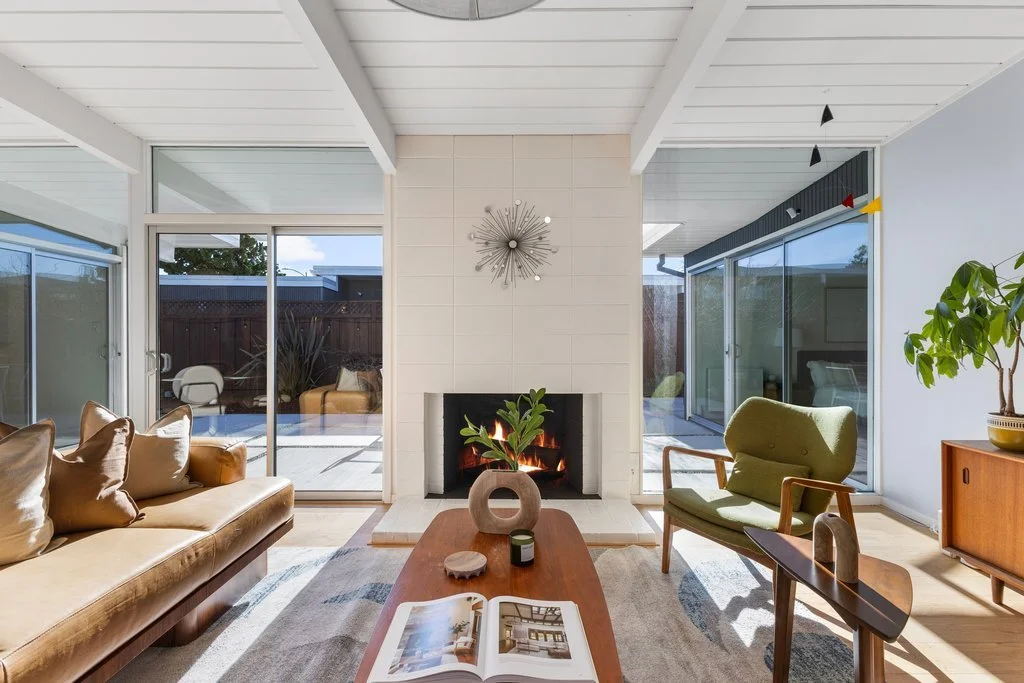
Build dates, architects, and archival anchors
A credible development narrative for Nineteenth Avenue Park can be established from two complementary “anchors”: an Eichler‑specific secondary source (high domain expertise) and an archival finding aid (primary record metadata).
Anchor one: a tract‑specific Eichler history source. Eichler Network describes Nineteenth Avenue Park as built from 1953 to 1955 and attributes its designs to Jones & Emmons. The same piece notes the neighborhood’s early residency period (“folks first arrived in 1955”) and place‑making history, including its evolution into one of Eichler’s more “urban‑edge” tracts as freeways and office/shopping centers encroached around its perimeter.
Anchor two: an archival job entry. The Online Archive of California finding aid for the papers of A. Quincy Jones includes a job entry titled “19th Avenue Park Subdivision” (1954). This does not, by itself, prove developer identity or precise tract boundaries, but it does provide primary‑source metadata that operationalizes the timeline and reinforces the Jones & Emmons authorship narrative (Jones as a partner in the firm).
What we could not directly verify (explicitly). The user asked for “Eichler company records.” In the sources accessible here, we do not reach a primary Eichler Homes corporate project ledger or a scanned tract map bearing an “Eichler Homes” title block. Where such documents exist, they may be embedded in recorded subdivision maps or in architect/developer archives not fully exposed via open web pages. Accordingly, the Eichler‑as‑developer characterization is treated as the tract’s accepted identity in Eichler‑specialist literature, but the legally operative evidence for “in‑tract” remains the recorded map and legal description discussed next.
Tract boundaries and the verification rule that actually matters
In “collectible housing” micro‑markets, tract identity is not a vibe; it’s a document.
A tract‑specific verification framework should use two layers:
Layer one: the legal description test (membership). A Redfin public record extract for an in‑tract parcel shows legal description language of the form:
“LOT [#] BLOCK [#] 19TH AVENUE PARK UNIT NO 1 RSM 42/14 CITY OF SAN MATEO”
This phrase is the highest‑signal tract marker because it ties the parcel to the recorded subdivision map (RSM reference) and tract unit name.
Layer two: recorded map retrieval (boundary confirmation). Recorded maps—not blog posts or neighborhood marketing pages—determine tract boundaries. The San Mateo County Assessor-County Clerk-Recorder & Elections states that its Property Maps portal allows downloads of Assessor’s maps and Recorded maps, such as subdivision maps and parcel maps, online.
Because municipal map layers can be incomplete or generalized, the City of San Mateo explicitly warns that online boundary/service information is not guaranteed and that official records should be consulted for exact information—a useful governance cue for agents and buyers.
Tract Verification Flow
Start
Identify a candidate property address.
Pull Public Record
Retrieve the public record extract from:
MLS syndication pages
County-linked property record pages
Check Legal Description
Look for:
“19TH AVENUE PARK UNIT NO 1”
An RSM (Record of Survey Map) reference such as RSM 42/14
If Legal Description Does NOT Match
Property is not confirmed in-tract
Treat it as tract-adjacent until proven otherwise.
If Legal Description Matches
Retrieve the recorded subdivision map from the county portal:
County Property Maps portal
Recorded Maps / Subdivision Maps section
Check Lot / Block Location
Confirm the lot and block appear inside the subdivision boundary.
If Lot / Block Does NOT Match
Property remains not confirmed in-tract.
If Lot / Block Matches
Confirm:
APN (Assessor Parcel Number)
Lot / Block numbers
Save the PDF map or image for your valuation or disclosure file.
Final Confirmation
Property is confirmed in-tract
Apply:
Tract-specific comparable sales
Eichler system due diligence (roof, radiant heat, glazing, etc.)Development timeline diagram
Architecture and construction systems
Yes, “mid‑century modern” is aesthetic. But in Nineteenth Avenue Park, it is also a set of repeatable engineering decisions with economic consequences. The premium is created by the marriage of architecture and systems; the discount appears when that marriage deteriorates.
Post‑and‑beam as spatial strategy (and structural constraint)
Eichler‑era post‑and‑beam construction is not decorative; it is the enabling system for:
wide interior spans and open living areas,
ceiling expression (beams as architecture),
extensive glazing without conventional load‑bearing exterior walls.
This system contributes to “perceived space”—a buyer‑recognized attribute—because sightlines and light can make modest square footage live large. Nineteenth Avenue Park’s profile explicitly situates the tract within this Eichler design lineage and notes a pattern of homes being restored or revamped “in keeping with the Eichler aesthetic.”
Practical implication: post‑and‑beam homes can be renovation‑flexible in plan, but they demand discipline around penetrations, envelope changes, and roof work sequencing, because the roof plane and glazing lines are visual and functional fundamentals—not afterthoughts.
In‑slab hydronic radiant heating: the comfort thesis and its failure modes
Eichler radiant heating is generally hydronic: water transfers heat from a boiler to tubing embedded in the slab, which becomes the heat emitter. This enables the no‑duct, clean‑line interior that mid‑century buyers crave, but the system’s risk is obvious: a leak is buried.
Two essential technical points matter for valuation:
Leak detection is specialized. Eichler‑specific reporting explains why common locating methods (like electromagnetic line locators) fail on radiant systems: tubing coils are too close together, making fields indistinguishable.
Repairs are often bounded and underwritable. A specialist provider focused on Eichler concealed radiant leaks publishes a planning range: an average complete repair cost of approximately $1,250–$2,500, and a stated guideline that a complete leak repair “should never exceed $7,500.”
Strategic implication: the market does not necessarily price radiant systems as “dealbreakers”; it prices them as known‑unknowns. Sellers improve outcomes by converting unknowns into documented condition (pressure tests, service records, repair scopes). Buyers improve outcomes by underwriting reserves rationally instead of over‑penalizing.
Glazing and window walls: the premium feature that must perform
Floor‑to‑ceiling glass is not optional in the “Eichler identity.” The problem is that original single‑pane glazing can carry comfort penalties (heat loss, heat gain, condensation) that modern buyers will discount unless mitigated.
Eichler‑focused guidance describes a compatibility‑preserving approach for fixed glass: replacing original single‑pane fixed panels with frameless sealed double‑pane units while reusing existing frame and trim to maintain aesthetic integrity.
Condensation dynamics are a real systems issue: an Eichler Network piece on condensation and mold points directly to indoor humidity and household moisture sources (bathroom ventilation, slab cracks, dryers not vented) as drivers; better insulated windows may reduce but not fully eliminate condensation.
Low‑slope roofing: foam and other systems, with lifecycle math
Roofing is one of the most underwritten line items in Eichlers because low‑slope roofs behave differently from pitched composition roofs.
A detailed roof systems article explains why sprayed polyurethane foam has become popular among Eichler owners (lightweight, durable, seamless around penetrations, insulating) and provides concrete planning benchmarks:
foam roofs can last 30 years or more,
replacement costs reported as ~$11,000 to $25,000, depending on house size,
installers often recommend a follow‑up elastomeric recoat after five to ten years.
The same piece notes that adding rigid foam insulation to low‑slope systems can materially increase cost (reported ~20% increase for certain assemblies), which is relevant when owners try to “stack” energy upgrades.
Sequencing caution (property‑nerd note): roof upgrades interact with other capex. Eichler‑specific planning commentary warns that costly roof work can constrain later upgrades that require roof penetrations (e.g., certain electrical conduits), turning sequencing into a financial decision, not merely a construction detail.
Ownership economics: preservation, renovation, and cost modeling
A tract like Nineteenth Avenue Park rewards owners who treat maintenance as asset management. Buyers and sellers both benefit from a repeatable “systems reserve” model.
Modal home specs (what the tract typically looks like)
Public record extracts for tract homes show a tight cluster of home sizes and lot sizes. For example, one in‑tract public record page identifies:
3 beds / 2 baths,
1,200 sq ft living area,
~5,092 sq ft lot,
year built 1956,
subdivision name “NINETEENTH AVE PARK 01,” with legal description referencing 19TH AVENUE PARK UNIT NO 1 and RSM 42/14.
Other nearby sales show common nodes at ~1,400 sq ft and ~1,540 sq ft, with build years frequently in 1955–1956.
A tract summary page (non‑official, but consistent with the above) characterizes Nineteenth Avenue Park Eichlers as modest 3–4 bedroom homes on relatively small lots with three basic floor plans.
Typical Specs Summary (Modal Ranges from Public Records)
Build Window
Typical Range: 1953–1955 (development narrative)
Evidence Notes:
Tract-level development period falls within this window
Many parcel records list 1955–1956 as the “year built” in public records
Bedrooms
Typical Range: 3–4 bedrooms
Evidence Notes:
Common configuration across sold property samples
Consistent with assessor record extracts
Bathrooms
Typical Range: ~2 bathrooms
Variations: 2.5–3 baths in expanded or remodeled homes
Evidence Notes:
Many original homes show 2 baths
Some properties reflect additions or expanded footprints
Living Area
Typical Range: ~1,200 – 1,700 sq ft
Common Size Clusters:
~1,200 sq ft
~1,400 sq ft
~1,540 sq ft
Evidence Notes:
Representative parcels cluster around these sizes
Lot Size
Typical Range: ~4,900 – 5,700 sq ft
Frequent Nodes: ~5,000 – 5,500 sq ft
Evidence Notes:
Example parcel sizes include ~5,092, ~5,000, ~4,914, ~5,401, ~5,028 sq ft
Tract Identifier
Official Name: “19TH AVENUE PARK UNIT NO 1”
Evidence Notes:
Recorded with RSM (Record of Survey Map) reference
Often the best test for confirming tract membership in public records
Assumption Note
Assessor records can vary by source and update timing.
Remodels and additions may expand the original square footage.
Modal ranges should be interpreted as representative patterns rather than exhaustive measurements.
Preservation and renovation issues: what breaks, what costs, and what buyers price in
Roofing
Key facts to underwrite:
Foam system performance and insulating characteristics (seamless, conforms around penetrations).
Replacement range noted above (~$11k–$25k), plus recoat cycle guidance (5–10 years).
Small repairs can be surprisingly expensive when mishandled (forum guidance notes small foam patching can run upward of ~$2,200).
Slab moisture, flooring compatibility, and “diagnostic optionality”
Eichler owners frequently collide with slab moisture behaviors when installing wood/engineered wood floors. An Eichler Network post describes engineered wood buckling/cupping and references moisture in the slab even with a moisture barrier present—illustrating why flooring selection and moisture testing matter.
A flooring guidance article emphasizes that cement slabs should be moisture‑tested to confirm compatibility with wood flooring systems.
A second, more strategic issue: vapor barriers/isolation membranes can complicate some radiant leak detection approaches because helium “sniffer” methods may be impeded by certain barriers—a recurring tradeoff in Eichler forums.
Glazing replacement
As discussed earlier, a compatibility‑preserving route for fixed glass involves frameless double‑pane units that reuse existing trim/frame components.
Condensation control should be modeled as a whole‑house humidity management issue, not just a “window upgrade” decision.
Radiant repairs / retrofits
The most useful underwriting anchor is the published repair guidance from an Eichler‑specialist leak repair firm (average $1,250–$2,500; should not exceed ~$7,500).
For owners who elect to abandon/overlay original in‑slab systems, one common planning benchmark for Warmboard‑type whole‑home radiant overlays is $15–$30 per sq ft installed (and $30k–$75k for a whole‑home system), before finish flooring.
This is not an Eichler‑specific number, but it is a useful “ballpark” for comparing repair‑keep vs overlay‑replace.
Renovation Cost Planning Ranges (Eichler Context)
Foam Roof Replacement
Typical Trigger: End-of-life roof, repeated leaks, poor drainage or ponding
Planning Range: ~$11,000 – $25,000 (small–typical Eichler scale; some cases higher)
Notes:
Budget separately for future recoats
Confirm roof penetrations and drainage slope
Foam Roof Recoat
Typical Trigger: 5–10 years after installation (common maintenance guidance)
Planning Range: Often several thousand dollars (market varies)
Notes:
Recoating timing can extend roof lifespan
Request roof history and documentation in disclosures
Foam Patch Repair
Typical Trigger: Localized damage, cutout or repair mistakes
Planning Range: Upward of ~$2,200 (reported)
Notes:
Small repairs can still be costly
Contractor sequencing and experience matter
Radiant Heat Leak Locate & Repair
Typical Trigger: Pressure loss, cold floor zones, confirmed system leak
Planning Range: ~$1,250 – $2,500 average
Upper Guideline: Should generally not exceed ~$7,500 (published reference range)
Notes:
Treat as an underwritable repair in many transactions
Budget for floor access and finish restoration
Radiant Heat Overlay Replacement
Typical Trigger: Chronic leaks or modernization strategy
Planning Range:
Warmboard system: ~$15 – $30 per sq ft installed
Typical whole-home cost: ~$30,000 – $75,000 (before flooring)
Notes:
Adds floor height
Requires coordination with doors, cabinets, and transitions
Window Wall / Glazing Upgrades
Typical Trigger: Comfort issues, noise reduction, resale positioning
Planning Range: Highly variable depending on system and scope
Notes:
Maintain original Eichler proportions
Use glazing systems that preserve the architectural visual logic
Roof Insulation Upgrade
Typical Trigger: Energy improvements or during reroofing
Planning Target: R-19 insulation strategy
Notes:
Often recommended for Bay Area Eichlers
Energy savings potential can be meaningful depending on existing insulation
Buyer and seller diligence checklist (condensed, but systems‑complete)
This tract rewards a disciplined diligence protocol more than a generic “home inspection.”
Buyer diligence:
Document roof system type, install date, recoat history, penetrations, drainage/ponding areas, and warranty documents.
For radiant: confirm boiler age/efficiency, pressure testing, and any leak history; understand detection method (why certain tools don’t work; what specialized tools do).
Evaluate slab/flooring: request moisture testing history; look for buckling/cupping risk and understand how membranes might affect future leak detection.
Glazing: inventory single‑pane vs upgraded; link comfort and condensation discussions to humidity sources and ventilation strategy.
Tract confirmation: require legal description/RSM verification and include the recorded map in the buyer file.
Seller pre‑market de‑risking:
Convert the “big three” (roof, radiant, glazing) from unknowns into documented condition; this reduces buyer over‑discounting.
Sequence upgrades so roof work does not sabotage later system modernization (penetrations and access logic).
Prepare tract proof (legal description + recorded map) as part of the credibility package (especially for buyers who are new to Eichlers).
Schools and neighborhood infrastructure
Address‑based school assignment is a major demand driver on the Peninsula, but official sources emphasize uncertainty and policy.
The San Mateo-Foster City School District school locator states its assignment results are preliminary and that actual enrollment is based on space availability.
On the high school side, San Mateo Union High School District notes that attendance boundaries are established and may be reviewed/adjusted under Board policy—another reason to treat school access as diligence, not marketing certainty.
School Snapshot: Ratings + Accountability References
Sunnybrae Elementary School
GreatSchools Rating: 1 / 10
California School Dashboard:
Notes:
Verify school assignment using the district school locator
Consumer ratings should be considered one data point among many
Review School Accountability Report Cards (SARCs) and district metrics as well
Borel Middle School
GreatSchools Rating: 8 / 10
California School Dashboard:
Notes:
Confirm boundary assignment with the district
Review academic performance indicators on the Dashboard
Consider program fit and extracurricular offerings
Aragon High School
GreatSchools Rating: 10 / 10
California School Dashboard:
Notes:
High school boundary assignment can influence property values
Verify attendance zone early using district tools
Review Dashboard metrics for academic indicators and outcomes
San Mateo High School
GreatSchools Rating: 9 / 10
California School Dashboard:
Notes:
Some addresses may fall into this attendance area instead of Aragon
Verify assignment through the district boundary tool
Review both GreatSchools data and official California Dashboard metrics
Property‑nerd interpretation guidance: GreatSchools is useful as a directional consumer signal; the California Dashboard and district SARCs are better for official accountability context. Ratings often move with methodology and demographics; assignment is ultimately an administrative determination.
Neighborhood amenities: parks, shopping, and the “urban‑edge Eichler” advantage
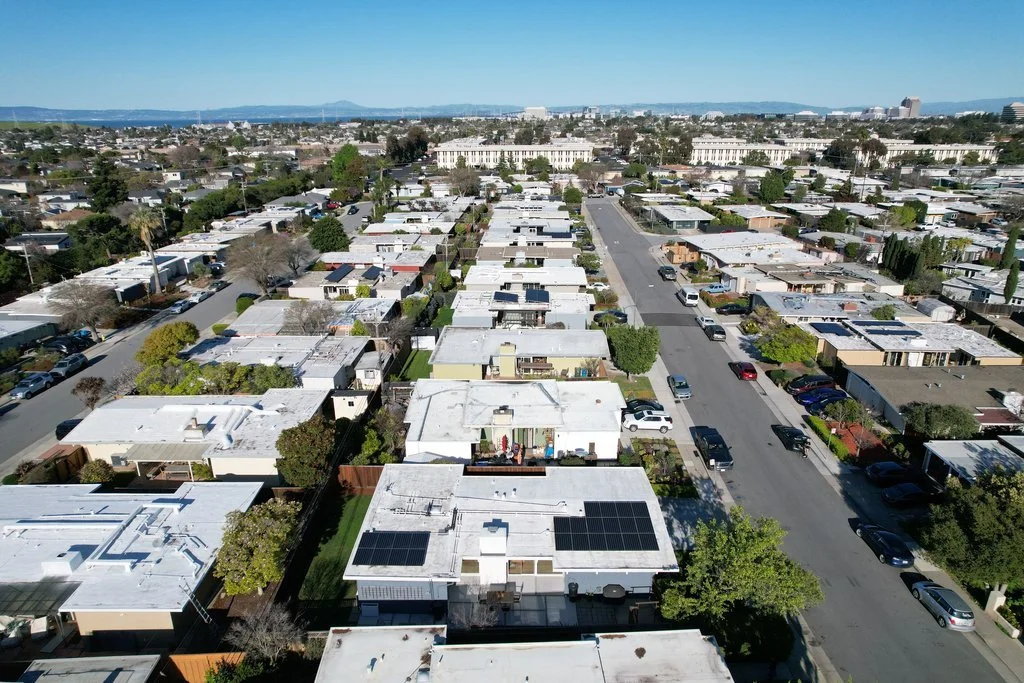
A defining feature of Nineteenth Avenue Park is that it remains a “hidden enclave” despite sitting near major infrastructure. Eichler Network explicitly describes a central location at the crossroads of the Peninsula, with Highway 101 and Highway 92 nearby and downtown San Mateo described as roughly a 25‑minute walk.
Parks: Concar Playground and the community negotiations story. The City’s parks list includes Concar Playground (650 Connie Avenue) as a small neighborhood/mini park. Eichler Network provides “how neighborhood value is defended” context: it recounts negotiations surrounding a hotel expansion where neighborhood leaders pushed for mitigation, including improvements to nearby Concar Park, funded jointly with the city and the hotel entity (Marriott is mentioned in the narrative).
Retail: Hillsdale as a nearby gravity center. Hillsdale Shopping Center describes itself as a premier destination with 130+ stores, dining, free parking, and accessibility by Caltrain.
Transit and commute logic
Caltrain access is not just nearby—it’s part of the tract’s operating thesis. Eichler Network notes the Hayward Park station is two blocks away and frames it as a commute alternative (also referencing bike paths).
The Caltrain station page for Hayward Park Station provides operational details (401 Concar Drive address, amenities, parking capacity, bike racks, and transit connections).
Rail commute times (schedule‑based examples, not estimates):
Northbound example: San Mateo at 5:32a → San Francisco at 6:01a (~29 minutes).
Southbound example: San Mateo at 6:43a → Palo Alto at 6:59a (~16 minutes).
Southbound example: San Mateo at 6:43a → Sunnyvale at 7:09a (~26 minutes).
SFO access (public transit): SamTrans describes routes that stop directly at airport terminals (including routes 292 and 397; with additional connections also noted).
For a tract where many buyers travel frequently, this “airport connectivity” functions as a lifestyle premium.
Driving commute times (explicit assumption): Because road travel times vary materially by time‑of‑day, incidents, and season, car commute times are best presented as a range and verified in real time. A reasonable Peninsula planning range is: ~10–25 minutes to SFO, ~25–60+ minutes to downtown SF, and ~20–60 minutes to major South Bay employers, depending on peak conditions.
Suggested embeds for this section
A map graphic showing walk/drive links to Hayward Park station, downtown, and Hillsdale.
A screenshot snippet of the 2026 Caltrain schedule timing rows for San Mateo ↔ SF and San Mateo ↔ Palo Alto/Sunnyvale.
A city park list screenshot calling out Concar Playground, paired with an on‑site photo.
Market analysis 2022–2025
Data and methodology (what this is, and what it isn’t)
This section compiles 2022–2025 sold transactions for Nineteenth Avenue Park addresses using publicly visible listing‑syndication pages (Redfin/Zillow/Compass pages that reference MLSListings IDs or MLS#). It is not a full MLS extract and is therefore best used to study price bands and dispersion logic, not to claim complete market coverage.
Comparable Sales (2022–2025)
1669 Wolfe Dr
Close Date: June 24, 2022
Sale Price: $1,520,000
Beds/Baths: 4 / 3
Size: 1,540 sq ft
Price per Sq Ft: $987
1669 Eleanor Dr
Close Date: May 17, 2023
Sale Price: $1,920,000
Beds/Baths: 3 / 2
Size: 1,400 sq ft
Price per Sq Ft: $1,371
644 Joanne Dr
Close Date: October 11, 2023
Sale Price: $1,635,000
Beds/Baths: 3 / 2
Size: 1,400 sq ft
Price per Sq Ft: $1,168
651 Joanne Dr
Close Date: June 27, 2024
Sale Price: $2,200,000
Beds/Baths: 3 / 2
Size: 1,400 sq ft
Price per Sq Ft: $1,571
635 Joanne Dr
Close Date: October 30, 2024
Sale Price: $2,005,000
Beds/Baths: 3 / 2
Size: 1,400 sq ft
Price per Sq Ft: $1,432
1711 Wolfe Dr
Close Date: October 10, 2024
Sale Price: $2,050,000
Beds/Baths: 3 / 2
Size: 1,700 sq ft
Price per Sq Ft: $1,206
1615 Wolfe Dr
Close Date: June 16, 2025
Sale Price: $1,805,000
Beds/Baths: 4 / 2
Size: 1,540 sq ft
Price per Sq Ft: $1,172
683 Vanessa Dr
Close Date: August 18, 2025
Sale Price: $2,417,000
Beds/Baths: 3 / 2
Size: 1,500 sq ft
Price per Sq Ft: $1,611
1636 Celeste Dr
Close Date: September 29, 2025
Sale Price: $2,100,000
Beds/Baths: 4 / 2
Size: 1,540 sq ft
Price per Sq Ft: $1,364
675 Edna Way
Close Date: October 24, 2025
Sale Price: $1,815,000
Beds/Baths: 4 / 2
Size: 1,540 sq ft
Price per Sq Ft: $1,179
Price band and dispersion: what this micro‑market is signaling
The sample above supports three practical conclusions:
A definable price band exists. Nineteenth Avenue Park closings in this visible sample cluster roughly between ~$1.5M and ~$2.4M in 2022–2025.
$ / sf dispersion is meaningful. Within similar size bands (especially around 1,400–1,540 sq ft), the $/sf spread ranges from roughly ~$987/sf to ~$1,611/sf—wide enough that “pricing to the neighborhood average” is materially hazardous.
Dispersion drivers are execution‑centric (systems + renovation + narrative). The tract’s systems profile makes it rational for buyers to price:
roof age/type and documentation (foam lifecycle, recoat history),
radiant health and detectability (specialized detection, bounded repair costs),
glazing upgrade strategy (compatibility‑preserving methods),
slab moisture/flooring risk (moisture testing discipline),
and school certainty as a diligence‑verified attribute (preliminary locator warnings).
The Boyenga Team and Compass
There are two ways to sell or buy an Eichler:
One: treat it like any other house.
Two: treat it like a design‑defined asset with known systems economics—then run a strategy built for that reality.
The Boyenga Team’s “Property Nerds” brand lands particularly well in a tract like Nineteenth Avenue Park because it is a market where systems clarity becomes price power.
Why “Eichler expertise” is not a slogan in this tract
Eichler Network’s tract profile produces the key insight: Nineteenth Avenue Park has long been “less known, less esteemed, with homes less costly, than its siblings” in other cities.
That positioning creates opportunity—but only for teams that can:
communicate architectural authenticity credibly,
defend values with systems documentation,
and avoid renovation choices that undermine the very premium buyers are paying for.
Boyenga Team positioning and credentials (as published)
The Boyenga Team’s Compass profile positions them as founding partners at Compass and highlights a long‑horizon Silicon Valley practice.
Their MidModHomes site markets them as “Property Nerds” and frames their experience as specialized across high‑value Bay Area properties.
An Eichler‑specific “about” page explicitly states specialization in Eichler and mid‑century modern properties (while also claiming production metrics and ranking within Compass).
Property‑nerd takeaway: in a tract where diligence is systems‑heavy, specialization should show up in the workflow: how inspections are staged, how disclosures are curated, how pre‑market upgrades are sequenced, and how pricing is defended.
Compass platform tools that map cleanly to Eichler sale mechanics
Concierge (prep capital without cash drag). Compass describes Concierge as fronting the cost of home improvement services with “zero due until closing,” including staging, flooring, painting, and more.
In Nineteenth Avenue Park, this can be strategically relevant because targeted prep (not necessarily major remodel) often determines whether a home reads as “authentic modernism” or “dated mid‑century.” (Inference supported by the tract’s revision/restoration narrative, but prep decisions are property‑specific.)
Private Exclusives (quiet price discovery). Compass defines Private Exclusives as properties accessible only to Compass agents and their serious buyers, allowing marketing without public days on market or visible price drops, and explicitly frames it as a way to “test” the market.
For Eichlers—where mispricing can cause long explained‑away DOM or multiple reductions—this phased approach can be a risk‑management tool when used ethically and consistently with MLS rules and seller goals.
Coming Soon / three‑phase strategy. Compass describes a structured 3‑phase marketing strategy designed to test price, build exposure, and create a strong market debut while protecting against prolonged time on market and value erosion.
Compass AI (agent workflow acceleration). Compass newsroom materials describe a product direction toward AI‑powered support and automation for agents.
In a niche micro‑market, the most practical “AI benefit” is not novelty; it’s compressing the time between buyer behavior signals and agent action (follow‑ups, narrative targeting, offer leverage). (This is an inference; the sources establish the product intent, not guaranteed transaction outcomes.)
Property-Nerd Engagement Workflow
(Hypothetical, tract-appropriate — modeled for a systems-heavy Eichler listing. Not a promise of outcomes.)
Phase 1: Systems Diagnosis
Objective: Convert fear into scope
Roof, radiant heat, and glazing review
Slab moisture and flooring risk scan
Collect permits, receipts, and upgrade documentation
Deliverable:
“Eichler Systems Profile” memo
Capex scenarios and planning notes
Phase 2: Prep & Positioning
Objective: Remove high-friction buyer objections
Targeted repairs and strategic improvements
Professional staging
Consider Concierge funding for mission-critical prep
Deliverable:
Preparation plan
Budget and timeline
Phase 3: Quiet Validation
Objective: Test pricing without public market scars
Compass Private Exclusives to gauge demand
Buyer and agent feedback loops
Narrative and pricing refinement
Deliverable:
Updated pricing recommendation
Phase 4: Full Launch
Objective: Create a strong market debut
“Coming Soon” marketing buildup
Go-live listing launch
Fully engineered disclosure package
Deliverable:
Launch strategy
Offer review protocol
Phase 5: Negotiation
Objective: Defend value
Use systems documentation to reduce concession pressure
Manage buyer diligence and timelines
Deliverable:
Negotiation plan
Concession logic (if needed)
Marketing & Transaction Timeline
Week 1
Tract verification
Property inspections
Rationale:
Confirms Eichler tract authenticity and system condition to prevent buyer over-discounting.
Weeks 2–3
Targeted preparation and repairs
Optional Concierge program
Rationale:
Strategic prep improves buyer perception and supports pricing.
Weeks 3–4
Compass Private Exclusives
Rationale:
Quietly test demand without creating public days-on-market history.
Weeks 4–5
“Coming Soon” marketing
Official listing launch
Rationale:
Structured debut designed to protect pricing power.
Week 5+
Offer strategy
Contract negotiation
Close of escrow
Rationale:
Documentation and preparation support price defense and reduce concessions.
Future outlook for the tract (demand, supply, and preservation)
The tract’s forward fundamentals remain strong because its supply is fixed (nearly 240 homes) and its differentiation is legible to buyers who value design‑led living.
At the same time, the tract will likely continue to price “systems confidence” aggressively: buyers are increasingly sophisticated about roof lifecycle, glazing performance, and radiant risk—and that sophistication becomes the mechanism through which quality renovations and well‑documented homes achieve premium outcomes.