
Preservation guide
How a Mid-Century Neighborhood Becomes a Historic District: The Steps, the Votes and the Timeline
We want unique mid-century neighborhoods, in the Bay Area and beyond, to stay mid-century. A historic district is one of the tools owners have used to do that. No district appears by itself: under the federal rules each one starts as a written nomination and moves through notices, a public hearing and a federal review.
This page follows that process in California: who can nominate, what makes a tract eligible, how owners are counted, how long each step takes, and what listing does and does not do. It is a companion to Mid-Century Modern Historic Districts, which shows where neighborhoods already have standing, and to Keep It Midmod, our guide to one house at a time.
- National RegisterThe federal list: the packet, the notices, the owner count and the state hearing.See the steps
- California RegisterThe state list: its own forms and a 90-day comment period for the city or county.See the state path
- City and county toolsLocal registers, overlays and zoning, where review of changes comes from.See local tools
- TimelineThe day counts written into the federal rule and California’s guidance.See the day counts
Before you start
The National Register of Historic Places is the federal government’s official list of historic places worth preserving. The National Park Service describes it as authorized by the National Historic Preservation Act of 1966, and the program runs under a federal rule, 36 CFR Part 60. Three points from those sources shape everything below.
- Listing honors a place. It is not a permit desk. The federal rule says listing private property does not prohibit, under federal law or regulation, anything the owner may otherwise do with it. The Park Service’s how-to page adds that listing does not automatically bring local historic district zoning or local landmark designation, does not lead to public acquisition and does not require public access.
- Anyone can start a nomination. The Park Service says nominations come from property owners, historical societies, preservation organizations, government agencies and other people or groups, and that they go to the State Historic Preservation Office. California’s registration programs page says any individual, group or local government may nominate a place that meets the criteria.
- No rung of the ladder has to come first. California says a place does not need local designation before a state nomination, and does not need state registration before a National Register nomination. A neighborhood can choose the tool that fits what it wants.
California’s Office of Historic Preservation runs four registration programs: California Historical Landmarks, California Points of Historical Interest, the California Register of Historical Resources and the National Register of Historic Places. This page follows the National Register, the route taken by the Bay Area’s listed Eichler districts, and then the California Register, the state’s own list. For Landmarks and Points of Historical Interest, the state’s meetings and public participation page says a nominator does not have to own the property, but the owner has to consent to the designation.
What makes a tract eligible
The Park Service’s general mark is age: places on the Register are generally at least 50 years old. A tract finished in the 1950s or 1960s is past that mark. The federal rule then asks two more things.
- Significance. The federal criteria cover four kinds: a link to events and broad patterns of history; a link to the lives of significant people; design and construction, meaning the distinctive features of a type, period or method of building, the work of a master, or high artistic value; and the ability to yield information about the past. The design criterion has a clause that fits districts: a group of buildings can qualify as a significant and distinct whole even when its individual parts would not stand out alone.
- Integrity. The rule names seven aspects: location, design, setting, materials, workmanship, feeling and association. For a tract, that is the question of how much of the as-built design is still there to see. Keep It Midmod covers what that means house by house.
The rule defines a district as a definable area with a significant concentration, linkage or continuity of buildings and sites, united by past events or by plan or physical development. A tract planned and built as one project is one kind of place that definition can fit.
There is a rule for younger buildings too. Properties that became significant within the past 50 years are ordinarily not eligible, but the rule makes an exception when they are integral parts of a district that meets the criteria.
A nomination counts each building as contributing or not contributing. Our districts page shows how three nominations made that count.
Surveys and context statements
California’s survey guidance describes the groundwork. Where relatively little is known about an area, the guidance recommends starting with a historic context statement and a reconnaissance survey. An intensive-level survey then documents properties in more detail. The guidance also advises updating a survey that is more than five years old. Ask the planning department whether a context statement or survey already covers your tract. If one does, it is the first document to read.
Multiple Property Documents
Some districts build on research that already exists. California’s National Register page explains that properties eligible under a Multiple Property Document can be nominated more simply, because the document supplies the general historic context. The same forms and the same level of eligibility still apply. Two examples from our districts list: the Pegfair Estates nomination in Pasadena names a related multiple property listing, Cultural Resources of the Recent Past, City of Pasadena, and the Park Service record for Hollin Hills in Virginia files it under a multiple-property listing for historic residential suburbs.
The National Register path in California
The steps below combine the federal rule with the California Office of Historic Preservation’s instructions. Other states follow the same federal rule through their own State Historic Preservation Office.
- Talk to the neighbors first. The federal count is by owner, and a majority of objections stops a listing (see how owners are counted). So the first step is a conversation, not a form.
- Contact the state office early. For a proposed historic district, California asks applicants to contact Office of Historic Preservation staff before submitting, in the early stages of the work.
- Gather the packet. The state lists it: National Register form 10-900, National Register Bulletins 15 and 16A, and the Park Service’s photo policy.
- Draw the boundary and count the buildings. The nominations behind our districts list set a boundary and count the buildings inside it as contributing or not.
- Build the owner list. The federal rule says the list of owners comes from official land recordation or tax records, obtained within 90 days before the notice of intent to nominate. California asks for those records with the submittal, along with a spreadsheet of email and mailing addresses for all owners and applicants. An applicant who is not the owner is asked to tell the owner.
- Submit. As of September 1, 2026, California takes nominations electronically, through a secure upload folder the office sets up for each applicant. Paper submittals are still accepted, sent with a USB drive that holds all the files. The submittal includes a cover letter that lists every property owner with contact details, the 10-900 form in Word format, photographs as TIFF or JPEG files, and maps.
- Notices go out. Under the federal rule, written notice of the intent to nominate goes out at least 30 and no more than 75 days before the review board meets. When a nomination has more than 50 owners, the rule calls for a general notice to owners in one or more local newspapers of general circulation in the same window, unless the state chooses to notify every owner individually. The state must also notify the chief elected local officials in writing, and the rule suggests a public information meeting in the area. During the comment period the nomination is on file with the state program, and a copy is available to the public. California also gives the local government 60 days to comment before the Commission considers the nomination.
- Owners support or object. Objections are made in notarized statements and counted one vote per owner. The details are in the next section.
- The state hearing. In California the review board is the State Historical Resources Commission: nine members appointed by the Governor. It meets four times a year. Meetings are open to the public and live-streamed, and notices and agendas are posted ten days ahead. The posted order for the November 12, 2026 meeting gave the nominator ten minutes to speak on an item taken up for discussion, each owner inside a nominated district five, government representatives five each, and members of the public two. The state’s questions page says written comments are due no later than two days before the meeting. The notice for that November meeting set an earlier cutoff, a week ahead, so read the notice for your own meeting.
- The federal decision. The Park Service’s questions page says the state office can reject a nomination, ask for more information, list the place only with the state, or send the forms on for listing. Until the Keeper of the National Register lists a district, the nomination posted on the state’s pending nominations page is a draft. The rule gives the Keeper 45 days from receipt to enter the nomination in the Register unless it is disapproved, appealed or objected to. A nomination that is not adequately documented is returned for correction.
- Listing. When the district is listed, the state office tells the owners and the chief elected local official. In California a National Register listing is automatically a California Register listing as well.
How owners are counted
The federal rule spells out how owner objections work. California’s page states the result in one line: a property or district may not be listed over the objection of the owner, or of a majority of private owners.
- An objection is a notarized statement. In it the owner certifies being the sole or partial owner of the property and objects to the listing.
- A majority of objections stops a district. If a majority of the owners of private property in the district object, the district is not listed.
- One owner, one vote. In the rule, an owner is whoever holds fee simple title: a person, a partnership, a corporation or a public agency. Holders of easements or leases are not counted. Each owner of private property in the district has one vote, no matter how many properties or what share of one property that owner holds, and whether or not the property contributes to the district.
- Owners missing from the list still count. An owner who is not on the official list is counted after certifying ownership in a notarized statement.
- A district that is blocked can still be found eligible. When a majority objects, the state sends the nomination to the Keeper only for a determination of eligibility, made within 45 days of receipt. A finding of eligibility is not a listing: under the rule it does not open the grants, loans or tax incentives that require listing, though a federal project that affects a listed or eligible place still goes through the Section 106 comment step. The district can be listed later if owners withdraw their objections in notarized statements.
- Others can weigh in. Any person or organization that supports or opposes a nomination may petition the Keeper during the process to accept or reject it.
Timeline: the day counts
These are the time periods the sources state. None of them includes the research and writing that come first.
| Step | Time | Where it comes from |
|---|---|---|
| State reply to a completed nomination form | In writing within 60 days | Federal rule |
| Owner list | Taken from official land or tax records within 90 days before the notice of intent to nominate | Federal rule |
| Notice of intent to nominate | At least 30 and no more than 75 days before the review board meets | Federal rule |
| Local government comment | A 60-day period to comment, before the state Commission considers the nomination | California National Register page |
| Meeting notice and agenda | Posted ten days before the Commission meeting | California pending nominations |
| Written comments | Due no later than two days before the meeting, according to the state’s questions page. A meeting notice can set an earlier cutoff: the notice for the November 12, 2026 meeting asked for comments a week ahead. | California questions page · California pending nominations |
| Commission meetings | Four a year | State Historical Resources Commission |
| State review as a whole | Typically a minimum of 90 days | National Park Service |
| State sends the nomination on | Within 90 days after the review board acts | Federal rule |
| Federal Register comment period | 15 days from the published notice. The rule allows the period to be shortened or waived. | Federal rule |
| Federal decision | Within 45 days after the Keeper of the National Register receives the nomination | Federal rule |
| California Register: local comment | 90 days from the certified-mail notice to the city or county clerk | California Register page |
With four Commission meetings a year, the meeting calendar shapes the schedule as much as the day counts do.
The California Register path
The California Register of Historical Resources is the state’s own list. Its page sets out four criteria: a link to events and broad patterns of California history; a link to the lives of people important in the past; design, meaning the distinctive features of a type, period, region or method of construction, the work of an important creative individual, or high artistic value; and the ability to yield information important in prehistory or history.
- Fill in the forms. The application uses the state’s DPR 523 series: generally one 523A and one 523B, plus the 523L continuation sheet if needed. The series includes a 523D District Record.
- Notify the city or county. The applicant sends the clerk of the local government a copy of the application by certified mail and asks for written comments within 90 days.
- Submit. At the end of the 90 days, the application may go to the state office.
- Owners. Owner consent is not required, but a resource cannot be listed over an owner’s objection. When an owner objects, the Commission can still formally determine that the property is eligible. The state’s page does not say how objections are counted when a district has many owners, so ask the office before you plan around it.
Among the effects the state names for a California Register listing: environmental review may be required if a project threatens the property, the local building inspector must grant code alternatives, and the owner may place a plaque or marker.
City and county tools
Review of changes to a house, where a neighborhood has it, is run by the city or county. California’s registration page notes that many local governments offer their own designation programs, and that the state office does not have access to local registers. So the planning department is the place to ask what your city has.
The state office’s local government unit advises cities and counties on preservation plans and ordinances, context statements, surveys, criteria for local designation programs, historic districts, historic preservation overlay zones, conservation districts and design guidelines.
Certified Local Governments
The Certified Local Government program dates from the 1980 amendments to the National Historic Preservation Act. A certified city or county enforces its designation and protection laws, sets up a review commission by ordinance, keeps a survey and inventory of historic properties, provides for public participation, and carries out duties the state delegates. California passes at least 10 percent of its yearly federal Historic Preservation Fund allocation to certified local governments through competitive grants. Ask whether your city or county is certified: if it is, it should have a review commission and a survey and inventory system to start from.
What neighborhoods have used
These examples come from our districts page and our city guides. They show how different the local tools are, and that the order varies.
| Place | Tool | What the record shows | Read more |
|---|---|---|---|
| Palo Alto | Single-story overlay | Owners apply. The threshold is support from 70 percent of them, or 60 percent where recorded restrictions exist. | Single-story overlays |
| Palo Alto | Design guidelines | Eichler Neighborhood Design Guidelines, adopted April 2, 2018. Voluntary. | Palo Alto guidelines |
| Sunnyvale | Design guidelines | Eichler Design Guidelines, adopted July 2009. | Sunnyvale guidelines |
| Cupertino | Zoning written for one tract | R1e zoning, written for the Fairgrove tract. | Fairgrove and R1e |
| San Rafael | Combining district | The –EA district caps height at seventeen feet to the peak and allows one habitable floor. | Districts page |
| Sacramento | City Register district with a written plan | South Land Park Hills (Eichler) Historic District Plan, adopted May 21, 2024. | District plan (PDF) |
| Scottsdale, Arizona | City register first, National Register after | Town and Country Scottsdale and Village Grove 1-6 entered the city register on June 7, 2005. National Register listings followed in September 2009 and May 2010. | City register (PDF) |
| Fairfax County, Virginia | National Register first, county overlay after | Hollin Hills was listed on September 30, 2013. The county adopted a Historic Overlay District on March 8, 2022. | State record · County page |
| Clark County, Nevada | County overlay | Paradise Palms is under a county Historic Neighborhood Overlay. | County notice |
Scottsdale used its own register first and the National Register after. Fairfax County adopted its overlay more than eight years after the federal listing. The four Bay Area cities in the table used zoning and design guidelines. Our design guidelines hub gathers the Bay Area rules city by city.
What listing does and does not do
Neighbors usually ask the same questions at the first meeting. Here is what the sources say on each.
| Topic | What the sources say | Source |
|---|---|---|
| Work on your own house | Listing private property does not prohibit, under federal law or regulation, anything the owner may otherwise do with it. | Federal rule |
| Local zoning and review | Listing does not automatically bring local historic district zoning or local landmark designation. California adds that a listing may lead to design review or environmental review run by the local government. | Park Service · California |
| Public access | Listing does not lead to public acquisition and does not require public access. | Park Service |
| Federal projects | Listed places are considered when a federally funded or licensed project is planned (the Section 106 review). | California |
| Building code | California names building-code alternatives among the effects of both registers. On both pages the state says the local building inspector must grant them. | National Register page · California Register page |
| California Register | A place listed in the National Register is automatically listed in the California Register. | California |
| Environmental review | For a California Register property, environmental review may be required if a project threatens it. | California Register page |
| Fees | The National Register charges no fees and never asks for money. | Park Service questions |
| Plaques | Neither program hands them out. The Park Service leaves plaques to owners, and California says markers are at the owner’s discretion and paid for with private funds. | Park Service questions · California |
| Grants | The National Register office has no grant program of its own. The federal rule says listing makes owners eligible to be considered for federal preservation grants-in-aid, and certified local governments compete for federal grants awarded each year. | Federal rule · California |
The work of a nomination (research, photographs, maps and the form) is the applicant’s to do or to arrange. Our sources give no figures for that, so this page gives none.
A first neighborhood meeting
A short agenda, drawn from the steps above.
- What do we want? Recognition, review of changes, or both. The two registers give recognition, and California says a listing may also lead to design or environmental review at the local level. Review of everyday changes comes from local tools.
- What does the city already have? A survey, a context statement, design guidelines, an overlay process, certified status.
- Where would the boundary run? And how many owners are inside it. More than 50 changes how notice may be given.
- What do the houses look like today? Walk the tract with the seven aspects of integrity in hand.
- Who does what? Someone researches and writes, someone talks to the state office, and someone makes sure every owner hears about it from a neighbor before the official notice arrives.
- Where are the records? The Eichler Archives Directory lists tract site-plan records you can open online, and the Mid-Century House Records Finder shows where permits and maps are kept.
Questions and answers
Can one owner stop a National Register district?
Not alone. Under the federal rule, a district is not listed when a majority of the owners of private property inside it object in notarized statements. Each owner has one vote.
Do I have to own a house in the tract to nominate it?
No. The Park Service says nominations come from property owners, historical societies, preservation organizations, government agencies and other people or groups. California says any individual, group or local government may nominate a place that meets the criteria, and asks an applicant who is not the owner to tell the owner.
My house has been remodeled. Does my vote still count?
Yes. The federal rule gives each owner of private property one vote whether or not the property contributes to the district, and no matter how many properties, or what share of one property, that owner holds.
How long does it take?
The Park Service says state review typically takes a minimum of 90 days and that it makes a listing decision within 45 days. The federal rule counts those 45 days from the day the Keeper receives the nomination, and gives the state up to 90 days after its review board acts to send the nomination on. Research and writing come before all of it. In California the Commission meets four times a year, so the meeting calendar matters as much as the day counts.
What happens if most owners object?
The district is not listed. Under the federal rule the state sends the nomination to the Keeper of the National Register only for a determination of eligibility, which the rule says is made within 45 days of receipt. A finding of eligibility is not a listing. The district can be listed later if owners withdraw their objections in notarized statements.
Will listing change what I can do to my house?
Not under federal law or regulation, unless the work is part of a project with federal assistance, which the Park Service says usually means federal funding, a license or a permit. Local rules are separate, and California’s National Register page notes that a listing may lead to design or environmental review run locally. Ask the planning department how your city treats listed properties before you rely on either answer.
Our tract was built in the 1960s. Is it old enough?
The Park Service’s general mark is 50 years, and a tract finished in the 1960s is past it. Age alone is not enough: the nomination also has to show significance and integrity.
Do we need city landmark status first?
No. California’s registration programs page says a place does not need local designation before a state nomination, and does not need state registration before a National Register nomination.
Can a district be removed from the Register?
The federal rule gives four grounds: the place has lost the qualities that met the criteria, added information shows it does not meet the criteria, there was an error in professional judgment, or there was a prejudicial error of procedure in the nomination or listing. Any person or organization may petition in writing for removal.
What if the state will not nominate our district?
The federal rule lets any person or local government appeal to the Keeper when a nominating authority fails or refuses to nominate a property.
Can we watch a hearing before we file?
Yes. California’s Commission meetings are quarterly, open to the public and live-streamed. The state’s pending nominations page posts the nominations on each agenda, so you can read a district nomination and then watch it heard.
How do we find out what our city already has?
Ask the planning department. California’s registration page says many local governments run their own designation programs and that the state office does not have access to local registers. Our Eichler Remodel Rules Finder covers 34 Bay Area places as a starting point.
Keep reading
- Mid-Century Modern Historic Districts: where mid-century neighborhoods already have formal standing, in the Bay Area, across California and in 12 other states.
- Preservation glossary: the terms on this page in plain English, from contributing building to period of significance.
- Keep It Midmod: how to repair and update one house so it stays mid-century.
- Eichler Archives Directory: where the plans and tract site-plan records are kept.
- Is my house historic?: California’s registers and local lists, explained for one house.
- Single-story overlays in the Bay Area: how owners apply and what an overlay limits.
- Design guidelines hub: our city-by-city guides to Eichler and mid-century design rules.
- Eichler Remodel Rules Finder: five layers of rules to check before remodeling, for 34 places.
- Mid-Century House Records Finder: where permits and maps are kept in 34 Bay Area cities and county areas.
If you own a mid-century home in the Bay Area and want to know what applies to it before you remodel or sell, call the Boyenga Team at (408) 373-1660 or (650) 383-8606, or write to MidMods@Boyenga.com.
About the sources
Every step, day count and rule on this page comes from a public source we read on November 11 and 12, 2026: the National Park Service’s National Register pages, the federal rule at 36 CFR Part 60 in its 2024 edition, and the California Office of Historic Preservation’s pages, plus the records behind our districts list and our own guides where we link them. We put each in our own words. Rules and procedures change, so confirm with the agency before you rely on anything here. This page is general information, not legal advice. We reproduce no images from these sources.
- National Park Service: How to list a property
- National Park Service: What is the National Register?
- National Park Service: National Register questions and answers
- Code of Federal Regulations, Title 36, Part 60: National Register of Historic Places (2024 edition, PDF)
- California Office of Historic Preservation: Registration programs
- California Office of Historic Preservation: National Register of Historic Places
- California Office of Historic Preservation: California Register of Historical Resources
- California Office of Historic Preservation: State Historical Resources Commission
- California Office of Historic Preservation: Commission meetings
- California Office of Historic Preservation: Pending nominations
- California Office of Historic Preservation: Questions and answers
- California Office of Historic Preservation: Historical resource surveys
- California Office of Historic Preservation: Local government assistance
- California Office of Historic Preservation: Certified Local Government program
- Pegfair Estates Historic District nomination form, Pasadena (PDF)
- National Park Service record 13000807: Hollin Hills Historic District
- Virginia Department of Historic Resources: Hollin Hills Historic District
- Fairfax County: Hollin Hills Historic Overlay District
- City of Scottsdale: Scottsdale Historic Register (PDF)
- City of Sacramento: South Land Park Hills (Eichler) Historic District Plan (PDF)
- Clark County, Nevada: Paradise Palms notice
From our listings
The garden side of homes we’ve sold
Low roofs, vertical siding, walls of glass and the gardens behind them, in mid-century homes we’ve sold in Fairglen, in San Jose, Fairbrae and Rancho Verde, in Sunnyvale, and Palo Verde, in Palo Alto. Each photo shows the home as it was when listed. We haven’t checked these houses against any register, district or overlay.
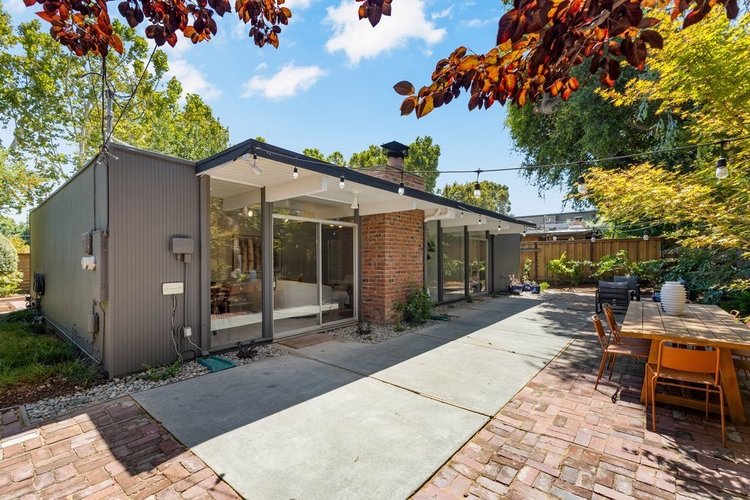
Fairglen, San JoseBack of the home · Sold 2026 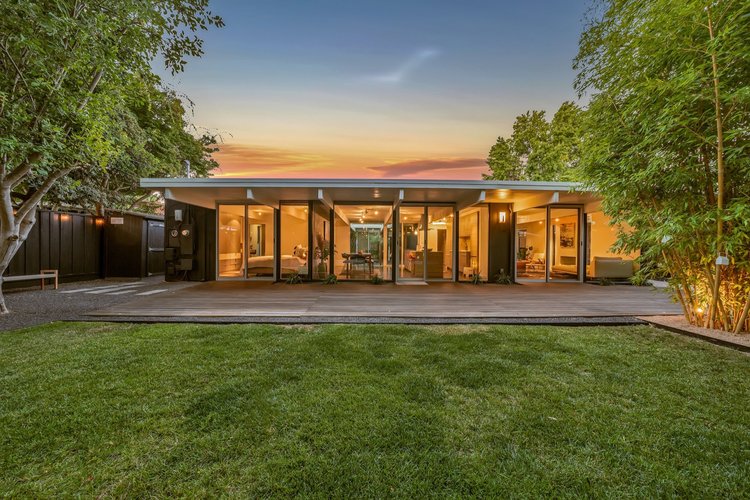
Fairbrae, SunnyvaleBack lawn at dusk · Sold 2023 
Rancho Verde, SunnyvalePool · Sold 2021 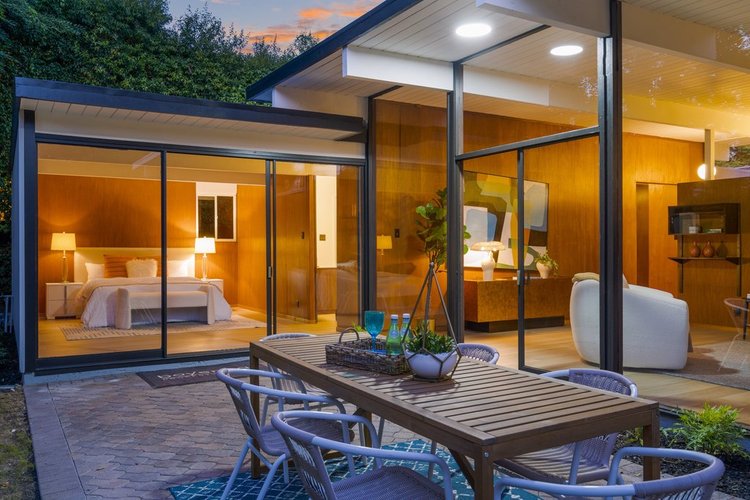
Palo Verde, Palo AltoPatio at dusk · Sold 2024 
Fairglen, San JoseGarden deck · Sold 2024 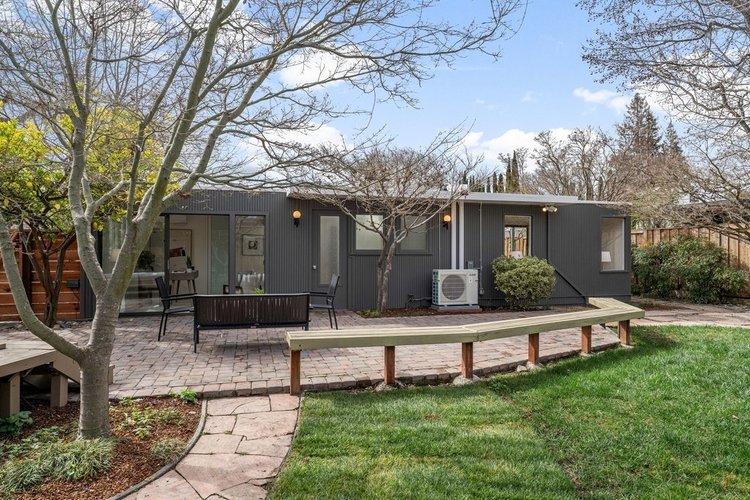
Palo Verde, Palo AltoBack yard · Sold 2026
Listing photographs of homes sold by the Boyenga Team at Compass. More homes we’ve sold
See our portfolio