
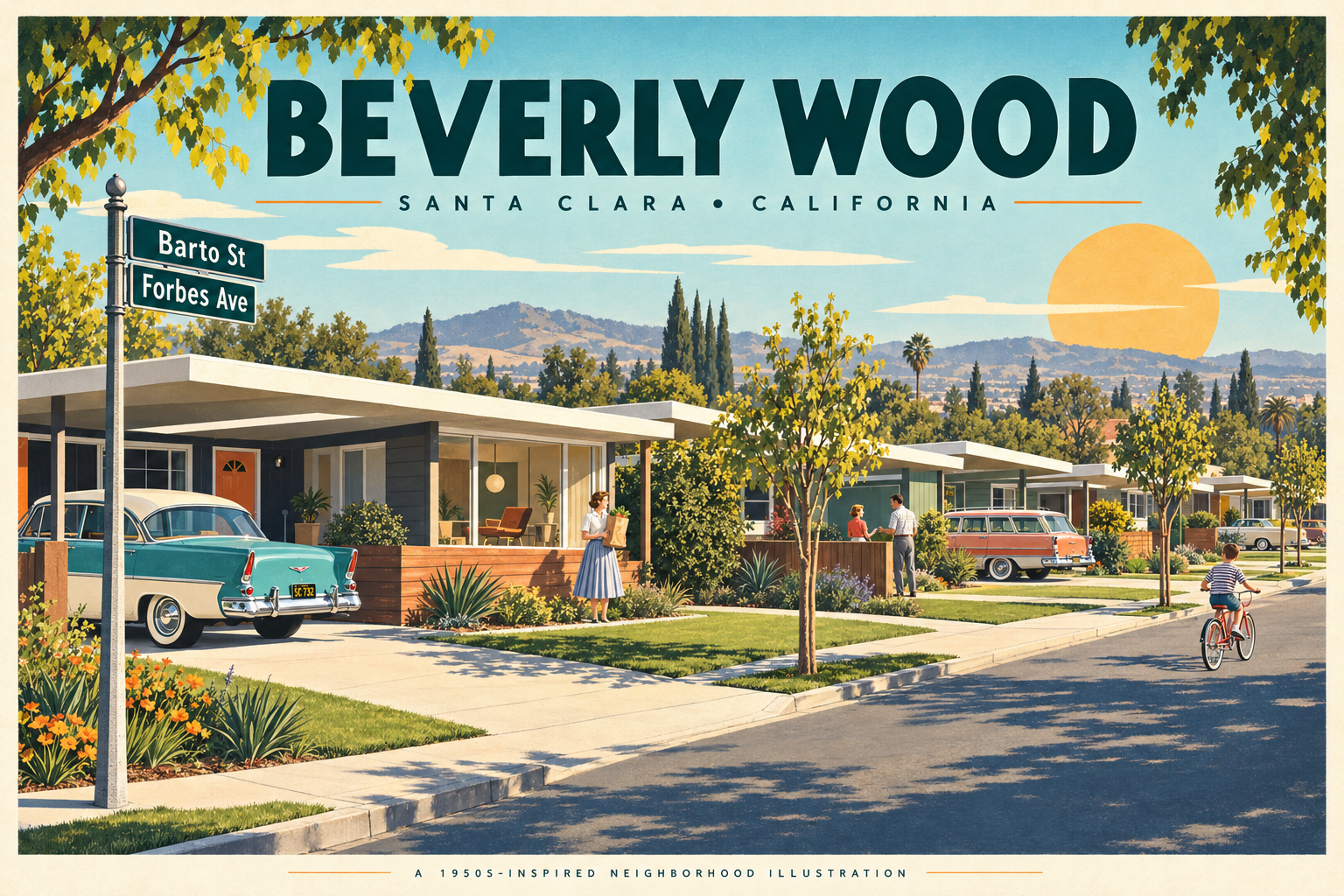
Sunshine Meadows (Beverly Wood), Santa ClaraThe Mackay Neighborhood That Put Everyday Modern Living on the Map
Discover the Sunshine Meadows story behind the Beverly Wood area of Santa Clara. This neighborhood guide connects Mackay Homes, Anshen and Allen, early-1950s design and the streets around Hamilton, Woodhams, Flannery and Barto, with a closer look at compact floor plans, parks and the details that make midcentury architecture worth understanding
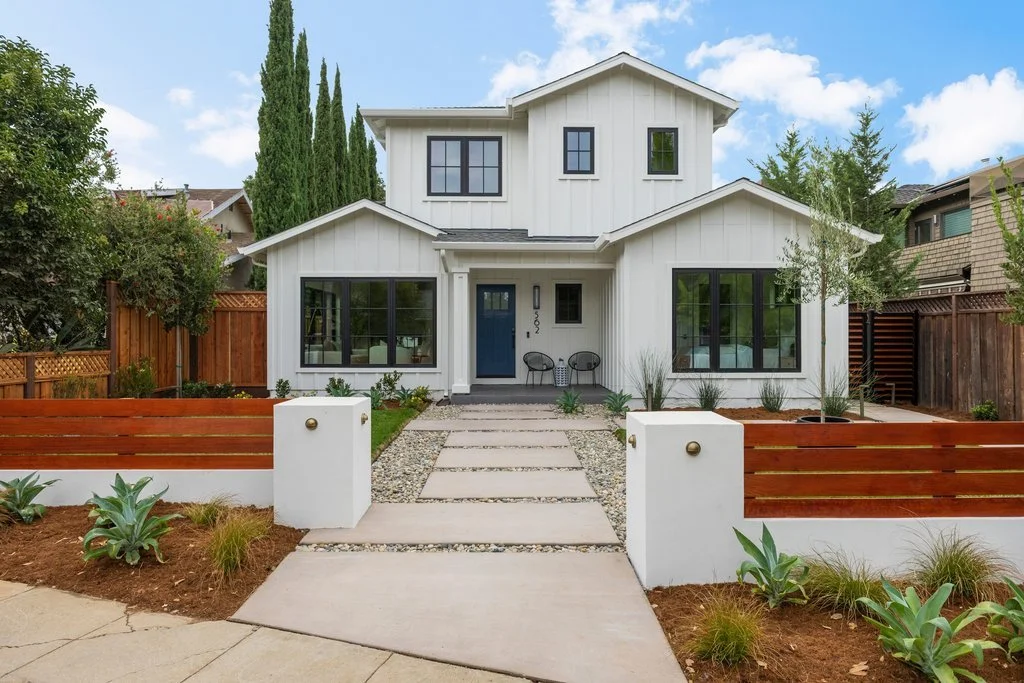
Modern Living Reimagined: New Construction at 562 Palm Avenue in Old Los Altos
A fresh approach to new construction in Old Los Altos, 562 Palm Avenue combines a sophisticated modern farmhouse, substantial second residence, solar array, dual primary suites, exceptional indoor/outdoor living, and private gated access in one remarkably flexible property.
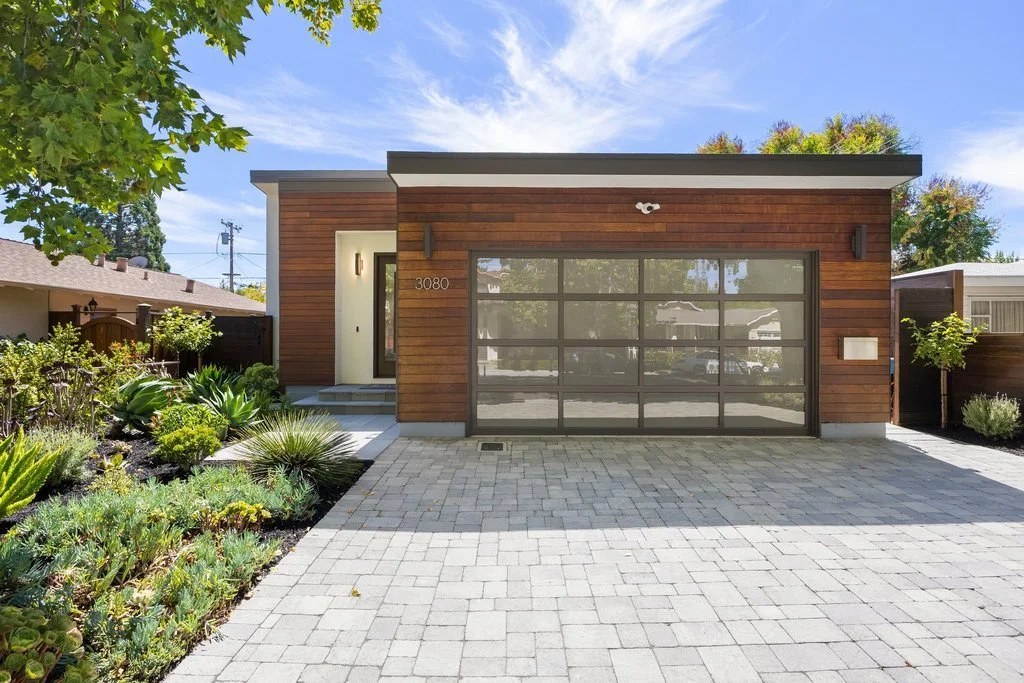
Designed for the Way Silicon Valley Lives: 3080 South Court in Midtown Palo Alto
Modern Palo Alto living is increasingly defined by adaptability. At 3080 South Court, dual primary suites, two kitchens, multiple work and gathering areas, private courtyards and separate systems for each level create a residence designed to evolve with its occupants—all within Midtown’s connected residential setting near Stanford and Silicon Valley employment centers.
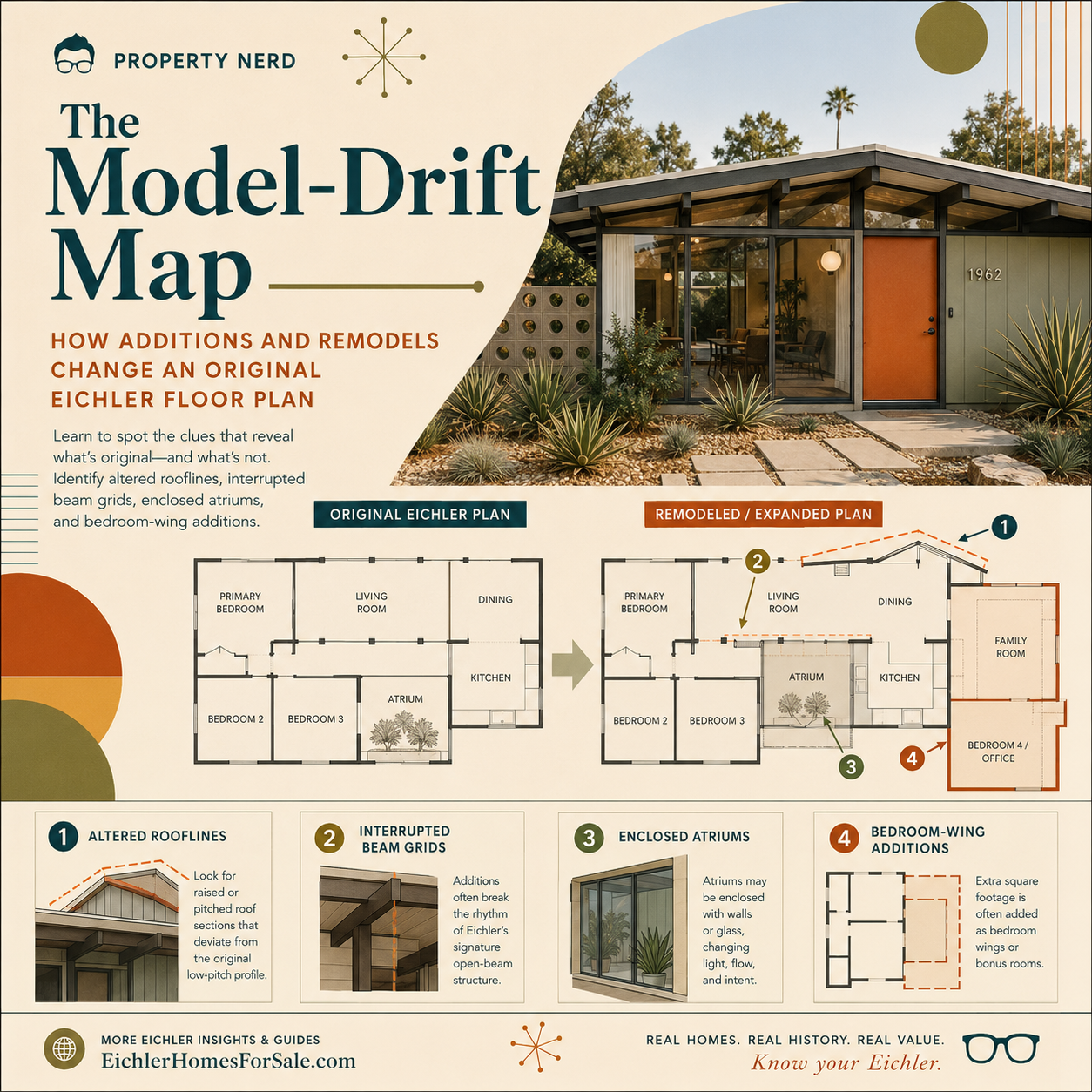
The Model-Drift Map: How Additions and Remodels Change an Original Eichler Floor Plan
An Eichler can look original from the street while carrying decades of hidden floor-plan drift. This Property Nerd field guide explains how to read roof seams, interrupted beam grids, enclosed atriums, expanded bedroom wings and converted garages—then map those changes with a 20-point Model-Drift Score and a separate documentation-confidence grade.
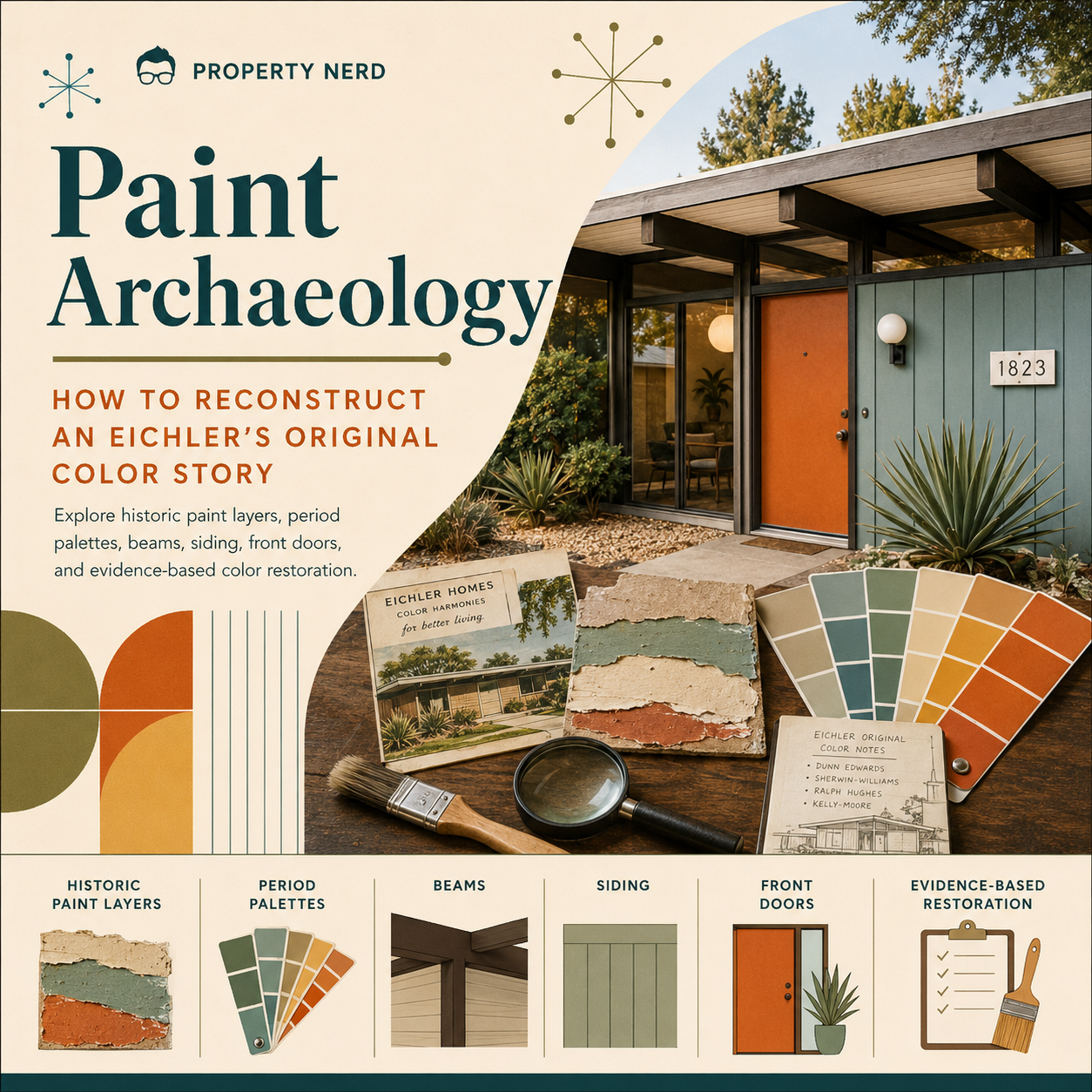
Paint Archaeology: How to Reconstruct an Eichler’s Original Color Story
An Eichler’s original palette may still survive beneath later paint, behind hardware, under trim, or inside old property records. This Property Nerd guide explains how to read historic finish layers, distinguish stain from paint, evaluate siding, beams, fascia, and front-door accents, and build an evidence-based color restoration without turning the home into a mid-century caricature.

The Mid-Century Pool Equation: Architecture, Safety, Insurance, Equipment and Resale Value
The Eichler Pool Equation: Design, Safety and Value In an Eichler, a swimming pool is more than a backyard amenity. The Property Nerds® Mid-Century Pool Equation examines how water, glass walls, patios, fencing, equipment, insurance and safety combine to strengthen—or complicate—indoor-outdoor living and resale value.

Aging in Place in an Eichler: Modernizing a Single-Level Home Without Losing Its Architecture
By day, an Eichler is composed in sunlight. After sunset, lighting determines whether the architecture disappears or becomes even more dramatic. The Night Eichler uses warm globe lights, illuminated beams, glowing atriums, layered landscaping, glare control, and twilight presentation to preserve the home’s indoor-outdoor magic after dark.

The Glass-House Privacy Equation: Creating Seclusion Without Closing Off an Eichler
An Eichler does not need to choose between transparency and privacy. The Property Nerds® Glass-House Privacy Equation explains how layered landscaping, architectural screens, courtyard walls, window treatments, strategic films and nighttime lighting can create seclusion without closing off the architecture.
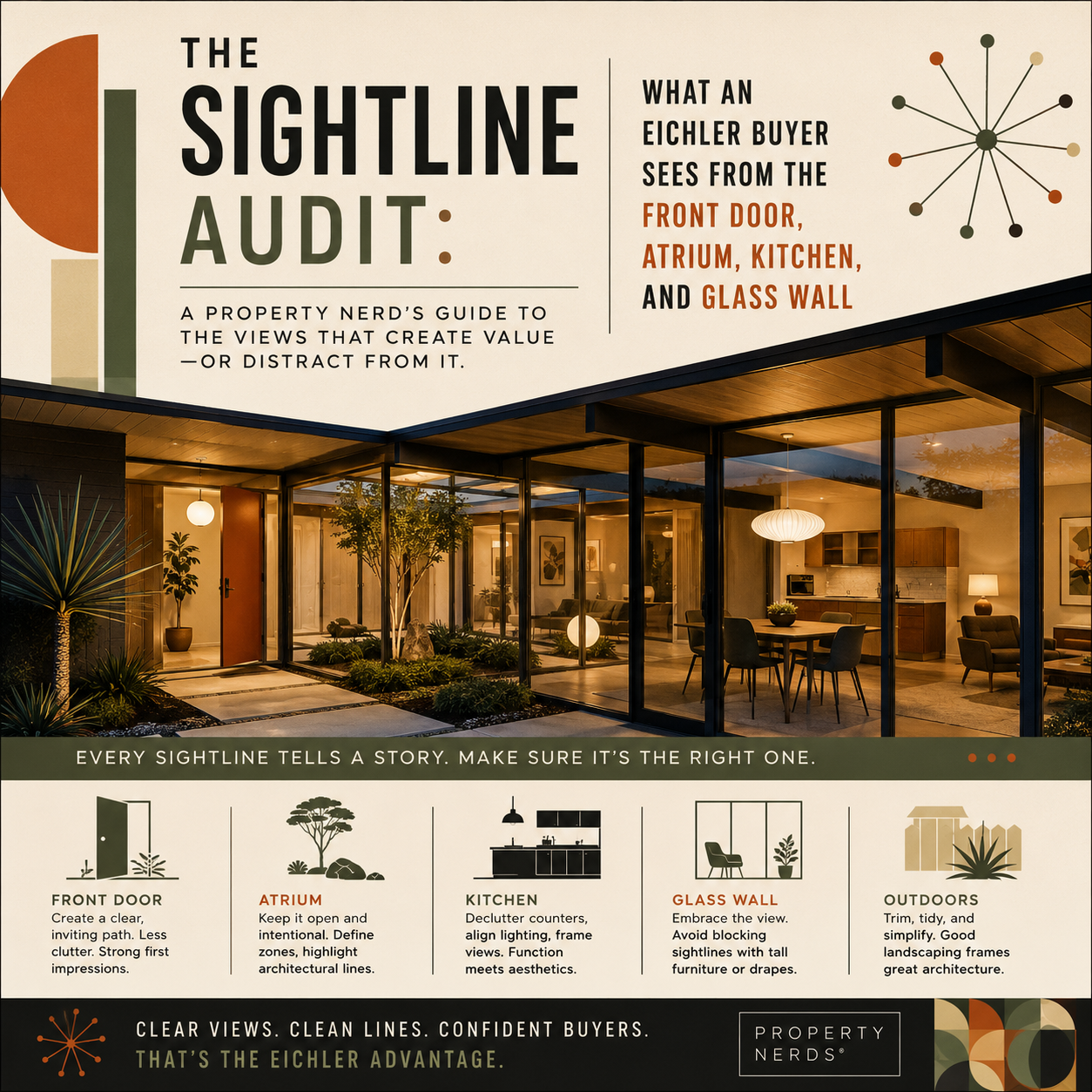
The Sightline Audit: What an Eichler Buyer Sees From the Front Door, Atrium, Kitchen and Glass Wall
Excerpt: An Eichler buyer experiences the home as a sequence of views rather than a collection of rooms. The Property Nerds® Sightline Audit examines visual depth from the front door, atrium, kitchen and glass wall to reveal how furniture, landscaping, fencing and clutter can strengthen—or compress—the architecture.

The Provenance Premium: Can Original Plans, Brochures, Permits and Architectural Records Increase Eichler Value?
Original Eichler plans, brochures, permits and architectural records can do more than document a home’s past. They can verify model history, support architect attribution, identify original features and reduce buyer uncertainty—creating what the Boyenga Team calls the Provenance Premium.

The Reversibility Score: Which Eichler Updates Preserve Future Value—and Which Cannot Be Undone?
Not every expensive Eichler renovation preserves value. The Property Nerds® Reversibility Score evaluates whether an update is removable, architecturally compatible or permanently architecture-erasing.

The Night Eichler: Mid-Century Modern Lighting Design After Sunset
An Eichler is designed around daylight, but its architecture should not disappear after sunset. Discover how layered lighting, illuminated atriums, glass-wall privacy, warm color temperatures, landscape lighting, dimming, and twilight presentation can transform a mid-century modern home into the Night Eichler.

The Quiet Eichler: Fix Echo and Privacy Without Losing the Architecture
Eichlers were designed to remove visual barriers, but modern life often requires acoustic ones. The Quiet Eichler strategy uses source control, sound absorption, stronger privacy boundaries, and mid-century-compatible design to reduce echo and noise without hiding the beams, glass, atrium, or exposed ceiling that define the home.

Eichler Homes and Tracts in Menlo Park: A Deep, Practical Guide for Owners, Buyers, and Preservationists
Hidden among the tree-lined streets of Menlo Park are some of the most fascinating chapters in California’s mid-century modern story. While the city contains far fewer Eichler homes than nearby Palo Alto or Sunnyvale, the Eichlers that do exist here are historically significant—representing both some of Joseph Eichler’s earliest modern housing experiments and some of the most distinctive late-period designs ever built. For architecture enthusiasts and homebuyers alike, Menlo Park’s Eichler neighborhoods offer a rare combination of design pedigree, Silicon Valley location, and enduring modernist appeal.

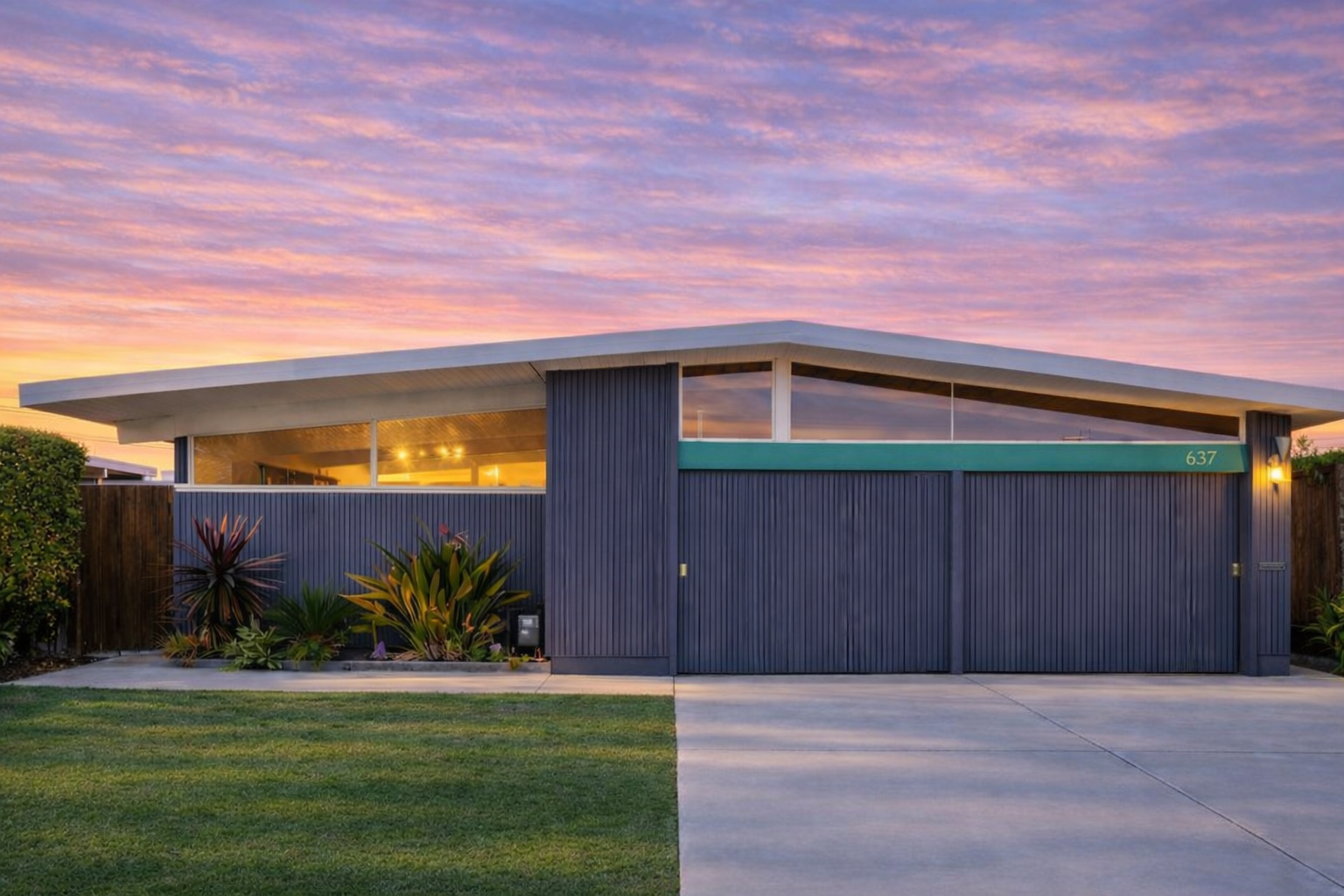
637 Vanessa Drive — A Refined Mid-Century Modern Retreat
A rare architectural opportunity, 637 Vanessa Drive showcases the timeless appeal of mid-century modern design with bright interiors, indoor-outdoor flow, and thoughtful modern upgrades. Located in the heart of Silicon Valley, this design-forward residence offers the perfect balance of architectural authenticity and contemporary livability.
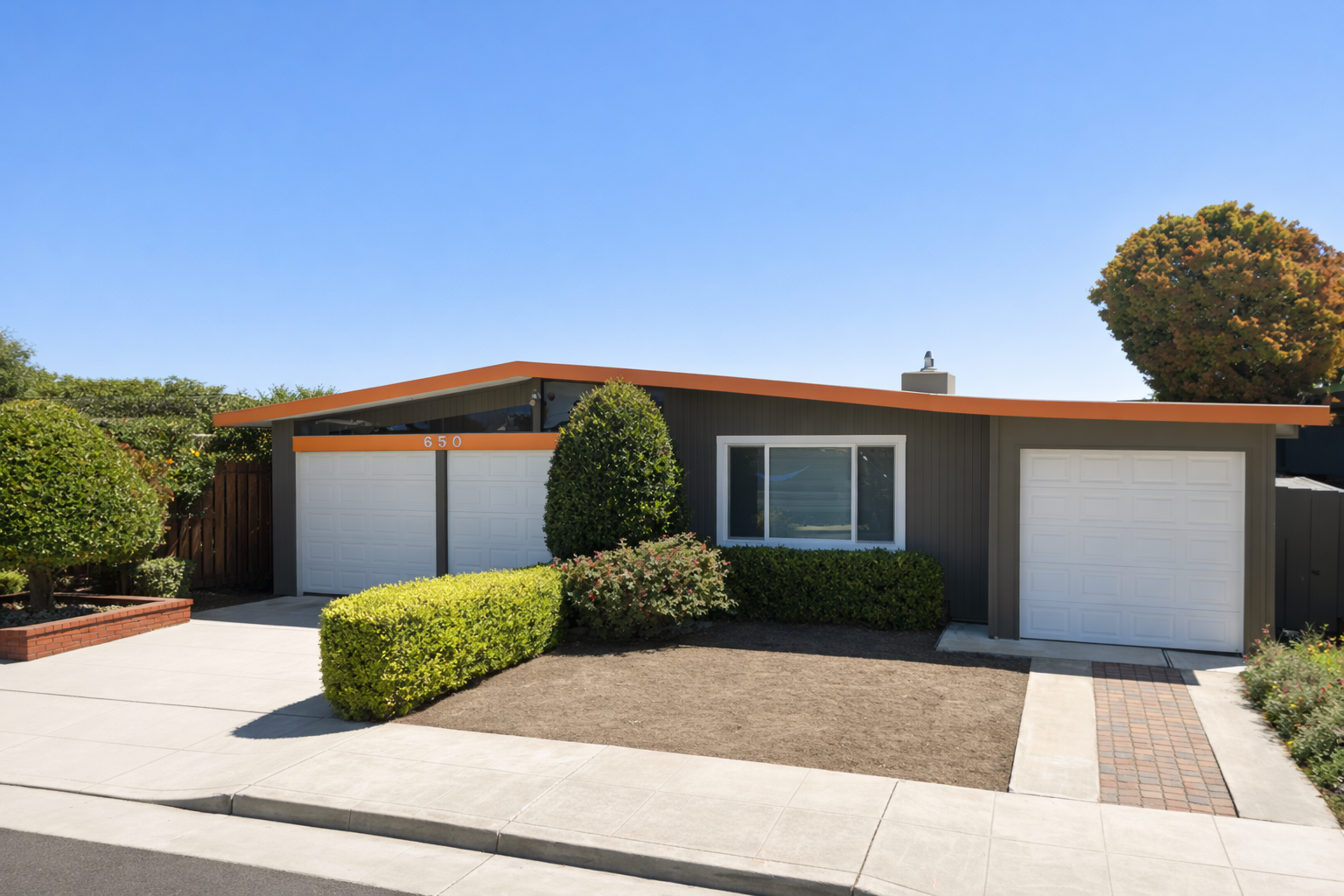
The Eichler Neighborhood of 19th Avenue Park in San Mateo
Nestled in San Mateo, the Eichler neighborhood of 19th Avenue Park features 235 classic mid-century modern homes built in the 1950s. Celebrated for their indoor–outdoor design, this Silicon Valley community attracts affluent tech professionals and design enthusiasts alike. Our comprehensive guide covers the tract’s history, architecture, schools, amenities, commute options, market trends, and the Boyenga Team’s Eichler expertise.

Fairwood Eichler Tract in Sunnyvale 94087: A Strategic Micro‑Market Brief in HBR Style
Hidden within Sunnyvale’s desirable Ponderosa / Ortega Park district, the Fairwood Eichler Tract represents one of Silicon Valley’s most architecturally distinctive residential enclaves. Developed in the early 1960s by visionary builder Joseph Eichler and designed by celebrated mid-century modern architects, these homes transformed suburban living by blending architecture, nature, and lifestyle into a single cohesive design philosophy. Today, Fairwood remains one of Sunnyvale’s most coveted neighborhoods—where timeless design meets the modern innovation economy of Silicon Valley.
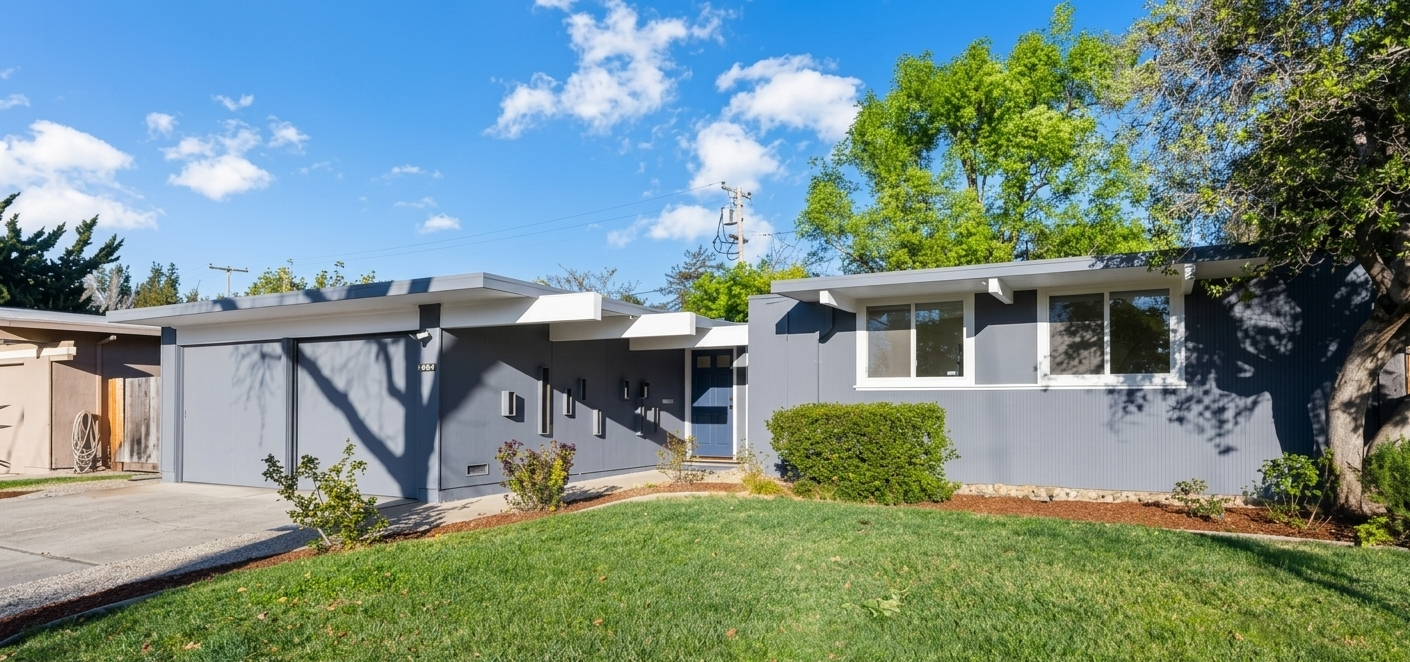
Featured Property: Mid-Century Eichler Living at 1484 Kingfisher Way, Sunnyvale
A beautifully remodeled Eichler in Sunnyvale, 1484 Kingfisher Way blends iconic mid-century modern architecture with thoughtful contemporary upgrades. Walls of glass, open living spaces, and seamless indoor-outdoor flow create a home that captures the essence of California modern living.