
Joseph Eichler’s Personal Residence
The Architectural Soul of Mid-Century Modern California
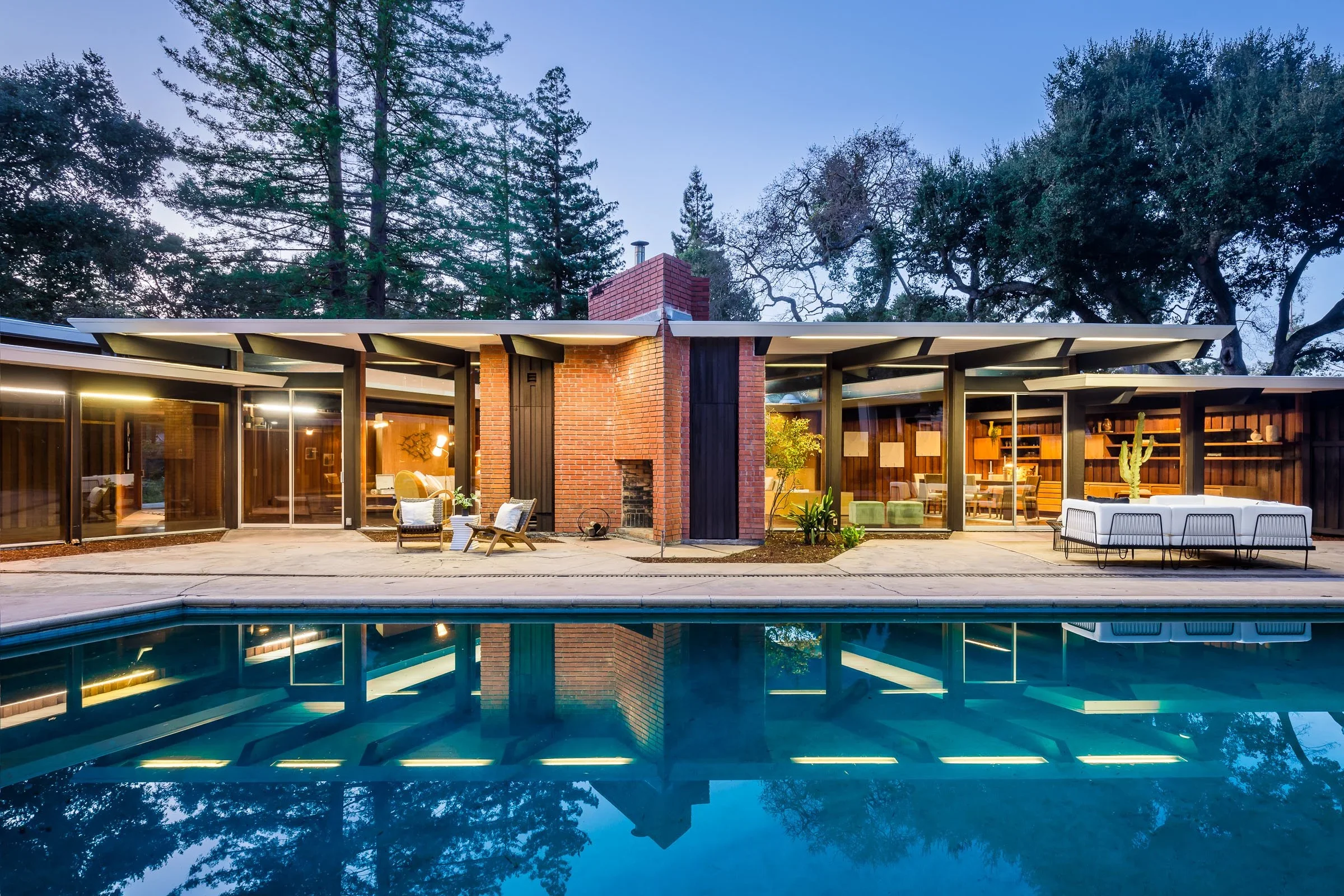
Few names are as synonymous with California mid-century modern architecture as Joseph Eichler. While thousands of Eichler homes dot Northern California neighborhoods from Palo Alto to San Rafael, and while Southern California features celebrated communities such as Balboa Highlands in Granada Hills, it was Eichler’s own personal residence that most clearly embodied his philosophy.
Joseph Eichler did not simply develop modern homes — he lived in one.
His personal residence was not a showroom experiment detached from daily life. It was a living, breathing demonstration of his belief that modern architecture could — and should — be accessible, humane, and deeply connected to its surroundings.
Understanding Eichler’s personal home means understanding the man, his mission, and the architectural movement that reshaped California suburban design.
The Historical Context: Joseph Eichler and the Democratization of Modern Design
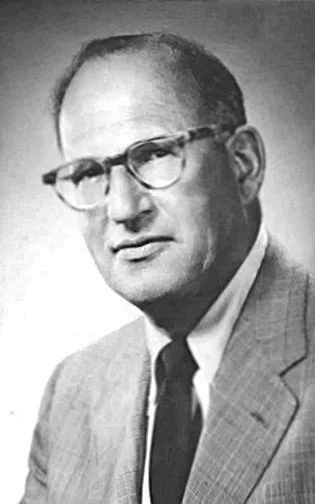
Joseph Leopold Eichler (1900–1974) was not an architect. He was a visionary real estate developer who believed that great design belonged in middle-class neighborhoods, not just on elite estates.
In the years following World War II, as returning veterans and young families fueled suburban expansion, Eichler saw an opportunity. Rather than replicate traditional Colonial Revival or Ranch-style homes, he partnered with progressive architects — most notably the firm Anshen & Allen — to create something radically different.
His developments emphasized:
Post-and-beam construction
Floor-to-ceiling glass walls
Radiant heating systems
Indoor-outdoor integration
Open floor plans
Central atriums
At a time when most suburban housing was compartmentalized and stylistically conservative, Eichler homes felt transparent, airy, and forward-looking.
But before convincing thousands of buyers, Eichler first had to convince himself.
Where Was Joseph Eichler’s Personal Residence?
Joseph Eichler’s most historically recognized personal residence was located in Burlingame, California, in the Burlingame Hills neighborhood — a setting that deeply influenced his architectural direction.
The Burlingame Hills area, situated between San Francisco and Palo Alto on the San Francisco Peninsula, offered sweeping views, established tree canopies, and proximity to the emerging cultural and economic vitality of the Peninsula.
It was here that Eichler lived in a modernist home designed by architect Frank Lloyd Wright protégé Robert Anshen — a residence that transformed his life.
The experience of living in that house directly inspired Eichler’s later developments.
From Burlingame Hills to Palo Alto, Eichler’s geographic choices were intentional. These communities would later become synonymous with Silicon Valley innovation, progressive thinking, and architectural experimentation.
The Frank Lloyd Wright Influence
Eichler’s early residence in Burlingame Hills was influenced by Frank Lloyd Wright’s Usonian ideals — an approach emphasizing affordable modern design, horizontal lines, integration with nature, and open interior plans.
The Wrightian influence was pivotal.
Eichler often credited his time living in that modernist residence as the moment he understood how architecture could change daily life. The experience of light pouring through glass walls, of moving freely through open interior spaces, and of blurring boundaries between indoors and outdoors profoundly affected him.
Unlike speculative developers, Eichler did not impose a design he wouldn’t personally inhabit. His personal home was proof of concept.
Architectural Analysis of Eichler’s Personal Residence
While his later tract homes refined the formula, Eichler’s own residence showcased core elements that would define the Eichler brand.
1. Post-and-Beam Construction
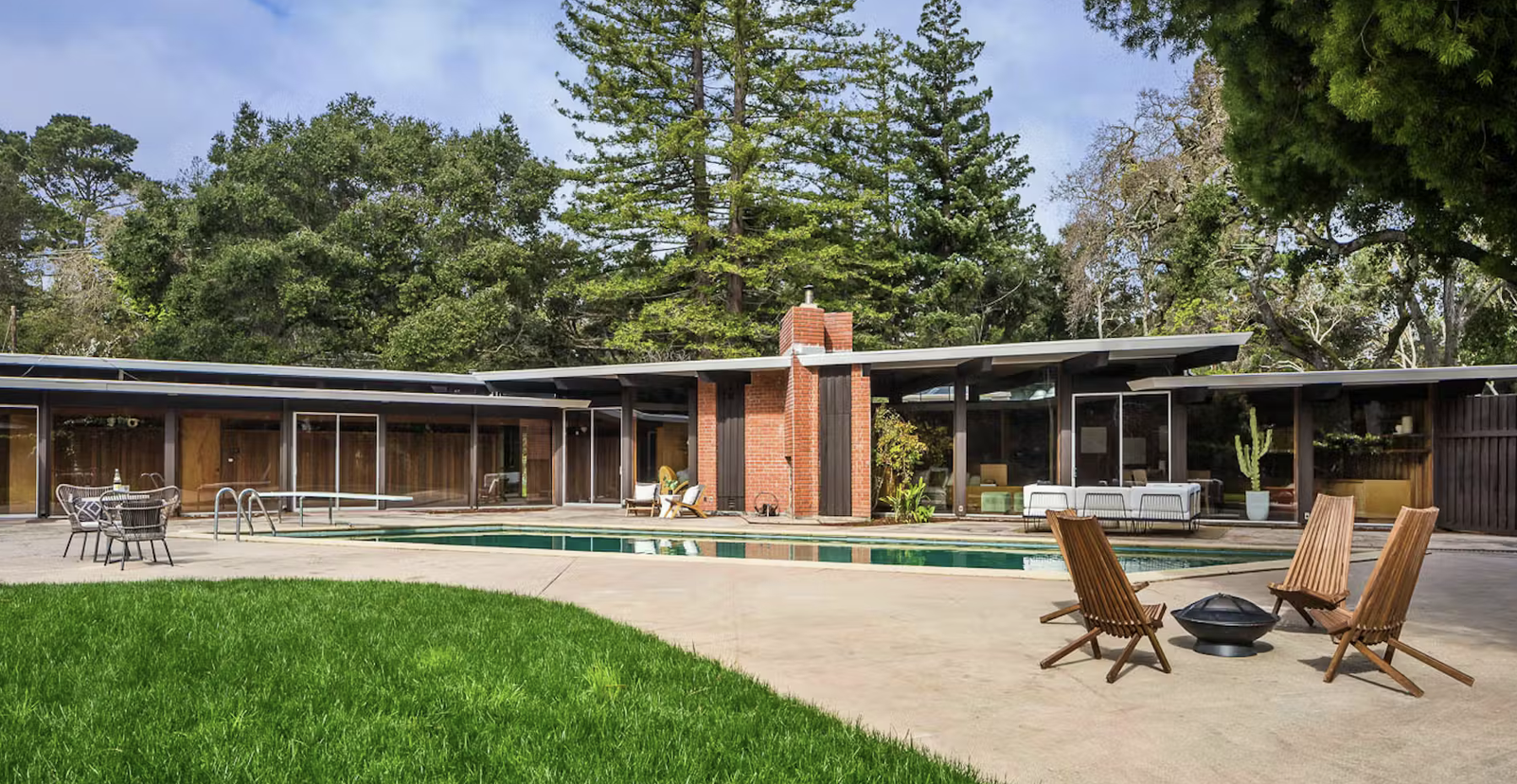
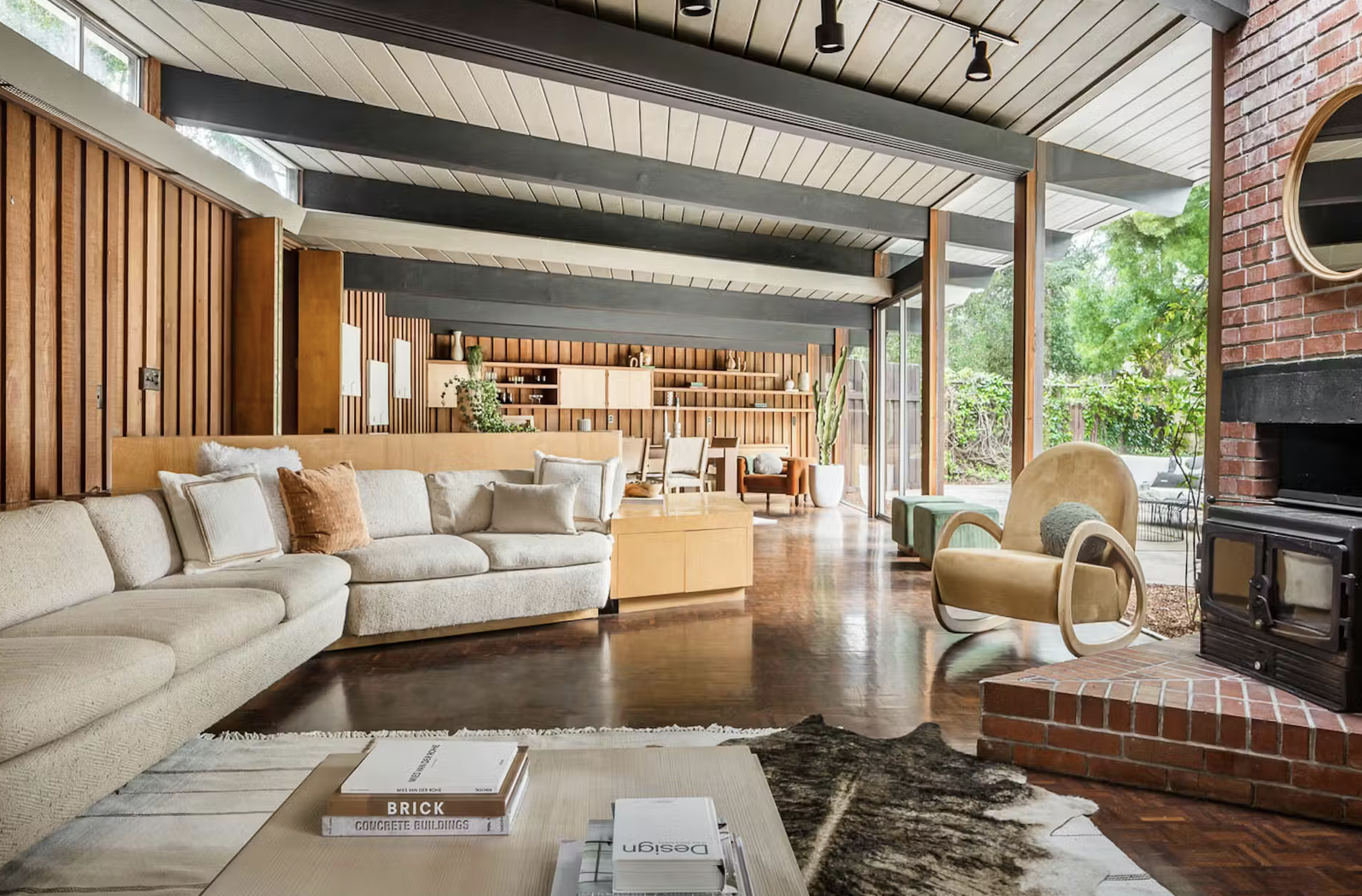
Rather than relying on load-bearing interior walls, post-and-beam framing allowed expansive glass walls and flexible layouts. This structural system created transparency and openness that became hallmarks of Eichler homes in Palo Alto and throughout Northern California.
2. Glass as Architecture
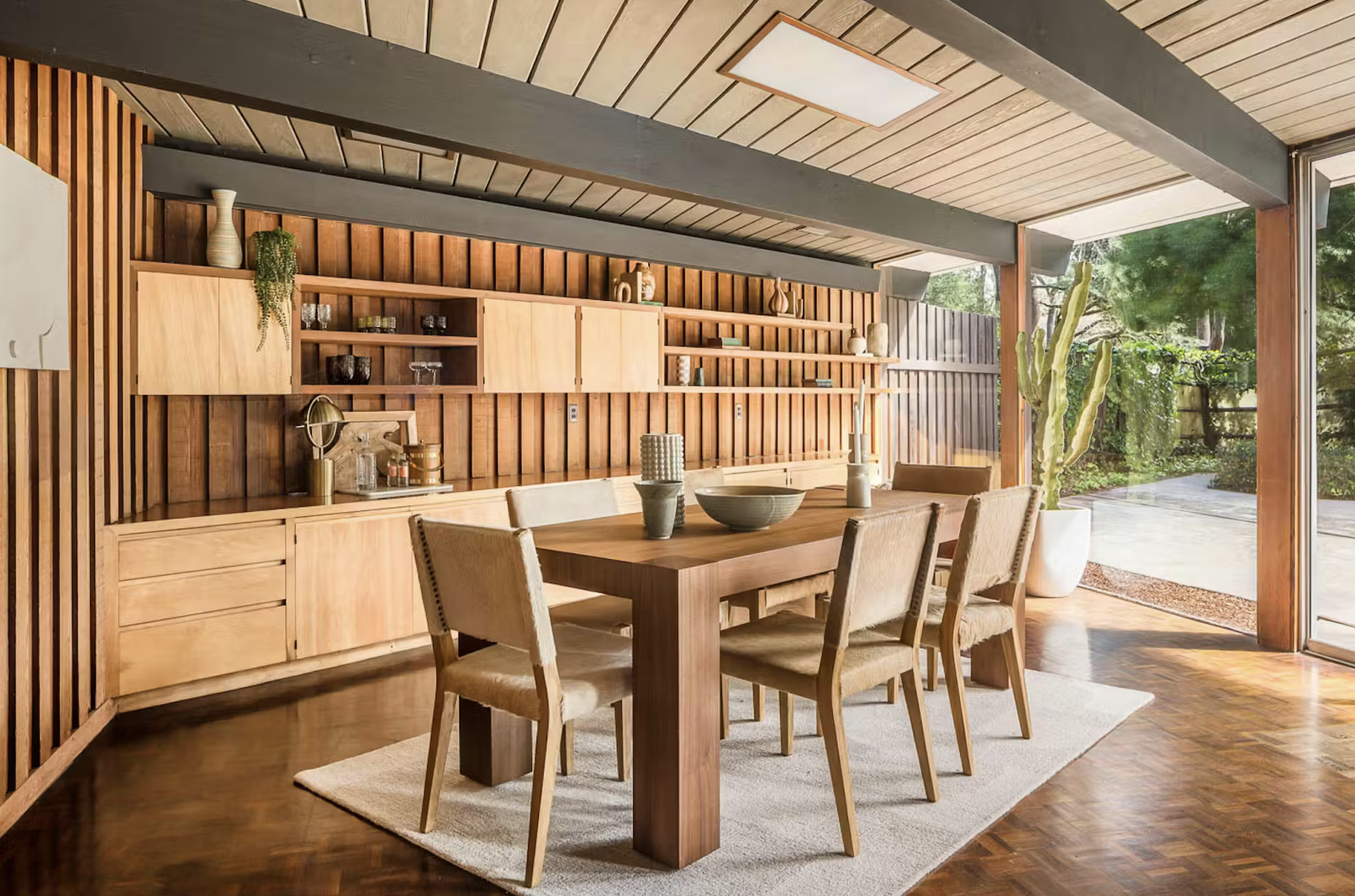
Glass was not decorative — it was foundational. Floor-to-ceiling glazing dissolved the boundary between interior and exterior, inviting landscape, sky, and sunlight into everyday life.
In California’s temperate climate, this design choice felt natural and revolutionary.
3. Indoor-Outdoor Continuity
Central courtyards and atriums introduced privacy while maximizing light. These interior gardens became emotional centers of the home — quiet sanctuaries visible from multiple rooms.
This concept would later define thousands of Eichler homes across Silicon Valley.
4. Radiant Heating Innovation
Eichler incorporated radiant slab heating — an advanced feature in the 1950s — reinforcing his commitment to comfort and innovation.
Gallery
The Palo Alto Connection
While Eichler’s personal residence in Burlingame influenced his direction, Palo Alto became the epicenter of his legacy.
Palo Alto, Mountain View, Sunnyvale, and surrounding Silicon Valley cities became home to some of the largest concentrations of Eichler developments.
The connection was more than geographic.
Palo Alto embodied forward-thinking culture — home to Stanford University, emerging technology industries, and progressive architectural tastes.
Eichler’s developments fit seamlessly into this environment.
Living on the Peninsula placed Eichler at the crossroads of innovation — a theme that would later define Silicon Valley itself.
Eichler’s Philosophy of Inclusivity
One of the most important aspects of Joseph Eichler’s legacy — reflected in both his personal residence and developments — was his commitment to fair housing.
During the 1950s and 1960s, discriminatory housing covenants were common. Eichler refused to adopt them.
His communities were sold without racial restrictions — a bold stance during a segregated era.
The personal and the professional were inseparable. Eichler’s values shaped his architecture.
The Evolution From Personal Residence to Development Model
The lessons Eichler learned living in his own modernist home translated directly into his tract developments.
He standardized design elements while preserving architectural integrity.
By collaborating with firms such as:
Anshen & Allen
Jones & Emmons
Claude Oakland
Eichler ensured that modernism could scale without losing its essence.
His personal residence was not replicated exactly — but its DNA infused every Eichler home built from Palo Alto to Marin County.
The Importance of Location: Why the Peninsula Mattered
The San Francisco Peninsula provided ideal conditions:
Mediterranean climate suitable for indoor-outdoor living
Progressive buyers open to modern design
Expanding postwar population
Proximity to San Francisco cultural influence
Burlingame, Palo Alto, and Atherton represented a blend of established affluence and emerging suburban growth.
Eichler understood that modernism would resonate here first.
Design Legacy and Lasting Impact
Today, Eichler homes are among the most sought-after mid-century modern properties in California real estate markets.
In cities like Palo Alto, Mountain View, Sunnyvale, and San Rafael, original Eichlers command premium prices due to:
Architectural pedigree
Limited supply
Preservation efforts
Silicon Valley location value
The personal residence that shaped this movement remains symbolic — a reminder that great developments begin with lived experience.
Restoration and Preservation of Eichler Homes
Homeowners of Eichler properties often focus on:
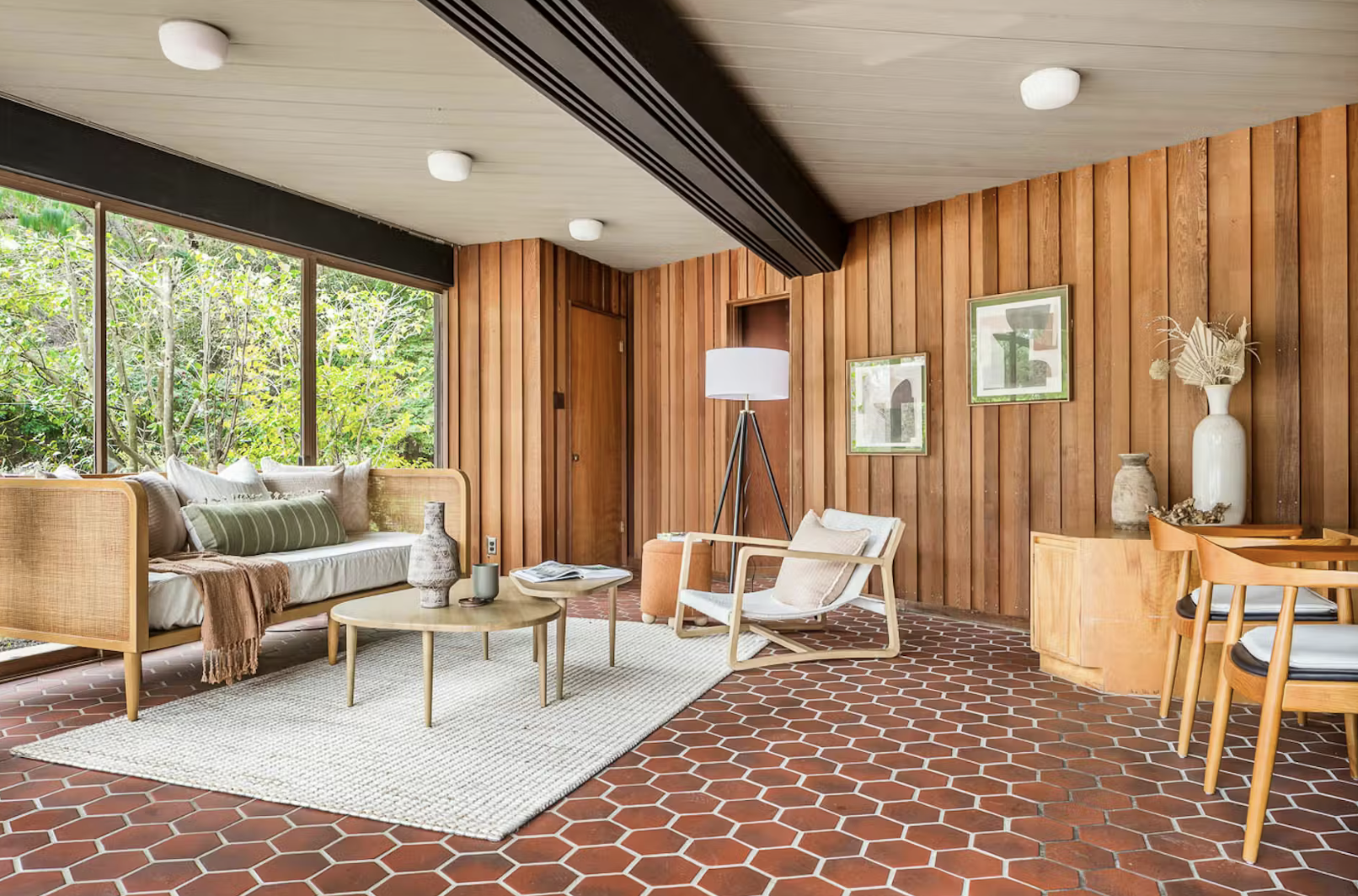
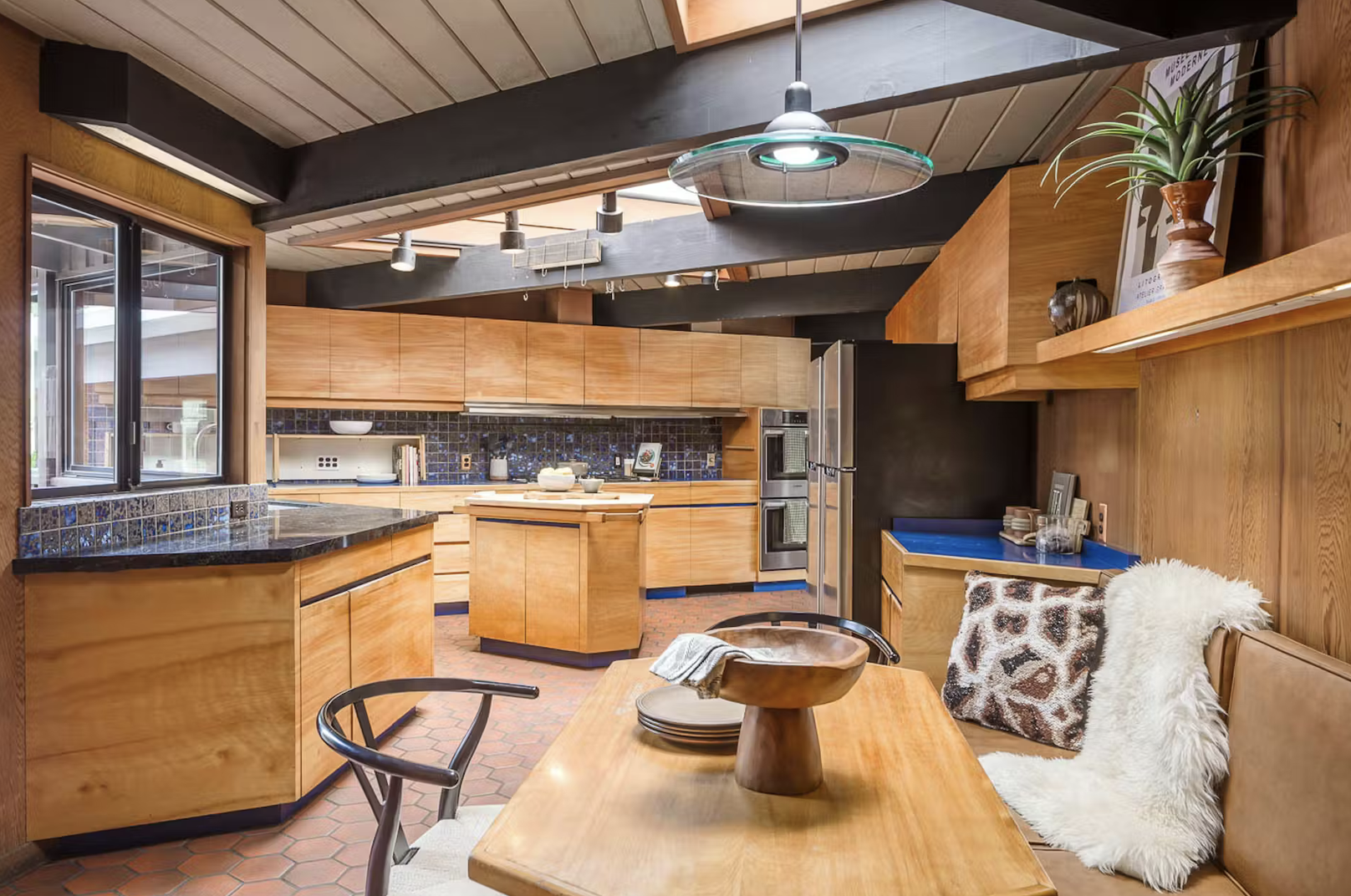
Restoring mahogany paneling
Replacing single-pane glass with energy-efficient glazing
Preserving globe lighting fixtures
Maintaining original atrium layouts
Upgrading radiant heating systems
The architectural integrity established in Eichler’s own residence set the standard for preservation.
Joseph Eichler’s Broader Architectural Significance
Eichler’s work bridged:
Frank Lloyd Wright’s Usonian vision
West Coast mid-century modernism
Postwar suburban expansion
Early Silicon Valley cultural identity
His personal home represents the pivot point between inspiration and execution.
Why Joseph Eichler’s Personal Residence Still Matters
For architects, historians, real estate professionals, and mid-century modern enthusiasts, Eichler’s residence is more than a historic address.
It is the birthplace of a philosophy.
It demonstrates how:
Personal experience can transform an industry
Architecture can shape community
Modernism can be democratic
Design can be both accessible and timeless
In the quiet hills of Burlingame and across the neighborhoods of Palo Alto, Eichler’s vision continues to shape California living.
The Enduring Appeal of Eichler Architecture in Silicon Valley
Today, as Silicon Valley represents global innovation, Eichler neighborhoods reflect that same spirit architecturally.
Clean lines. Glass walls. Open collaboration. Indoor-outdoor flow.
The parallels are striking.
Eichler’s personal residence foreshadowed a cultural shift toward openness — both spatially and socially.
The Home That Launched a Movement
Joseph Eichler’s personal residence was not merely a private dwelling. It was the laboratory in which a revolutionary idea took form.
From Burlingame Hills to Palo Alto and throughout Northern and Southern California, the ripple effects of that home continue to influence real estate, architecture, and community design.
To understand Eichler homes is to understand the residence that inspired them.
And to stand in an Eichler home today — sunlight filtering through clerestory windows, atrium doors open to the breeze — is to experience the living legacy of Joseph Eichler’s personal vision.