

Home Buyer’s Checklist for Mid-Century Modern Homes in Silicon Valley
Buying a mid-century modern home in Silicon Valley isn’t just about square footage or price per square foot—it’s about understanding scarcity, architectural authenticity, and a niche market where design integrity drives long-term value. Eichler homes, in particular, operate in their own ecosystem, rewarding buyers who know how to evaluate originality, condition, and location with precision.
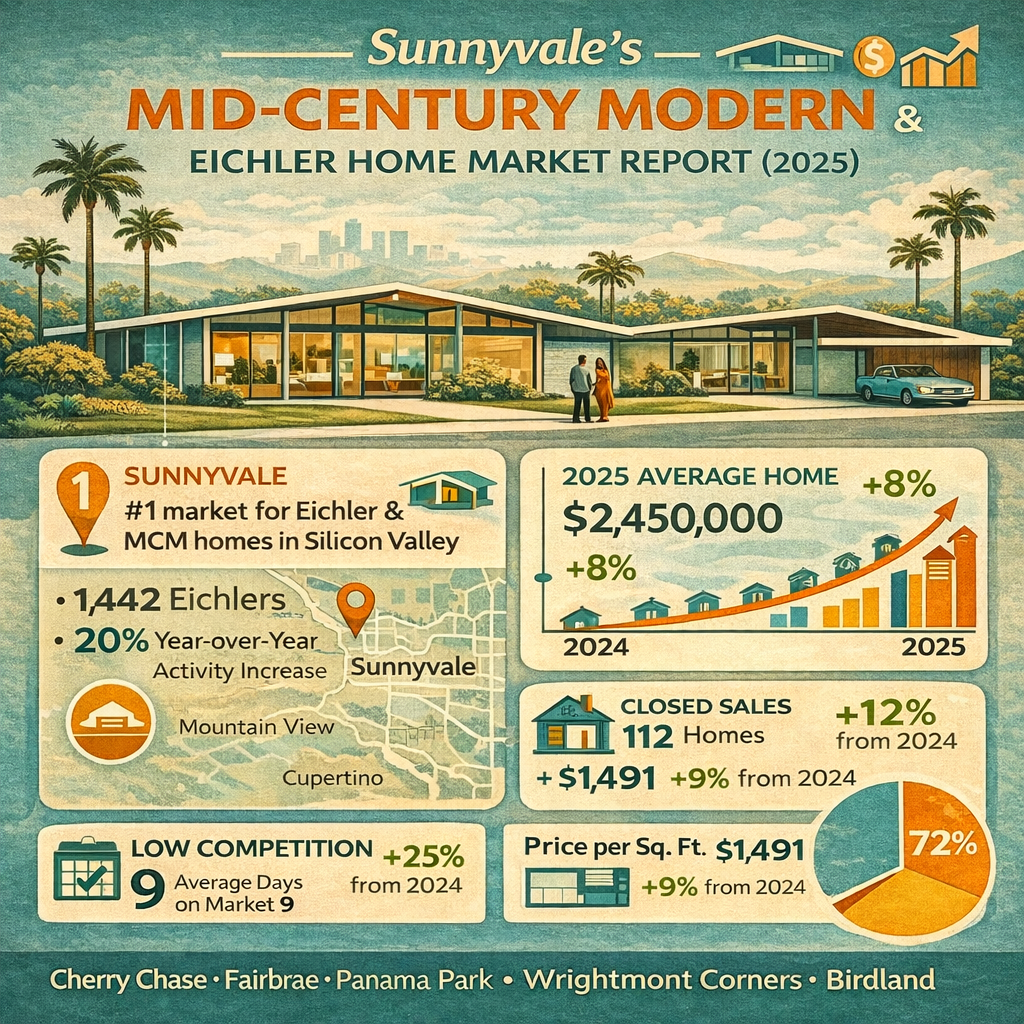
Sunnyvale’s Mid-Century Modern & Eichler Home Market Report
Sunnyvale stands as one of Silicon Valley’s most important mid-century modern epicenters — home to more than 1,100 Eichler residences and the birthplace of Joseph Eichler’s revolutionary vision. With fiercely limited inventory, intense buyer demand, and a deeply preservation-minded community, Sunnyvale’s Eichler neighborhoods consistently outperform the broader market in pricing, speed, and long-term appreciation. Today, these architecturally significant homes are not just residences — they are design-forward assets that blend California modernism, lifestyle appeal, and enduring value.
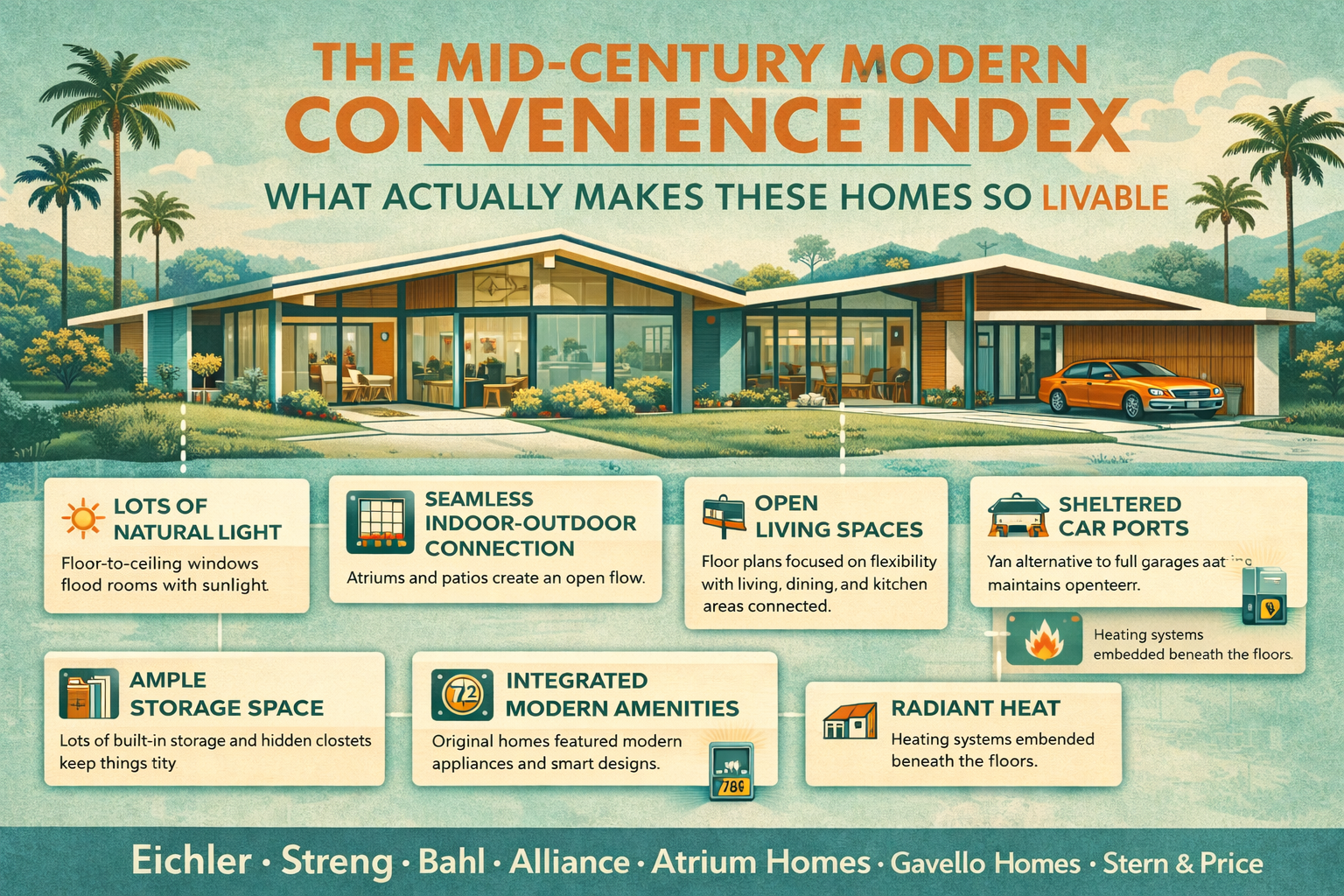
The Mid-Century Modern Convenience Index: What Actually Makes These Homes So Livable
The enduring value of mid-century modern homes isn’t nostalgia — it’s intelligence. These homes were designed around movement, light, and daily living, eliminating wasted space and friction long before modern buyers had the language to describe what they wanted. That’s why great mid-century homes don’t just look right — they live right.

Mid-Century Modern Builders of Silicon Valley
n Silicon Valley, not all mid-century modern homes are created equal. Architectural purity, builder legacy, and buyer perception play a measurable role in long-term value—and understanding those nuances is where real leverage is found. From iconic Eichlers to lesser-known atrium builders, knowing the difference isn’t just design appreciation—it’s a market advantage.
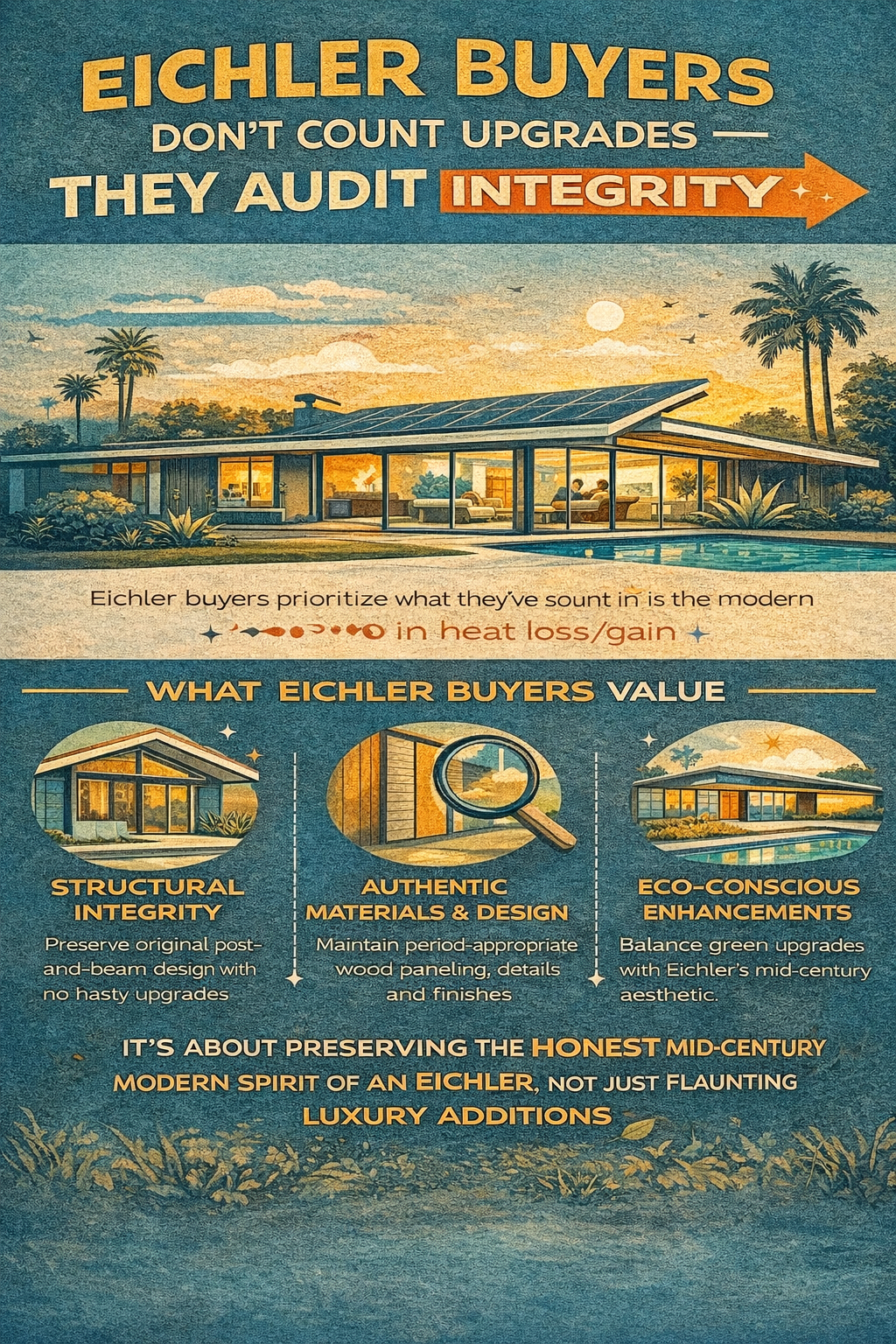
Eichler Buyers Don’t Count Upgrades — They Audit Integrity
“Eichler buyers don’t ask what’s been upgraded — they ask what’s still intact. From floating ceilings to open sightlines and intact atriums, value in an Eichler isn’t created by adding features, but by preserving architectural truth. In this niche market, integrity isn’t sentimental — it’s strategic.”
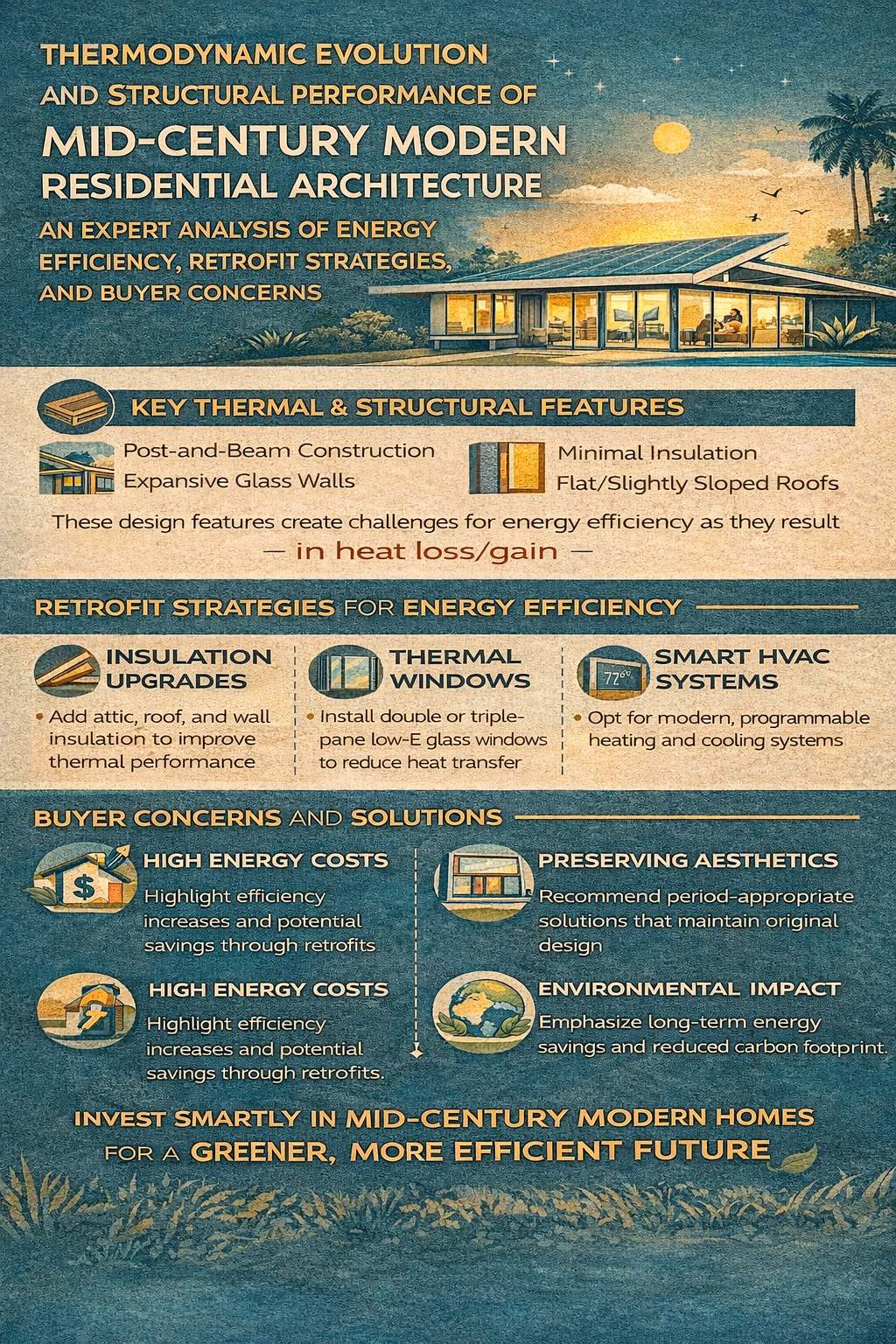
Thermodynamic Evolution and Structural Performance of Mid-Century Modern Residential Architecture
Mid-century modern homes were never designed to conserve energy—they were designed to dissolve the boundary between indoors and outdoors. Thin rooflines, expansive glass, uninsulated slabs, and radiant floors embedded directly in concrete created architectural poetry, but thermodynamic vulnerability. Today, the true question for buyers isn’t whether these homes are inefficient—it’s whether they’ve been thoughtfully modernized without destroying the architecture that gives them value.
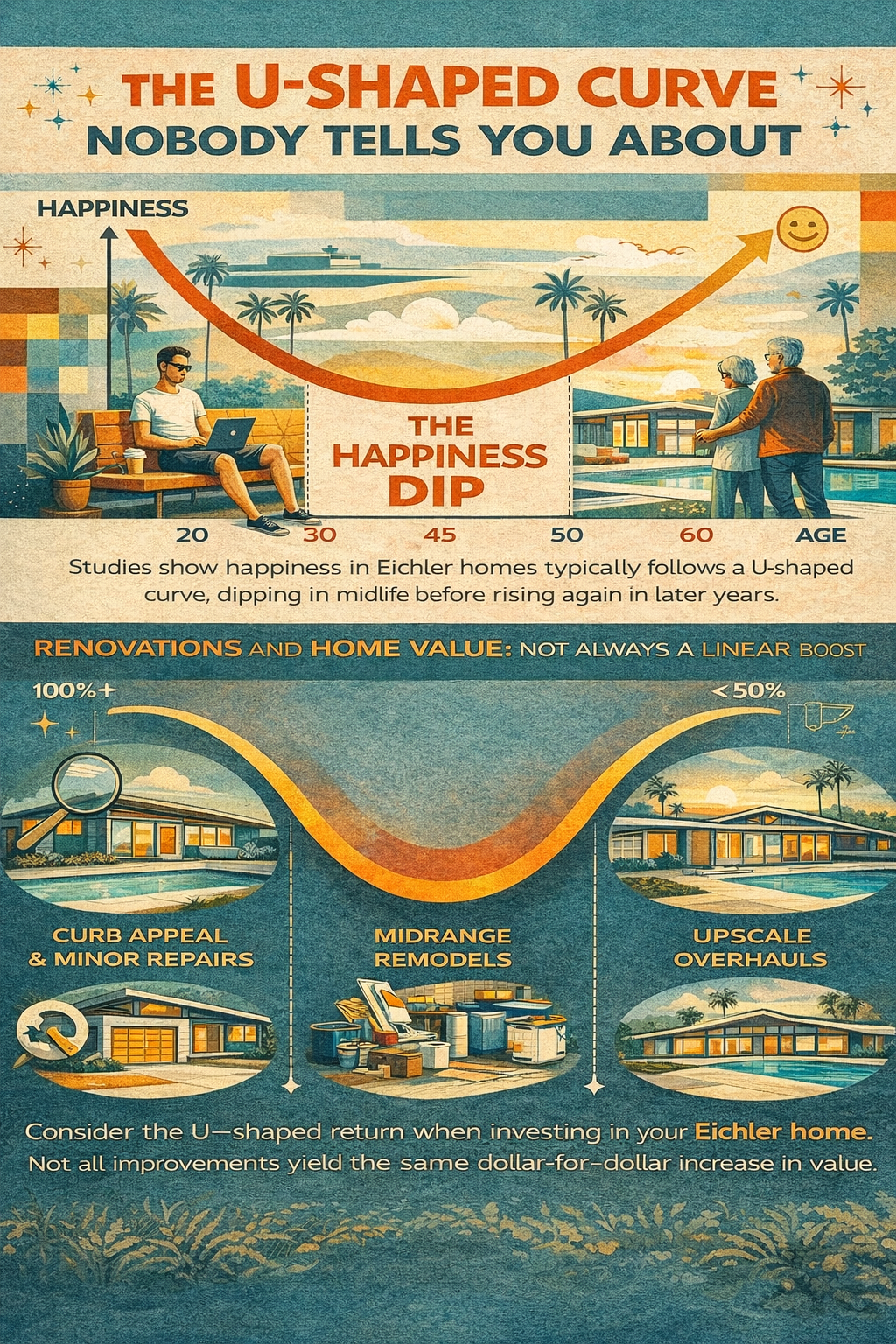
The U-Shaped Curve Nobody Tells You About
In mid-century modern homes, renovation value is not linear—it’s U-shaped. Buyers pay premiums for untouched “time capsules” and architecturally aligned upgrades, while partially renovated, stylistically mismatched homes often lose value. In Eichlers especially, authenticity isn’t nostalgia—it’s a measurable financial advantage.
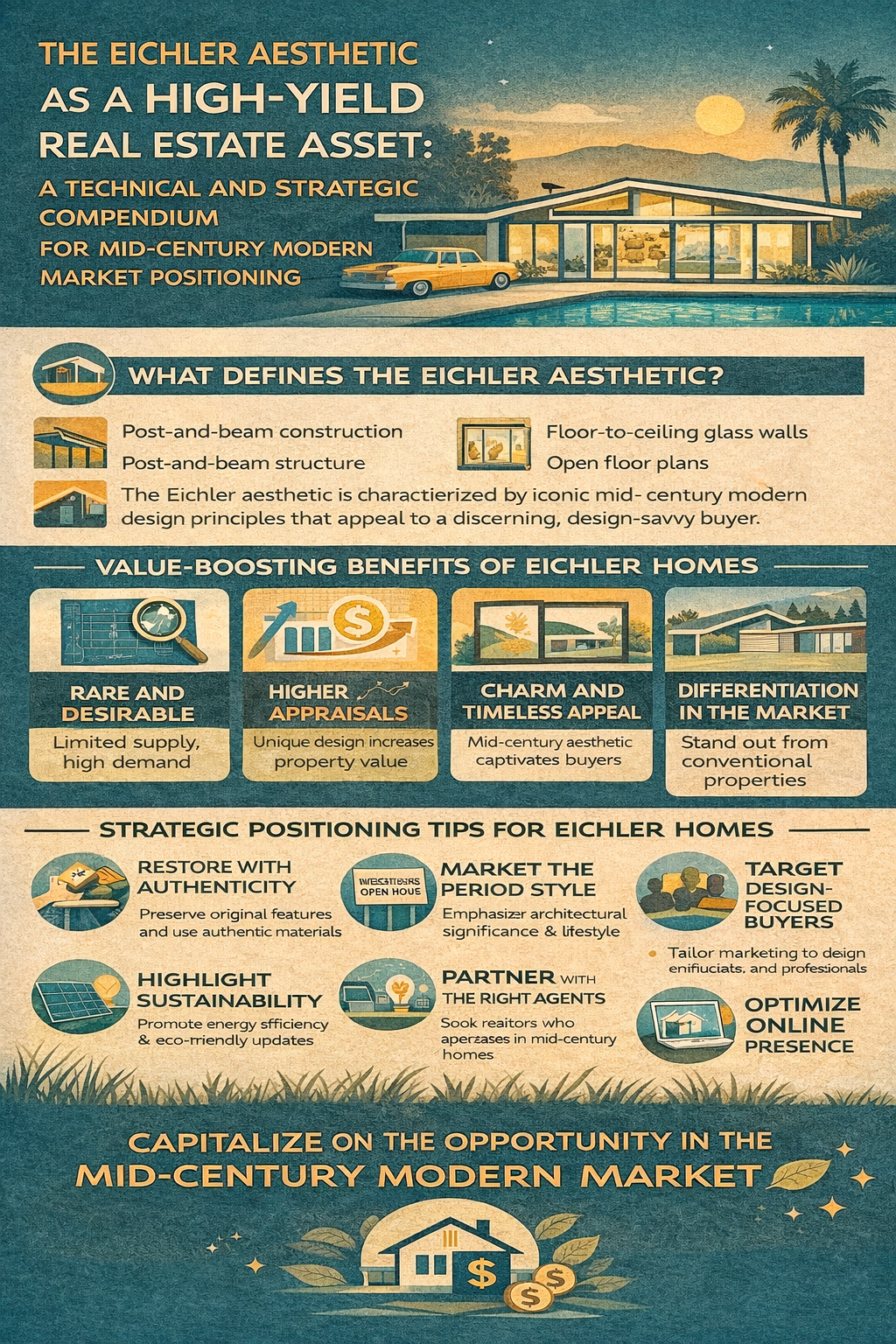
The Eichler Aesthetic as a High-Yield Real Estate Asset: A Technical and Strategic Compendium for Mid-Century Modern Market Positioning
Eichler homes operate on a fundamentally different economic frequency than conventional suburban real estate. Value is not created by luxury spend alone, but by architectural alignment—post-and-beam integrity, radiant heating metallurgy, thin-profile glazing, and fidelity to Joseph Eichler’s original social and design philosophy. In today’s market, authenticity isn’t nostalgia—it’s a measurable asset class.

Comprehensive Geographic and Architectural Taxonomy of Eichler Homes Northern California Developments: A Spatial Analysis and Neighborhood Inventory
Joseph Eichler didn’t build neighborhoods—he built systems for living. Across Northern California, his architect-driven communities formed a deliberate geographic network where post-and-beam engineering, glass walls, and atrium-centered planning redefined how light, privacy, and community could coexist. From the experimental prototypes of Sunnyvale to the terraced hillsides of Marin and the vertical modernism of San Francisco, Eichler’s developments remain one of the most cohesive and enduring architectural legacies in American residential design.
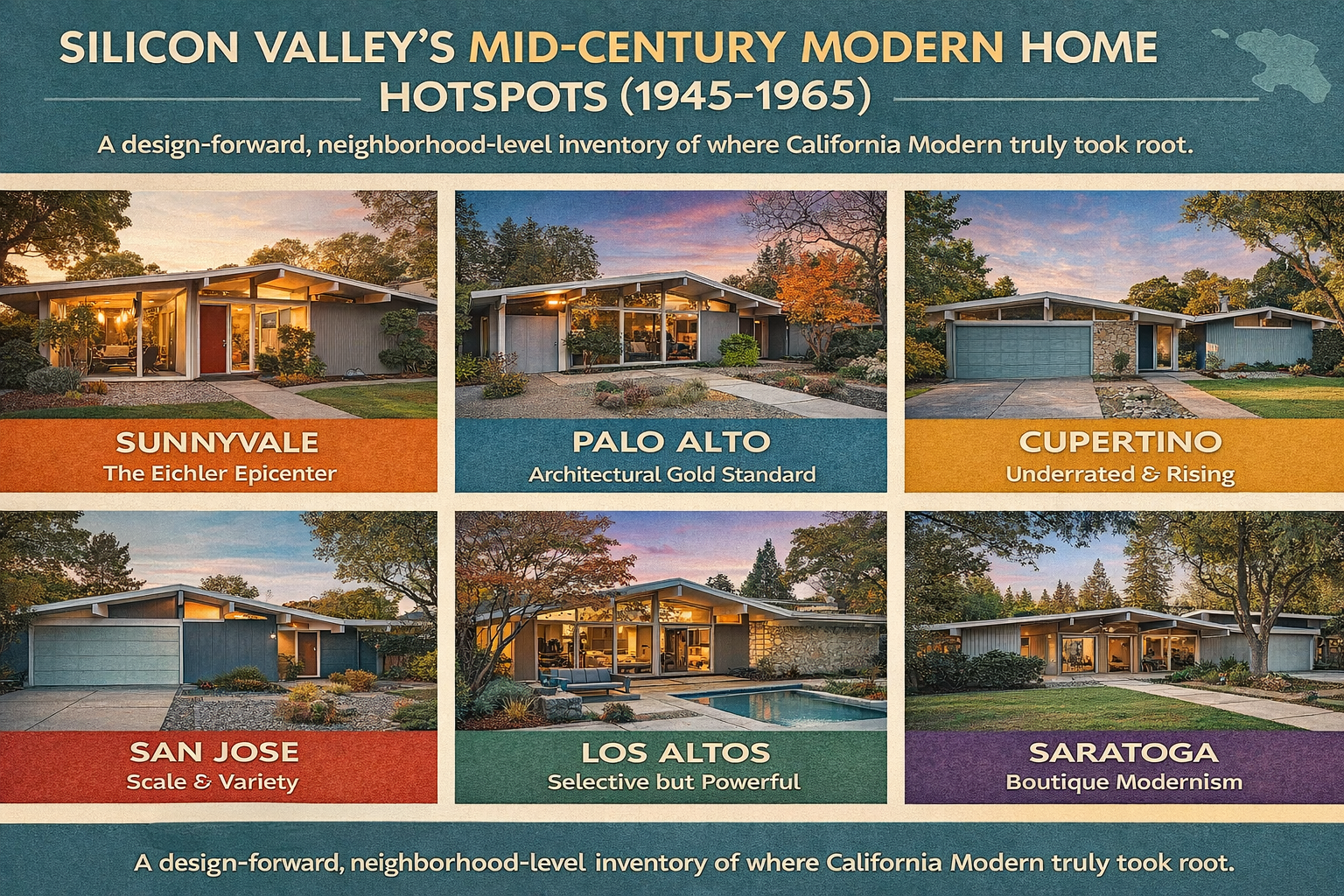
Silicon Valley’s Mid‑Century Modern Home Hotspots (1945–1965)
Silicon Valley’s mid-century modern neighborhoods—built between 1945 and 1965—represent one of the most design-driven and resilient residential asset classes in California real estate. From Joseph Eichler’s iconic post-and-beam tracts in Palo Alto and Sunnyvale to preserved enclaves in Cupertino, Mountain View, and Los Altos, these homes combine architectural integrity, indoor-outdoor living, and long-term market performance. Today, well-preserved and thoughtfully renovated mid-century homes consistently command premiums, attracting design-savvy buyers who value authenticity, lifestyle, and legacy.
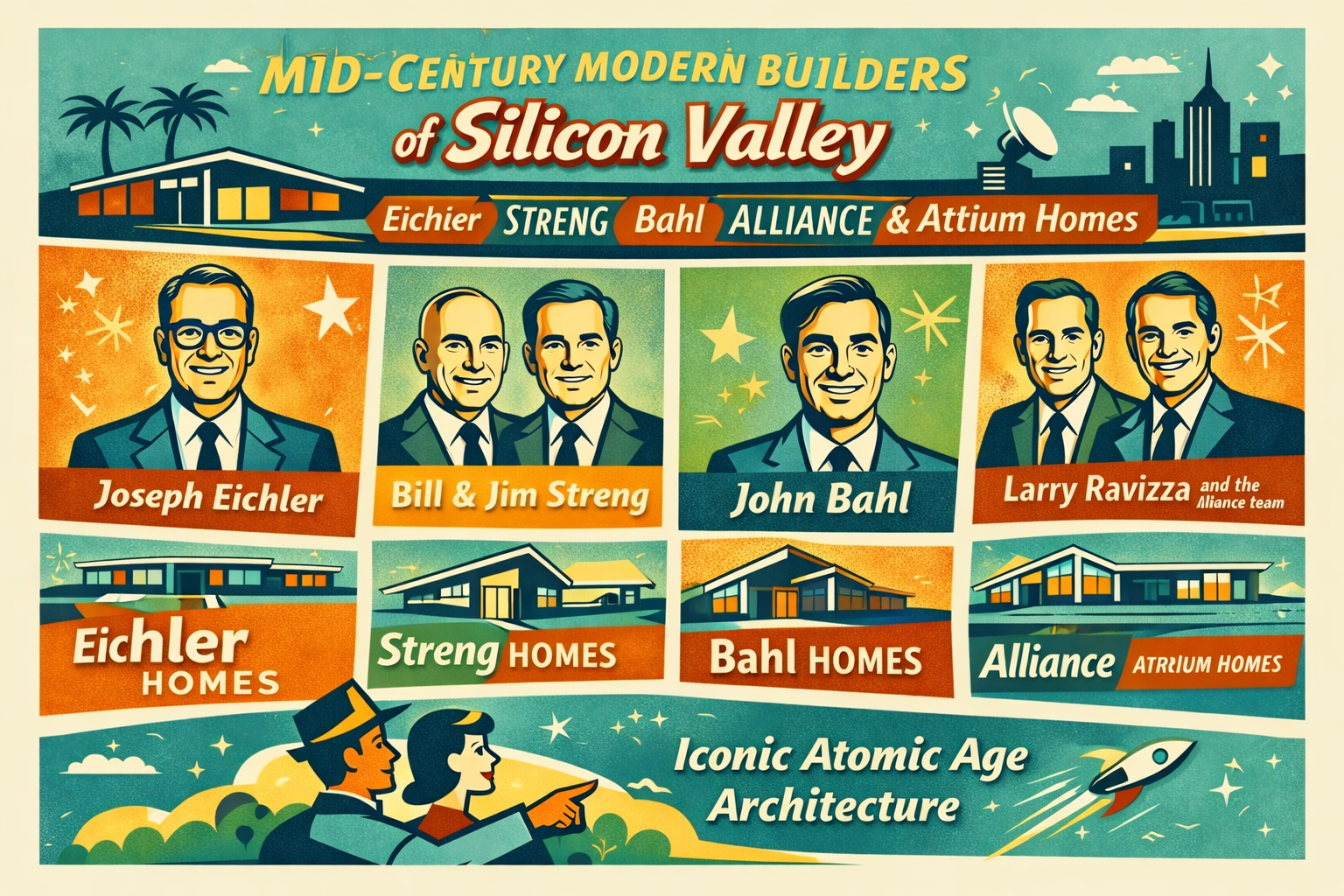
Mid-Century Modern Builders of Silicon Valley: Eichler, Streng, Bahl, Alliance & Atrium Homes
Mid-century modern homes in Silicon Valley aren’t just houses — they’re architectural assets. From Joseph Eichler’s glass-walled atrium models to the rare and private Bahl patio homes tucked into Cupertino and Sunnyvale courts, these properties operate in a design-driven market where authenticity, layout, and pedigree directly influence value. Understanding who built your home — and why — can be the difference between an average sale and a top-of-market result.
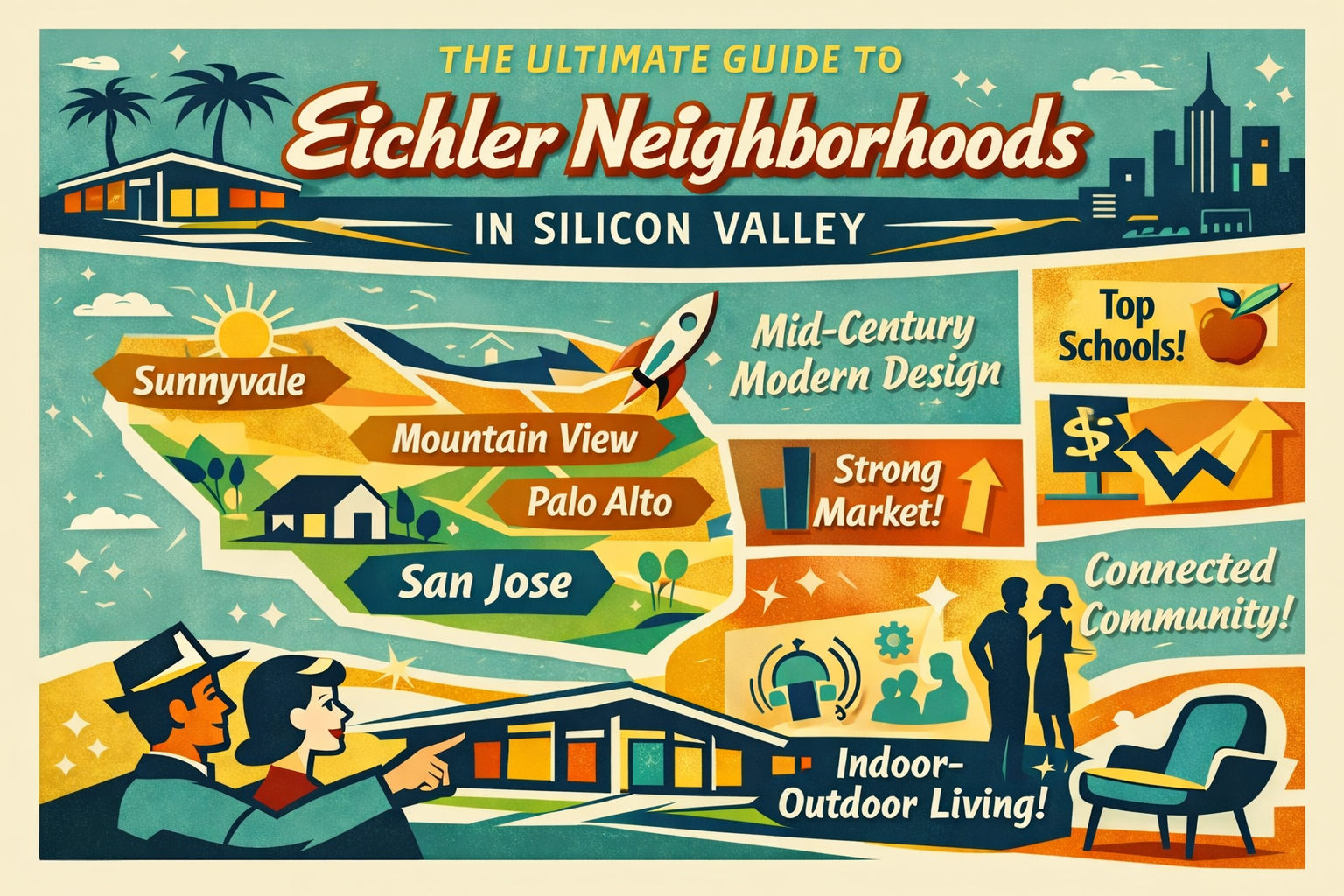
The Ultimate Guide to Eichler Neighborhoods in Silicon Valley
Silicon Valley’s Eichler neighborhoods are more than collections of homes — they are living design legacies. Built between the late 1940s and 1960s, Eichler tracts across Palo Alto, Sunnyvale, Cupertino, San Jose, and Los Altos introduced open floor plans, post-and-beam construction, indoor-outdoor living, and a community-first vision decades ahead of their time. Today, these mid-century modern enclaves remain remarkably intact, protected by design guidelines, single-story overlays, and deeply committed homeowners. From Palo Alto’s nationally registered Eichler districts to Sunnyvale’s family-centric atrium communities and Los Altos’ rare luxury Eichlers, these neighborhoods function as both architectural time capsules and blue-chip real estate assets — coveted by design enthusiasts, tech leaders, and long-term investors alike.
The Eichler Premium: Architectural Consistency and Market Resilience in Silicon Valley Housing
Eichler neighborhoods behave less like conventional housing and more like blue-chip assets. Their architectural consistency, legal protections, and cultural cachet create a market dynamic that resists volatility, restricts supply, and attracts financially resilient, design-driven buyers who value pedigree over square footage. In Silicon Valley, this has translated into faster sales, stronger overbids, and long-term price resilience—even during market corrections.
Marketing an Eichler Is Not Like Marketing Any Other Home: Why Design-Literate Presentation Changes Results and Why Wrong Photos Attract the Wrong Buyers
Eichler homes are not commodities — they are architectural artifacts. When marketed with generic photography and feature-based copy, they send distress signals to flippers and bargain hunters. When presented with design literacy, editorial photography, and historical narrative, they attract preservationist buyers who pay premiums for authenticity, provenance, and lifestyle. In the Eichler market, presentation doesn’t just influence price — it determines who shows up to buy.
San Jose Eichler Market Trends (Late 2025)
“In San Jose’s tight Eichler market, demand continues to outpace supply — especially in Cambrian, where renovated mid-century modern homes are sparking bidding wars and going pending in under two weeks. Fairglen remains steady at the top of the market, while Cambrian’s Fairglen Addition is surging ahead with strong year-over-year appreciation. For sellers, it’s prime time. For buyers, it’s all about preparation — and partnering with true Eichler experts who understand these architectural icons inside and out.”

📍 Top Eichler Micro-Markets in Silicon Valley (By Market Readiness + Upside Potential)
"Silicon Valley’s top Eichler micro-markets—Palo Alto, Sunnyvale, Cupertino, and select San Jose tracts—continue to outperform thanks to their rare blend of architectural authenticity, school-district strength, and long-term lifestyle appeal. With limited inventory, strong preservation culture, and rising demand from design-oriented buyers, these neighborhoods have become the gold standard for mid-century modern living. Guided by the Boyenga Team’s unmatched Eichler expertise, buyers and sellers gain strategic insights into remodel levels, authenticity scoring, and future value potential across each micro-market."

The Boyenga Team Eichler Authenticity Scale: A Guide to Eichler Remodel Levels
Eichler homes aren’t just structures — they’re California’s mid-century modern soul. The Boyenga Team’s Eichler Authenticity Scale reveals how remodel choices shape not only architectural integrity but also market value and buyer psychology. From untouched time-capsule originals to heavily altered transformations, this scale helps homeowners, buyers, and agents understand exactly what makes an Eichler magical — and what happens when that magic is preserved, reinterpreted, or erased. No matter where a home falls on the spectrum, the right knowledge unlocks smarter decisions, better pricing, and a deeper appreciation for Silicon Valley’s most iconic modernist neighborhoods.

The 94303 Eichler Atlas: Comparing Green Gables, Edgewood, and Mitchell Park
Discover Palo Alto’s iconic Eichler enclaves in our in-depth “94303 Eichler Atlas.” We compare Green Gables, Edgewood, and the Mitchell Park area (Greenmeadow) – three architecturally intact mid-century modern neighborhoods. Explore their rich history, top-ranked PAUSD schools, vibrant parks (from Rinconada to Mitchell Park), and luxury real estate trends. Learn how these 94303 and 94306 communities became Silicon Valley’s coveted havens for Eichler homesand modernist design. With detailed market analysis (median home prices, appreciation rates) and insider case studies of record sales, this comprehensive guide offers an authoritative look at lifestyle and real estate in Palo Alto’s Eichler neighborhoods – brought to you by the area’s Eichler experts, the Boyenga Team.
The Mid-Century Index: Ranking Silicon Valley Eichler ZIP Codes by 20-Year Appreciation Modeling
Eichler homes have become Silicon Valley’s blue-chip architectural asset—rare, protected, and consistently outperforming the broader market. This Mid-Century Index reveals the ZIP codes with the strongest 20-year appreciation, from Palo Alto’s historic enclaves to Sunnyvale’s tech-proximate communities. By analyzing architectural rarity, land value, school districts, and community capital, this report uncovers why certain Eichler neighborhoods deliver exceptional long-run growth and remain among the most coveted investments in California real estate.
Downtown Sunnyvale’s Evolution & Its Impact on 94086 Eichler Values
Downtown Sunnyvale’s Cityline transformation is redefining the desirability of 94086 Eichler homes. As walkability, retail, and design-forward development converge, mid-century modern neighborhoods surrounding the Cityline core are experiencing accelerated appreciation—and the Boyenga Team at Compass remains the trusted authority guiding luxury buyers, sellers, and architecture enthusiasts through this evolving market.