
Keep it midmod
The National Register Rules in Plain Words: 36 CFR Part 60, Section by Section
Behind every National Register listing is one short federal rule. This page reads it section by section for owners in mid-century modern neighborhoods: what a listing does, who is told, how owners are counted, and how a listing can change.
- What listing doesSection 60.2 in plain words, including the line about private owners.Read § 60.2
- ObjectionsHow owners are counted, and what a majority objection does.See the count
- The day counts15, 30, 45, 60, 75 and 90 days, and what each one times.See the days
- Change and removalFour reasons to redraw a boundary and four grounds to remove a listing.See the grounds
How to use this page
The National Register of Historic Places runs on a short federal regulation: Part 60 of Title 36 of the Code of Federal Regulations, written 36 CFR Part 60. It says how a property is nominated, who has to be told, how owners are counted and how a listing can later be changed or removed. Our guide to starting a historic district and our reading of the nomination form both lean on it. This page goes through the rule itself.
We read the edition dated July 1, 2024, and we give the section number with each point so that you can check it against the published text of Part 60. Everything below is a summary in our words. Rules are amended from time to time and state offices add procedures of their own, so treat this page as general information, not legal advice. For a decision about a particular property, read the current rule and talk with your State Historic Preservation Office or an attorney.
One limit to keep in mind: Part 60 covers the federal register only. City design guidelines, single-story overlays and local historic districts come from city and county law, and they are outside it. See what Part 60 does not cover.
Part 60 at a glance
The section names below are the rule’s. The notes beside them are ours.
- § 60.1, Authorization and expansion of the National Register. The ways a property gets onto the Register. Read our summary.
- § 60.2, Effects of listing under Federal law. What listing does and what it does not do. This is the section most owners want. Read our summary.
- § 60.3, Definitions. District, building, owner, Keeper and the other terms the part relies on. Read our summary.
- § 60.4, Criteria for evaluation. The test a property has to meet, including the fifty-year line. Read our summary.
- § 60.5, Nomination forms and information collection. Nominations are made on the standard forms. Our section-by-section reading of the form covers what goes in them.
- § 60.6, Nominations by the State Historic Preservation Officer under approved State Historic Preservation programs. The working procedure for a neighborhood: notice, objections, and review by the State and the Keeper.
- §§ 60.7 and 60.8. Reserved. The numbers are held and the sections are empty.
- § 60.9, Nominations by Federal agencies, and § 60.10, Concurrent State and Federal nominations. Procedures for property that a federal agency owns or controls. We did not summarize them, because a neighborhood of privately owned houses does not travel this way.
- § 60.11, Requests for nominations, and § 60.12, Nomination appeals. How anyone can ask for a nomination, and what to do when the answer is no. Read our summary.
- § 60.13, Publication in the Federal Register and other NPS notification. The public notice the Park Service gives. It is covered under review.
- § 60.14, Changes and revisions to properties listed in the National Register. Boundary changes and moved buildings. Read our summary.
- § 60.15, Removing properties from the National Register. The grounds for taking a property off, and the steps. Read our summary.
How a property gets onto the Register (§ 60.1)
Section 60.1 opens with the authority behind the Register: the National Historic Preservation Act of 1966 authorizes the Secretary of the Interior to expand and maintain a National Register of districts, sites, buildings, structures and objects. It then lists the ways a property is added:
- acts of Congress and executive orders that create historic areas of the National Park System;
- designation as a National Historic Landmark;
- a nomination prepared under an approved State Historic Preservation Program, submitted by the State Historic Preservation Officer and approved by the National Park Service;
- a nomination from any person or local government, but only where a State has no approved program;
- a nomination of federal property, prepared by the federal agency and submitted by its Federal Preservation Officer.
For a neighborhood of privately owned houses the third route is the working one, and § 60.6 sets out its steps. The glossary has entries for the State Historic Preservation Officer and for the National Park Service.
What listing does, and what it does not (§ 60.2)
Section 60.2 is headed “Effects of listing under Federal law”, and it is short. Point by point:
- A planning tool. The section says the Register was designed as a planning tool and is run as one.
- Private owners. Listing private property does not, under federal law or regulation, prohibit any action the owner could otherwise take with the property. It is the plainest answer the rule gives to the question owners ask most.
- Federal projects. When a federal agency undertakes a project that affects a listed or eligible property, it has to give the Advisory Council on Historic Preservation a reasonable chance to comment. This is the section 106 review, and the section points to 36 CFR Part 800 for the Council’s procedures. Once that step is complete, the section says, the agency may take the course it believes appropriate, with the Council’s comments taken into account.
- Grants. Listing makes owners eligible to be considered for federal preservation grants-in-aid. That is eligibility to be considered, not a promise of funding.
- Taxes and coal. Paragraph (c) refers to federal tax provisions, which we leave to the current tax law and a tax adviser. Paragraph (d) concerns permits for surface coal mining.
Our reading. Taken by itself, a National Register listing is recognition plus a review step for federal projects. It is not a design-review rule for a private owner. Rules of that kind, where they exist, come from a city or county; see what Part 60 does not cover.
Who and what the rule names (§ 60.3)
Section 60.3 defines the terms the rest of the part uses. These are the ones an owner meets most often.
- District. An area that can be defined on a map, urban or rural, with a significant concentration, linkage or continuity of sites, buildings, structures or objects, united by past events or, visually, by plan or physical development. A tract of houses built to one plan fits those last words. Glossary: historic district.
- Building. A structure created to shelter human activity. A house is among the rule’s own examples.
- Owner or owners. Individuals, partnerships, corporations or public agencies that hold fee simple title. Holders of easements or of lesser interests, leaseholds included, are not owners for the purposes of the rule. Glossary: owner.
- State Historic Preservation Officer. The person designated by the Governor or chief executive, or by State statute, to run the State program. The work includes identifying and nominating eligible properties.
- State Review Board. A body whose members represent professional fields such as American history, architectural history, historic architecture and archeology, and which may include citizen members. In a State with an approved program it reviews nominations against the criteria before they go to the Park Service.
- Keeper of the National Register. The individual to whom the National Park Service has delegated the authority to list properties and to determine their eligibility. Glossary: Keeper.
- Chief elected local official. The mayor, county judge, county executive or otherwise titled elected head of the local jurisdiction where the property is. Glossary: chief elected local official.
- Determination of eligibility. A decision by the Department of the Interior that a property meets the criteria although it is not formally listed. Glossary: determination of eligibility.
The test: criteria and integrity (§ 60.4)
Section 60.4 holds the whole test. A property has to possess integrity, which the section spells out as seven things: location, design, setting, materials, workmanship, feeling and association. And it has to meet at least one of four criteria:
- (a) association with events that made a significant contribution to the broad patterns of history;
- (b) association with the lives of persons significant in the past;
- (c) the distinctive traits of a type, period or method of construction, the work of a master, high artistic values, or a significant and distinguishable entity whose parts may lack individual distinction;
- (d) information important in prehistory or history, already yielded or likely to be.
Our reading. The closing words of criterion (c) are the ones a tract of similar houses relies on. A district can qualify as a whole even where no single house would qualify alone. Our reading of Section 8 of the form shows how four mid-century neighborhoods made the argument.
The section then lists kinds of property that are ordinarily not eligible. Among them are properties that achieved significance within the past 50 years. Two exceptions matter for mid-century houses: such a property qualifies if it is an integral part of a district that meets the criteria, and under consideration (g) it qualifies if it is of exceptional importance. See Consideration G and the fifty-year guideline and the glossary entry for the fifty-year guideline.
Notice to owners and local officials (§ 60.6)
Section 60.6 is the longest in the part, and its opening paragraphs are about telling people. The State Historic Preservation Officer has to give notice before the State Review Board takes up a nomination.
- The owner list. The State takes the list of owners from official land recordation records or tax records, whichever is more appropriate, within 90 days before the notice of intent to nominate.
- Written notice to owners. The State sends written notice at least 30 and not more than 75 days before the State Review Board meeting.
- Notice to local officials. The chief elected local officials of the county, or its equivalent, and of the municipality are notified in the same 30-to-75-day window.
- More than 50 owners. For a nomination with more than 50 property owners the State gives general notice, published 30 to 75 days before the meeting in a local newspaper. The rule suggests a public information meeting in the area before the Board meets. A tract of a hundred houses is on this side of the line.
- The nomination on file. During the comment period the nomination is on file with the State program. A copy is available by mail on request, or at a place owners can reach, such as a local library or courthouse.
- Waiving the comment period. The comment period after notice can be waived only when all property owners and the chief elected local official have told the State in writing that they agree.
Objections and the owner count (§ 60.6)
The same section says how an owner objects and what an objection does. Glossary: owner objection.
- How an owner objects. By sending the State Historic Preservation Officer a notarized statement certifying that the party is the sole or partial owner of the private property and objects to the listing.
- The district rule. If a majority of the owners of private property in a district object, the district is not listed.
- One owner, one vote. Each owner of private property in a district has one vote, regardless of how many properties, or what part of one property, that owner holds, and regardless of whether the property contributes to the district.
- Owners missing from the list. An owner whose name is not on the State’s list can certify ownership in a notarized statement and be counted.
- If a majority objects. The State officer sends the nomination to the Keeper only for a determination of eligibility. The Keeper decides within 45 days. The property can be listed later if owners file notarized statements that they no longer object.
Our reading. As the rule is written, what gets counted is notarized objections from owners of private property. Our guide to starting a district walks through the owner count step by step.
State review and the Keeper’s 45 days
After notice comes review, at the State and then at the National Park Service. The steps below are from § 60.6, with the public notice from § 60.13.
- The State Review Board. Reviews the nomination, decides whether the property meets the criteria and makes its recommendation to the State officer.
- Block 12. The State Historic Preservation Officer signs block 12 of the form if, in the officer’s opinion, the property meets the criteria. The rule treats the signature as a certification that procedure was followed, that the documentation is adequate, that the form is technically and professionally correct, and that the criteria are met.
- When the officer and the Board disagree. The officer may send the nomination on with both opinions, and has to send it if the Board or the chief elected local official asks within 45 days of the Board meeting.
- Federal Register notice. The Park Service publishes notice in the Federal Register that a nomination is under consideration, with a 15-day comment period.
- The Keeper’s 45 days. A nomination is listed within 45 days of receipt by the Keeper unless the Keeper disapproves it, an appeal is filed, or owners object in the way described above. Nominations that are not adequate are returned for correction.
- Petitions. Any person or organization that supports or opposes a nomination may petition the Keeper, while the nomination is in process, to accept it or to reject it.
- After listing. The State officer tells the owners and the chief elected local official.
- Major revisions. If a nomination’s boundaries or substance are revised in a major way after notice went out, the owners and the chief elected local official are notified again.
A nomination is a draft until this review ends. Our nomination guide explains draft, nomination and listing.
Asking for a nomination, and appealing (§§ 60.11, 60.12)
A nomination does not have to start inside a government office. Sections 60.11 and 60.12 give anyone a way in, and a way to appeal.
- Anyone can ask. Section 60.11 says the State officer responds in writing within 60 days to any person or organization that submits a completed nomination form, with a technical opinion on whether the property is adequately documented and appears to meet the criteria.
- Scheduling. A complete nomination is scheduled for the State Review Board in line with the State’s priorities, and the applicant is given notice of the meeting 30 to 75 days ahead.
- After the Board. If the Board approves, the officer submits the nomination to the Keeper within 90 days. If the officer does not consider the property eligible, the applicant is told within 45 days.
- Appeals. Under § 60.12 any person or local government may appeal to the Keeper when a nominating authority fails or refuses to nominate a property. The appeal carries the completed form, the documentation, an explanation and the correspondence. The Keeper answers within 45 days. If the appeal is sustained, the Keeper asks for the nomination to be submitted within 15 days where the procedural steps are complete, or to be processed promptly where they are not.
- Petitions during review. A petition filed while the Park Service is reviewing a nomination extends the 45-day review by 30 days beyond the date of the petition.
- The last word. The Keeper’s decision is the final administrative action on an appeal.
Changing a boundary or moving a building (§ 60.14)
Listings are not fixed for all time. Section 60.14 covers two kinds of change: a new boundary, and a building that is moved. For how a boundary is argued in a nomination to begin with, see boundaries and why they are drawn.
- A boundary change is handled as a new nomination. It goes through the notice and review steps again.
- Who is notified. For an enlargement, only the owners in the added area are notified and counted for objection. For a reduction, owners are notified as they would be for a removal.
- Four justifications. Professional error in the initial nomination, loss of historic integrity, recognition of additional significance, and additional research documenting that a larger or smaller area should be listed.
- Moving a building. The section says listed properties should be moved only when there is no feasible alternative for preservation. Documentation goes to the Keeper before the move, and the Keeper responds within 45 days. If the Keeper does not approve the move, the property is deleted from the Register automatically when it is moved.
Removing a property (§ 60.15)
Section 60.15 gives four grounds for removing a property from the Register, and they are the whole list:
- 1. the property no longer meets the criteria, because the qualities that caused it to be listed have been lost or destroyed;
- 2. additional information shows that it does not meet the criteria;
- 3. an error in professional judgment about whether it meets the criteria;
- 4. a prejudicial procedural error in the nomination or listing process.
A property listed before December 13, 1980 can be removed only on ground 1.
- Who can ask. Any person or organization may petition in writing for removal, setting out the reasons.
- Through the State. For a property a State nominated, the petition goes to the State Historic Preservation Officer, who notifies the owners and the chief elected local official and responds within 45 days. The petitioner then has 45 days to say whether to go on. The Keeper, once the petition arrives, responds within 45 days.
- Procedural errors. A property removed for a procedural error is reconsidered for listing, and in the meantime it is treated as eligible.
- Without a petition. The Keeper may also remove a property on the Keeper’s own motion, after notice and a chance to comment.
Our reading. Ground 1 is the one that ties this rule to everyday decisions about a house. A listing rests on what is physically there, which is why our reading of the rehabilitation standards and Keep It Midmod spend so long on repair before replacement.
The day counts in one place
Part 60 runs on deadlines. Here they are in one place, shortest to longest, each with its section.
- 15 days. The comment period after notice in the Federal Register (§ 60.13). The time to submit a nomination after a sustained appeal, where the procedural steps are complete (§ 60.12).
- 30 days. How far a petition extends the Keeper’s review, counted from the date of the petition (§ 60.12).
- 30 to 75 days. The notice window before a State Review Board meeting, for owners, local officials and applicants (§§ 60.6 and 60.11).
- 45 days. The Keeper’s review of a nomination, and of eligibility where owners object (§ 60.6). The Keeper’s answer to an appeal (§ 60.12), to a proposed move (§ 60.14) and to a removal petition (§ 60.15). The window for the Board or the chief elected local official to ask that a disputed nomination be sent on (§ 60.6).
- 60 days. The State’s written response to a completed nomination form (§ 60.11).
- 90 days. The age limit on the owner list before notice (§ 60.6). The time to submit a requested nomination after the Board approves it (§ 60.11).
Our guide to starting a district lays the same counts along a timeline.
What Part 60 does not cover
Part 60 is short, and it leaves a good deal to other law and other documents.
- City and county rules. Design guidelines, single-story overlays and local historic districts are adopted locally, under local procedures. See local rules in Keep It Midmod, our reading of Sacramento’s Eichler historic district plan, and the glossary entries for overlay and design review.
- State registers. A State register is set up under State law. Glossary: California Register. Our reading of the state rules: the California Register in plain words.
- What goes in the form. Section 60.5 requires the standard forms and stops there. For the form itself, see the form, section by section.
- How to treat a house. Part 60 has nothing on windows, siding or roofs. The Secretary of the Interior’s standards are a separate text; see the ten rehabilitation standards.
- Section 106 in detail. Part 60 points to 36 CFR Part 800 for the Advisory Council’s procedures and goes no further.
- Which neighborhoods are listed. The rule is procedure. For places, see our mid-century modern historic districts page.
More on our site
- How to read a National Register nomination: the form, section by section, with four mid-century neighborhoods.
- The California Register in plain words: the state register’s law and regulations, the companion to this page.
- How to start a mid-century historic district: the path from a conversation with neighbors to a listing.
- Mid-century modern historic districts: the neighborhoods on a register, with a link to each record.
- Mid-century preservation glossary: the terms used on this page, each with its source.
- The ten rehabilitation standards, read for a mid-century modern home.
- Sacramento’s Eichler historic district plan: a local district’s written standards, section by section.
- Keep It Midmod: records, standards, repairs, local rules and easements in one guide.
- Eichler plans and archives: where plans, tract maps and permits are kept.
Questions and answers
Does a National Register listing stop an owner from remodeling?
Section 60.2 says that listing private property does not, under federal law or regulation, prohibit actions the owner may otherwise take. A city or county can have rules of its own, and those are separate from Part 60, so the planning office is the place to ask.
Who counts as an owner?
Under § 60.3, those who hold fee simple title: individuals, partnerships, corporations or public agencies. Holders of easements and of lesser interests, leaseholds included, are not counted.
How many objections keep a district off the Register?
A majority of the owners of private property, each objecting by notarized statement. In that case the Keeper can still determine that the district is eligible, without listing it.
Does the owner of a house that does not contribute get a vote?
Yes. Section 60.6 gives each owner of private property in a district one vote, regardless of how much is owned and regardless of whether the property contributes.
Can a neighbor ask for a nomination?
Yes. Section 60.11 says the State officer answers any person or organization that submits a completed nomination form, in writing, within 60 days. Our guide covers the practical side.
Are houses under fifty years old ruled out?
Not always. Section 60.4 makes room for a property that is an integral part of a district that meets the criteria, and for one of exceptional importance.
Can a listing be taken back?
Only on the four grounds in § 60.15: lost qualities, additional information, an error in professional judgment, or a prejudicial procedural error. See removing a property.
We want mid-century neighborhoods to stay recognizably mid-century, and knowing the rule is part of that: it says what a listing is, what it is not, and where an owner’s say comes in. If you own or are thinking of buying or selling an Eichler or other mid-century home in the Bay Area and want to talk through what recognition could mean for your street, call the Boyenga Team at (408) 373-1660 or (650) 383-8606, or write to MidMods@Boyenga.com.
About the sources
Everything this page says about the rule comes from one document: Part 60 of Title 36 of the Code of Federal Regulations, in the edition dated July 1, 2024, read from the copy published on govinfo.gov. The National Park Service explains the program in its own words on its pages What is the National Register? and How to list a property. We did not summarize §§ 60.9 and 60.10, which deal with property that federal agencies own or control.
The summaries are in our words, and the lines headed “Our reading” are ours alone. The rule can be amended after an edition is printed. Where the rule differs from this page, go by the rule.
From our listings
Patios, gardens and glass at homes we’ve sold
Patios, decks, back gardens and long walls of glass at mid-century homes we’ve sold in Fairbrae, in Sunnyvale; Fairgrove, in Cupertino; Fairhaven and Fairglen, in San Jose; and Greenmeadow and Palo Verde, in Palo Alto. The rules on this page are about paperwork, and homes like these are what the paperwork describes. None of these homes is shown here as a National Register property.

Fairbrae, SunnyvaleDeck · Sold 2023 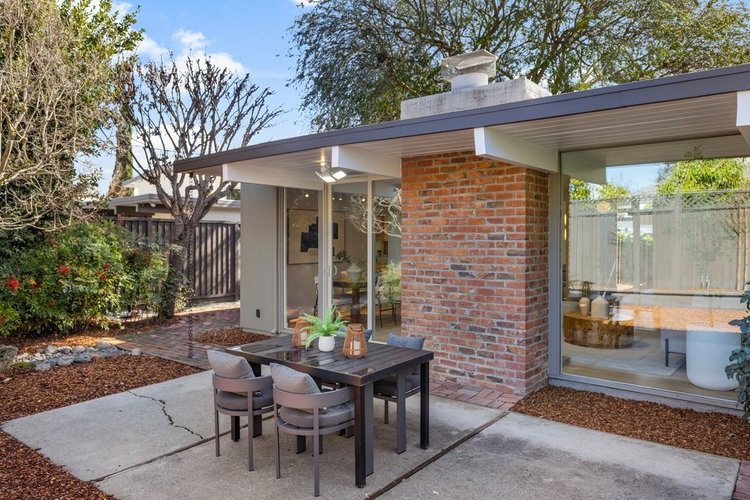
Fairgrove, CupertinoPatio and brick chimney · Sold 2026 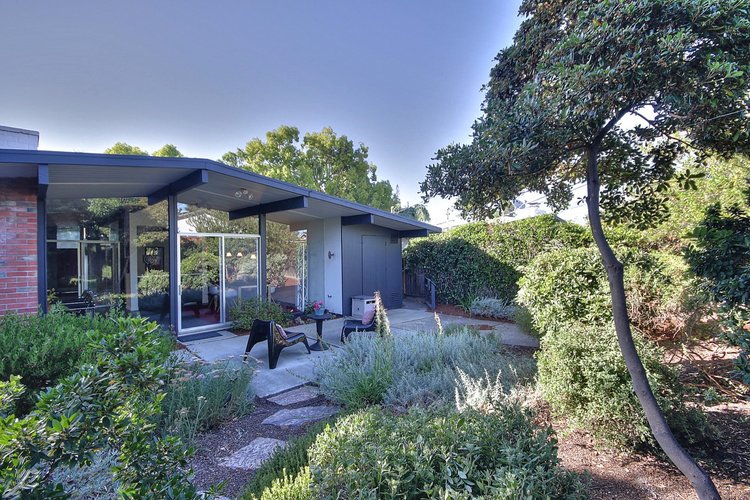
Fairhaven, San JoseBack garden · Sold 2014 
Fairglen, San JoseCovered patio at dusk · Sold 2025 
Greenmeadow, Palo AltoSide patio · Sold 2026 
Palo Verde, Palo AltoCovered patio · Sold 2026
Listing photographs of homes sold by the Boyenga Team. More homes we’ve sold
See our portfolio