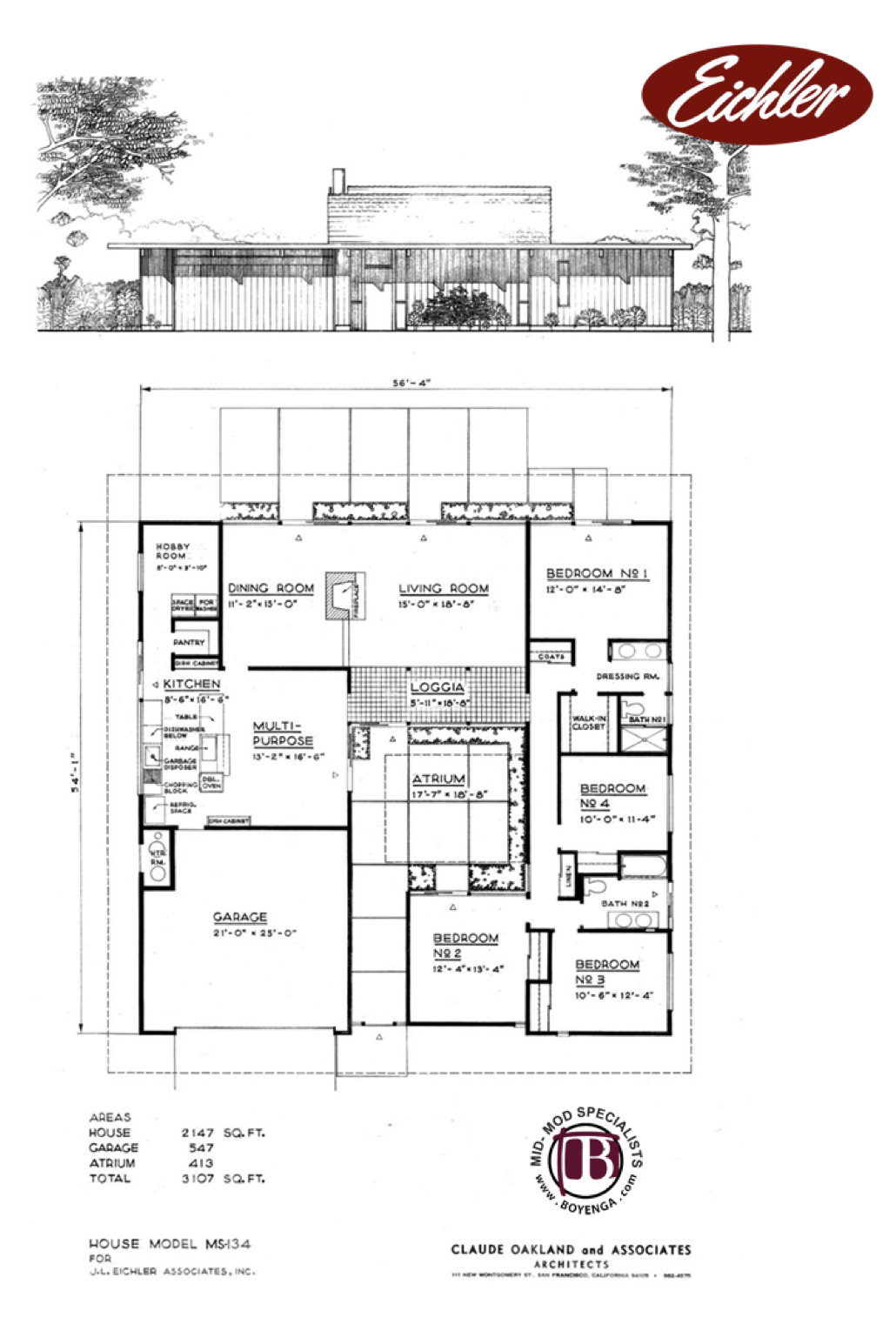
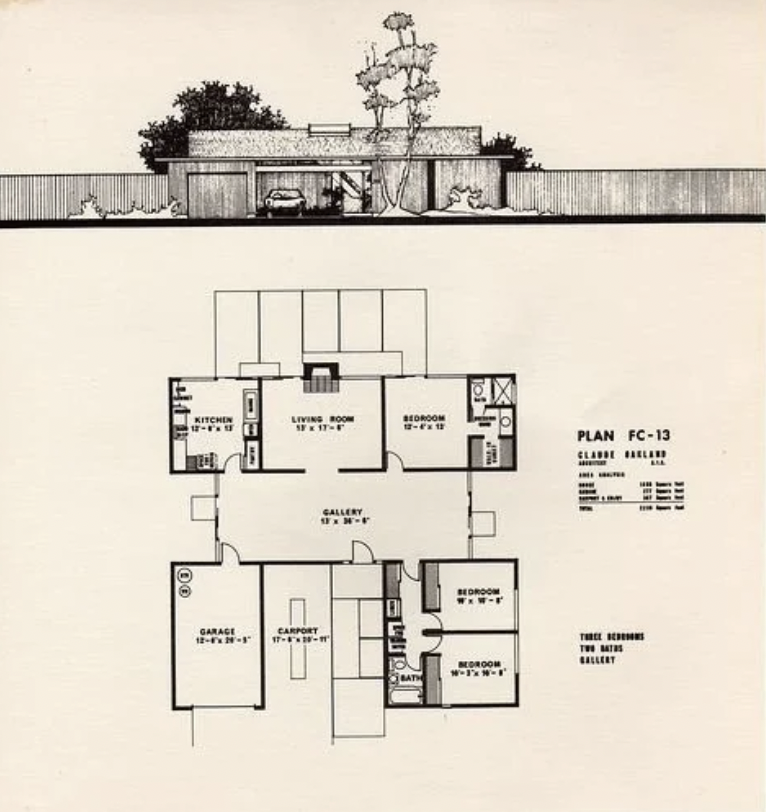
Eichler & Mid-Century Modern Floor Plans
Floor plans are at the heart of mid-century modern and Eichler homes. More than simple layouts, they reflect a philosophy of living—one centered on openness, light, flexibility, and a seamless connection between indoors and outdoors. Understanding these floor plans is essential for appreciating the architecture, evaluating a home’s potential, and choosing a design that truly fits your lifestyle.
This page explores the most common Eichler and mid-century modern floor plan concepts found throughout Silicon Valley and the greater Bay Area, along with guidance on how to interpret and use them when buying, selling, or renovating a modern home.
The Philosophy Behind Eichler Floor Plans
Joseph Eichler believed good design should be accessible and livable. His floor plans were intentionally innovative for their time, breaking away from compartmentalized layouts in favor of openness and flow.
Core principles behind Eichler floor plans include:
Open-concept living areas that combine kitchen, dining, and living spaces
Minimal interior walls, enabled by post-and-beam construction
Strong visual sightlines across the home and into outdoor spaces
Central atriums or courtyards in many models
Separation of public and private spaces, often with bedroom wings
Flexible rooms that adapt to changing lifestyles
These ideas continue to feel contemporary decades later.
Common Eichler Floor Plan Types
While Eichler homes share consistent design language, they were built in a variety of layouts to suit different lot sizes, family needs, and neighborhoods.
Atrium Models
One of the most iconic Eichler designs, atrium floor plans feature a private, open-air courtyard at the center or entrance of the home. The atrium serves as both a visual focal point and a source of natural light.
Gallery Models
Gallery-style Eichlers include a long interior corridor—often with clerestory windows—that connects living spaces to bedroom wings. These homes emphasize linear flow and privacy.
Double-Gabled Plans
Common in later Eichler developments, double-gabled homes offer larger living areas, vaulted ceilings, and expansive glass walls facing the backyard.
Ranch-Style Modern Plans
Found throughout Sunnyvale, San Jose, and Mountain View, these single-story layouts blend traditional ranch proportions with modernist detailing and open interiors.
Split-Level & Hillside Plans
In areas with varied topography, Eichler-inspired and mid-century modern homes use split-level designs to follow the land while maintaining openness and visual continuity.
Understanding Original Eichler Models
Many Eichler homes were built using standardized models, each with distinct characteristics. Knowing a home’s original model can help buyers and sellers understand:
Intended room use and proportions
Original circulation patterns
Where modifications have occurred
How renovations can be done without compromising design integrity
Original floor plan knowledge is especially valuable when restoring or sensitively updating an Eichler home.
Floor Plans and Indoor–Outdoor Living
Eichler and mid-century modern floor plans are intentionally designed around outdoor space. Sliding glass walls, courtyards, and rear patios are not accessories—they are integral parts of the layout.
In many homes, outdoor areas function as extensions of the living room, dining room, or primary bedroom, reinforcing the California modernist lifestyle.
Using Floor Plans When Buying a Mid-Century Home
For buyers, floor plans provide critical insight beyond square footage:
How light moves through the home during the day
Whether private spaces are adequately separated
How flexible rooms can adapt to home offices or guest use
How original design aligns with modern living needs
Reviewing multiple Eichler floor plans can help buyers quickly identify which layouts feel intuitive—and which do not.
Floor Plans and Renovation Potential
Floor plans also guide renovation strategy. Because Eichlers rely on post-and-beam construction, walls often cannot be moved without understanding structural loads. Conversely, many layouts allow thoughtful reconfiguration without altering the home’s architectural essence.
Understanding the original plan helps homeowners:
Preserve architectural integrity
Avoid costly structural mistakes
Plan additions or updates that feel intentional
Balance modernization with authenticity
The Boyenga Team Floor Plan Archives
The Boyenga Team maintains access to an extensive archive of classic Eichler and mid-century modern floor plans across Palo Alto, Sunnyvale, Cupertino, Los Altos, Mountain View, and surrounding communities.
These resources allow clients to:
Identify original Eichler models
Compare layouts across neighborhoods
Understand value differences tied to floor plan desirability
Confidently evaluate both original and remodeled homes
This level of insight gives buyers clarity and helps sellers present their homes with accuracy and credibility.
Explore Eichler Floor Plans with Confidence
Whether you are searching for the right Eichler layout, preparing to sell a modern home, or planning a thoughtful renovation, understanding floor plans is essential.
Partner with the Boyenga Team to access expert guidance, architectural insight, and curated Eichler floor plan resources—so you can make informed decisions rooted in design, history, and long-term value.
Anshen + Allen
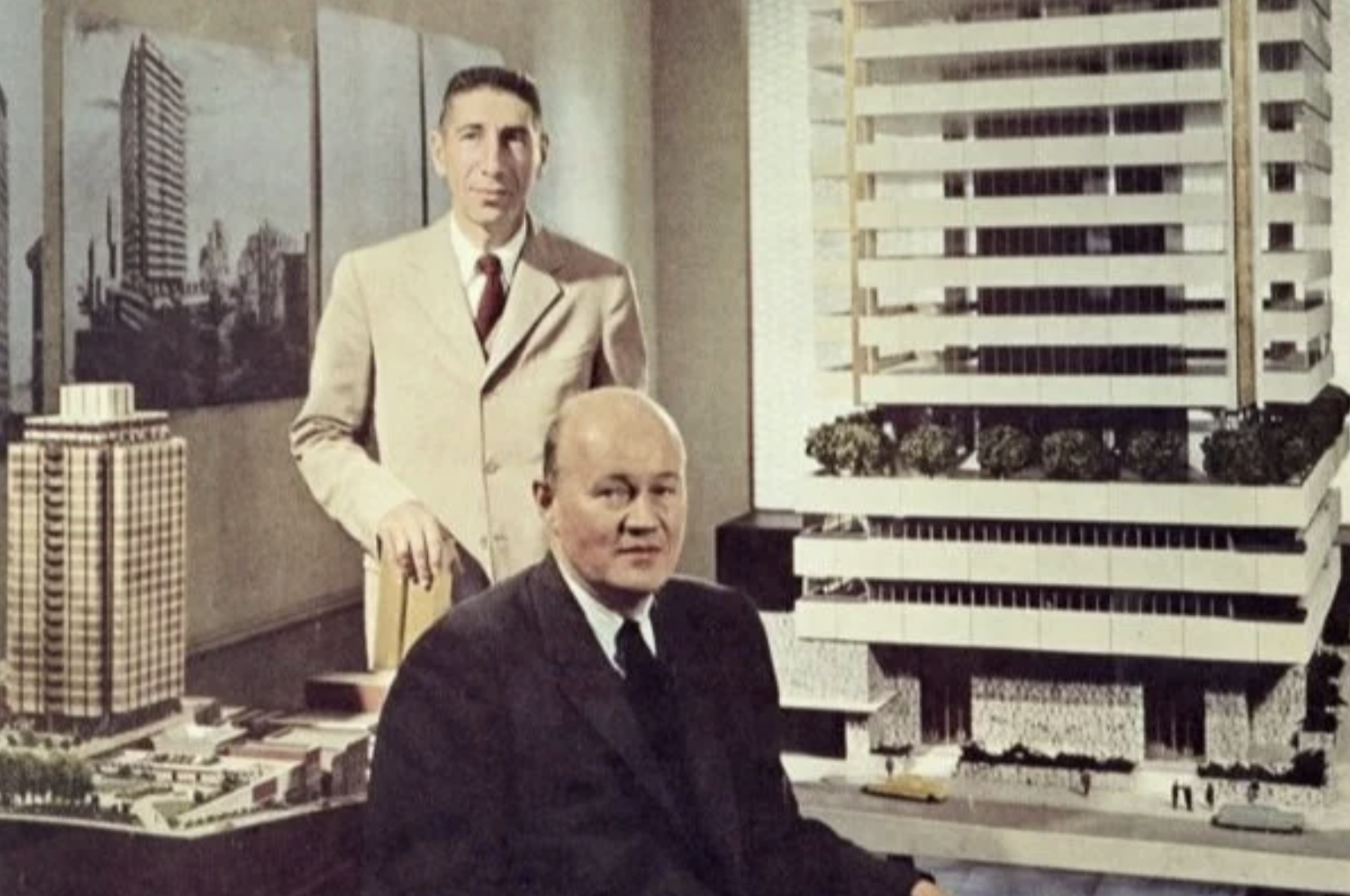
Left to Right: Robert ‘Bob’ Anshen, William Stephan Allen
Anshen & Allen were key figures in shaping mid-century modern residential architecture, particularly through their collaboration with Joseph Eichler during the post-war era. Their designs helped define the Eichler home, emphasizing open floor plans, low-profile rooflines, and expansive glass that blurred the line between indoor and outdoor living.
By combining architectural innovation with efficient, repeatable design, Anshen & Allen made modernist principles accessible at scale. Today, their homes remain some of the most recognizable and influential examples of mid-century modern housing in the Bay Area.
Anshen & Allen Floor Plans
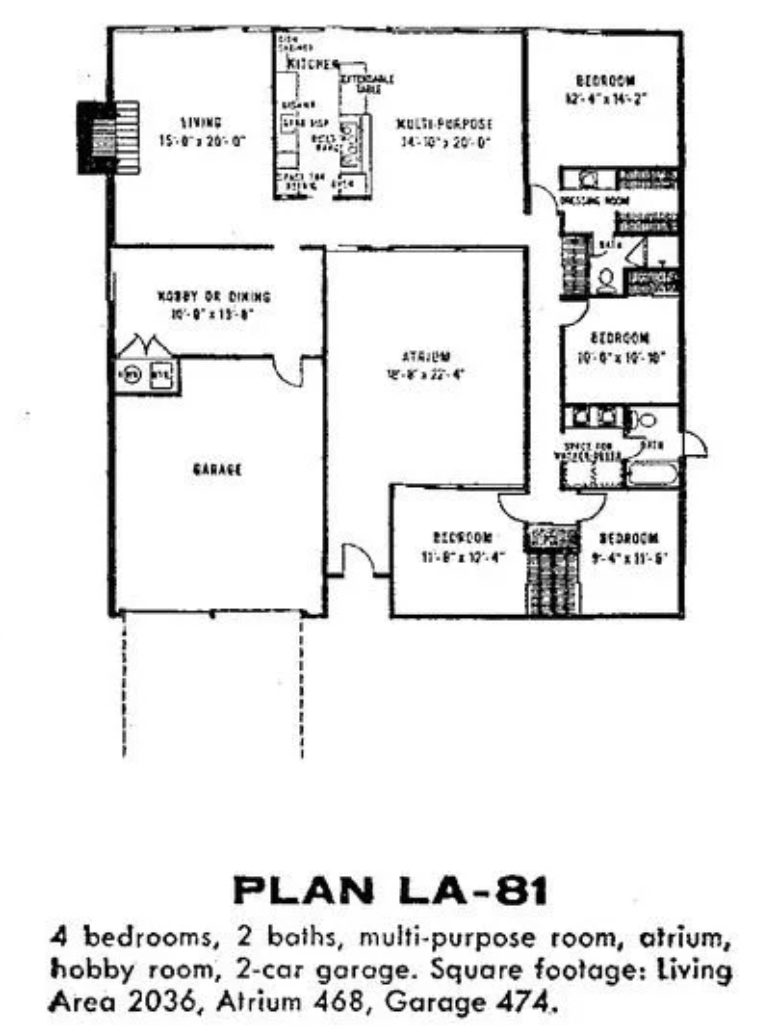
Eichler Floor Plan LA-81
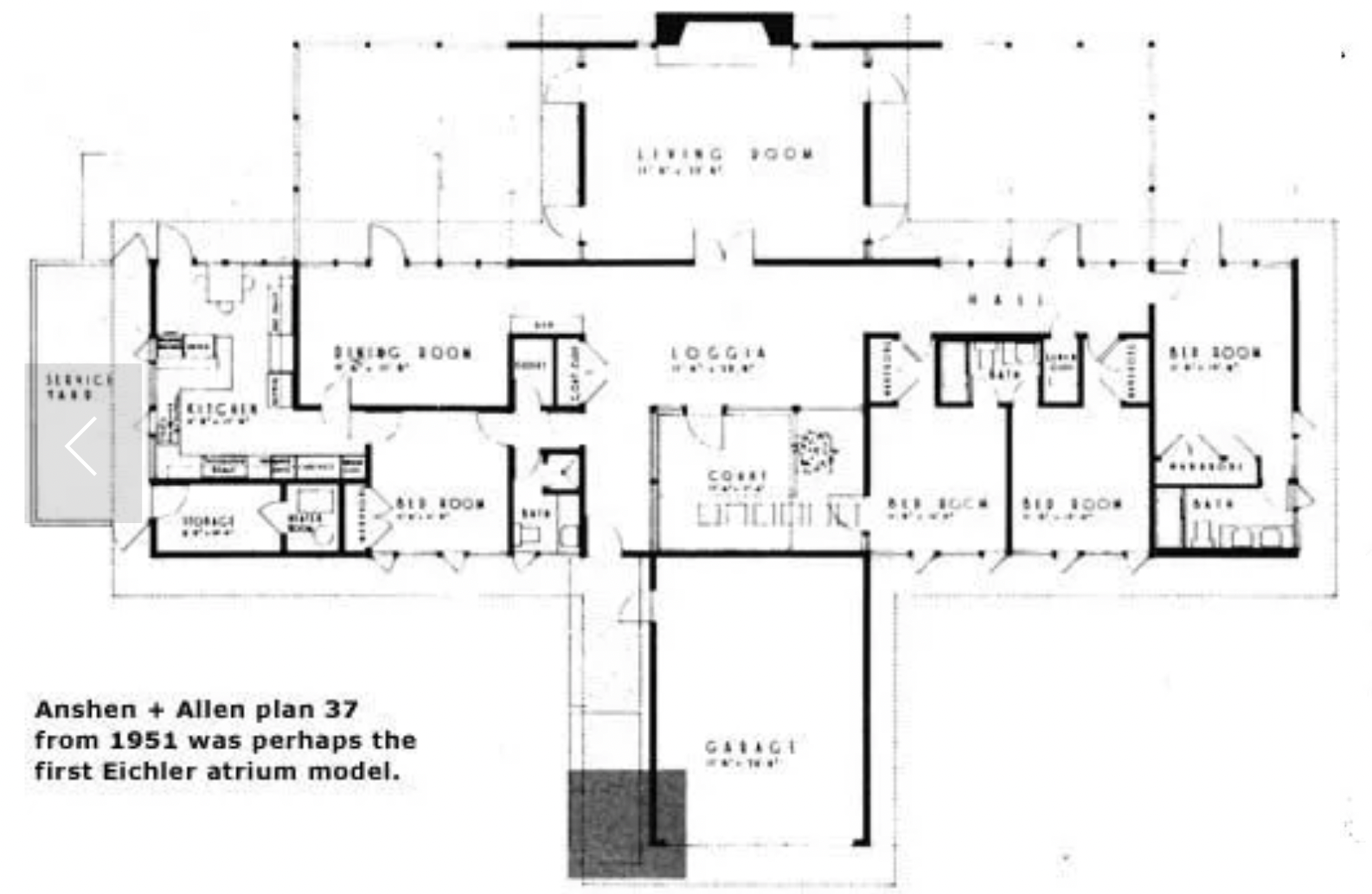
Anshen + Allen Original Eichler 'Atrium’ Model
Eichler Floor Plan Architects
Jones & Emmons
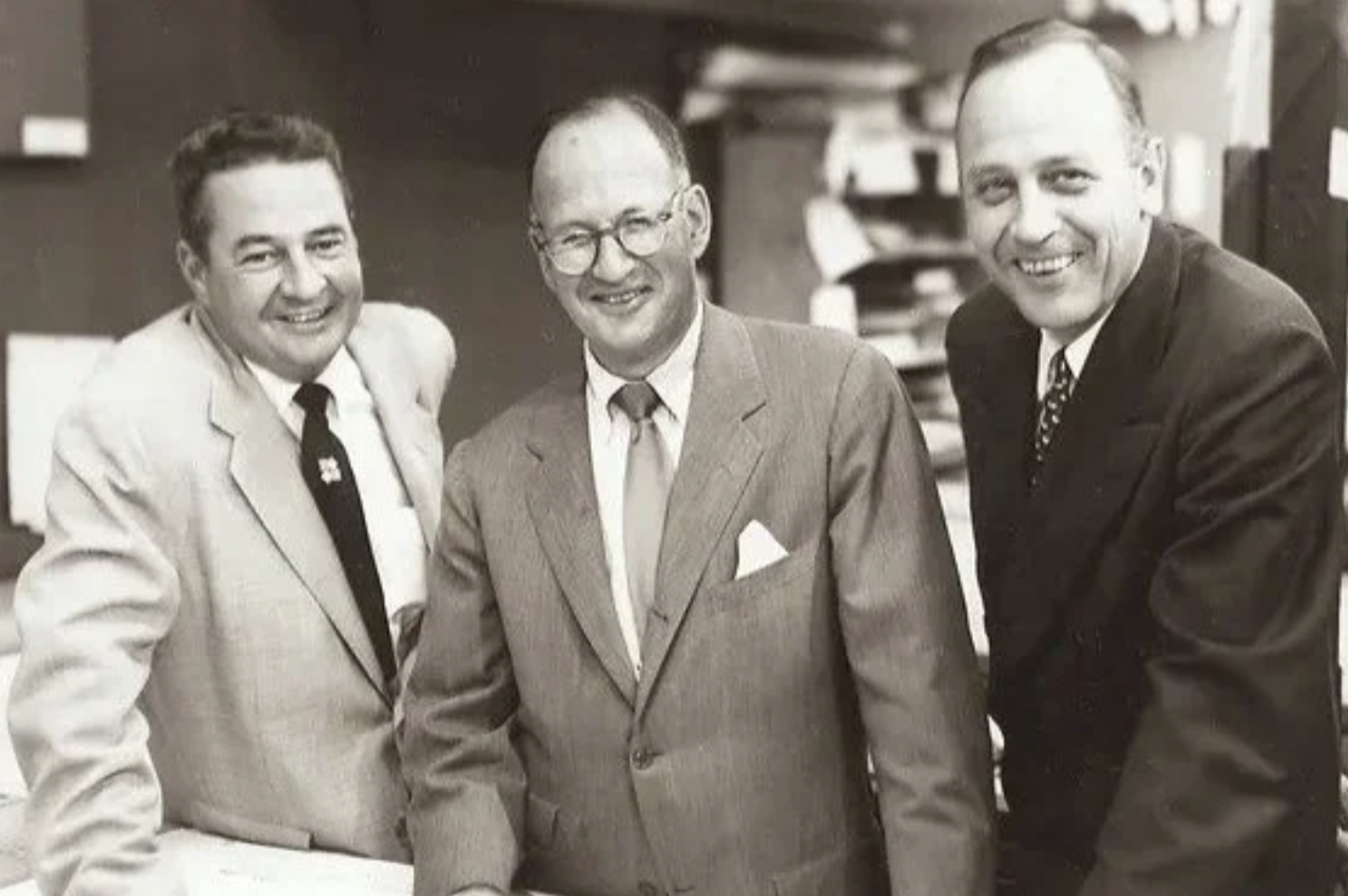
Left to Right: A. Quincy Jones, Joseph Eichler, Frederick Emmons
Jones & Emmons were influential architects in the development of mid-century modern residential design, best known for their work on Eichler homes throughout the Bay Area. Their designs emphasized clean lines, efficient layouts, and a strong relationship between indoor spaces and private outdoor areas.
Through thoughtful planning and refined modernist principles, Jones & Emmons helped shape many of the tract neighborhoods that define Eichler communities today. Their homes remain highly regarded for their livability, architectural clarity, and lasting contribution to mid-century modern housing.
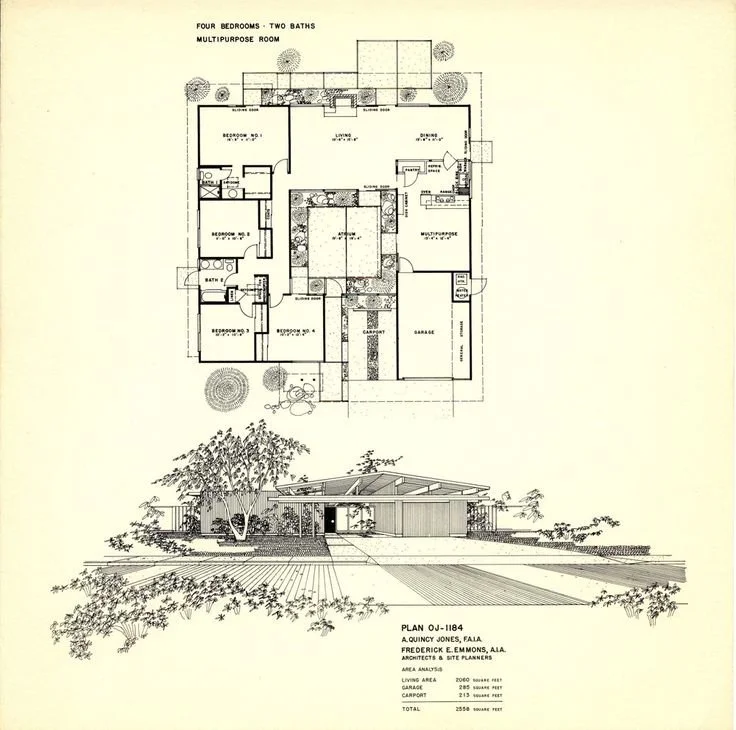
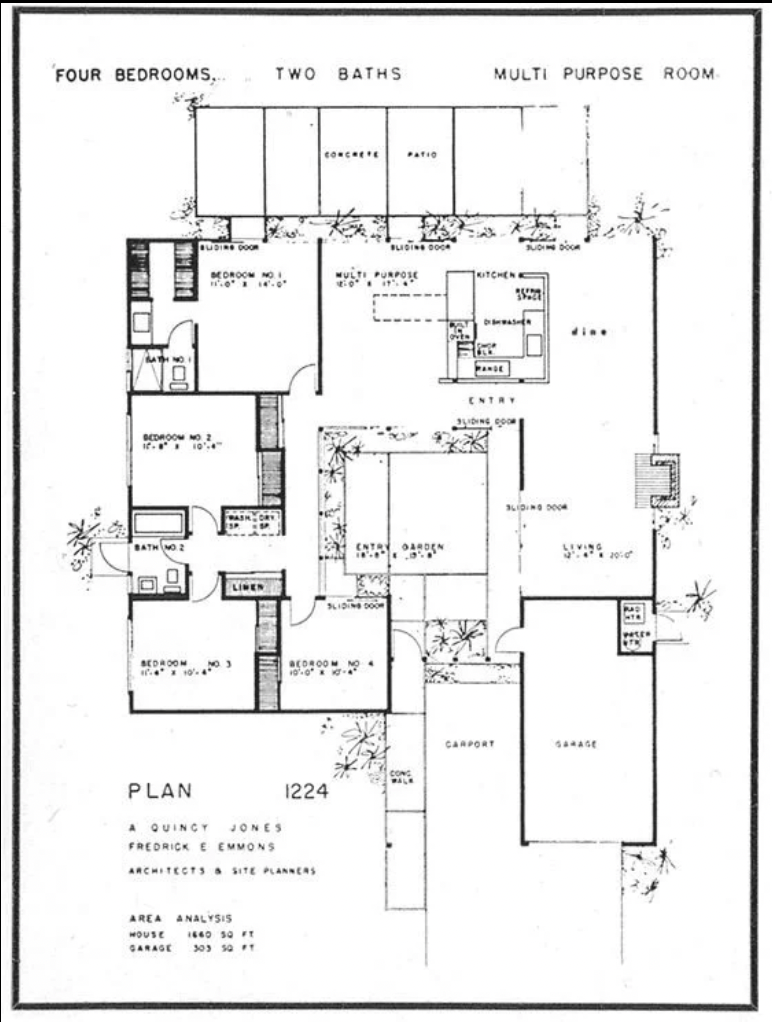
Jones & Emmons Floor Plans
Contact Us and Begin Your Mid Mod Journey Today!
Boyenga Team + Compass Eric & Janelle Boyenga 📞 Call / Text : 408-373-1660 📧 Email : Eichlers@Boyenga.com 🌐 www.BoyengaTeam.com / www.EichlerHomesForSale.com DRE #01254724 / #01254725
Claude Oakland
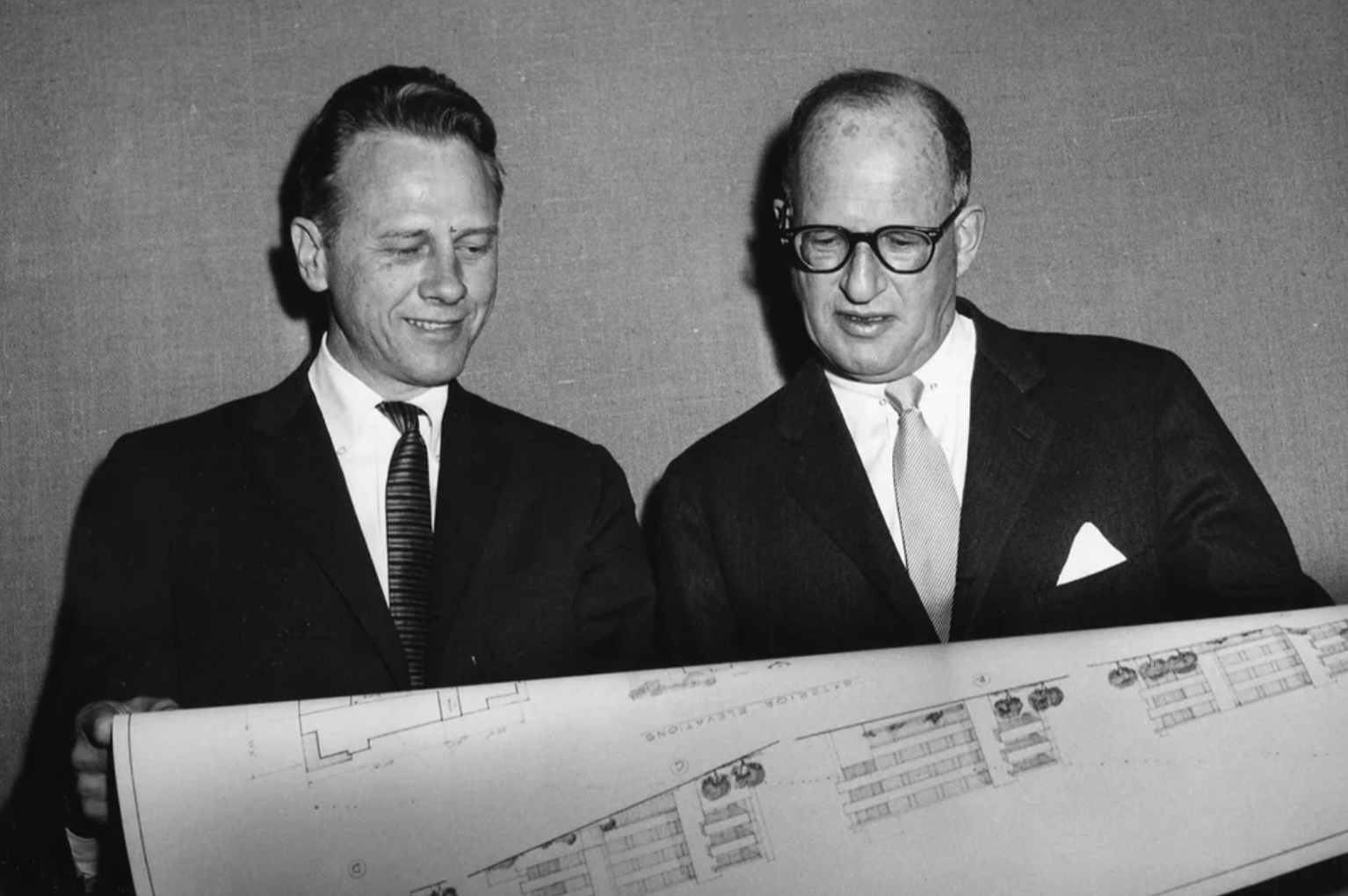
Left to Right: Claude Oakland, Joseph Eichler
Claude Oakland was a prominent architect of mid-century modern homes in Northern California, widely recognized for his expressive designs within Eichler developments. His work is known for bold rooflines, dramatic use of glass, and interiors that emphasized volume, light, and a strong indoor–outdoor connection.
Oakland’s homes pushed the visual language of mid-century modern architecture while remaining highly livable, helping elevate the architectural identity of many Eichler neighborhoods. Today, his designs are among the most sought-after examples of Bay Area mid-century modern residential architecture.
Claude Oakland Floor Plans