Front yard fence height is the first figure to check on a street-side fence: a height allowed along a back lot line can be too tall near the street. City rules set lower limits in the front yard and at corners and driveways, and Eichler design documents add their own view on what belongs between the house and the sidewalk.
This guide covers the street side of the lot: front-yard limits, corner lot fence rules, driveway sight lines, hedges, property lines and the Eichler guidelines, with example figures from the pages and handouts of the cities named, as of November 2026. Treat each figure as one city's example and confirm your own city's rules. For a fence shared with a neighbor, and for overall height limits in Palo Alto, Sunnyvale, Cupertino and San Mateo, see our guide to the Good Neighbor Fence Law.
Front yard fence height: lower near the street
The City of San Jose's fences and retaining walls page (updated April 15, 2026) gives the maximum height without a permit as 3 feet in the front yard and 7 feet in side and rear yards. A taller fence needs both a building permit and a planning permit.
The Town of Los Gatos fence handout (updated June 5, 2024) allows fences, walls, gates and hedges up to 6 feet, plus 1 foot of lattice, outside the Town's hillside area. The limit drops to 3 feet within a required front or side yard abutting a street, and in the view areas described below, unless the Town grants an exception.
Measuring points differ too. The City of Mountain View's fences and walls page, as of November 2026, measures height from adjacent grade to the top, lattice and posts included, and requires a planning permit for a fence or wall over 6 feet. A City of Sunnyvale staff report to the Zoning Administrator (July 15, 2026 agenda) says that city measures front yard fence height from the top of the nearest street curb.
Corner lot fence rules and the sight triangle
A corner lot has two street frontages, and city rules keep fences low in a triangle of ground at the corner to keep the view open for drivers and people walking. The name varies (visibility triangle, corner sight triangle, vision triangle), and so does the way it is measured.
San Mateo. The city's Fence Regulation FAQs handout (revised March 24, 2025) limits fences to 3 feet in the visibility triangle. At a street intersection the triangle is measured 45 feet from the point where the curb lines meet, or from the pavement edge where there is no curb.
Los Gatos. The handout defines a corner sight triangle with 30-foot sides measured from the intersecting property lines, where the 3-foot limit applies.
Palo Alto. The city's fence code handout (reprinted December 2002) prints a rule for fences and walls at street intersections: no more than 3 feet above the adjacent curb grade, inside a triangle formed by the curb lines and a line joining points 35 feet from where the projected curb lines meet. The handout is old, so confirm the current code with the city.
San Jose. On corner lots the city's page gives 3 feet for both the front yard and the side yard along the street. Rear and side fences away from the street may reach 7 feet, but must be low enough to keep sight lines to the street from the driveway.
San Mateo County's planning page on fence height exceptions adds that a civil engineer's study of sight distance may be required for an over-height fence in the front yard of a corner parcel.
Driveway sight lines
The same idea applies where a driveway meets the sidewalk, so that a driver pulling out and a person walking can see each other.
San Mateo's handout sets a visibility triangle at driveways, measured 10 feet from the point where the edge of the driveway meets the edge of the sidewalk closest to the private property. Fences there are limited to 3 feet.
Los Gatos defines a driveway view area as a triangle with 10-foot sides, measured along the driveway's path of travel from the back of the sidewalk or the street, with the same 3-foot limit. Vehicular gates are set back at least 18 feet from the edge of the adjacent street, measured along the driveway centerline.
Hedges and planting count too
In San Mateo and Los Gatos, replacing a fence with a hedge doesn't take the corner or the driveway out of the rules. San Mateo's handout requires trees and landscaping in the visibility triangle, and within any street or alley right-of-way, to keep a clear view between 3 feet and 7 feet above the ground. Los Gatos lists hedges alongside fences, walls and gates in its height limits.
The Palo Alto Eichler guidelines (the city's final draft dated February 2018) come at hedges from the design side: hedges lining a front yard that block views of the house are discouraged, while shrubbery is offered as a possible substitute for a fence in some cases, so long as it doesn't hide the house from the street.
Where the property line really is
San Mateo's handout warns that in some cases front and street-side property lines are not directly behind the sidewalk, and that city property may extend several feet behind it. Mountain View's page makes the same point and adds that only a survey by a licensed civil engineer or land surveyor settles where the line is.
San Mateo requires a site survey, stamped and signed by a licensed land surveyor, with a fence exception application. Palo Alto's fence handout (reprinted December 2002) says a fence in a public utility easement needs an encroachment permit from Public Works, and San Mateo County's page says the same of a fence in the public right of way.
What the Eichler guidelines say about front fences
Design documents in three cities address fences and screens on the street side of an Eichler.
Palo Alto. The Palo Alto Eichler Neighborhood Design Guidelines (the city's final draft dated February 2018) describe themselves as voluntary, and their fence section is worded as guidance. Fences between the house and the street are generally discouraged, and side-yard fences should be flush with the front facade or set back from it. The document recommends wood and advises against tall fences that can't be seen through where they would block the view of the house from the street. Our posts on Eichler carports and entry courts and the Palo Alto Eichler guidelines cover courtyard fences and when the document applies.
Sunnyvale. The July 2026 staff report says the municipal code requires a use permit for a front yard fence over 6 feet. It cites the city's Eichler Design Guidelines for a 15-foot setback from the front property line for fences 6 feet or taller, worded as a requirement, and for a simple, modern design, worded as a recommendation.
San Jose. The City Council adopted the Eichler Neighborhood Objective Design Standards on December 2, 2025, for exterior changes to Eichler houses on the city's Historic Resources Inventory that need a Single-Family House Permit or another planning permit involving historic review. The draft in the August 2025 council packet separates required standards from optional guidance. Its carport standard is a requirement: carports are to be kept in place and not enclosed by new walls or fencing, except to create an accessory dwelling unit as state law allows. Its examples of secondary original features of an Eichler house include low landscaping and no barriers in the front yard.
Before you design a street-side screen, find out which document covers your address and whether the project triggers review. Our Eichler renovation guide lists the related owner guides.
Older fences and what to ask the city
A fence taller than today's limit may still be allowed to stay. The Los Gatos handout says fences that existed on September 6, 2019, the effective date of its ordinance, and don't meet the rules are nonconforming and exempt, and may be maintained or replaced in kind. Other cities handle older fences in their own ways, so ask before you rebuild.
Questions to take to the planning counter:
What is the height limit in my front yard and street-side yard, and from what point is it measured?
Is my lot a corner lot under the code, and where do the corner and driveway triangles fall on it?
Do hedges and other planting follow the same limits?
Do Eichler guidelines or standards cover my address, and may an existing fence be replaced in kind?
This is general information as of November 2026, not legal, engineering or code advice. Fence rules differ by city and change, so confirm with your city's building and planning departments and a licensed professional before you build.
From our listings
Front gardens and fences at homes we’ve sold
Four photos from homes the Boyenga Team has sold in Sunnyvale, Palo Alto, San Jose and Redwood City: a low planter wall beside the public sidewalk, a front garden with a wood fence, a fenced entry court and a wood fence along the side of a house. A photo shows a fence. It cannot show where the property line or a corner sight area runs, or how tall a city lets a fence stand; the city’s code and a survey can.
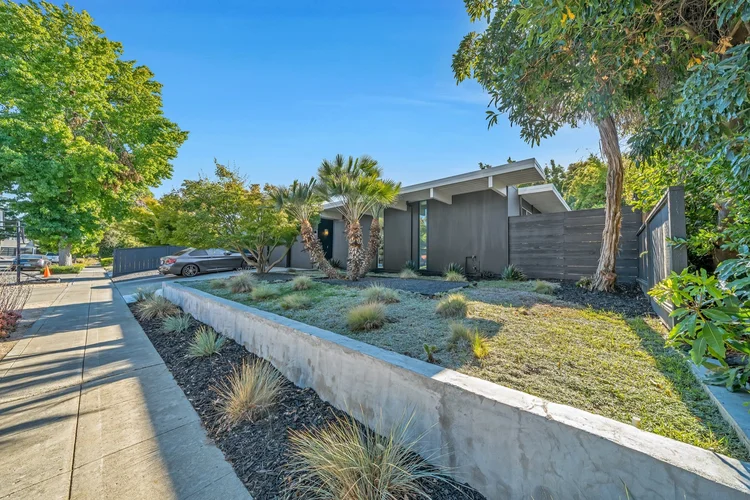
Fairbrae, SunnyvaleLow planter wall beside the sidewalk · Sold 2023 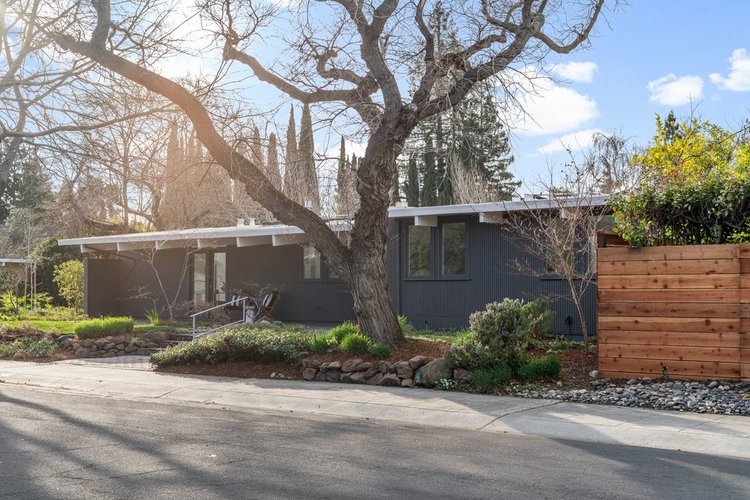
Palo Verde, Palo AltoFront garden with a wood fence · Sold 2026 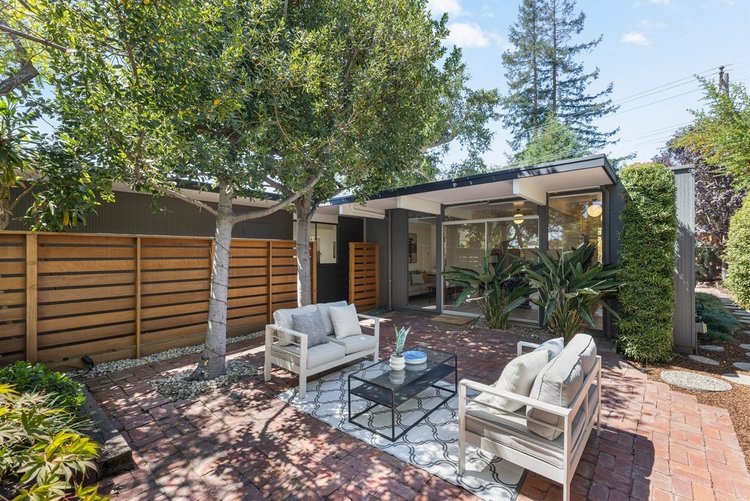
Fairglen, San JoseEntry court with a horizontal wood fence · Sold 2026 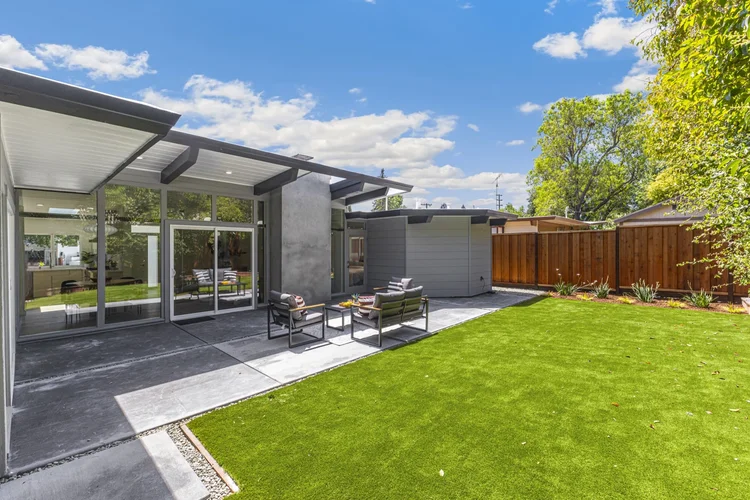
Redwood CitySide of the home with a wood fence · Sold 2024
Listing photographs of homes sold by the Boyenga Team at Compass. More homes we’ve sold
See our portfolioFrequently asked questions
How tall can a front yard fence be?
It depends on the city. As of November 2026, San Jose's page gives 3 feet in the front yard without a permit, and the Los Gatos handout gives 3 feet within a required front yard. Other cities set their own figures and measuring points, so check with your planning department before you build.
What is a sight triangle on a corner lot?
It is a triangle of ground at the corner where fences, walls and planting stay low to keep the view open for drivers and people walking. As of November 2026, San Mateo's handout measures 45 feet from where the curb lines meet, and the Los Gatos handout uses 30-foot sides from the property lines. Both limit fences there to 3 feet. Your city may measure it another way.
Do Eichler guidelines allow a front fence?
Palo Alto's guidelines (the city's final draft dated February 2018) are voluntary and generally discourage fences between the house and the street. A July 2026 Sunnyvale staff report cites that city's Eichler guidelines for a 15-foot setback for fences 6 feet or taller. San Jose's Eichler standards, in the August 2025 council draft, say carports are not to be enclosed by new walls or fencing, except to create an accessory dwelling unit. Check which document covers your street.
Related reading
Mid-Century Modern Landscaping: Water-Wise Plants and Hardscape
Sunnyvale Eichler Design Guidelines: What Still Applies in 2026
Shared Driveway Easement in California: Utility and Access Easements
More guides on this topic: Owning & Renovating a Mid-Century Modern Home
Planning a street-side fence or screen on a mid-century home you own or want to buy? Call or text the Boyenga Team at Compass at (408) 373-1660 or (650) 383-8606, or contact the Boyenga Team to talk it through.