A breeze block wall is a mid-century detail: a screen of open, patterned concrete block beside an entry or a patio. If you own one, or want to add a screen block wall to a mid-century modern home, three questions come up. Can the old wall be repaired? What does a new one need? And when does the city ask for a permit?
The answers below draw on official sources as of November 2026: a state study of tract houses, federal earthquake and preservation guidance, the state list of permit-exempt work and local permit pages. Permit rules differ by city and county, so confirm with your own building department.
What the records call a breeze block wall
Breeze block is the everyday name. The California Department of Transportation's 2011 study, Tract Housing in California, 1945-1973: A Context for National Register Evaluation, describes the same thing in other words. It says masonry on Contemporary style houses is more likely to be concrete block than brick, sometimes with patterned faces, and frequently set in stack bond rather than running bond, meaning the units line up one above the other instead of being staggered. It adds that entries and patios on these houses may be screened by walls of open concrete block.
The same study says many of the houses the Alexander Construction Company built in Palm Springs, designed mainly by William Krisel of Palmer and Krisel, have butterfly roofs and screen walls of patterned concrete block.
So breeze block, screen block and screen wall all point to the same thing: open concrete masonry units laid up as a screen. Solid street-side block walls at Eichler entry courts are a different element, covered in our post on Eichler carports, entry courts and blank street walls.
What keeps a screen wall standing
A screen wall that stands on its own, the way a fence does, is a freestanding masonry wall, and federal earthquake guidance covers that category. The Federal Emergency Management Agency's guide to nonstructural earthquake damage, FEMA E-74 (last modified December 2012), has a section on freestanding masonry walls and fences (section 6.3.9.1). It covers masonry walls in general, not screen block in particular.
The guide says freestanding walls of concrete block, brick or stone need to be engineered and built to cantilever from the base, which means the wall is held only at the bottom. It names four things such a wall needs:
appropriate foundations;
adequate reinforcing;
good quality mortar;
good workmanship.
The foundation is below grade and the reinforcing is inside the wall, so neither can be judged from the face. How an open block pattern should be reinforced is a question for an engineer and the building department.
Why old block walls are an earthquake concern
The same section says freestanding fences of 6 feet or less are often not covered by code provisions (the current California permit list is covered below), yet unreinforced or poorly reinforced masonry walls, and those with inadequate foundations, are vulnerable to earthquake damage. Such walls frequently fail out-of-plane, meaning they tip over sideways, and may collapse completely. Falling walls, the guide says, may injure people and block walkways, driveways and streets.
FEMA's example is from California: the 1994 Northridge earthquake damaged many miles of poorly built concrete block fences and brought down walls in Northridge and Sylmar, covering sidewalks with debris. One photo caption notes that the rubble showed the wall was unreinforced.
For an existing hazardous wall, the guide lists two paths: replace it with a reinforced masonry fence, a wood fence or a chain-link fence, or, where the foundation is adequate, improve it with retrofit details.
Repairing a breeze block wall
For repair, a useful federal source is the National Park Service's Preservation Brief 15, Preservation of Historic Concrete (2007). It covers historic concrete in general, not screen block, but its vocabulary helps when you talk with a mason or an engineer:
Cracks are active or dormant. Active cracks widen, deepen or migrate; dormant cracks stay about the same size. The brief says hairline cracks that show no sign of growing may often be left unrepaired, and that structural cracks can come from uneven foundation settling or seismic forces.
Spalling is the loss of surface material. One cause the brief describes: reinforcing bars corrode, the corrosion products expand, and the concrete next to them cracks and is pushed out of place.
Stains can be a warning. The brief says staining can indicate corrosion of embedded steel, or efflorescence: soluble salts left on the surface by water moving through the concrete.
Repairs should match. The brief calls for keeping as much original material as possible, for repairs that visually match the existing concrete as closely as possible, and for trial repairs before the full job.
Put next to the FEMA guidance, that suggests an order of work. A lean, a crack that keeps growing, or rust stains at the joints are questions for an engineer before anyone patches the face. Whether matching units are still made for a given pattern is a question for a masonry contractor or supplier. For the wider picture, see our Eichler renovation guide.
New screen walls: when a permit applies
Start with the state code. The California Building Standards Commission's codes page gives the 2025 edition of Title 24 an effective date of January 1, 2026; the California Residential Code is Part 2.5 of it. Section R105.2 of that code lists work exempt from a permit. The City of Albany's building handout, which excerpts section R105.2 from the 2025 code, includes fences not over 7 feet high in that list.
Two cautions come with that list. First, the excerpt opens by saying an exemption does not authorize work done in violation of the code or of any other laws or ordinances of the jurisdiction. Second, cities and counties amend the state codes, and a local rule can treat masonry more strictly than other fence materials. Three local examples, as of November 2026:
San Mateo County. The Planning and Building Department's Fence Height Exception page says all fences exceeding 6 feet and "masonry fences of any height" will require a building permit. A Fence Height Exception is required for any fence over four feet in a front or street-facing side setback, or over six feet in a rear or interior side setback.
City of San Mateo. The city's building permit FAQ lists rear fences not over seven feet and front fences not over three feet as exempt from a building permit. The list does not mention masonry.
Mountain View. The city's fences and walls page says a wood fence 6 feet or less at a single-family home needs no permit, while any non-wood fence, masonry included, needs a building permit.
These are examples, not a survey, and San Mateo County and the City of San Mateo are separate jurisdictions with separate rules. In any city, ask the building department three things: whether a masonry screen wall of your height needs a building permit, what zoning allows for height and placement, and whether repair or partial rebuilding of an existing wall counts as new work. FEMA's guide adds that some jurisdictions and homeowner associations may limit fence height, setbacks or materials. For city height tables and the state law on shared boundary fences, see our post on the good neighbor fence law in California.
Who does the work
The Contractors State License Board's C-29 Masonry Contractor classification covers this trade. The board's description includes installing concrete block, and fabricating and installing masonry units for load bearing and non-load bearing walls for structures and fences. Our guide to hiring a licensed contractor in California explains how to check a license. Because FEMA says freestanding masonry walls need to be engineered, ask early whether your project needs an engineer's design.
This is general information as of November 2026, not legal, engineering or code advice. Codes and city rules change, so confirm with your own building department and a licensed engineer or contractor before you repair, rebuild or build a wall.
From our listings
Walls, screens and courtyards at homes we’ve sold
Four photos from homes the Boyenga Team has sold in Mountain View, San Jose, Cupertino and Menlo Park: a red brick wall beside a covered patio, a slatted sunscreen over an atrium and two courtyards. A photo shows the face of a wall or a screen. It cannot show the steel or grout inside, the footing under it or whether it was built with a permit.
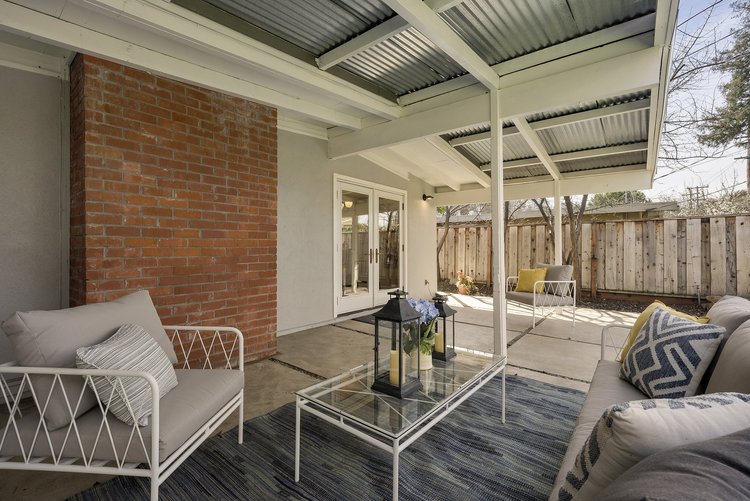
Monta Loma, Mountain ViewCovered patio with a red brick wall · Sold 2021 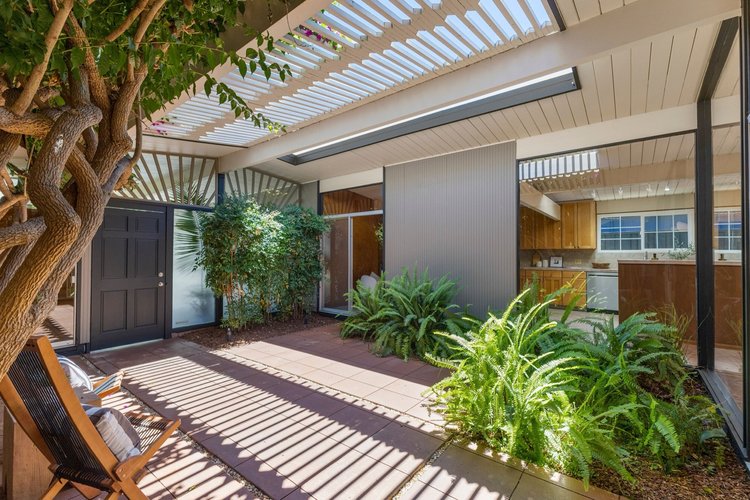
Fairglen, San JoseAtrium under a slatted sunscreen · Sold 2026 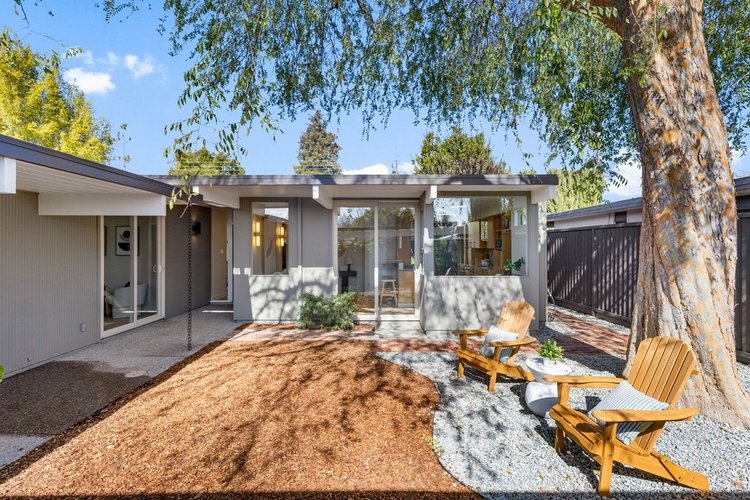
Fairgrove, CupertinoCourtyard with a large tree and gravel · Sold 2026 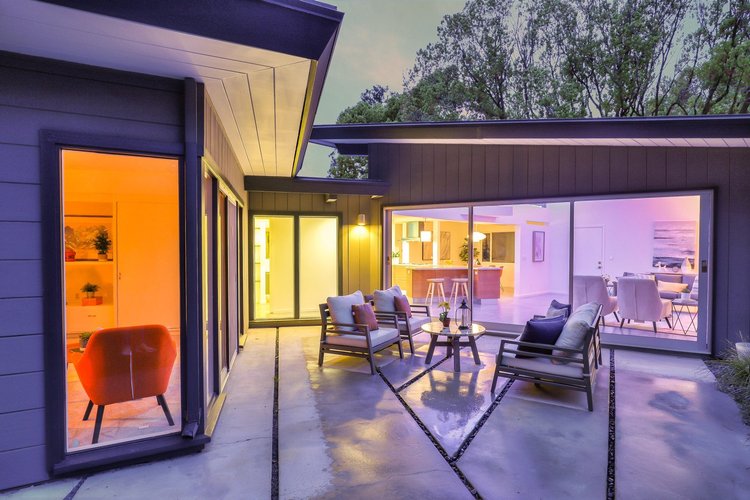
Central Menlo ParkCourtyard at dusk · Sold 2019
Listing photographs of homes sold by the Boyenga Team at Compass. More homes we’ve sold
See our portfolioFrequently asked questions
Do I need a permit to build a breeze block wall?
It depends on the jurisdiction, the height and the place on the lot. The state list of exempt work, as excerpted from the 2025 code by the City of Albany, includes fences not over 7 feet high, but San Mateo County's page says masonry fences of any height will require a building permit. Zoning height limits apply separately.
Do I need a permit to repair an existing screen block wall?
Ask before work starts, because the answer is local. The City of San Mateo's building permit FAQ, for one, says a permit is required for any construction, repair, improvement, modification or demolition, and then lists its exemptions. The state list of exempt work also opens by saying that an exemption does not authorize work that violates the code.
Are old breeze block walls an earthquake hazard?
They can be. FEMA's guide says unreinforced or poorly reinforced freestanding masonry walls, and walls with inadequate foundations, are vulnerable to earthquake damage and may collapse. The reinforcing is inside the wall and the foundation is below grade, so have an engineer or masonry contractor look.
Related reading
Post and Beam Earthquake Retrofit: Slab Homes, Programs and Checks
Do You Need a Permit for a Shed in California? Bay Area Rules
Mid-Century Modern Landscaping: Water-Wise Plants and Hardscape
More guides on this topic: Owning & Renovating a Mid-Century Modern Home
Buying a home with an old screen wall, or planning wall work before a sale? Call or text the Boyenga Team at Compass at (408) 373-1660 or (650) 383-8606, or contact the Boyenga Team to talk it through.