To prep a mid-century home for market, start about ten weeks before the listing date. A 1950s or 1960s post-and-beam house has systems that a general inspection can't see into, permit records that may span decades of owners, and original materials worth showing rather than covering.
The timeline below counts back from the day the listing goes live. It's a schedule we suggest, not a rule, and it links to our longer guides for each step rather than repeating them. For what to fix and what to leave alone, see our guide to selling a mid-century modern home.
Ten to eight weeks out: inspections, the roof and the radiant heat
Order pre-listing inspections first, because every later step depends on what they find. California law defines a home inspection as noninvasive, so a general inspector won't open the slab, the walls or the roof. In an Eichler or a house like one, that leaves several things that need their own check:
Radiant heat. Many of these houses are heated by hot-water pipes in the concrete slab. Greenmeadow's National Register nomination says radiant heating systems are standard there. Palo Alto's Eichler design guidelines say the copper pipes in some Eichlers may be repairable without removing concrete, while the steel pipes in others are much harder to repair if corroded. A radiant heating specialist can tell you which you have and how it's working.
The roof. Greenmeadow's nomination says Eichler roofs don't have attics; the underside of the roof decking is the ceiling. A structural pest report must say whether the roof's exterior was inspected and, if it wasn't, tell you to contact a licensed roofing contractor, so plan on a separate roof inspection.
Wood and pests. A structural pest report separates Section 1 items, which show evidence of active infestation or infection, from Section 2 conditions likely to lead to one. The Structural Pest Control Board lets you check whether the property was inspected in the last two years and request copies of those reports.
The sewer lateral, where required. Some cities and sewer districts require a lateral test or certificate when a house is sold, such as Burlingame on the Peninsula and EBMUD's program in the East Bay. Ask your city or district.
Our mid-century home inspection checklist covers what each inspector should look at.
Eight to six weeks out: permits, records and disclosures
Next, gather the paper. Request the permit history from the city by address and parcel number; Palo Alto's Permit View and San Jose's online public search both list past permits. Then walk the house with that list. California's Transfer Disclosure Statement asks whether you know of room additions, structural modifications or other alterations made without permits, and a buyer can compare your answers with the city's records.
Start the disclosure package with your agent early, since some items depend on the year the house was built:
Lead-based paint, for houses built before 1978. Before a buyer is bound by the contract, federal rules require the seller to give an EPA-approved lead hazard pamphlet, disclose any known lead-based paint or hazards and hand over available records. The buyer gets 10 days to test unless both sides agree in writing on a different period or the buyer waives it. EPA explains the steps on its real estate lead disclosure page.
Earthquake guide, for houses built before 1960. For a one-to-four-unit house of conventional light-frame construction built before January 1, 1960, California has the seller deliver the state's earthquake guide for homeowners and complete an earthquake hazards disclosure.
Alarms, water heater bracing and plumbing fixtures. Smoke alarms, carbon monoxide devices, water heater bracing and water-conserving fixtures each come under their own state rule. Our guide to what California requires when you sell an older home goes through each one, plus city extras.
Which forms apply depends on the house and the city, so confirm the list with your agent, and talk to a real estate attorney if a question comes up.
Six to four weeks out: repairs, paint and original wood
With reports in hand, decide what to fix. Paint is where the pre-1978 rules come in again. Under EPA's Renovation, Repair and Painting rule, anyone paid to do work that disturbs paint in a pre-1978 home must be an EPA-certified firm. The exceptions are jobs a certified inspector or renovator has tested and found free of lead-based paint, and minor jobs that disturb 6 square feet or less of painted surface per room inside, or 20 square feet or less outside, with no window replacement or demolition of painted surfaces. The firm must give you EPA's Renovate Right pamphlet no more than 60 days before work starts. EPA says the rule generally doesn't apply to owners working on their own homes, though it recommends lead-safe work practices.
Restore original wood instead of covering it. Greenmeadow's nomination describes walls of "deep-toned Philippine mahogany veneer paneling" and a ceiling that is the underside of tongue-and-groove redwood roof decking. The Secretary of the Interior's Standards for Rehabilitation say deteriorated historic features should be repaired rather than replaced where possible. Veneer is a thin face layer, so hire someone who has refinished it before.
If you'd rather not pay for work up front, Compass Concierge is Compass's program that fronts some pre-sale costs, which are repaid at closing. Ask your agent what it can cover for your house.
Three to two weeks out: staging to the plan and the light
Stage to the floor plan. Palo Alto's guidelines describe Eichler plans organized around a center atrium, or U-shaped around a rear patio or a front entry court, with living spaces that open straight to the rear yard. Furniture that keeps the path to the glass clear shows that plan, and furniture that blocks it hides it. Treat the atrium and the patio as rooms. Our guide to staging a mid-century modern home goes room by room.
Fix the light before the photographer arrives. Replace burned-out bulbs, use one warm bulb color throughout so the rooms match in photos, and clean every pane of glass inside and out. Open the drapes so the glass walls read as glass.
The last week: photographs that show the structure
Post-and-beam houses photograph well when the structure is the subject. Ask for shots that follow the beams from inside out to the overhang, show the tongue-and-groove ceiling, the clerestory windows at the front and the glass wall at the back, and keep vertical lines straight. A dusk photo of the rear with the interior lights on shows the glass walls at their clearest. A floor plan drawing helps show how the rooms wrap around the atrium or patio.
If any photo is digitally altered, as with virtual staging, California has required since January 1, 2026 that real estate licensees put a statement on or next to the image saying it was altered, with a link, URL or QR code to the unaltered original.
From our listings
Ready for market
Rooms in homes we’ve sold, as they were shown for sale, from kitchens and bedrooms to a covered patio. Photos from the listings of six mid-century homes the Boyenga Team has sold in Sunnyvale, San Jose, Palo Alto and Cupertino.
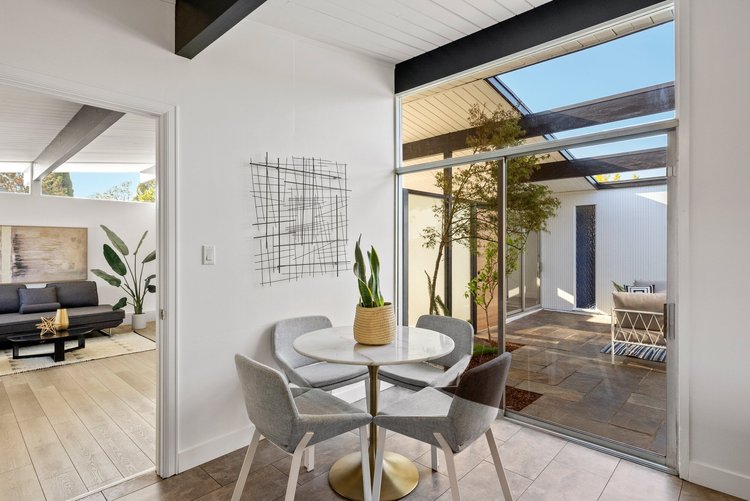
Fairwood, SunnyvaleBreakfast nook · Sold 2021 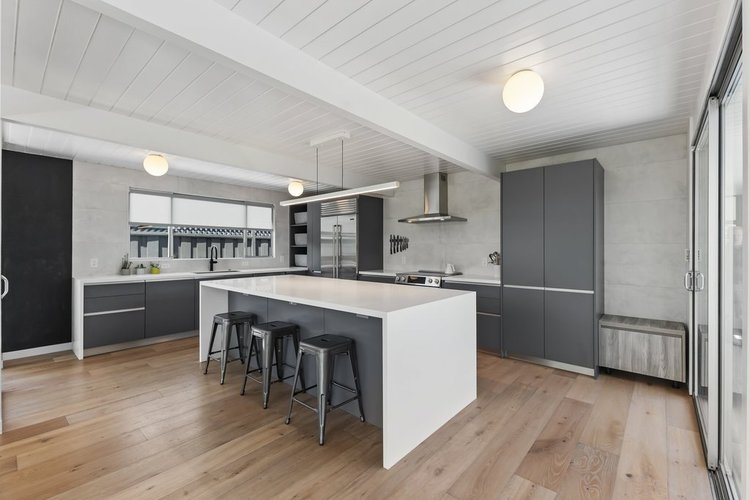
Fairglen, San JoseKitchen · Sold 2024 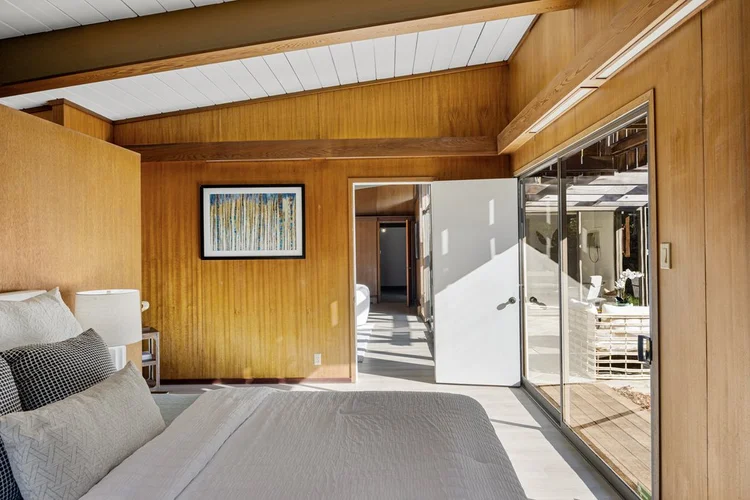
Duveneck / St. Francis, Palo AltoBedroom · Sold 2024 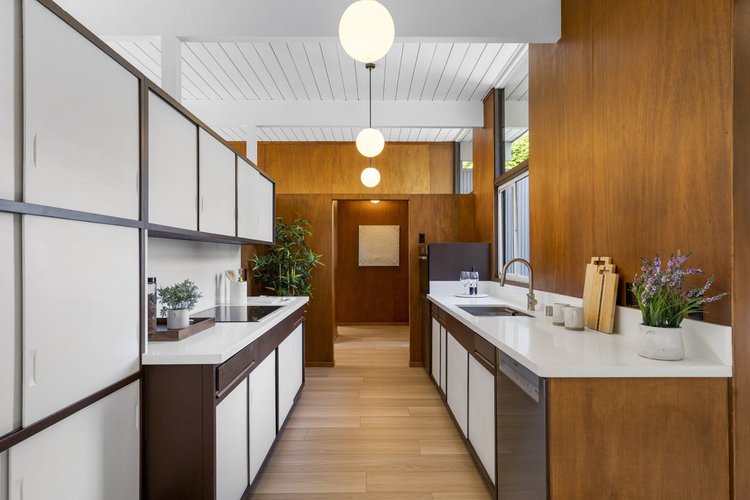
Palo Verde, Palo AltoGalley kitchen · Sold 2024 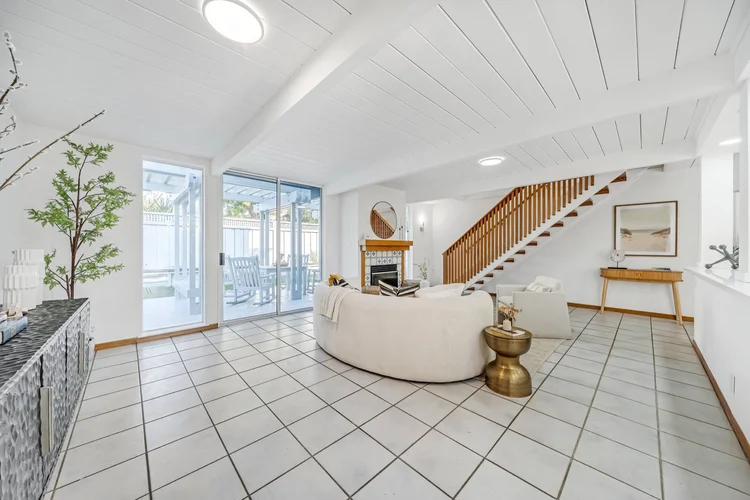
Fairgrove, CupertinoLiving room · Sold 2023 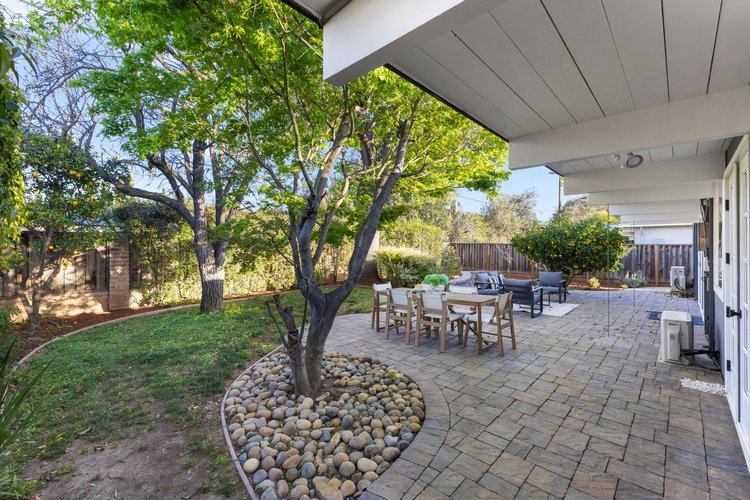
Fairwood, SunnyvaleCovered patio · Sold 2026
Listing photographs of homes sold by the Boyenga Team at Compass. More homes we’ve sold
See our portfolioFrequently asked questions
Should I get inspections before I list a mid-century home?
Pre-listing reports let you plan repairs and disclose what you know before buyers arrive. Buyers can still order their own inspections. For an Eichler or similar house, include the radiant heat and the roof, which a general inspection doesn't open up.
Do I need a lead-certified painter before I sell?
If the house was built before 1978 and you're paying someone to disturb paint, generally yes, unless the job is small enough to count as minor repair and maintenance or testing shows no lead-based paint. If you do the work yourself in your own home, EPA says the rule generally doesn't apply, but it recommends lead-safe work practices.
How far ahead should I start?
About ten weeks ahead, if you can. Specialist inspections, permit research and any repairs they turn up are the steps that can stretch out, while staging and photography come last and take less time.
We're Eric and Janelle Boyenga of the Boyenga Team at Compass, Silicon Valley's Property Nerds®. We've been in Silicon Valley real estate since 1996, with 2,520+ homes sold and $2.6+ billion in sales. If you're planning to sell a mid-century home and want a hand with the schedule, call or text (408) 373-1660 or (650) 383-8606, or contact the Boyenga Team.