
Cupertino — Silicon Valley’s Mid-Century Modern & Tech-Driven Residential Hub
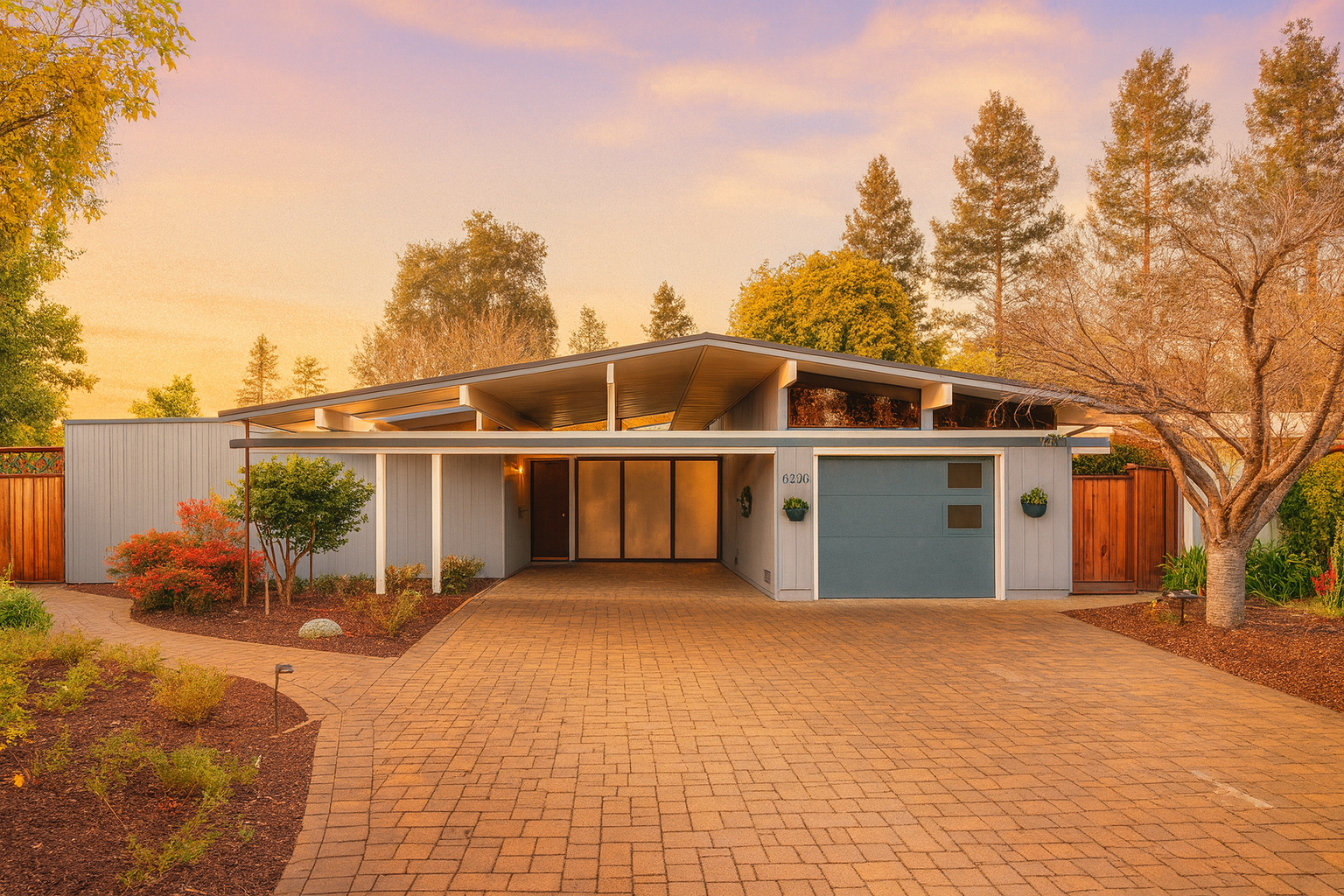
How Postwar Architecture, Schools, and Silicon Valley Discipline Shaped ZIP Code 95014
Historical Overview
Origins and Early Development
Cupertino’s origins are deeply rooted in California’s pre-Silicon Valley agricultural era, when the region was part of the fertile “Valley of Heart’s Delight.” Long before the rise of semiconductors and software campuses, the land that would become Cupertino was dominated by orchards producing apricots, cherries, plums, and walnuts. Spanish explorers in the late 18th century named a local waterway Arroyo San José de Cupertino, a reference that later influenced the naming of the area itself. The modern name “Cupertino” gained permanence in the late 19th century through John T. Doyle, a prominent local entrepreneur who operated the Cupertino Wine Company. When a post office was established in 1904, the name Cupertino was officially adopted, replacing earlier references such as “West Side” and giving the community a distinct civic identity. For much of the early 20th century, Cupertino remained a quiet rural settlement. Unlike neighboring San Jose, which experienced early industrialization, Cupertino’s growth was gradual and agrarian in nature. Farmhouses, packing sheds, and small local businesses defined the landscape, and this slower pace of development would later influence the city’s cautious approach to urban planning. The mid-20th century marked a turning point. As Santa Clara Valley began transitioning away from agriculture, Cupertino residents faced a critical decision: remain unincorporated and risk annexation by San Jose, or incorporate as an independent city. In 1955, community leaders successfully guided Cupertino through incorporation, preserving local control and establishing the foundation for the city’s future planning philosophy. This early emphasis on autonomy would prove decisive in shaping Cupertino’s long-term character—particularly its residential zoning, school investment strategy, and resistance to unchecked commercial sprawl.
Key Transformations Over the Decades
Cupertino’s transformation from orchards to a global technology center unfolded deliberately rather than explosively. During the 1960s, two developments catalyzed the city’s evolution: the creation of the VALLCO Industrial Park and the opening of De Anza College. VALLCO, originally conceived as a business and industrial park, represented Cupertino’s first major pivot toward technology and advanced manufacturing. While later iterations would transform the site into a regional shopping center and redevelopment project, its early role signaled Cupertino’s readiness to participate in the emerging Silicon Valley economy. The opening of De Anza College in 1967 marked an equally important shift. Built on land once occupied by vineyards, De Anza quickly became one of California’s premier community colleges, enrolling tens of thousands of students and establishing Cupertino as a center of higher education and workforce development. The most consequential transformation began in 1977, when Apple Computer relocated operations to Cupertino. What started as a modest presence grew into a defining relationship between city and company. Over the following decades, Apple’s success reshaped Cupertino’s economic base, global visibility, and real estate demand. That relationship reached its architectural and symbolic peak in 2017 with the opening of Apple Park, Apple’s 175-acre global headquarters. Designed as a circular campus integrating advanced sustainability features and cutting-edge design, Apple Park cemented Cupertino’s position on the world stage—not merely as a tech suburb, but as a core node of global innovation. Unlike many tech-adjacent cities, Cupertino resisted large-scale downtown densification. Instead, zoning policies emphasized preserving residential neighborhoods, limiting high-rise development, and maintaining a suburban scale. This approach helped protect housing quality and school capacity, reinforcing Cupertino’s appeal to long-term homeowners rather than transient renters.
Notable Figures or Developments That Shaped the Area
Another influential figure was Joseph Eichler, albeit in a different realm: residential architecture. Eichler’s company built a tract of modern homes in Cupertino’s Fairgrove neighborhood circa 1959–1961, seeding the city with a distinctive mid-century modern flair that remains part of Cupertino’s charm (more on this in the Architecture section). The education pioneers who built Cupertino’s excellent public schools also deserve mention – the investment in great schools began early and has paid dividends in property values and community prestige.
From Spanish ranchos to semiconductor startups, Cupertino’s history is one of continuous transformation. Yet through the changes, the city has carefully balanced growth with livability. As the City’s own history summary notes, Cupertino’s leaders recognized early that highly skilled people “prefer working and living in the Cupertino area” for its unique mix of “high technology firms, retail centers, open space, quality schools and residential areas”. That formula, set in motion by past generations, still defines Cupertino today.
School Districts and Education Landscape
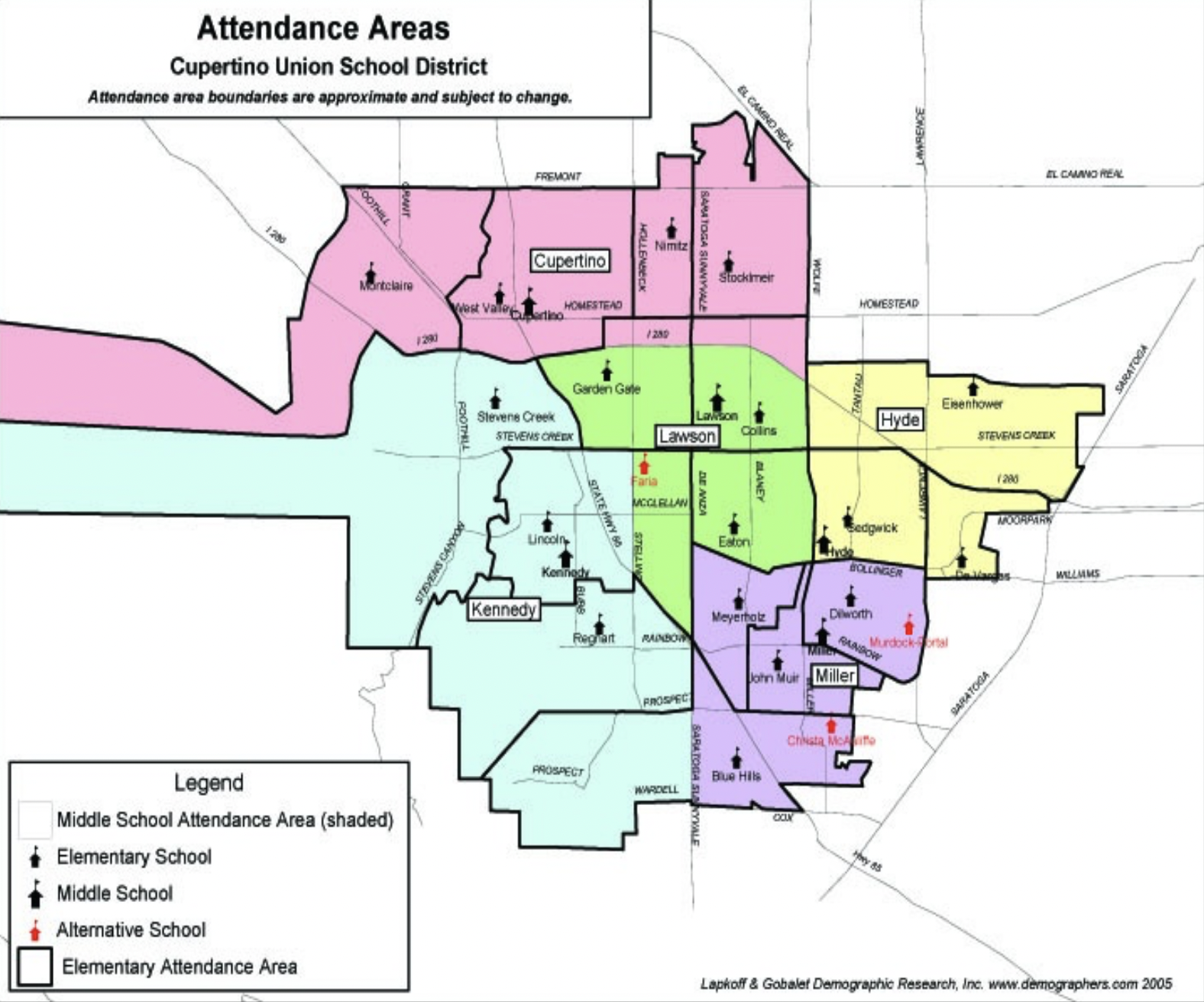
One of Cupertino’s strongest pillars – arguably the key pillar of its residential appeal – is its exceptional public education system. Unlike some elite communities that rely on private schools, Cupertino’s identity and housing values are deeply tied to the performance of its public schools. Families from around the world have flocked to this city so their children can attend its schools, which consistently rank among California’s (and the nation’s) best. Cupertino is served by two primary public school districts: the Cupertino Union School District (CUSD) for elementary and middle schools (K–8) and the Fremont Union High School District (FUHSD) for high schools (9–12). Together, these districts operate some of the highest-performing public schools in the state. Many schools in Cupertino earn 9 or 10 out of 10 on GreatSchools ratings and have won national Blue Ribbon awards.
Demographic and Socioeconomic Profile
Cupertino’s real estate market cannot be understood without first understanding its population. Unlike many suburban cities whose demographics are shaped primarily by proximity to jobs or housing affordability, Cupertino’s population profile is the result of a rare convergence of elite public education, high-paying technology employment, and intentional urban planning. Together, these forces have produced one of the most affluent, educated, and globally connected communities in the United States.
Population Size, Growth, and Household Structure
According to the U.S. Census Bureau, Cupertino’s population stands at approximately 59,000 residents, a figure that has remained relatively stable over the past several years. This stability is notable. In a region characterized by boom-and-bust cycles, rapid migration, and shifting housing demand, Cupertino’s population growth has plateaued not because of waning interest, but because of structural scarcity. The city is largely built out, with limited opportunities for large-scale residential expansion. As a result, demand is constrained not by desire to live in Cupertino, but by the availability of housing.
Household composition in Cupertino skews heavily toward family households, with a significant percentage of owner-occupied single-family homes. Multi-generational living is also more common than in many peer cities, reflecting both cultural norms within the community and the economic logic of maximizing high-value real estate. It is not unusual to find homes housing grandparents, parents, and children under one roof—particularly in neighborhoods with strong school access.
Income Levels and Wealth Concentration
Cupertino ranks among the wealthiest cities in California and the United States. The median household income exceeds $230,000, more than double the California median and substantially higher than neighboring Silicon Valley cities. Per capita income surpasses $100,000, placing Cupertino in an elite tier of U.S. municipalities where income levels reflect not only employment in technology, but seniority within it. Many households include multiple earners working in engineering, product management, executive leadership, or specialized technical roles. This income profile directly shapes Cupertino’s housing market. High household incomes allow buyers to compete aggressively for limited inventory, absorb higher interest rates more easily, and make substantial down payments—often augmented by stock compensation from publicly traded tech companies. As a result, Cupertino’s market is less interest-rate sensitive than many other housing markets, and price corrections tend to be muted relative to broader regional trends.
Educational Attainment and Human Capital Density
Cupertino’s most defining demographic characteristic is its extraordinary level of educational attainment. More than 83% of adults hold a bachelor’s degree or higher, and a substantial portion of the population holds graduate or professional degrees. This concentration of human capital is among the highest in the nation and has profound implications for the city’s culture, schools, and housing demand. Education is not simply valued in Cupertino—it is foundational. Academic performance, enrichment activities, and school placement decisions are central to family life, influencing everything from daily schedules to real estate purchasing strategies. The correlation between education and housing values is particularly strong here. Buyers are not only purchasing homes; they are purchasing access to an ecosystem of academic rigor, peer networks, and future opportunity. This dynamic reinforces demand even during periods of broader market uncertainty.
Ethnic and Cultural Diversity
Cupertino is one of the most ethnically diverse cities in the United States, with diversity driven largely by high-skilled immigration rather than traditional urban migration patterns.
More than 70% of Cupertino residents identify as Asian, with large Chinese and Indian populations forming the backbone of the community.
Over 55% of residents are foreign-born, a statistic that reflects Cupertino’s role as a destination for global talent.
This diversity is visible throughout daily life: in multilingual households, globally oriented education priorities, international cuisine, and cultural celebrations such as Lunar New Year and Diwali. Unlike many cities where demographic change is accompanied by displacement or socioeconomic tension, Cupertino’s diversity is largely additive—new residents arrive with the economic means to integrate seamlessly into the housing market and civic life. The result is a community that is globally connected yet locally cohesive, with shared values centered on education, stability, and long-term investment.
Migration Patterns and Tech-Driven Relocation
Cupertino’s migration patterns differ markedly from classic gentrification narratives. The city has not experienced widespread displacement of lower-income residents due to urban redevelopment. Instead, migration into Cupertino has been driven primarily by tech-sector relocation and school-focused family moves. Many residents arrive in Cupertino after working elsewhere in Silicon Valley, relocating specifically to secure access to Cupertino’s public schools. Others move directly from abroad, often sponsored by technology firms or arriving after completing graduate education in the United States. Out-migration, when it occurs, is often voluntary and strategic: retirees downsizing, families relocating after children graduate, or professionals cashing out equity to move to other high-quality markets. This churn is relatively low, contributing to inventory scarcity and price stability.
Socioeconomic Homogeneity and Market Implications
While Cupertino is ethnically diverse, it is socioeconomically homogeneous at the upper end of the income spectrum. Poverty rates are low—approximately 4%—and unemployment consistently remains below state and national averages. This homogeneity reinforces a shared set of expectations around public services, school quality, neighborhood upkeep, and property values. Residents tend to be highly engaged in civic processes, particularly when issues relate to schools, zoning, or housing density. Proposals that threaten school capacity or neighborhood character often meet organized resistance. From a real estate perspective, this creates a highly defensive market. Demand remains strong across cycles, sellers are rarely forced to sell, and distressed inventory is uncommon. Homes are typically sold by choice, not necessity, which limits downward price pressure even during economic slowdowns. For buyers, Cupertino’s demographic profile means competition is intense, informed, and strategic. Many buyers are analytically minded, data-driven, and well-capitalized. Winning in this environment requires more than enthusiasm—it requires preparation, timing, and expert guidance. For sellers, the same dynamics work in their favor. Homes in Cupertino are marketed into a buyer pool that understands long-term value, appreciates architectural integrity, and is willing to pay a premium for the right property in the right location. This demographic reality underpins why Cupertino consistently outperforms neighboring markets in terms of price stability and long-term appreciation—and why working with advisors who understand these nuances is critical.
At the high school level, Monta Vista High School is a crown jewel. Located in the Monta Vista neighborhood at Cupertino’s western edge, Monta Vista is often ranked among the Top 100 high schools in the U.S. for STEM and overall excellence. It boasts an A+ rating on Niche.com, stellar test scores (average SAT around 1420, ACT ~32), and a college matriculation list that includes UC Berkeley, UCLA, Stanford, and Ivy League universities. Monta Vista’s rigorous curriculum features 20+ Advanced Placement courses and a host of honors classes. Students regularly place in national science and math competitions, reflecting a culture of academic intensity. The school’s student body is majority Asian, mirroring the community, and parents are highly involved through booster clubs and science fairs. Importantly, all this achievement comes tuition-free – a public resource that drives real estate demand (homes within Monta Vista’s attendance boundary command a premium, as they effectively come with a built-in elite education).
Also in FUHSD, Cupertino High School (commonly “Tino”) is another top-tier school serving the northern part of the city. It too holds an A+ Niche grade and offers strong AP and STEM programs. With a diverse student body, Cupertino High excels in academics and sends graduates to excellent colleges each year. Two other FUHSD schools, Lynbrook High and Homestead High, serve parts of Cupertino (though their campuses lie just outside city limits in San Jose and Sunnyvale, respectively). These schools are similarly renowned – Lynbrook, for instance, often rivals Monta Vista in test scores and has an intense following among homebuyers. The availability of multiple high-caliber public high schools is a huge draw; families strategize over addresses and attendance zones to get into their desired school. As one local saying goes, “In Cupertino, a home purchase is predominantly an investment in public school access.”
At the K–8 level, Cupertino Union School District feeds the pipeline with outstanding elementary and middle schools. Schools like Faria Elementary (a magnet school), Stevens Creek Elementary, Lawson Middle School, and Kennedy Middle School boast test scores in the top percentile statewide. Curriculum is rigorous and often enriched with coding, music, and science fairs. One noteworthy aspect: CUSD has a significant number of bilingual immersion programs (Mandarin and Spanish), reflecting community demand and adding to the district’s innovative reputation. Parent involvement is extremely high, and education is truly a community endeavor here – PTAs raise substantial funds to support enrichment programs, and local tech companies and foundations often contribute to science and engineering initiatives in the schools.
The excellence of Cupertino’s public schools has two notable effects on the community: (1) It creates a unifying culture where education is highly valued (students compete but also thrive in a like-minded peer environment), and (2) it exerts relentless upward pressure on housing prices, as families bid up limited inventory to secure a spot in these school zones. In essence, buying a house in Cupertino is akin to buying a four-year tuition at a top prep school – except here it’s the public school that delivers the quality, and the “tuition” is baked into the mortgage and property taxes.
What about private schools? Interestingly, unlike in some wealthy areas, private schools are not the dominant education route in Cupertino. Roughly 90% of local students attend public schools, in line with statewide averages, because the public options are so strong. However, Cupertino families do have nearby private choices if desired. A few smaller private and parochial schools operate in town (e.g., St. Joseph of Cupertino School for K-8). More significantly, some families opt for prestigious private schools in adjacent communities – for example, The Harker School (a top K-12 private in San Jose) and BASIS Independent Silicon Valley (a rigorous STEM-focused private school) draw a handful of Cupertino students. These schools offer ultra-small class sizes and specialized programs (Harker is known for sending kids to Ivies), but they are costly. Given that Cupertino’s public schools already rival or exceed many privates in academic outcomes, private enrollment is usually for specific needs – such as a different teaching approach or a program not available in public school. By and large, though, Cupertino’s “educational prestige is public”, a point of pride that also forges a communal bond (parents meet through school events, etc.).
In higher education, while Cupertino doesn’t have a major research university within city limits, it is proximate to world-class institutions. Stanford University is about 15 miles northwest, and the University of California, Berkeley is within an hour’s drive – both common destinations for Cupertino’s top graduates. Within Cupertino, De Anza College deserves special mention. This community college is one of the nation’s top feeder colleges to University of California and CSU schools. Each year, De Anza’s 2,800+ graduates transfer to universities or enter the workforce with strong technical skills. For local residents, De Anza offers continuing education, professional development classes, and cultural resources (it houses the Euphrat Museum of Art and a planetarium). The presence of De Anza adds to the city’s intellectual atmosphere – on any given day its campus is buzzing with activity, from tech meetups to language classes for adults.
For homebuyers, school district boundaries are paramount. Realtors advertise homes by high school (e.g., “Monta Vista HS attendance area”) as much as by city. The resale value of homes is closely tied to these lines. A house just across the border in a less acclaimed district can be worth significantly less than a comparable Cupertino house in CUSD/FUHSD. As a result, the community is vigilant about zoning changes – proposals to adjust school boundaries or to add housing that might strain school capacity are hot-button issues. The flip side is that the school-driven demand insulates Cupertino’s housing market from downturns: even in softer markets, there’s always demand for “a good school house.”
In summary, Cupertino’s education landscape is a foundational component of its desirability and character. Public schools here function like elite private academies in terms of outcomes, but they also foster a vibrant public community. This dynamic – of education as the great equalizer and status symbol – has created what one could call an “educational premium” on every parcel of real estate. For those considering moving here, understanding the school system is key, as it not only shapes the childhood experience but also underpins property values and even day-to-day life (expect traffic jams around 8am near the schools; education is the heartbeat of Cupertino). The Boyenga Team often counsels buyers on the nuances of school boundaries and feeder patterns – such as which elementary feeds into which middle and high school – because these distinctions can influence a home’s long-term value and a family’s satisfaction. As next-gen agents deeply familiar with Silicon Valley’s school districts, the Boyengas recognize that in Cupertino, real estate and education are inextricably linked.

Neighborhood Attractions and Lifestyle
Cupertino may be best known for tech and schools, but it also offers a well-rounded lifestyle with ample parks, diverse dining, and a sense of community. While it doesn’t have a traditional downtown, the city’s amenities are sprinkled across pleasant neighborhoods, giving residents plenty to see and do.
Parks and Outdoor Recreation: Cupertino is blessed with an enviable location against the foothills of the Santa Cruz Mountains, providing easy access to nature. Just west of town, Rancho San Antonio County Park and Open Space is a beloved weekend spot – locals hit the trails for hiking and jogging under oak woodlands, often up to the scenic vista at Deer Hollow Farm or further to Black Mountain. To the south, Fremont Older Open Space Preserve offers additional hiking and mountain biking trails, with sweeping views of the valley. Within the city, Stevens Creek Corridor features a string of green spaces: McClellan Ranch Park (a former ranch now a nature preserve and community farm), Blackberry Farm (with swimming pools and picnic grounds), and Stevens Creek County Park with a reservoir for fishing and a network of trails. This corridor lets residents momentarily escape into nature right in their backyard.
Neighborhood parks are abundant and well-maintained. For instance, Memorial Park in the heart of Cupertino hosts everything from outdoor concerts to the seasonal Diwali Festival; it’s adjacent to the Cupertino Sports Center and Community Center. Smaller gems like Wilson Park offer playgrounds and open fields for families. Ortega Park, recently renovated, is popular for youth sports leagues on its soccer and baseball fields. Many Cupertino parks have tennis courts, and there’s even a cricket pitch reflecting the city’s diverse population. Residents also enjoy Cupertino’s extensive bike lanes and the Stevens Creek Trail (currently being extended), which encourage cycling and walking. In short, despite being an urbanized area, Cupertino retains pockets of tranquility and recreation that promote an active, family-friendly lifestyle.
Shopping and Dining: Cupertino’s retail scene is a mix of convenient suburban shopping centers and newer upscale developments. Arguably the social hub now is Main Street Cupertino, a modern open-air center developed in 2015. Main Street features trendy restaurants (ranging from Asian fusion to farm-to-table Californian), a luxury CineArts movie theater, coffee shops, and a central town square often animated with events. It gives Cupertino something of a downtown focal point. Just across Stevens Creek Boulevard is the anchored Cupertino Village, known regionally for its authentic Asian eateries – here you’ll find some of the Bay Area’s best Chinese hot pot, dim sum, Korean BBQ, and Taiwanese boba tea shops, catering to the large Asian community. In fact, Cupertino is a food lover’s dream if you enjoy Asian cuisines: whether it’s steaming xiao long bao dumplings at Din Tai Fung in nearby Westfield Valley Fair (just outside city limits) or spicy South Indian dosas at Saravanaa Bhavan on De Anza Blvd, the choices are abundant.
For everyday needs, Cupertino has several shopping plazas. The Oaks Shopping Center on Stevens Creek is a convenient stop with a Safeway, Starbucks, and casual eateries. Homestead Square on Homestead Road has groceries and services. And while the city lost its aging Vallco Mall (now the site of a massive redevelopment project called “The Rise” that will bring new housing, retail, and office space), residents still have quick access to Westfield Valley Fair Malland Santana Row in San Jose, both just 10–15 minutes away for high-end shopping (think Nordstrom, Tesla, and boutique shops).
Cupertino also supports local cultural institutions: the Cupertino Library is a state-of-the-art facility often packed with students and families (its adjoining plaza hosts a vibrant farmers market on Friday mornings). Next door, the Cupertino Civic Center has community halls where events like cultural performances and art exhibitions take place. The Flint Center for Performing Arts at De Anza College (now closed for renovation) historically was a major venue that hosted symphonies and even Apple product launches – its eventual replacement is being planned as an updated community performing arts space. In the meantime, De Anza’s VPAC theater and Black Box theater fill the gap for local plays and concerts.
Dining in Cupertino is wonderfully diverse. Apart from Asian cuisine, there are upscale options like steakhouse Alexander’s Steakhouse (a Michelin-starred fusion steakhouse) and Galpão Gaucho Brazilian churrascaria. There’s no shortage of cafes (Philz Coffee and Blue Bottle serve the discerning coffee crowd) and bakeries (85°C Bakery for Taiwanese breads, etc.). Notably, because of the city’s demographics, many restaurants here are authentic and cater to native tastes – for example, you’ll find regional Chinese cuisines (Sichuan, Hunan, Cantonese) represented. Foodies from all over Silicon Valley come to Cupertino for its eats, which is saying something in a region known for global fare.
Culture and Community: Cupertino might not have the nightlife of San Francisco, but it fosters a rich community life. The city organizes numerous events: a Cherry Blossom Festival (honoring the sister city relationship with Toyokawa, Japan), summer outdoor concerts in Memorial Park, Diwali and Lunar New Year celebrations reflecting its multicultural populace, and an annual Silicon Valley Fall Festival. Neighbors mingle at these family-friendly events, often dressed in cultural attire, which reinforces Cupertino’s reputation as a harmoniously diverse suburb. For arts enthusiasts, the Cupertino Historical Society & Museum keeps local history alive with exhibits on the area’s journey from orchards to silicon chips. And not to be overlooked, the presence of so many highly educated residents means there are myriad enrichment opportunities: from coding camps for kids to chess clubs, music schools (Cupertino has an accomplished youth orchestra), and language schools that operate on weekends.
Technology and Commute: Life in Cupertino is inevitably intertwined with the tech industry. The most visible symbol is Apple Park, Apple’s global headquarters – an enormous ring-shaped building with gleaming glass walls set in a lushly landscaped campus. While the campus itself isn’t open to the public, Apple’s Visitor Center on Tantau Avenue is; residents often take visiting friends there to peek at an architectural model of the campus and grab an Apple-branded coffee. Apple Park’s presence also means thousands of Apple employees in town: you’ll see badge-wearing professionals at local cafés discussing code and design. The energy of innovation is palpable – many Cupertino residents either work for Apple or other nearby tech firms, or are entrepreneurs themselves. In a real sense, Cupertino sits at “the intersection of global technology and premier public education”, making it a nexus of brainpower and capital.
Commuting in Cupertino is relatively convenient by Silicon Valley standards. The city straddles the juncture of Interstate 280 and Highway 85, two major freeways, giving residents direct routes to Palo Alto/Menlo Park to the northwest and to San Jose/Santa Clara to the east and south. Many Apple and local tech employees enjoy short commutes or even bike to work, which is a perk of living near jobs. For those working at Google in Mountain View or Facebook in Menlo Park, the 20–30 minute freeway drive (reverse commute direction) is quite manageable. Additionally, corporate shuttle buses (common for big tech companies) ferry employees from Cupertino to various campuses, easing traffic and offering an alternative to driving. Public transit is more limited – there’s no BART or Caltrain station in Cupertino – but the Caltrain stop in Sunnyvale or Mountain View isn’t far, and the city is served by VTA bus lines. Still, the car is king for most residents.
One interesting aspect of Cupertino’s lifestyle is the global perspective of its residents. With so many families having international ties (Asia, Europe, Middle East), it’s not uncommon for summer vacations to be trips abroad, or for households to have grandparents visiting from overseas for extended stays (strolling the parks in the morning). The community values education, achievement, and also global citizenship. Perhaps as a result, kids in Cupertino grow up in a bit of a pressure cooker academically, but also in a melting pot of cultures – they might attend Chinese language school on weekends or learn Indian classical dance, then go hiking and camping in true Californian tradition.
In summary, Cupertino’s lifestyle is suburban comfort with a cosmopolitan twist. It’s safe, orderly, and family-centric, yet it’s not a bland bedroom community – the influence of Apple and the international population give it a unique vibrancy. You can have a picnic under blooming cherry blossoms at Memorial Park in the spring, grab some authentic dumplings for lunch, catch an indie film at the local theater, and discuss startups at a coffee bar – all within a few miles. And if that’s not enough, world-class shopping, beaches (an hour to Santa Cruz), and San Francisco’s culture (45 minutes north) are close at hand. Cupertino, in essence, offers a balanced Silicon Valley life: high-tech and affluent, but still rooted in community and nature.
Architectural Highlights and Housing Inventory
Cupertino’s housing stock is an appealing blend of mid-century suburban charm and modern luxury, with a few unique twists. Unlike some cities that have one dominant style, Cupertino’s neighborhoods reflect the eras of the city’s growth: modest post-war bungalows, elegant mid-century modern homes (including rare Eichlers), practical 1970s ranch homes, and newer custom builds on redeveloped lots. This variety gives homebuyers options – from classic “California Modern” design to contemporary mansions – all within the same city.
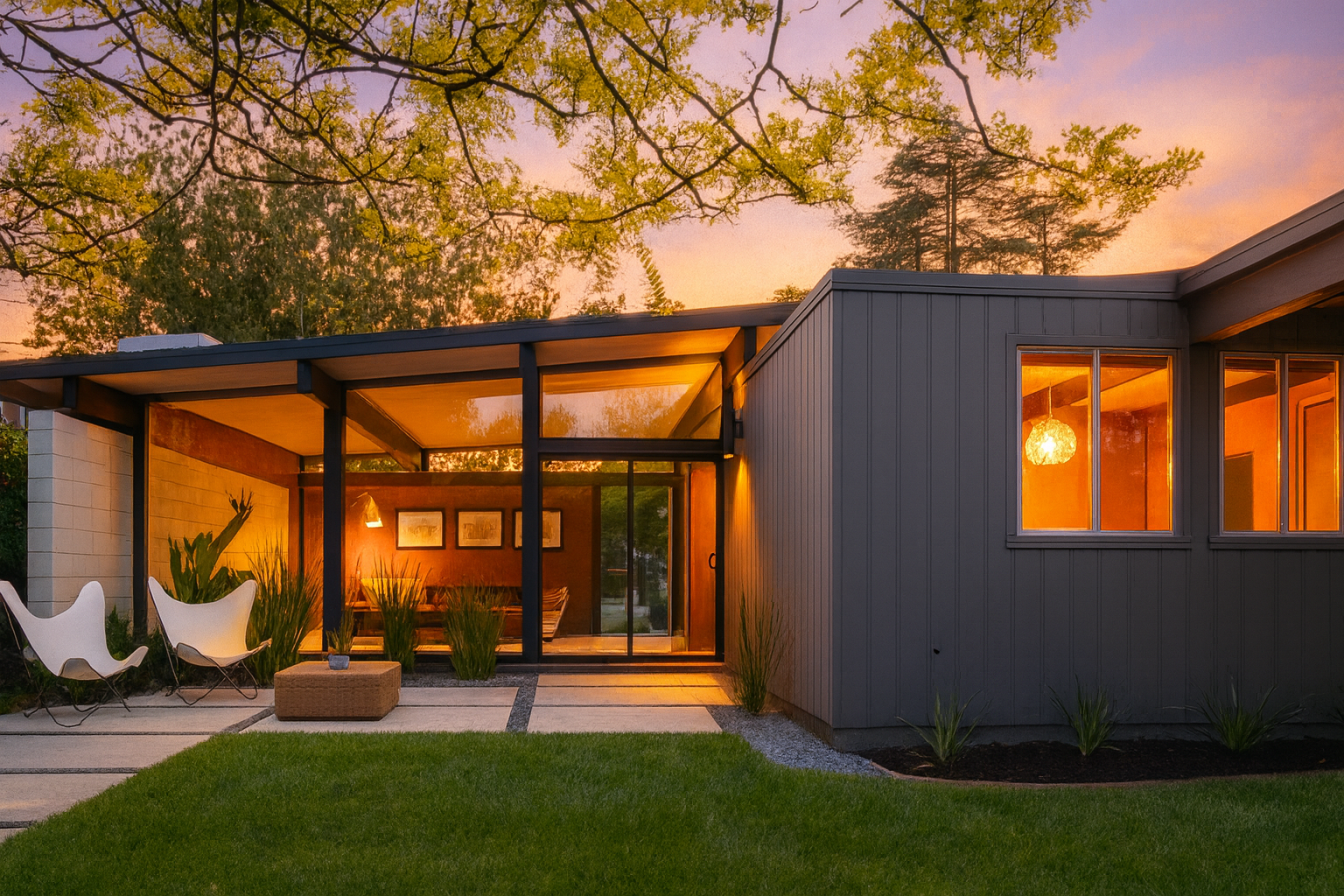
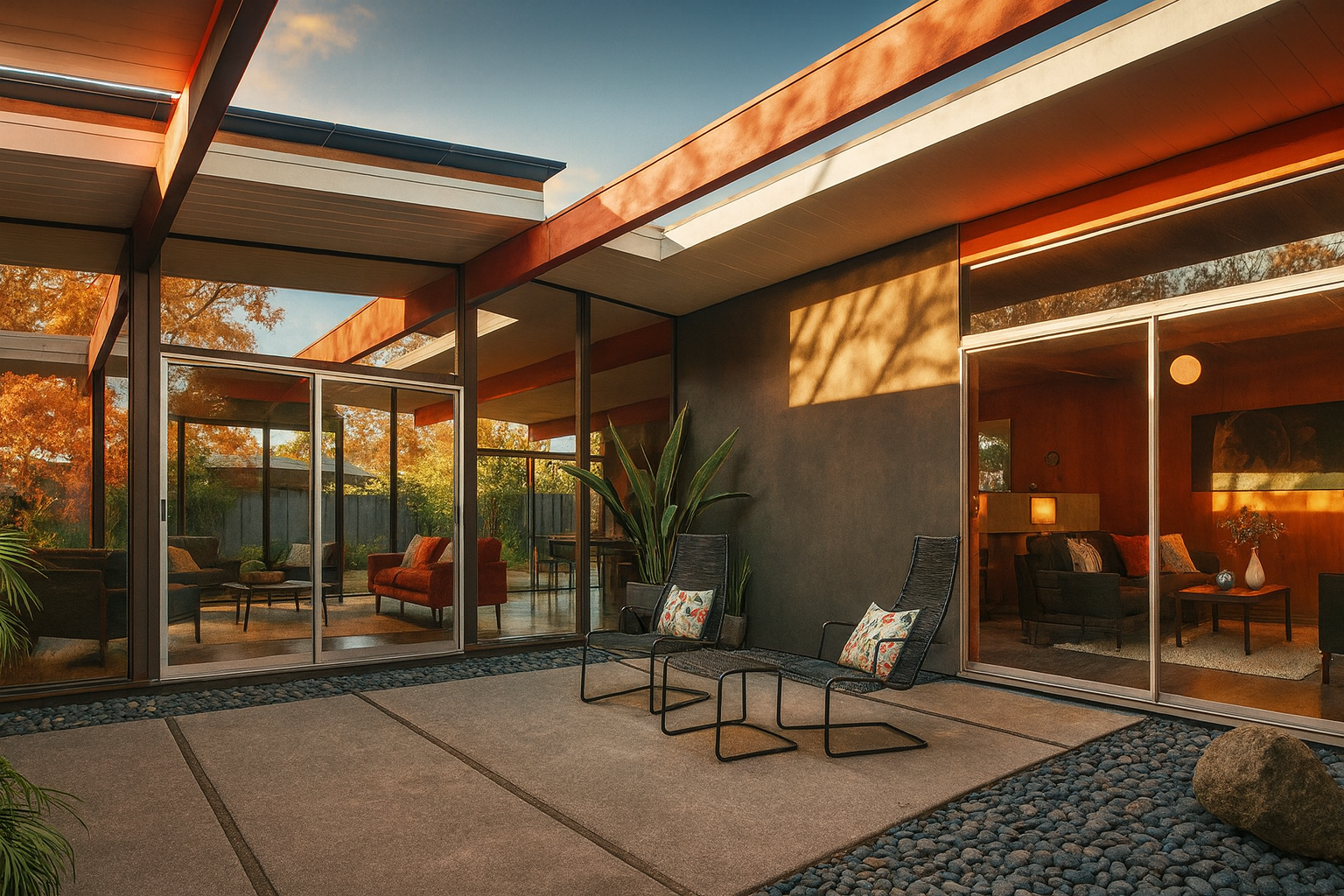
Mid-Century Modern & Eichler Homes: Perhaps the most distinctive architectural legacy in Cupertino is its collection of Eichler homes. Joseph Eichler, the legendary developer, built approximately 150 Eichler houses in the Fairgrove neighborhood of Cupertino between 1959 and 1961. Tucked in a pocket near Miller Avenue and Bollinger Road, the Fairgrove Eichler tract showcases Eichler’s signature modernist style: single-story post-and-beam construction, open floor plans, walls of glass, and seamless indoor-outdoor integration. Many of these homes feature the classic atriums– open-air interior courtyards – that Eichlers are famous for, as well as radiant floor heating and floor-to-ceiling windows that flood interiors with natural light. With their flat or low-pitched roofs and unassuming facades, Eichlers in Cupertino stand out amid more conventional houses, exuding an “California Modern” vibe that architects and design enthusiasts adore. These homes have been lovingly preserved by many owners: it’s not uncommon to find Eichlers with original mahogany paneling and globe lights, even as kitchens and baths get updated for modern living. The Fairgrove Eichler Neighborhood today is highly sought-after for its architectural significance and strong sense of community (many homes are arranged on cul-de-sacs, making it family-friendly as well). Living in an Eichler here means joining a kind of informal club – neighbors swap renovation tips to stay true to Eichler’s aesthetic, and mid-century modern real estate specialists like the Boyenga Team often maintain active buyer lists for any Eichler that comes up for sale.
In addition to Fairgrove, other Cupertino areas feature mid-century modern homes by builders inspired by Eichler. For example, George Bahl built enclaves of “Bahl Patio Homes” in the 1960s and ’70s in parts of Sunnyvale and Cupertino. These homes echo Eichler concepts with courtyard-focused designs, clerestory windows, post-and-beam construction, and open layouts. They tend to be slightly more conventional in exterior style but still emphasize indoor-outdoor living and clean lines. Likewise, developers like John Mackay, Stern & Price, and Alliance built Eichler-like modern homes in the South Bay during that era. Cupertino’s Rancho Rinconada neighborhood, for instance, has some modest mid-century homes (some say Alliance or Mackay built) that were once affordable starter homes – many have since been remodeled or expanded. While Joseph Eichler’s originals remain the stars, these other mid-century homes contribute to Cupertino’s supply of “California contemporaries”, giving the city one of the highest concentrations of mid-mod architecture in Silicon Valley. It’s no surprise that the Boyenga Team are Eichler and mid-century modern specialists, given the demand: they understand the nuances of these homes’ design and have represented many in sales, preserving their legacy.
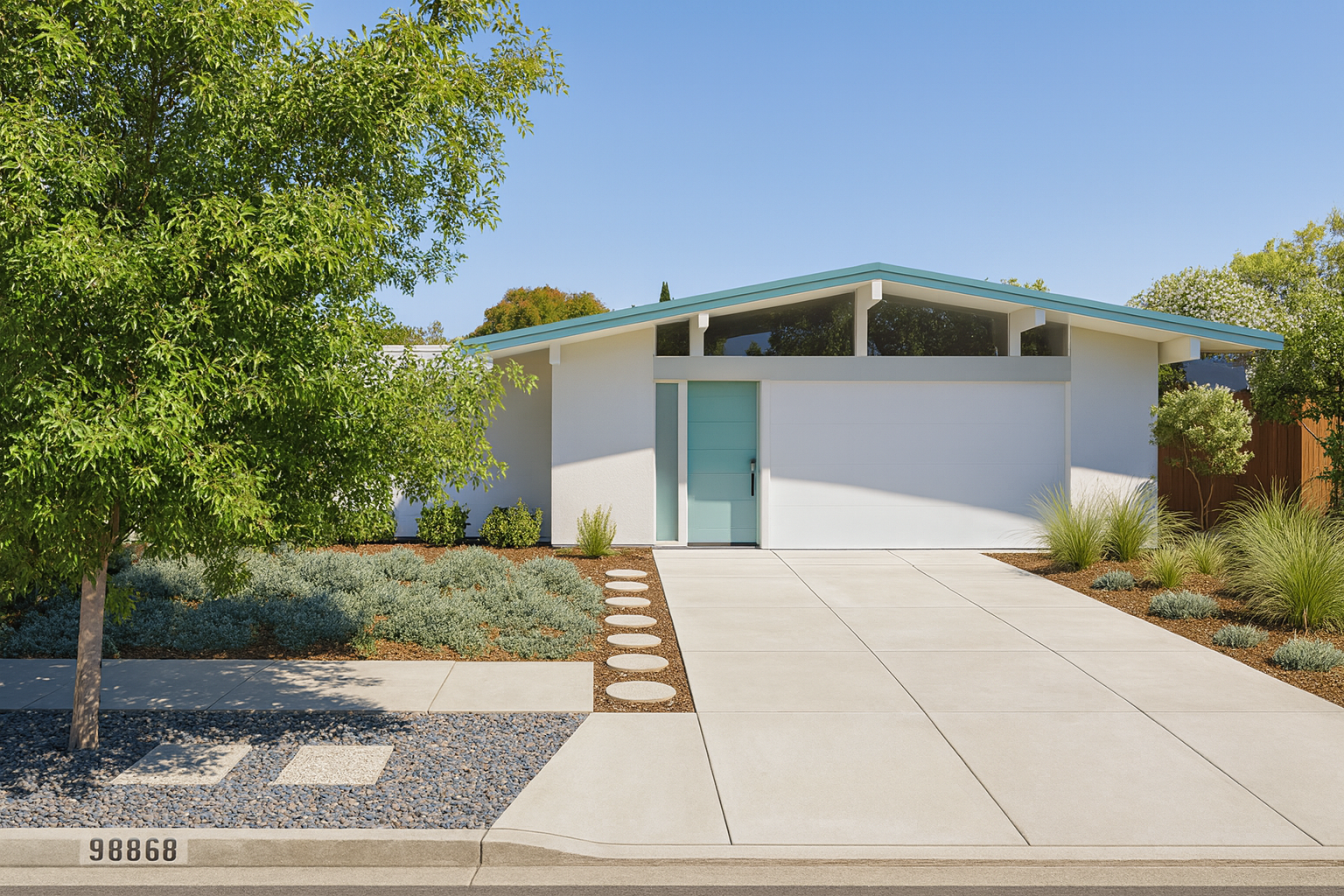
Ranch and Contemporary Homes: Beyond the mid-century enclaves, much of Cupertino is composed of ranch-style houses built from the late 1950s through the 1970s. These are typically single-story or split-level homes with gabled roofs, attached garages, and traditional layouts – the classic American suburb look. In areas like Monta Vista and around Lincoln Avenue, you’ll find many 3-4 bedroom ranchers on 7,000 to 10,000 sq ft lots, often with lovingly tended gardens. Many have been updated over time (second-story additions are not uncommon as families grow or as new buyers renovate). The architecture here isn’t flashy – think simple rooflines, brick or stone accents on facades – but these homes are functional and blend into Cupertino’s tree-lined streets. Builders like Mackay did some tracts in the 1960s, which, interestingly, were designed by Eichler’s architects and often can be mistaken for Eichlers at first glance (they usually have crawl spaces instead of slab foundations, and other small differences). Other custom builds from the 1980s introduced Spanish-style or Mediterranean touches (stucco exteriors, tile roofs) in a few pockets.
In recent years, a wave of modern luxury homes has appeared. As older homes get torn down, owners have built larger two-story houses with contemporary styling – high ceilings, big foyers, and sometimes very modern exteriors with wood, glass, and metal. In the Monta Vista foothills, you’ll even find some estate-style properties on large lots (0.5 – 1 acre) taking advantage of hill views; these can be 4,000+ sq ft mansions with terraced yards and smart-home features. That said, Cupertino’s typical parcel sizes in most neighborhoods limit how large homes can get compared to, say, neighboring Saratoga or Los Altos which have more estates. Contemporary homes in Cupertino typically range from $3.5M–$5M+ for 3,000–4,000 sq ft on larger lots, featuring luxury amenities and sleek designs for buyers who want new construction with all the bells and whistles.
Noteworthy Builders and Styles: We’ve mentioned Eichler and Bahl. To paint a fuller picture: Eichler’s influence in Cupertino means that even non-Eichler homes sometimes adopted mid-century elements. For example, Mackay Homes(by developer John Mackay) in the area are known for open-beam ceilings akin to Eichlers. Stern & Price, a partnership that built mid-century modern homes in Silicon Valley, also left their mark – their designs often have striking folded plate rooflines or expansive glass, blending modernism with a bit of 60s flair. Cupertino’s Fairgrove tract itself was built by Eichler’s company but features some models designed by architects Jones & Emmons and Claude Oakland (Eichler’s primary architects), which means architectural pedigree. In the late 1960s, Gavello (another local builder) constructed contemporary tract homes in nearby cities like Sunnyvale; while Gavello might not have a huge presence in Cupertino, the overall region’s mid-mod builders collectively contributed to the style palette available to Cupertino homebuyers. The takeaway is that Cupertino’s housing stock is richer in mid-century DNA than one might expect for a city its size.
At the same time, Cupertino’s prosperity has fueled extensive remodels. Drive around and you’ll see many older ranch houses that have been renovated with modern facades – horizontal wood siding, aluminum-framed windows, clean minimalist lines, etc. Architects and homeowners have creatively updated 60-year-old homes to feel brand new while retaining some original charm. The city building department has been busy with permits for second-story additions as well. There’s an unofficial trend: families who bought in the 80s and 90s are now rebuilding or expanding homes to accommodate multigenerational living (grandparents often live with families here). So you might see a mid-century footprint expanded into a two-story modern farmhouse style home, for instance.
Housing Inventory Breakdown: Cupertino is predominantly a single-family home community. Of roughly 22,000 housing units in the city, about 61% are owner-occupied houses. The classic Cupertino home is a 3 or 4 bedroom single-story house on a quiet street, perfect for families. These range from original 1,200 sq ft bungalows to expanded 2,500 sq ft modernized homes. Yards are well-kept; many homeowners invest in landscaping (some even reflecting Asian aesthetics, like Japanese gardens or elaborate fruit trees).
That said, there are a significant number of condos and townhomes as well – especially given Cupertino’s push for more housing diversity. Along major corridors like Stevens Creek Boulevard and near Cupertino’s commercial centers, you’ll find attractive condominium complexes. A standout example is the Montebello Condos, a mid-rise condo development at 20488 Stevens Creek Blvd. Built in 2003, Montebello offers 181 units in a resort-style setting with a pool, spa, fitness center, and a clubroom. It’s adjacent to the new Cupertino library and within walking distance of shops and restaurants – a lifestyle that appeals to downsizing empty nesters and young professionals alike. Similarly, Cupertino City Center Apartments/Condos near Cali Mill Plaza provide luxury living with walkability. Townhouse communities such as Cuernavaca or Glenbrook offer attached homes with community pools and parks, often occupied by young families who desire Cupertino schools but with a bit less maintenance than a standalone house.
There are also a few rental apartment complexes, some dating back to the 70s and others brand new, often catering to the influx of tech interns and employees (Apple, for example, built the Main Street Cupertino Apartments for workforce housing). But with the median home values so high, about 39% of Cupertino’s housing units are renter-occupied – which includes many single-family homes being rented out to those who can’t yet afford to buy but want to reside in the city for schools or work.
One can’t talk about Cupertino housing without mentioning that supply is perpetually tight. The city is largely built-out, and zoning has been traditionally low-density. Thus, new additions to inventory come mostly from small infill projects or the occasional subdivision of a larger lot. Recently, Cupertino has seen proposals for mixed-use developments (e.g., the redevelopment of the Vallco mall site will include several thousand housing units when completed). But community debates over density and height means these projects move slowly. For now, the typical inventory at any given time might be on the order of only a few dozen homes for sale in the entire city – a minuscule number relative to demand (as we’ll see in the market analysis).
Architectural Preservation vs. Change: There is a growing awareness of the importance of preserving Cupertino’s mid-century architectural heritage. The Eichler neighborhoods, for instance, have informal guidelines and passionate owners who resist scrapes (demolitions). Real estate experts like the Boyenga Team, who are leaders in luxury, design-forward real estate, often counsel Eichler buyers on how to update systems (roof, heating) while maintaining the Eichler aesthetic. On the other hand, many older ranch homes have been transformed or replaced entirely, which has incrementally changed the look of some streets. Still, Cupertino doesn’t have the drastic mansionization seen in, say, parts of Palo Alto – likely due to smaller lot sizes and perhaps a community ethos of modesty. It’s common for a $3 million home here to appear from the street as a simple, single-story ranch; the real value is in the location and interior upgrades, not ostentatious curb appeal.
In summary, Cupertino’s housing offers something for every taste (as long as one can afford the entry price): Mid-century modern enthusiasts will find genuine Eichlers and kindred designs; those seeking practical family homes have a plethora of safe, comfortable ranch houses near parks and schools; and buyers wanting modern luxury can find beautifully crafted new homes with high-end finishes. The unifying factor is that almost all reside on quiet, leafy streets with a backdrop of the Santa Cruz Mountains or nearby open space. Cupertino’s architectural diversity, combined with its planning of neighborhoods around schools and parks, creates an environment that is aesthetically pleasant and highly livable. It’s an environment that the Boyenga Team, with their specialized knowledge in both mid-century and modern homes, navigate expertly to match clients with the perfect property – whether it’s an Eichler atrium or a new smart home by Apple Park.

Real Estate Market Analysis
Cupertino’s real estate market is robust, expensive, and fiercely competitive – a direct outcome of the city’s desirability and constrained supply. For prospective buyers and sellers, understanding the market dynamics here is crucial. Let’s delve into key metrics and trends, including home values, appreciation, inventory, and how Cupertino compares to neighboring markets.
Home Values and Appreciation: By any measure, Cupertino housing is in the upper echelon of U.S. real estate. As of early 2026, the typical home value in Cupertino hovers around $3 million. Zillow’s Home Value Index reports an average home value of $2.99M, up about 2.2% in the past year. This suggests that even after years of significant growth, Cupertino’s prices are continuing a steady climb (albeit at a more modest rate recently). In fact, 2025 saw home prices rise around 4–5% in Cupertino, on top of a decade where values roughly doubled. This long-term appreciation (around 6–7% annually compounded over the past 10 years) reflects Cupertino’s resilient demand – even when broader markets cool, the combination of tech wealth and school-driven buyers keeps Cupertino strong.
As of the end of 2025, median list prices were about $2.87M and median sale prices about $2.87M–$3.25M depending on the source. In practice, many single-family homes in good condition now sell in the $2.5M to $4M range, with the lower end being smaller 3-bedroom ranchers and the upper end being larger new or remodeled homes (or premium locations). For example, a 1,500 sq ft original ranch might fetch $2.5M, whereas a 3,000 sq ft rebuilt home can easily top $4M. Eichler homes, interestingly, often command high per-square-foot prices; it’s common to see Eichlers in Fairgrove selling for $2.5M–$3.5M for ~1,600–2,000 sq ft, essentially pricing on par with or even above larger conventional homes, due to their architectural appeal. Meanwhile, ultra-modern new builds or mini-estates in the Monta Vista foothills have breached $5M.
Condominiums and townhomes offer a (slightly) more affordable entry point – newer 2-bed condos might be in the $1.2M–$1.5M range, while larger luxury condos or townhouses can be $1.5M–$2M+. With such prices, Cupertino is a luxury market through and through: nearly all sales are above $1M, and a large proportion above $2M.
Market Velocity and Demand: Homes in Cupertino sell extremely fast. The market is characterized by low days-on-market and frequent multiple-offer situations. For much of the past year, the median days to pending sale was around 8–14 days – basically about one to two weeks from listing to accepting an offer, which indicates that well-priced homes get snapped up almost immediately. In peak seasons, anecdotal reports often show turnkey houses selling in less than a week after manic weekend open houses. Even in cooler months, anything lingering more than 3-4 weeks might be seen as overpriced. The Boyenga Team’s analysis notes Cupertino’s “hyper-competitive velocity” means a single day or decision can make the difference in securing a property. For sellers, this means pricing correctly from the start is vital – if a home doesn’t receive strong offers quickly, it may be perceived as flawed. For buyers, it means coming in with non-contingent offers, often above asking, within days of a listing. The environment truly rewards those who are prepared and informed (and often all-cash or pre-underwritten).
The sale-to-list-price ratio is telling: it’s not uncommon for Cupertino homes to sell for over the asking price. In recent times, depending on market swings, perhaps 50-60% of listings sell above list. For instance, in neighboring Sunnyvale (similar dynamics), nearly 87% of houses were selling above list price in 2025 with final prices averaging ~110% of asking. Cupertino sees similar bidding wars, especially on attractive homes in top school locations. A median sale price to list price ratio above 1.0 (i.e., >100%) has been recorded during hot stretches. This indicates many buyers are willing to bid over list – sometimes substantially – to win. It’s not unheard of for an appealing property (say a remodeled home walking distance to an award-winning school) to fetch $200K+ over asking with 5–10 offers. In one dramatic case, a Sunnyvale Eichler (marketed by the Boyenga Team) sold for $327,000 over asking, showcasing how emotional demand can drive up prices. In Cupertino, similar premium outcomes occur, particularly when inventory is scarce.
Inventory and Supply: One reason for such competition is the chronic low inventory. At the end of 2025, only about 42 homes were for sale in Cupertino – a strikingly low figure for a city this size. New listings trickle onto the market; in December 2025 there were only 15 new listings that month. This imbalance – far more buyers than homes available – has defined Cupertino for years. The months of inventory often sits under 1 month in hot times, meaning if no new homes came on, the existing stock would all sell in under a month at current pace. Even as the broader Bay Area saw some inventory buildup in certain segments, Cupertino remained inventory-starved. Part of this is because people who own in Cupertino tend to hold on; there’s a limited outflow since anyone who secured a home here has a big incentive (schools, rising value) to stay put. Additionally, new construction has been limited. Hence, supply-side relief is minimal.
Trends and Outlook: Over the last year, Cupertino’s home values grew modestly (~2–4%), which might seem slow compared to the double-digit annual gains of the boom years. However, this “slow but solid” growth is reflective of a market reaching a mature price plateau while still edging upward. Many analysts view Cupertino real estate as a relatively safe long-term bet: even if tech cycles cause short-term volatility, the underlying demand drivers (Apple’s continuous expansion, school demand, limited land) suggest any dips are likely temporary. Indeed, during the 2020–2021 pandemic frenzy, Cupertino saw prices jump sharply; subsequent cooling in 2022 was mild here relative to less supply-constrained areas.
One emerging factor is interest rates – higher mortgage rates have constrained some buyers’ budgets since 2022. Yet in Cupertino’s price brackets, many buyers are either cash or making large down payments, often due to stock equity from tech jobs. Thus, the market is less sensitive to interest rate spikes than more entry-level markets. International buyers also find Cupertino attractive (for investment or residency), and some bring cash from overseas, further buoying demand.
Comparison with Neighboring Zip Codes: Cupertino sits in a cluster of affluent communities, but it holds its own or exceeds many in home value. For perspective, neighboring Sunnyvale (94087) has an average home value around $2.0M – Cupertino’s is roughly 50% higher, reflecting the premium for Cupertino’s schools and perhaps larger average lot sizes. Santa Clara (95051) and West San Jose (95129, 95130), which border Cupertino, have medians in the $1.3M–$2M range, significantly lower, though parts of West San Jose that attend Cupertino schools (like Lynbrook HS in 95129) narrow the gap. On the higher end, Saratoga (95070), just to the south, boasts an average home value around $3.9M – slightly above Cupertino’s, thanks to Saratoga’s estate-style properties and perhaps even more exclusive ambiance. Los Altos (94024/94022) to the northwest is pricier still, with average home values in the mid-$4 millions, and Los Altos Hills is off the charts around $5.6M. Compared to these, Cupertino is a bit more “accessible” while still firmly luxury. In essence, Cupertino’s pricing is on par with or above other family-focused Silicon Valley enclaves like Palo Alto (which ranges widely, but north PA is very high) and is only clearly surpassed by ultra-wealthy towns like Los Altos Hills, Atherton, or Monte Sereno.
That being said, within Cupertino’s own micro-markets, there are differences: the Monta Vista foothills (95014 west of De Anza Blvd) often see higher prices due to larger lots and Monta Vista HS zoning – many sales $3M+ there. The Lynbrook High area (95129 ZIP but Cupertino schools) similarly competes with Monta Vista area pricing. The Rancho Rinconada area (near Lawrence Expressway), with smaller lots and older cottages, has some of the lower prices in Cupertino (some sub-$2M sales for very small houses, or townhomes in the low $1Ms). But even those have seen redevelopment with bigger new homes, pulling values up. Condos near the Cupertino Main Street or along Stevens Creek might go for $1M–$1.5M, whereas an equivalent condo in Sunnyvale could be a few hundred thousand less. Thus, across the board, Cupertino carries a premium – one that neighboring residents clearly recognize (the “Cupertino Schools” effect often adds 15-30% value compared to an identical home just outside the boundary).
For investors, Cupertino’s outlook remains positive: rental demand is high (families rent just to be in the school district, and Apple hires many newcomers who rent before buying). The median rent ~ $3,700/month for a 2-bedroom is high, though not proportional to purchase prices (meaning rental yields are low; this market is typically better for long-term appreciation than for high rental cap rates).
Market Challenges: One factor to monitor is the push for higher-density housing mandated by California (RHNA housing quotas). Cupertino has resisted large developments in the past (the Vallco redevelopment was contentious). If new condos or apartments come online in large numbers, it could slightly expand inventory and moderate price growth, especially for entry-level segments. However, luxury single-family home supply will remain fixed, so that segment is likely to keep climbing. Additionally, the market can be sensitive to the tech sector’s fortunes – a big IPO or surge in Apple’s stock can suddenly inject more down payment cash into the buyer pool, whereas an economic slowdown could temporarily reduce demand. But historically, even during downturns like 2008 or 2001, Cupertino home prices rebounded strongly due to the enduring appeal of its fundamentals.
In sum, Cupertino’s real estate market is characterized by sky-high prices, strong appreciation, low inventory, and feverish demand. For sellers, it’s a bonanza – if well marketed, a Cupertino home can attract multiple qualified buyers and potentially set new neighborhood price records. For buyers, it’s a battlefield requiring strategy, decisiveness, and often willingness to stretch budgets. This is where aligning with experts like the Boyenga Team yields dividends: they bring data-driven pricing insight and off-market network access to help clients navigate bidding wars and find opportunities in this ultra-competitive arena. Whether it’s understanding how a Cupertino home compares to one in Saratoga or Palo Alto in value, or how to leverage Compass tools like Concierge and Private Exclusives to maximize sale price or find a hidden listing, navigating Cupertino’s market is not for the faint of heart – but with the right guidance, the rewards (both financial and lifestyle) are unparalleled.
Case Studies and Success Stories
To illustrate Cupertino’s market in action – and the value that savvy strategy can add – let’s look at a few success stories from the Boyenga Team’s portfolio in the mid-century and luxury segment. These case studies highlight how expert preparation, pricing, and marketing can yield exceptional outcomes, even in an already hot market.
Sunnyvale Eichler – Sold $327K Over Asking: In a neighboring Silicon Valley community, the Boyenga Team listed a 4-bed, 2-bath Eichler home (mid-century modern with atrium) that had been upgraded with green technology. Through targeted pre-listing improvements and an aggressive marketing campaign emphasizing the home’s unique design, they attracted a frenzy of interest. The property received multiple offers and ultimately sold for $327,000 above the asking price. This sale not only set a new neighborhood price record but showcased how highlighting architectural pedigree and modern upgrades can ignite buyer emotion and competition. As Eric Boyenga noted, “marketing Eichler homes in a modern way through aggressive online exposure is the only way to unlock their true value,” and this sale proved that formula.
West San Jose Eichler – Multiple Offers, Record Price: The Boyenga Team represented an Eichler in San Jose’s Rose Glen area (95128) listed at $629,000. Leveraging their Eichler buyer database and staging the home to accentuate its mid-century features (e.g. exposing the post-and-beam ceilings, highlighting floor-to-ceiling glass), they attracted numerous offers. The home closed at $745,000 – about $116K over list – with the winning bid coming in well above asking and with no contingencies. This original courtyard-model Eichler, while smaller and more affordable than Cupertino homes, benefited from the Boyengas’ expertise in tapping pent-up demand among mid-century enthusiasts. It reinforced that even entry-level homes can fetch premium results with the right approach.
Fairglen (San Jose) Atrium Eichler – $262K Over Ask: In another case, a 4-bed atrium Eichler in San Jose’s Fairglen neighborhood was prepared meticulously by the Boyenga Team – including beautiful staging and strategic cosmetic updates (remodeled bathrooms, fresh Eichler-appropriate paint colors). Priced competitively to attract attention, it drew a throng of bidders. The final sale was $262,000 over asking with multiple offers. Notably, this home had the trifecta: architectural charm, great presentation, and a tight-knit Eichler community location. The Boyenga Team’s marketing reached both local buyers and Eichler aficionados from other regions, ensuring maximum exposure. The outcome was another neighborhood high, validating the team’s proven formula of preparing and staging, aggressive marketing, and skilled negotiating techniques.
Cupertino Luxury Home – Off-Market Success: In Cupertino itself, consider a scenario (composite of recent experiences) where a high-end contemporary home was to be sold quietly. The sellers, preferring discretion, engaged the Boyenga Team, who tapped into their private network and Compass’s “Private Exclusive” platform. By showing the property to a curated list of qualified buyers (including some of their Silicon Valley executive clients and international contacts), the team generated offers without ever going on the public MLS. The home sold off-market at a price competitive with open-market sales, achieving the sellers’ goals of privacy and a premium price. This case underscores how the Boyenga Team’s connections and off-market strategy can benefit clients who want a low-profile transaction.
Compass Concierge Transformation – Maximizing Sale Price: In another representative case, a Cupertino seller had an older home in need of updates to appeal to today’s buyers. The Boyenga Team advised leveraging Compass Concierge, an innovative program that fronts the cost of home improvement with no upfront fees. They coordinated a swift pre-sale renovation: fresh interior paint, modern light fixtures, landscaping to boost curb appeal, and home staging with stylish furniture. Using data-driven pricing analysis, they listed the home at a sweet-spot price. The result: the home sold quickly, above asking, after attracting dozens of showings. By investing in strategic updates (with no out-of-pocket cost to the seller) and pricing it right, the Boyengas helped the seller net far more than they likely would have selling “as-is.” One of the Boyenga Team’s core strengths for sellers is this project management capability – handling everything from contractor bids to design choices – which removes stress for the seller and produces remarkable ROI on improvements.
These case studies demonstrate a few key takeaways. First, even in a strong market, expert strategy can significantly amplify results – whether that’s turning a good offer into a great offer (hundreds of thousands over asking) or selling a home off-market that others wouldn’t even know was available. Second, the Boyenga Team consistently uses data and technology to advantage: for example, their proprietary “Property Nerds” market analytics help advise buyers how much over asking might be needed to win (in one case, using data to craft a winning bid for a client amidst 10 offers). They also utilize tools like virtual tour technology and targeted digital advertising to reach the right audience for unique properties (like Eichlers which have almost a cult following). Third, presentation matters – every success story above involved careful home preparation, staging, or at least highlighting of the property’s best features. The Boyengas have a reputation for showcasing architecturally significant homes in their best light (they are known to employ high-end photographers and even create mini “look books” for special homes).
Finally, these stories highlight the Boyenga Team’s versatility. They are equally adept at selling a mid-century modern home to design-savvy buyers as they are at navigating a luxury sale to an international executive. They tailor their approach to each property’s strengths: an Eichler’s selling point might be its heritage and design (so they emphasize authenticity and mid-century lifestyle), whereas a new contemporary’s selling point is turnkey luxury (so they emphasize modern amenities and perhaps the smart-home features to tech buyers). In all cases, the thread is a commitment to maximizing value for the client. As evidenced by client testimonials, Cupertino sellers often note the Boyenga Team’s ability to instill confidence and a “competitive advantage” in the process – whether buying or selling, that advantage often translates to real dollars and peace of mind.
The Boyenga Team Advantage
What truly sets the Boyenga Team apart in Cupertino and greater Silicon Valley is their innovative approach as “Next-Gen Agents” combined with deep local expertise. Eric and Janelle Boyenga, often called the “Property Nerds”, have built a powerhouse team at Compass that delivers value far beyond the typical real estate transaction. Here’s a look at how their philosophy and resources give clients an edge:
Silicon Valley Real Estate Experts: Eric Boyenga is a true Silicon Valley real estate expert, born and raised in the Los Altos Hills area, and steeped in the culture of tech and innovation. Together, Eric and Janelle have over 25 years of experience and a team of over a dozen specialists. They have navigated every market cycle since the 1990s and have handled properties from entry-level condos to multi-million-dollar estates. This breadth of experience means they understand the nuanced micro-markets of each Silicon Valley community – from Cupertino’s school-centric streets to Palo Alto’s Eichler enclaves to Los Gatos’ estate neighborhoods. When the Boyenga Team says they have “unmatched local knowledge of San Jose’s finer communities” (and indeed all the Valley’s communities), it’s backed by a track record of transactions across Palo Alto, Los Altos, Menlo Park, Saratoga, Los Gatos, Willow Glen, and beyond. They know which areas appeal to certain buyers, what pricing strategies work in one neighborhood versus another, and even specifics like how a particular school boundary or upcoming development will affect value. This hyper-local insight is invaluable for clients making big decisions.
Eichler and Mid-Century Modern Specialists: The Boyenga Team are widely recognized Eichler and mid-century modern specialists – something that aligns perfectly with Cupertino’s mid-mod housing element. Over the years, they have not only sold countless Eichlers (often achieving record prices), but have also invested in educating the market about these homes. They run Eichler-focused websites and blogs, providing resources on Eichler maintenance and design, and have been featured in media as trusted Eichler home experts. This passion translates to a huge benefit for sellers of mid-century homes: the Boyenga Team can instantly connect them with a pool of enthusiasts and use the correct marketing language to elevate the architectural value. For buyers, the team can identify and sometimes source off-market mid-century opportunities (knowing that Eichler owners might sell quietly). Their specialized knowledge in mid-century design and restorative construction also means they can advise on how a vintage home can be updated without losing its soul – a confidence booster for buyers new to these unique properties.
In one notable program, the Boyenga Team will coordinate pre-sale inspections with contractors who understand Eichlers, so that potential issues (like an older radiant heating system) are addressed proactively, smoothing the sale. Such tailored services underscore their commitment as leaders in luxury, design-forward real estate – they appreciate architecture and design as much as value, which is not common in an industry that sometimes focuses only on dollars.
Innovative Marketing and Compass Platform: Branded by Zillow as “next generation” agents, the Boyengas leverage technology aggressively to benefit their clients. As part of Compass, they have access to a suite of exclusive tools. For example, Compass Concierge (mentioned earlier) helps sellers front renovation costs to boost sale price – the Boyenga Team was an early adopter of this, effectively “engineering higher ROI” for sellers through smart improvements. They also utilize Compass’s Coming Soon feature to build pre-market buzz, and the Private Exclusivesnetwork to shop properties off-market to a curated audience. Their digital marketing is cutting-edge: expect professional videography (drone aerial footage for a property near Apple Park, for instance), 3D virtual tours (Matterport), and targeted online ads that reach exactly the demographic likely to buy a given home.
The Boyenga Team’s own online presence is formidable – their websites (like SiliconValleyRealEstate, SiliconValleyEichler, BoyengaTeam.com) are rich with content and attract high Google search rankings, which in turn give their listings extra exposure. They are active on social media, showcasing new listings via Instagram, Facebook, YouTube, and even hosting virtual open house live streams when needed. All of this means their clients’ properties get more eyeballs. In a market where a wide net can attract that one extra bidder who pays top dollar, this marketing muscle is crucial.
Data-Driven and “Property Nerd” Analytics: As self-proclaimed Property Nerds®, Eric and Janelle emphasize data in decision-making. They provide clients with detailed market analysis – for instance, absorption rates, trend graphs, and school-by-school sales statistics. Their approach to pricing a home is analytical: they don’t just look at recent comps, but also at pending sales, broader economic indicators, and even apply proprietary algorithms to gauge demand. For buyers, their “Property Nerds analytics” means parsing through reams of sales data to advise on offer strategies (e.g., if a home has 10 offers, they can often predict roughly how high the winning bid will go based on patterns – giving their client an informed chance to win). This quantitative rigor is very in line with their Silicon Valley clientele, who appreciate an agent that can speak the language of numbers and logic, not just emotion. It’s one reason they have 576+ five-star reviews and over $2.1B in sales volume to date – consistent excellence builds client trust and loyalty.
Collaborative Team and White-Glove Service: The Boyenga Team operates with a team-of-specialists model. They have buyer agents who focus on different areas, listing coordinators, a stager/designer, transaction managers, etc., all orchestrated to provide seamless service. Clients often comment that someone is always available to answer questions and that no detail falls through the cracks. Eric and Janelle set this tone by being extremely responsive and hands-on. They also emphasize “Local Expertise / Innovative Marketing / Unparalleled Service” as their motto – and they deliver on it by combining personal attention with the resources of a top team. As a result, they rank as the #1 real estate team in Silicon Valley for Compass and were a Wall Street Journal Top 100 Nationwide team, which speaks to their performance.
Exclusive Partnerships and Tech Tools: The Boyenga Team doesn’t just rest on traditional methods; they partner with real estate tech innovators to benefit clients. They’re known to utilize or even beta-test tools from startups and platforms like HomeLight, HighNote, Modsy, Aidentified, and Matterport. For example, HomeLight (an online service that can make cash offers or bridge financing for buyers) is something they might use to help a client buy a new home before selling the old one – smoothing a tricky contingency situation. They mention working with Pacaso (for co-ownership of luxury second homes) and using tools like Chime CRM to manage buyer inquiries efficiently. By staying at the forefront of these technologies, the Boyengas ensure their clients have every possible advantage – whether it’s a simulation of how a remodeled kitchen could look (Modsy virtual staging) or an AI-driven buyer matching system. It’s fair to say they set “the modern standard for state-of-the-art marketing”, often imitated but never duplicated by others.
Client-Centric and Results-Oriented: At the end of the day, the Boyenga Team’s greatest asset might be their client-first ethos. Despite huge volume, they maintain a personal touch – clients have noted their empathy, patience in explaining processes, and skill in negotiations (the Boyengas are strong negotiators who often secure favorable terms, not just prices). Their mission statement “We Engineer Happiness ♡” captures their blend of technical proficiency and genuine care. For sellers, they aim to make the process smooth and profitable – handling everything from estate sales to minor renovations, so the seller isn’t overwhelmed. For buyers, they are mentors and advocates – if a client is stretching to win a Cupertino home, the Boyenga Team will ensure they understand the value and will deftly handle the offer war to get them their dream home (or counsel them to walk away if something isn’t right, because reputation matters more than any single deal).
In summary, choosing the Boyenga Team means partnering with Silicon Valley’s top real estate innovators who are at once local neighborhood experts, Eichler/mid-mod aficionados, and tech-enabled marketers. They are Silicon Valley real estate experts in every sense: deeply rooted in the community and relentlessly forward-thinking. Whether you’re eyeing a luxury estate with cutting-edge design or an Eichler time-capsule, Eric and Janelle Boyenga and their team have the specialized knowledge and proven strategies to optimize your outcome. They truly “deliver value to both buyers and sellers” – from maximizing sale prices with Compass Concierge and global outreach, to securing the ideal home for buyers through off-market finds and data-driven negotiation. In the high-stakes world of Cupertino and Silicon Valley real estate, the Boyenga Team stands out as leaders in luxury, design-forward real estate, offering an unmatched combination of experience, innovation, and passion that turns their clients’ real estate goals into reality.
Contact Us and Begin Your Mid Mod Journey Today!
Boyenga Team + Compass Eric & Janelle Boyenga 📞 Call / Text : 408-373-1660 📧 Email : MidMods@Boyenga.com 🌐 www.BoyengaTeam.com / www.EichlerHomesForSale.com DRE #01254724 / #01254725