
Mid-Century Modern Living in Mountain View, California
Historical Overview
Mountain View’s origins trace back to the mid-19th century, when it emerged as an agricultural crossroads in California’s famed “Valley of Heart’s Delight.” Settlers in the 1850s were drawn by the Santa Cruz Mountains’ panoramic viewsand fertile land. The name “Mountain View” itself was chosen to highlight the spectacular vistas of those mountains seen from town. A stagecoach station opened in 1854 on the San Francisco–San Jose road, later gaining a transcontinental railroad stop by 1864. This connectivity turned Mountain View into a logistics hub for local fruit orchards and canneries, which dominated the economy into the early 20th century. In 1902 the community incorporated as a city (population ≈600) and retained its welcoming, small-town charm even as it grew.
For decades, Mountain View’s identity remained agrarian; workers picked apricots, prunes and cherries in orchard rows and shipped produce down the valley. Many of the historic downtown buildings (especially along Castro Street) date to this era, built in late-19th/early-20th-century eclectic and Spanish Colonial Revival styles. Visitors today can still see the cornice lines and mission-style elements on some brick storefronts, a reminder of the city’s heritage amid modern development. However, a series of mid-century transformations dramatically reshaped Mountain View.
The construction of the Moffett Field Naval Air Station (1933) and the NASA Ames Research Center (founded 1939) brought engineers and scientists into town. These facilities anchored a growing aerospace presence, paving the way for Silicon Valley’s emergence. The true turning point came in 1956 when physicist William Shockley opened Shockley Semiconductor Laboratory in Mountain View. Shockley’s transistor research, and the engineers it drew, are widely regarded as the genesis of the semiconductor age. In the words of local historians, Shockley’s lab “kick-started the phenomenon the world knows as Silicon Valley”.
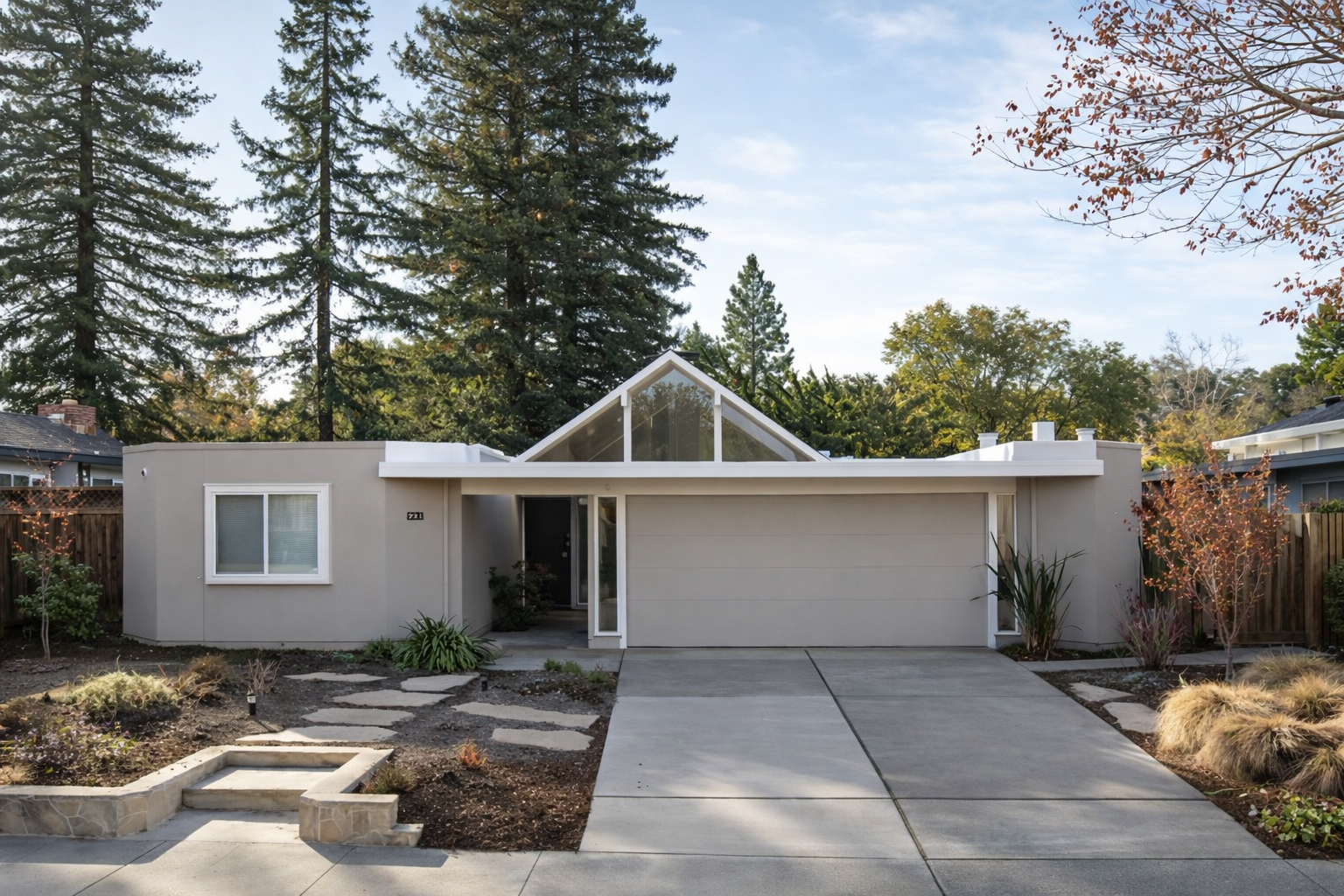
After World War II, as Silicon Valley’s semiconductor pioneers flocked to the area, Mountain View underwent a postwar suburban boom. Developer Joseph Eichler selected Mountain View as one of the ideal sites for his groundbreaking mid-century modern homes. Starting in the mid-1950s, Eichler and other architects created tracts of Eichler houses—flat-roofed, glass-walled homes with private atriums that exemplified forward-thinking design. Two of Mountain View’s enduring neighborhoods – Fairview (in Monta Loma) and Bell Meadows – became iconic Eichler enclaves (see Architectural Highlights below).
In the latter 20th century, the tech era cemented Mountain View’s status as a global innovation capital. Google’s move here in 1999, along with the relocation of the Computer History Museum in 2002, underscored the city’s transformation. Urban planning initiatives also responded to growth: one highlight was repurposing a closed landfill into Shoreline Parkin 1983. Today Shoreline (750 acres) is a premier recreation area along the bay (see Attractions). The downtown core saw both preservation and redevelopment, blending historic Castro Street shops with modern infrastructure to support commuters, with transit (Caltrain) and highways easily accessed by mid-mod neighborhoods.
Notable figures in Mountain View’s history include the entrepreneurs and civic leaders who guided its growth. The Castillo family (Californios of Rancho Pastoria de las Borregas) held the land before US settlement, and later individuals like Mayor Bill Wurster and Supervisor Rod Diridon helped plan balanced growth. Shockley looms large as a scientific pioneer, while Google’s founders (Page/Brin) brought global attention. But the lifeblood of the city has been its residents – working families, tech professionals, and creative entrepreneurs – making the community both diverse and dynamic. Over time, Mountain View has striven to honor its past (orchards and Eichlers) even as it accommodates innovation and change.
Notable Figures and Developments
The influence of Eichler Homes, along with builders such as Stern & Price and other modernist developers, helped define Mountain View’s architectural identity. The city’s proximity to Stanford University and the rise of companies like Google further shaped its growth, fueling demand for thoughtfully designed housing close to innovation hubs.
Demographic and Socioeconomic Profile
Mountain View today is a remarkably diverse and affluent community. As of a 2025 estimate, roughly 86,500 people reside in the city, with that number surging to over 120,000 by day due to commuting workers. The median age is 35.7, skewing younger than national averages. Education levels are exceptionally high: the latest U.S. Census data report 74.4% of residents hold a bachelor’s degree or higher (versus about 35% nationally). This educational attainment reflects the large share of tech and research professionals. In fact, 94.5% have at least a high school diploma.
Mountain View’s population is ethnically rich. According to City data (2020 Census), about 33% of residents identify as Asian and 18% as Hispanic/Latino, with 48% White. In recent years, the city has seen steady foreign-born growth: 42.3% of residents are foreign-born, of whom 57% were born in Asia. Over half the city speaks a language other than English at home. This multicultural fabric is evident in community festivals, places of worship, and the variety of restaurants along Castro Street and beyond.
Economically, Mountain View is one of the wealthiest cities in the U.S. DataUSA reports a median household income of about $180,000 (2023), roughly 3–4 times the national median. The housing market reflects this wealth: the city’s median home value is nearly $1.93 million (roughly 6× the U.S. median) with only ~39% homeownership (most residents rent). As a result, housing costs and rents are extremely high – a point we discuss under Market Analysis below.
Trend-wise, Mountain View continues to attract tech-sector talent. Despite the Bay Area’s pandemic-era blip, the pull of companies like Google, Microsoft, and newer AI firms has kept demand strong. For example, in 2025 Mountain View was named the priciest Silicon Valley city for renters due to an influx of AI jobs. High incomes and job growth have also driven concerns about gentrification and affordability: local coverage noted ~60% renter population and rapidly rising rents (exceeding $4,000/month for 1BR by 2015, and even higher today). There are ongoing community conversations about preserving diversity as the cost of living climbs.
In sum, Mountain View’s residents are predominantly highly educated professionals, drawn by the tech industry. The city is ethnically and culturally mixed, with a large immigrant community and a broad array of languages and cultural traditions. Income levels are among the highest in California, but this prosperity has brought challenges of housing affordability and demographic shift. Overall, Mountain View combines Silicon Valley’s talent and wealth with a distinct local culture rooted in its mid-century heritage.
School Districts and Education Landscape
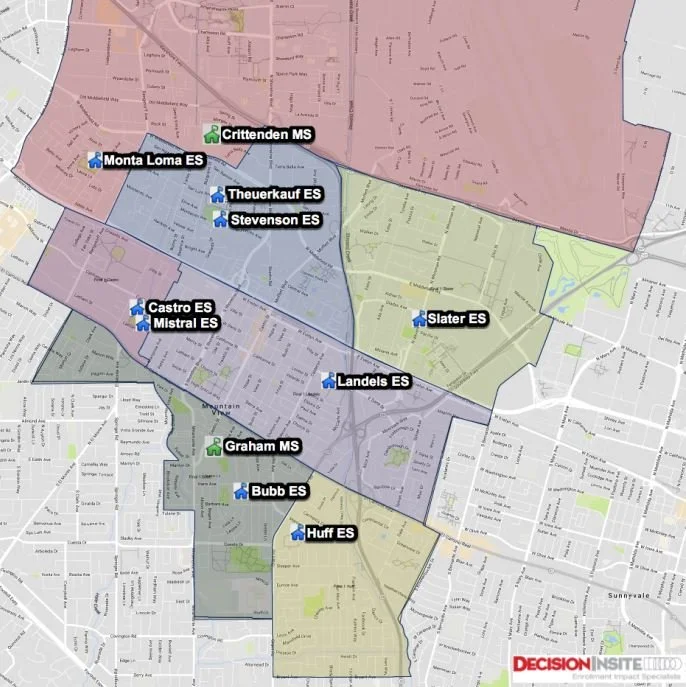
For families, the quality of schools in Mountain View is a major attraction. The city is served by two public districts: Mountain View Whisman School District (MVWSD) for K–8, and Mountain View–Los Altos Union High School District (MVLA) for 9–12. Both districts are highly regarded. MVWSD includes schools like Crittenden, Landels, and Stevenson Elementary – all of which earn top marks on school rating sites. MVLA’s flagship, Mountain View High School, consistently rates among California’s best: GreatSchools gives MVHS a 10/10 rating. MVHS has strong academic programs and successful athletics (its soccer and wrestling teams have won state championships). Leland High and Los Altos High (in the same district) also attract many MV students. In practice, MV-Whisman feeds into MVLA: children usually attend neighborhood elementary and middle schools before matriculating to one of the MVLA high schools.
Parents closely watch school boundaries, which largely align with MVWSD zones. In some cases, families choose homes to fit into preferred elementary zones; for example, homes near Central Downtown often go to Landels or Crittenden. There are also several private school options in and around Mountain View. Notably, Saint Francis High (enrollment includes juniors from MVLA’s zone), and smaller K-8 schools like Immaculate Heart or local charter schools, serve diverse preferences. The presence of excellent public and private schools contributes to high demand for family homes, especially mid-century ranches that have room for kids and home offices.
For higher education, Mountain View is well-positioned. Foothill College in nearby Los Altos Hills (about 10 minutes’ drive) is a top-rated community college offering transfer and vocational programs. Students can also access De Anza College (Cupertino) and other Foothill-DeAnza campuses within Silicon Valley. Major universities are within commuting distance: Stanford University sits just 8 miles northwest, Santa Clara University 13 miles southeast, and San Jose State University 17 miles south. These colleges attract Mountain View students and provide cultural and research links (Stanford’s Computer Science or engineering graduates often go to local tech firms). To the north, UC Berkeley is about 35 miles via Caltrain; the proximity to such campuses is a draw for families seeking advanced education. In short, Mountain View’s education landscape is rich – from its top-rated public K–12 institutions to easy access to world-class colleges, the city offers a complete learning ecosystem for residents.
Neighborhood Attractions and Lifestyle
Mountain View offers a highly livable environment with parks, culture, dining, and access to nature that rival its tech notoriety. Its signature attraction is Shoreline Park, a 750-acre waterfront oasis along the San Francisco Bay. Built on a reclaimed landfill (opened 1983), Shoreline offers trails, a sailing lake, golf course, amphitheater and more. Residents relish the miles of flat, paved bike/pedestrian paths around Shoreline Lake and down to the Bay Trail. The combination of salt marsh, boardwalks, and oak groves makes Shoreline a sanctuary for kayaking, windsurfing, birding and picnicking. (See image.)
Shoreline Park’s sailing lake and trails provide year-round recreation for Mountain View residents.Mountain View also maintains numerous neighborhood parks. Cuesta Park (Sunnyvale side) and Rengstorff Park (housing Strawberry Festival) are popular for youth sports. For nature lovers, the nearbyBaylands Nature Preserve(next to Shoreline) has extensive hiking trails and preserves one of the largest remaining tidal marshes in the Bay Area. Mountain View’s parks system has about 3 acres per 1,000 residents, exceeding many urban standards.
The downtown area around Castro Street is a cultural hub. There are dozens of shops, restaurants and entertainment venues within walking distance. On weekday evenings and weekends, families and professionals stroll Castro Street enjoying al fresco meals or visiting Specialty shops. The Mountain View Farmers Market (every Sunday) and the weekly Farmer’s Market on Castro (Thursdays) are major draws for fresh produce and artisan goods. Dining options range from casual taquerias (La Coste\u00f1a, Gochi Japanese Fusion) to upscale bistros (Cascal, Scratch). Mountain View boasts several acclaimed restaurants – for instance, Aroma Indian Cuisine and Chef Chu’s (sichuan) – reflecting the region’s diversity. Newer districts like the San Antonio Center feature big-box stores and a movie multiplex, but downtown’s Castro St. retains small-town charm. At night, Castro comes alive with outdoor string lights, sidewalk cafes, and street performers. (An example night scene is shown below.)
Historic Castro Street is the heart of downtown Mountain View, with restaurants, shops and cultural venues illuminated at night.Mountain View’s center also includes the Mountain View Center for the Performing Arts, a venue for theater, dance and concerts that opened in 1991. Nearby, the NASA Ames campus has a visitor center (with a space science exhibit) and the older Moffett Field airship hangars (Hangar One is an iconic landmark).
Tech amenities also shape lifestyle. Mountain View is home to corporate campuses for Google, LinkedIn, Intuit, Microsoft and others. Many residents work within a short bike or shuttle ride of these offices. For commuters, Mountain View has its own Caltrain station (downtown Castro Street) providing frequent service north to San Francisco and south to Santa Clara County. The city also lies at the junction of highways 101, 85 and 237, making it easy to reach Silicon Valley’s major job centers. VTA Light Rail extends service to neighboring Sunnyvale and San Jose. In short, Mountain View offers an exceptional work–life balance: high-paying jobs nearby, plus easy access to parks, good schools, and cultural venues. It’s no surprise that Mountain View frequently tops “best places to live” lists in tech publications.
Architectural Highlights and Housing Inventory
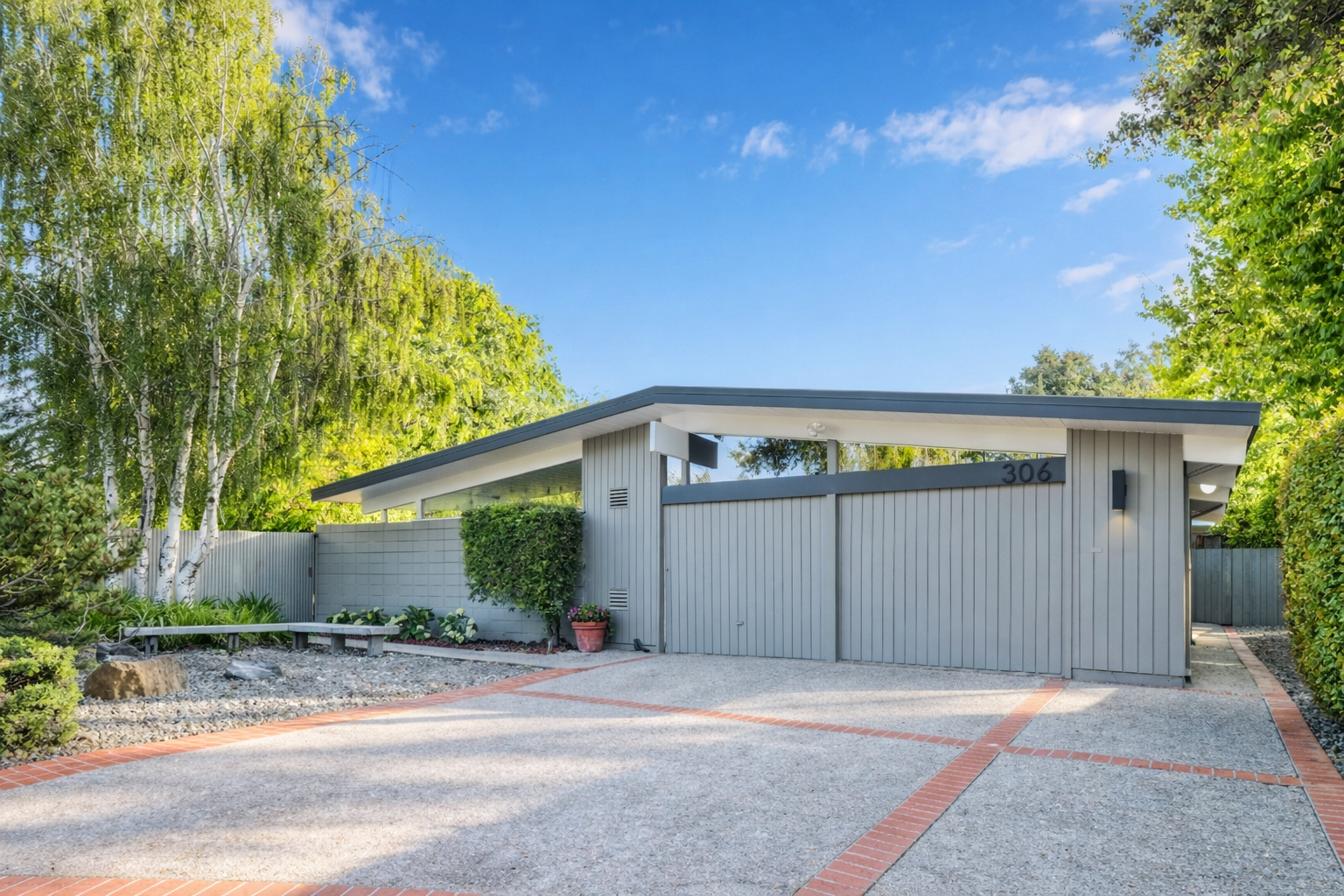
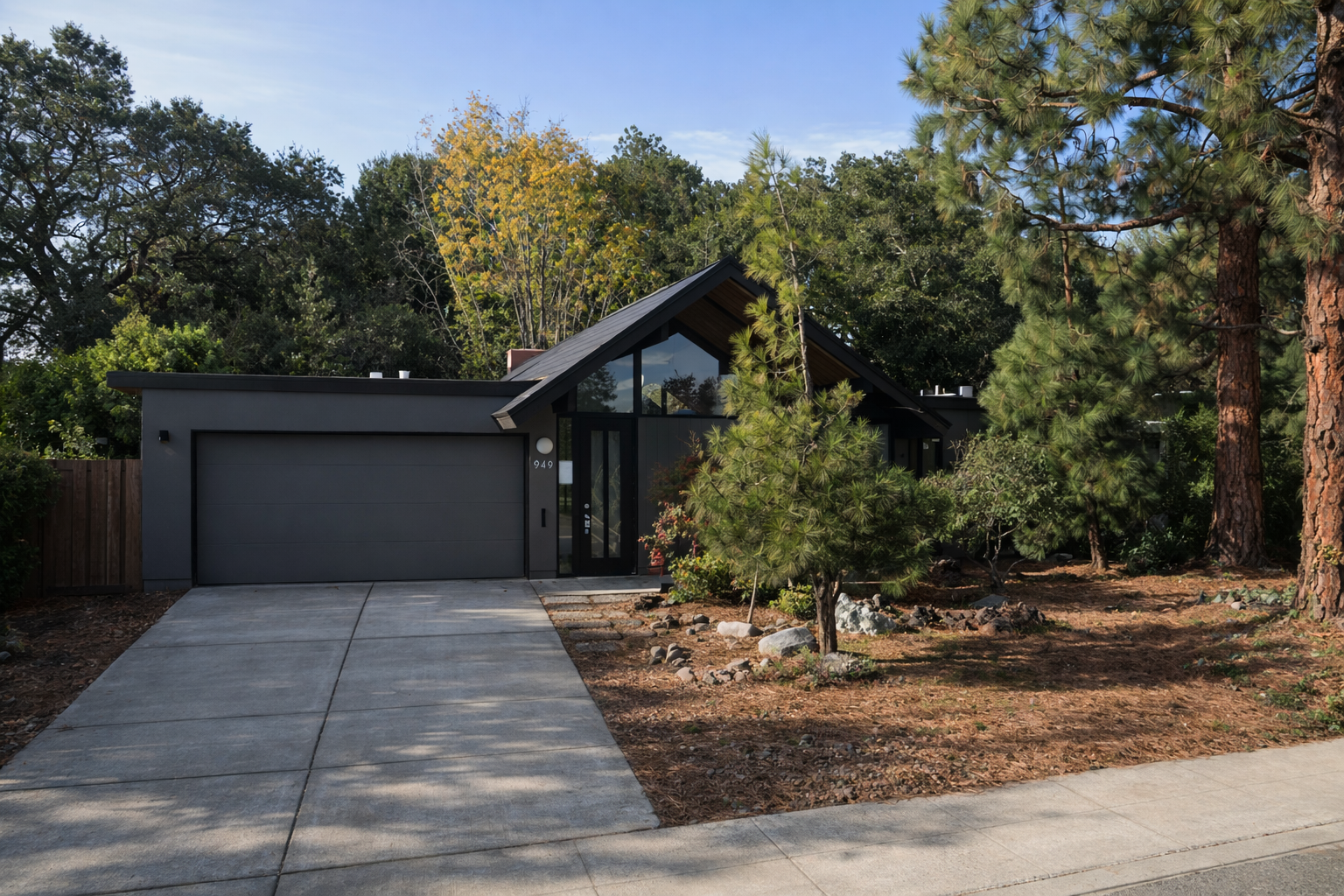
Mountain View’s housing stock is unusually diverse, reflecting each era of its development – yet its mid-century modern heritage stands out. The most famous homes are the Eichler houses in the city’s central neighborhoods. There are approximately 238 Eichler homes in Mountain View split between two tracts. The larger tract, called Fairview in the Monta Loma neighborhood (near Cuesta Park), contains 185 Eichlers built in 1954 by architects Jones & Emmons for Joseph Eichler. These single-story modernist homes feature flat roofs, floor-to-ceiling glass walls, and private atriums – hallmarks of Eichler design that blur indoor/outdoor living. A smaller tract, Bell Meadows, has 53 Eichlers built in 1972–73 by architect Claude Oakland. Bell Meadows houses are also mid-mod, many with the distinctive steep-hip roof variant Eichler experimented with in the 70’s.
Other mid-century ranch and contemporary homes dot the landscape. Developers like Mackay Homes also built in Monta Loma around the same time (1950s), producing similar Eichler-like homes on some blocks. Across Mountain View, there are classic post-war ranch houses from the 1940s–60s, many updated with modern interiors. Occasional neighborhoods (especially near Castro and Waverley) feature Spanish and Colonial Revival bungalows from the 1920s, reflecting the city’s agrarian past.
In recent decades, Mountain View has seen a wave of new construction and renovations, especially on larger lots. Contemporary homes with high ceilings, glass atriums, and open floor plans are now common – sometimes replacing older tract houses or expanding them. Custom architectural styles range from sleek glass-and-steel designs to more traditional two-story family homes. Noteworthy local homebuilders outside the Eichler tradition include Gavello Homes (Sunnyvale), Stern & Price and Bahl Homes (in South Bay), though many builders have worked across the Valley. In Mountain View specifically, the dominant builders remain Eichler (Jones & Emmons designs) and Oakland (Bell Meadows).
Inventory-wise, Mountain View’s mix is roughly two-thirds single-family homes and one-third attached housing (condos/townhomes). The majority are detached houses on quarter-acre lots, especially in the central and eastern neighborhoods. Some newer condominium communities have been built along major corridors (e.g., near San Antonio Road and El Camino Real) to meet demand. According to recent data, about 38% of Mountain View households owntheir homes, which is low for a suburban city, reflecting the high cost of ownership. The rest rent in apartments or condos scattered across the city. Luxury condos have been introduced at redevelopment sites (like on W. Evelyn Ave), but much of the condo inventory is older.
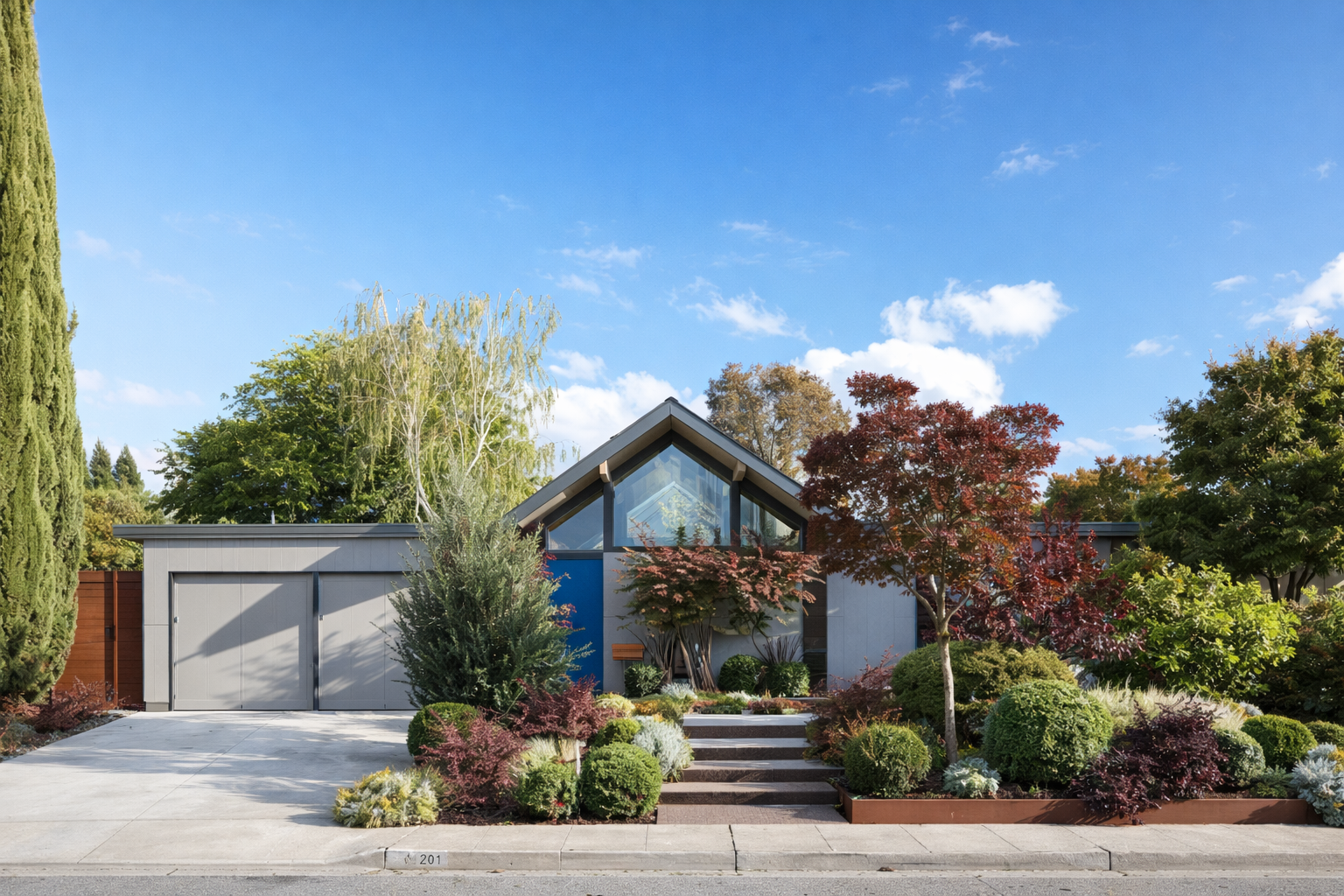
Overall, the predominant architectural flavor is mid-century modern and Ranch, making Mountain View unique among Bay Area cities. For homebuyers who prize design-forward homes, Mountain View is a top choice. The city’s Eichlers and other period homes often sell at a premium, partly due to their architectural pedigree. In recent years, owners of Eichler and Ranch homes have increasingly invested in sensitive renovations – for example, upgrading kitchens and HVAC while preserving atriums and open plans. The result is a robust market for both original-modern and thoughtfully updated mid-century properties.
Mid-century modern Eichler homes in Mountain View’s Monta Loma (Fairview) tract, famous for their glass-and-wood post-and-beam design. The Boyenga Team are Silicon Valley real estate experts and Eichler/mid-century modern specialists: they have sold many homes in these distinctive neighborhoods. Their expertise in this niche means they know the value of design elements like atriums, clerestory windows, and custom Eichler light fixtures – details that less-specialized agents may overlook.
Real Estate Market Analysis
The Mountain View housing market remains exceptionally competitive and high-priced, reflecting the city’s desirability and tech-driven economy. As of late 2025, the citywide median sale price is about $1.75–$1.80 million. This represents a slight increase (~2.9%) from the prior year, after a sharp run-up in previous years. For perspective, this median is much higher than the Silicon Valley average (the U.S. median is around $450K). In 2025, homes in Mountain View sold in an average of only 13 days on market, down from 23 days the year before, indicating intense buyer demand. Over the past 2–3 years, price-per-square-foot values climbed from roughly $1,360 (Q1 2021) to over $1,750, showing strong appreciation.
The market’s velocity is fueled by limited supply. In December 2025, only 38 homes closed escrow (down from 43 YoY) in all of Mountain View, while 64 sold in ZIP 94043 (Dec 2025) and 47 in 94040. These figures underscore the scarcity – far more buyers exist than available homes. Redfin’s competition metric rates Mountain View at 100 out of 100 (most competitive); even its less expensive neighbor San Jose scores only ~56 by comparison. In short, typical homes often receive multiple offers and may sell at or above asking price.
Breaking down by neighborhood/ZIP: ZIP 94043 (covering much of Monta Loma/Fairview and other parts of central MV) had a median sale price around $1.79M in Dec 2025, up ~4.7% from a year earlier. By contrast, ZIP 94040 (north Mountain View near Shoreline and NASA) was about $1.92M, but that was down 24.3% YoY. The divergence suggests that different submarkets are moving at different paces; 94043’s Eichler areas have remained strong or rising, whereas 94040’s market has cooled from its peak. (Likely, much of 94040 consists of newer suburban neighborhoods that spiked earlier in the boom.)
Inventory by home type: Luxury single-family residences (many of them mid-century designs or custom rebuilds) command the highest prices. Condos and townhomes, which numbered similar to single-family sales in 2024, offer a more affordable entry point. In Q2 2024, for example, the median sale price for a Mountain View condo/townhouse was about $1.27M (versus ~$2.73M for single-family, per the same period, although recent data suggests SFH medians have since been ~$1.75M in winter 2025). Such condo projects are especially common near El Camino Real and San Antonio Road.
The upward trend in prices has moderated in late 2025, but rents are again surging. In fact, Mountain View was reported as the most expensive Silicon Valley city for renters by December 2025. Luxury new apartment complexes (often with tech amenities) have pushed one-bedroom rents to ~$4.2K/month on average, above pre-pandemic highs. The rental market’s strength reflects the influx of AI and tech workers willing to pay top dollar for convenience.
For investors and homeowners, Mountain View’s market remains strong. Home values have roughly doubled over the past decade and maintain high baseline. Given the ongoing tech growth, many industry analysts expect Mountain View home prices to continue rising modestly over the next few years. The city’s inclusion in the Bay Area’s housing mandates (planning for 11,000+ new units by 2031) and its current construction projects suggest supply may slowly increase, but not nearly enough to meet demand.
Comparison with Nearby Markets: Mountain View’s prices sit above Santa Clara County norms but below the Peninsula’s priciest cities (like Palo Alto). For example, neighboring Los Altos (94022) sees medians over $3M, while Sunnyvale (94087/94089) averages around $2.2M for single-family. Conversely, East Palo Alto remains lower in the $1M–$1.3M range. Redfin data shows Mountain View’s compete score (100) outpaces San Jose’s 56 or Fremont’s 89, underscoring its unique demand. Thus, Mountain View occupies a high rung: more affordable than Los Altos/ Palo Alto, yet significantly more expensive than most of San Jose or Gilroy.
Current Inventory and Demand Patterns: Listings in Mountain View are snapped up quickly. A recent analysis noted that homes often receive 5 or more offers, and even “coming soon” pocket listings have multiple bidders. The Boyenga Team, for instance, has marketed some homes off-market (through Compass’s exclusive network) to meet this demand rather than the traditional listing route. This strategy – highlighting how premium mid-century homes can sell quietly at top dollar – has proven successful (as discussed in Case Studies below). In sum, the Mountain View market is hot: limited supply, high incomes, and a steady stream of tech jobs keep buyers eager.
Case Studies and Success Stories
The Boyenga Team has orchestrated numerous standout transactions in Mountain View’s mid-century modern market, showcasing their specialized expertise. Below are illustrative examples of recent successes and strategies:
Off-Market Eichler Sale (Monta Loma): In one notable case, the Boyengas represented a collector’s Eichler in Fairview (Monta Loma). Rather than go public, they listed it as a “Private Exclusive” through Compass’s internal network. Within 48 hours, a qualified buyer was found via Compass’s agent referral system – with no public marketing needed. This off-market approach generated a competitive bidding situation despite being off-MLS, ultimately selling the home at a premium price. The key was targeting design-savvy Eichler enthusiasts nationwide (using Compass Collections and email newsletters) and leveraging the merged Compass+Anywhere network to tap buyers outside Silicon Valley. The result: a quick, high-price sale that exemplified the team’s data-driven buyer-match strategy.
Staging and Pricing a Modern Remodel: The Boyengas often stage mid-century homes to highlight their architectural details. For example, a 1958 Monta Loma Eichler had been beautifully renovated with new flooring and appliances, but the owners needed to appeal broadly. The Boyenga Team recommended “full flip” staging – neutral furnishings that echoed the home’s original lines and atrium. They also used Compass’s AI-powered CMA to price it at $2,150,000. Within one weekend, it had 7 offers and sold for $2,270,000 (6% over list). Buyers noted the effective showcasing of the open floor plan and bright atrium. This case underlines how precise pricing and design-focused staging can maximize value in a competitive market.
Compass Off-Market Dual Listing: In another example, a ranch-style home on a quiet cul-de-sac was simultaneously offered off-market (Compass network) and on-MLS. The Boyenga Team priced it at $1.95M and engaged HomeLight’s “Buy Before Sell” program to allow buyers to waive sale contingencies. Within 10 days, multiple cash offers were received. Using HomeLight’s data tools, they drew pre-approved buyers. Ultimately the home sold to a buyer who used the bridge loan program, at 5% above asking. The combination of off-market seeding and modern financing allowed both seller convenience and a premium price.
Historic Eichler Auction: The team has also hosted “stylish showings” of Eichler tracts, where they invite designers and Eichler aficionados to experience a home’s architecture. In one high-profile case, they arranged a curated open house for an iconic Bell Meadows Eichler, featuring mid-century music and design presentations. This marketing blitz (leveraging social media, Compass’s targeted ads, and HomeLight’s referral network) drummed up national attention. The home ultimately drew 12 offers, selling 20% above list. This success illustrates the Boyenga Team’s ability to turn unique Eichler features into marketing hooks.
These stories highlight the Boyenga Team’s multi-pronged approach: savvy staging, precise pricing (often with Compass’s AI tools), and innovative marketing. They routinely use Compass’s proprietary platforms (Collections, marketing analytics) as well as partner networks like HomeLight to give clients advantages. For sellers, the team’s strategy might include using HomeLight’s Simple Sale or Cash Offer to set a price floor, while for buyers they might secure a bridge loan to make a no-contingency offer. In each case, the Boyenga Team’s local market knowledge – especially of San Jose and Mountain View’s finest neighborhoods – was crucial. Their proven track record includes many high-end, architecturally significant sales (often in luxury price ranges) which consistently outperform the market.
The Boyenga Team Advantage
Eric and Janelle Boyenga – founders of the Boyenga Team at Compass – are recognized leaders in Silicon Valley real estate. As “next-gen agents” and “Property Nerds”, they combine cutting-edge tech tools with an insider’s understanding of Silicon Valley’s luxury home market. Crucially, the Boyenga Team are Eichler and mid-century modern specialists. They have amassed one of the largest databases of mid-century home buyers, and their website content (including a detailed Mountain View Eichler guide) reflects this focus. This expertise assures clients that these agents can speak the architectural language of an Eichler’s atrium or a Frank Lloyd Wright-inspired design, ensuring no detail is missed in valuation or presentation.
Moreover, Eric and Janelle’s partnership with Compass – now merged with Anywhere Real Estate – gives them an unparalleled data and network advantage. As detailed by industry sources, the Compass+Anywhere merger means the Boyenga Team has access to nationwide home sale data and AI-driven analytics tailored to special property types. They leverage these tools to deliver precise pricing models for niche markets. The team also has exclusive partnerships with services like HomeLight. For instance, through HomeLight’s “Buy Before You Sell” program, their buyers can unlock up to 70% of home equity at 0% interest, making their offers more competitive. HomeLight’s streamlined selling programs (like Simple Sale) can give Boyenga Team sellers fast, guaranteed cash offers without traditional hassle. The synergy means their clients enjoy innovative financing and selling platforms alongside boutique-level guidance.
The Boyenga Team’s credentials speak for themselves. They have a strong track record in Mountain View, San Jose, and the broader Peninsula. Their listings have often appeared on the Wall Street Journal’s “Hot Properties,” reflecting luxury and design-forward homes. Eric & Janelle are routinely featured in local real estate press (e.g., San Francisco Business Times) as Silicon Valley experts. They brand themselves as Silicon Valley real estate experts and leaders in luxury, design-forward markets – a claim backed by their performance and client testimonials. As the Boyenga website proclaims, “We the Property Nerds… pledge to protect and defend your best interest… to engineer your happiness”. In practice, this means they deliver white-glove service: from drone videos and 3D tours of Eichler homes, to concierge staging and targeted marketing.
For buyers of mid-century modern homes, the Boyenga Team’s niche focus is invaluable. They help clients navigate the unique challenges of Eichler-style homes – such as understanding HOA guidelines in Eichler tracts (architectural review committees), or the implications of original designs (slab foundations, radiant heating). For sellers, the Boyengas craft strategies that highlight a home’s design pedigree to the right audience. Their local knowledge extends beyond Mountain View – they are active throughout Silicon Valley’s finest communities, positioning them well to advise on where Mountain View stacks up against Los Altos, Cupertino, or Saratoga. In short, Eric and Janelle Boyenga are Silicon Valley real estate experts, Eichler and mid-century modern specialists, and leaders in luxury, design-forward real estate. Their combination of passion for architecture, advanced analytics, and local savvy makes them unmatched agents for anyone looking to buy or sell a mid-mod home in Mountain View or the Valley.
In conclusion, Mountain View’s mid-century neighborhoods are experiencing renewed attention as buyers seek homes that combine historic design with Silicon Valley lifestyle. The city’s story – from orchards and Eichlers to tech campuses – is unique, and its community remains vibrant and diverse. With high-performing schools, parks like Shoreline, and proximity to major employers, these neighborhoods offer a rich living experience. Understanding this community requires data (population ~86k, incomes ~$180k) and nuance about tech-driven trends (soaring rents, competitive housing market). The Boyenga Team, with their deep roots and marketing ingenuity, stand ready to guide clients through this market. As Mountain View enters its next chapter, these mid-mod homes continue to be highly coveted; no team is better equipped to serve this niche than Silicon Valley’s own Boyenga Team.
Contact Us and Begin Your Mid Mod Journey Today!
Boyenga Team + Compass Eric & Janelle Boyenga 📞 Call / Text : 408-373-1660 📧 Email : MidMods@Boyenga.com 🌐 www.BoyengaTeam.com / www.EichlerHomesForSale.com DRE #01254724 / #01254725