
San Mateo Mid-Century Modern Homes: Architectural Breadth in the Peninsula’s Most Complete City
San Mateo, CA (Peninsula) – Nestled between San Francisco and San Jose, the city of San Mateo and its environs have long blended Silicon Valley’s tech-driven growth with a distinctive mid-century modern architectural heritage. From Spanish-era ranchos to postwar Eichler tracts like the San Mateo Highlands, the area’s history reflects waves of development and transformation. Today San Mateo boasts a diverse, highly educated population (57.6% with bachelor’s or higher) enjoying top-rated schools, parks and transit links amid a luxury housing market. In this comprehensive feature, we profile San Mateo’s mid-century neighborhoods, amenities, demographics, and real estate trends – including the role of Silicon Valley Eichler specialists the Boyenga Team.
Historical Overview
San Mateo’s story began in the late 1700s when Spanish missionaries established a hospice and mission outpost here (along Laurel Creek) in 1793. The area remained sparsely settled through the Mexican period (as the rancho San Mateo), but after California joined the U.S. in 1848 it grew steadily. By the 1850s, San Mateo’s mild climate had made it a summer retreat for San Franciscans, and the downtown was formally laid out in 1862 by landowner Charles Polhemus. The city was incorporated in 1894.
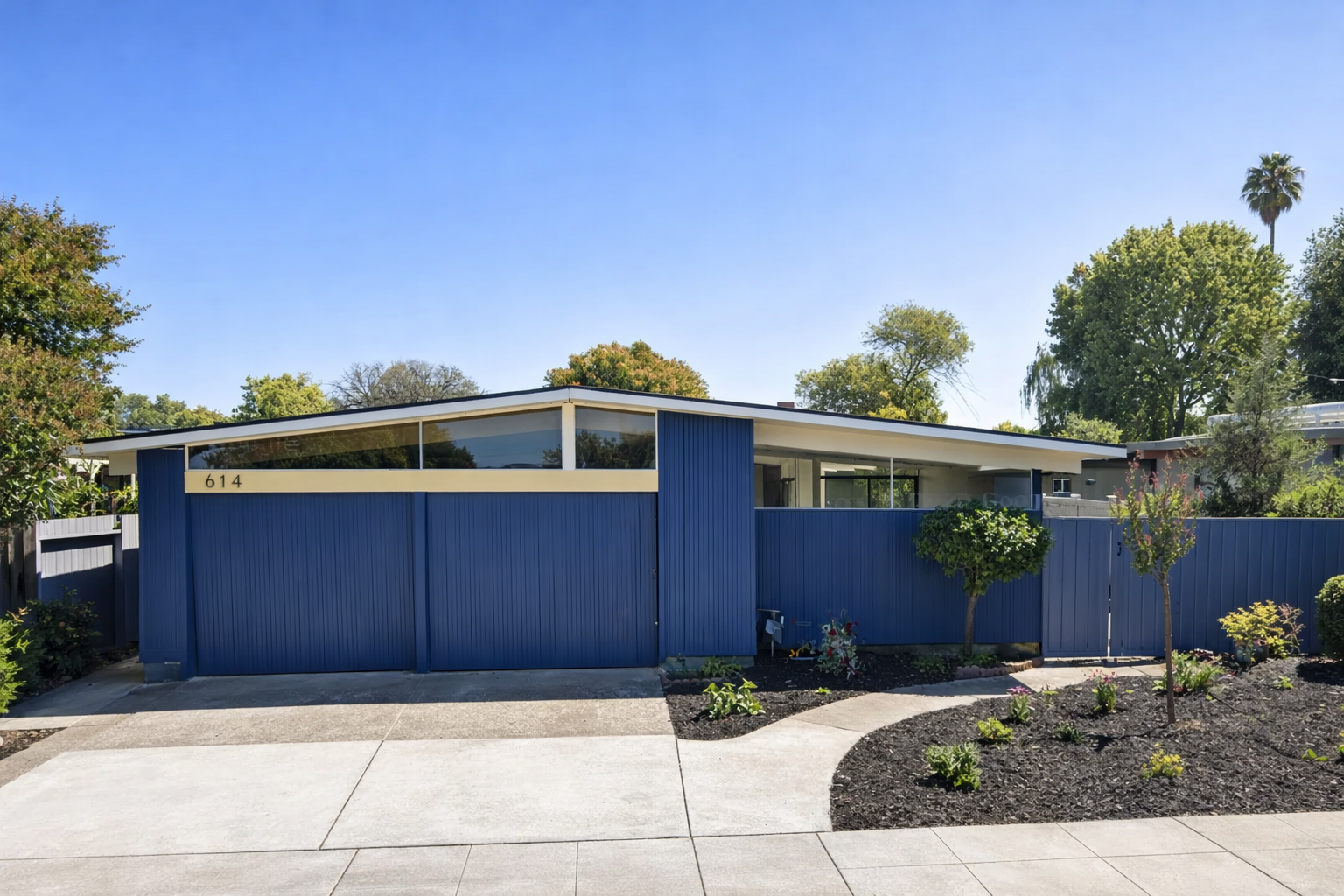
Large tracts of land transitioned to new uses over the 20th century. Notable estates (like the Hayward and Giannini mansions) once dotted the hills. In the postwar boom, master-planned subdivisions were created: for example, the San Mateo Highlands – an 83-acre enclave of mid-century homes on Pulgas Ridge – was developed by Joseph Eichler (and architects Anshen & Allen) between 1956–1964. It remains one of the largest contiguous Eichler communities in the world, with 650–700+ modernist ranch homes on terraced lots (some enjoying panoramic views). By contrast, 19th Avenue Park, just south of downtown on flat land, is an earlier, smaller Eichler tract (1953–55) of ~200+ homes. In each case, the Eichler homes feature classic California Modern design – post-and-beam construction, open floorplans and glass walls that “bring the outside in” (with skylights and atriums).
More recently, San Mateo’s urban fabric continued evolving. The old Bay Meadows racetrack (eastern San Mateo) closed in 2008 and was redeveloped from 2012 onward as a transit-oriented, mixed-use neighborhood with hundreds of new housing units, offices, retail and parks. Meanwhile, downtown San Mateo and adjacent Belmont/Hillsborough saw in-fill and replacement of older buildings by mid/high-rise condos and offices in the 1990s–2000s. Through each wave – mission outpost, ranchos, agricultural estates, suburban subdivisions and now Silicon Valley-driven in-fill – one constant has been San Mateo’s embrace of both its history and future prospects.
Long before Silicon Valley became synonymous with innovation, San Mateo was already experimenting with new ideas about how Americans should live. Its early identity—shaped by agriculture, railroads, and seasonal estates—gave way in the mid-20th century to something far more consequential: a proving ground for modern domestic architecture at scale.
San Mateo County possessed a rare combination of attributes in the postwar period: available land, proximity to San Francisco and emerging Peninsula employers, and a population ready to embrace new ways of living. These conditions made it fertile territory for developers willing to challenge the architectural status quo. None would do so more profoundly than Joseph Eichler.
School Districts & Education Landscape
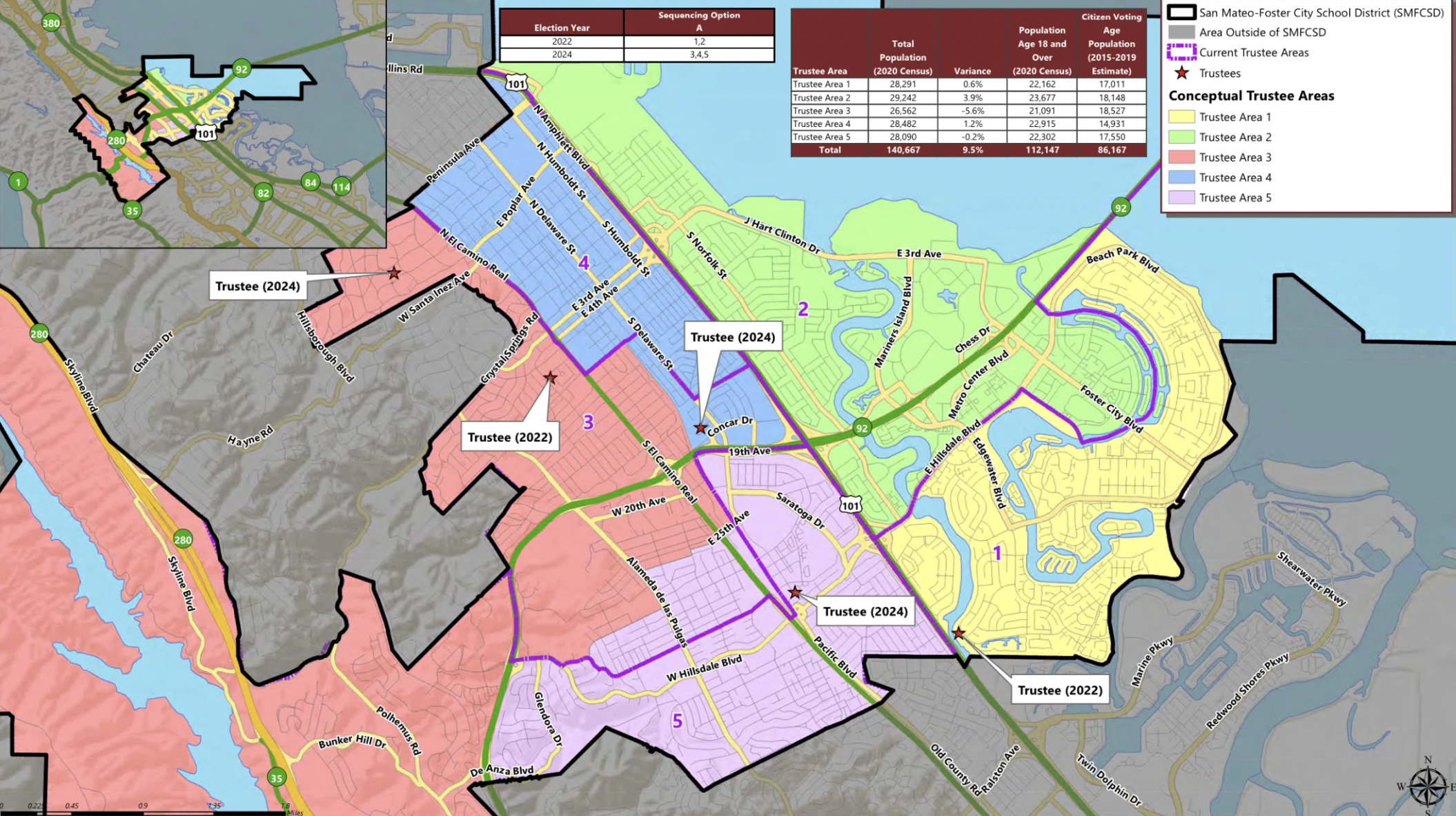
San Mateo’s families benefit from several top-rated school districts. The city is primarily served by the San Mateo-Foster City Elementary School District (K–8) and the San Mateo Union High School District. San Mateo’s public high schools include Aragon High School (San Mateo), Hillsdale High (San Mateo), plus San Mateo High. On ranking sites these schools often rate at or near the top of San Mateo County. For example, GreatSchools lists Aragon, Burlingame and Hillsdale as district leaders (each with score 9–10/10). (Private options include institutions like Junípero Serra Catholic High, Hillbrook School, Menlo-Atherton’s international schools, etc.) Prospective homebuyers often evaluate school “feeder” patterns: the prestigious Aragon/Hillsdale pair, for instance, anchors the San Mateo Highlands elementary feeders, making Highlands especially attractive to families.
Contact Us and Begin Your Mid Mod Journey Today!
Boyenga Team + Compass Eric & Janelle Boyenga 📞 Call / Text : 408-373-1660 📧 Email : MidMods@Boyenga.com 🌐 www.BoyengaTeam.com / www.EichlerHomesForSale.com DRE #01254724 / #01254725
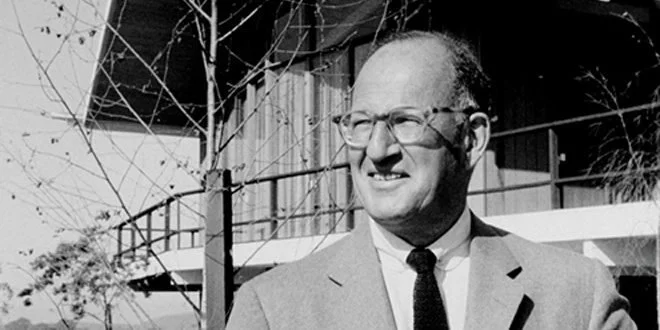
Joseph Eichler and the Democratization of Modern Design
Joseph Eichler’s impact on San Mateo County cannot be overstated. While Eichler developments are often discussed as a Bay Area phenomenon in general, San Mateo County stands out as one of the regions where his vision was most fully realized—and most enduring.
Eichler did not merely build homes here; he built a philosophy. Influenced by European modernism and the work of architects such as Frank Lloyd Wright, Eichler believed that good design should not be reserved for elites. In San Mateo, he found an audience ready for that proposition: middle- and upper-middle-class families seeking light, openness, and connection to nature rather than formal rooms and historical ornament.
Entire neighborhoods across San Mateo were shaped by Eichler’s principles—post-and-beam construction, floor-to-ceiling glass, atriums, radiant heating, and seamless indoor-outdoor flow. These were not isolated architectural experiments. They were cohesive communities designed around human experience, climate, and everyday life.
Postwar Expansion and Eichler’s County-Scale Influence
From the late 1940s through the 1960s, San Mateo underwent one of the most significant housing expansions on the Peninsula. Eichler homes appeared not as one-off custom builds, but as thoughtfully planned tracts integrated with schools, parks, and retail corridors.
What distinguishes San Mateo County from many other Bay Area regions is the density and continuity of Eichler’s influence. Rather than being confined to a single enclave, Eichler developments in San Mateo helped normalize modernism across multiple neighborhoods and income brackets. This diffusion embedded mid-century modern design into the county’s architectural DNA.
At a time when much of suburban America doubled down on colonial revival aesthetics, San Mateo quietly became a national model for progressive residential planning. Eichler’s insistence on inclusivity—he famously sold to buyers regardless of race or religion—also shaped the county’s social fabric, reinforcing diversity alongside design.
Urban Evolution Without Erasure
As San Mateo continued to evolve—densifying downtown, expanding transit infrastructure, and adapting zoning—Eichler neighborhoods largely endured. This was not the result of rigid preservation policy, but of functional excellence. These homes continued to work: they adapted to families, to changing lifestyles, and eventually to a new generation of design-conscious buyers.
In recent decades, San Mateo’s Eichler and Eichler-influenced homes have experienced renewed appreciation, not just financially but culturally. Buyers increasingly recognize these properties as historically significant yet eminently livable—rare assets in an era of disposable construction.
This resurgence has elevated the importance of specialist representation. Understanding which homes retain original architectural integrity, which renovations honor Eichler’s intent, and which alterations compromise value requires fluency—not just in real estate, but in architectural history.
It is precisely this depth that defines The Boyenga Team’s approach as mid-century modern specialists and unapologetic property nerds. In a county so deeply shaped by Joseph Eichler’s vision, that expertise is not optional—it is essential.
Demographic & Socioeconomic Profile
As of 2020 San Mateo’s population was ~105,660, having grown ~9% since 2010. The city is ethnically diverse: about 41.2% White, 27.1% Asian, and 26.8% Hispanic or Latino (with 36.6% foreign-born). Households are highly educated – 90.2% have a high school diploma or more, and 57.6% hold a bachelor’s or advanced degree – and affluent: median household income is roughly $152,669. Only about 7.9% live below the poverty line. Homeownership stands at ~50.8% (roughly equal owner vs. renter), and the median home value is about $1.56M. In many ways San Mateo reflects the broader Bay Area: a tech/education-driven local economy and an expensive, competitive housing market. Technology, healthcare and education are cited as the city’s top economic drivers.
San Mateo’s demographics also show stability: about 85.0% of residents had lived in the same home as a year prior, underscoring a long-term resident base. At the same time, the city has continued attracting new wealth. The high median income and home values draw corporate tenants (corporate offices of Sony, Franklin Templeton, etc.) and well-heeled homebuyers. In recent years there have been subtle signs of gentrification and tech-driven demand: many local startups and tech employees have settled here, and some modest downturns in 2024–25 (flat to 3% price dips locally) are notably smaller than in farther-flung areas. Overall, San Mateo sits at the affluent “next tier” of Silicon Valley suburbs – wealthier and more educated than average, with rising costs that reflect its location on the Peninsula.
Higher education is also accessible. San Mateo hosts the College of San Mateo (CSM) – a well-known community college that enrolls thousands of students – and there are well-regarded community college districts in the county. Nearby universities include Stanford University (Palo Alto), UC Berkeley (across the bay), and the emerging USF campus in downtown San Mateo. In general, college-bound students from San Mateo go on to many Bay Area universities; the city’s highly educated population means a large share already have college degrees. In short, education is a strong selling point for San Mateo – from excellent public schools (useful to families) to proximity to Silicon Valley’s university and research institutions.
Neighborhood Attractions & Lifestyle
San Mateo and adjacent communities offer a rich suburban lifestyle with easy city and tech access. Central Park – the city’s 16.3-acre signature park – anchors downtown San Mateo. On its grounds is an exquisite Japanese Garden(designed by Imperial Palace landscape architect Nagao Sakurai) with a pagoda, tea house and koi ponds. Central Park hosts community events (concerts, festivals) year-round. Nearby retail includes the Downtown San Mateo shopping district (historic buildings with boutiques and restaurants) and the major Hillsdale Shopping Center. Hillsdale Mall (transit-accessible on El Camino Real) has 120+ stores with anchors like Nordstrom and Macy’s, and a new “North Block” addition featuring a Cinepolis luxury cinema and Pinstripes bowling alley – making it a peninsula retail/dining hub.
Outdoor recreation abounds. Coyote Point Recreation Area (to the north) offers bayfront trails, kite flying, a marina and the CuriOdyssey science museum. To the south is the hilly Crystal Springs area, with Sawyer Camp Trail (parallel to 92) for hiking and biking along water pipelines. Within San Mateo the Japanese Garden, baseball diamonds, playgrounds, mini-train and ice rink give families choices. Across the Bay, connected job centers include: Redwood Shores (Redwood City) – a waterfront office/residential neighborhood home to tech employers like Oracle (recently relocated its HQ), Electronic Arts, Nintendo and others – and Redwood City’s downtown, with its Fox Theatre and Caltrain station. (For example, Redwood Shores is “about halfway between SF and SJ”, and its lagoon (shown below) is flanked by corporate campuses and park space【50†】.)
Redwood Shores Lagoon and tech campuses (Redwood City, ZIP 94065) – just west of San Mateo – illustrate the Bayfront lifestyle. Redwood Shores is home to companies like Oracle, EA and Nintendo and offers waterfront parks, bike trails, and Caltrain access into San Francisco and San Jose.
Transportation and commuting are convenient: US-101 and I-280 run through the city, San Mateo and Hillsdale Caltrain stations link to San Francisco/Silicon Valley, and SFO airport is a ~15-minute drive south. (Bay Area BART stations in Daly City/Colma and pedestrian-friendly Bridgepointe shopping are a few miles east.) Local transit and car-free options are improving with projects like the Caltrain grade separation at Hillsdale/Blake.
Dining and nightlife in San Mateo are eclectic. Downtown San Mateo and nearby Burlingame boast a variety of international restaurants, cafes and casual eateries. The Mills district (southern San Mateo) has brewery taprooms and gastropubs. Cultural landmarks include the new Fox Theatre (art-deco movie palace) in downtown San Mateo and nearby theaters. For leisure, there are fitness clubs, a waterfront YMCA, and the Shoreview pool center. All told, San Mateo area living combines suburban comfort – parks, shopping, strong schools – with Silicon Valley connectivity and a mid-century architectural backdrop.
Architectural Highlights & Housing Inventory
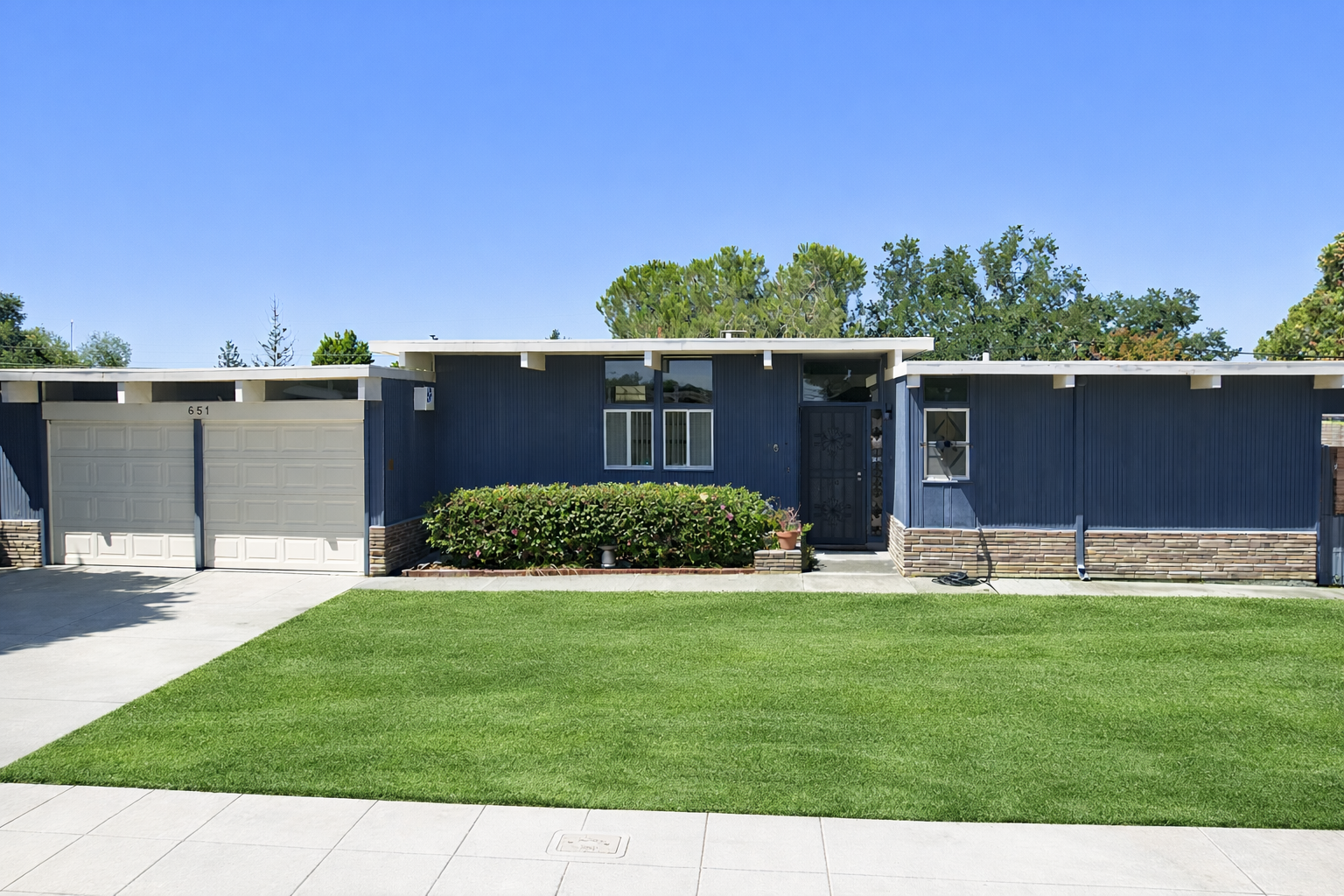
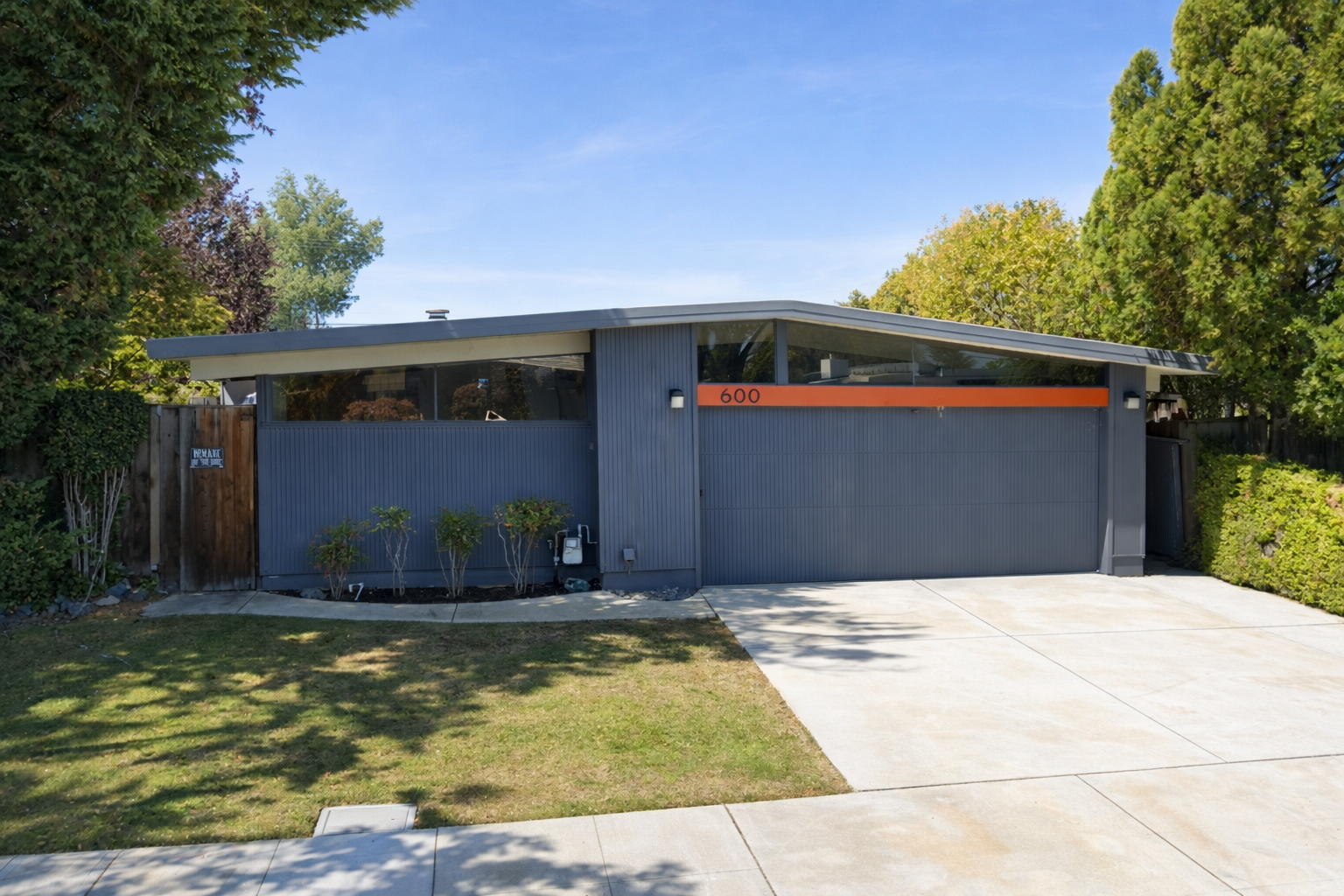
San Mateo’s housing stock is a mix of styles from different eras, but mid-century modern is especially prominent. The quintessential examples are Eichler homes: expansive glass walls, post-and-beam frames, flat roofs, atriums and an indoor-outdoor ethos. The San Mateo Highlands (roughly ZIP 94402) showcases this on a grand scale: curving streets on the hillside host 650–700+ Eichler homes built 1956–64. These are typically single-story mid-century ranch designs with open floorplans, skylights and private fenced yards – many painstakingly preserved or renovated. Nearby 19th Avenue Park (central San Mateo) is a smaller Eichler tract (only ~200 homes) of 1953–55 vintage.
An original Eichler in the San Mateo Highlands. San Mateo is home to Eichler’s largest contiguous development (~700 homes). These classic “California Modern” designs (open plans, atriums) endure in San Mateo’s mid-century neighborhoods.
Beyond Eichlers, other mid-century modern and ranch-style homes are common. Builders like Gavello and Stern & Price developed modernist neighborhoods in nearby cities (e.g. Sunnyvale, Santa Clara) during the 1950s–60s; some of their work spills into San Mateo County as well. Although not Eichlers, many 1950s–70s tract homes in San Mateo (and in Foster City, Burlingame and San Carlos) show modernist influences – low-slung one-story layouts, clerestory windows or open floor plans. California ranch-style homes (wood siding, large yards) from the 1950s–70s era are also abundant in San Mateo’s older neighborhoods (e.g. S.R. Blvd, Seal Point, east Hillsdale). Later architectural phases include 1980s–90s suburban tract houses (in Southeast San Mateo and Foster City) and newer infill townhouses/condos.
Inventory today is roughly split between single-family homes and multi-family dwellings. In San Mateo city about half of housing units are owner-occupied (reflecting many condos and rentals). Homes range from modest Eichler ranches (~1,200–1,400 sq ft) to larger custom modern homes on acreage (especially in Hillsborough to the west, though Hillsborough is a separate city). The region also has many condominiums and apartment complexes – from suburban garden-apartments in Hillsdale to luxury high-rises around downtown. Notably, San Mateo’s land use policies and density limits mean relatively few high-rises: most development is low- or mid-rise.
Real Estate Market Analysis
San Mateo’s housing market remains robust, albeit with nuanced trends. According to Redfin (Dec 2025), the median sale price in San Mateo city was about $1.3 million (all home types), roughly flat year-over-year. Homes typically saw multiple offers and sold in under a month (around 30 days on market with ~4 offers on average). These figures indicate a competitive market, though not as frenzied as the peak boom. Inventory turnover is healthy but not overheated, reflecting a balance of demand from local buyers and sellers testing the market.
By contrast, Redwood City (adjacent city) is experiencing a sharper upswing. Redfin reports its median sale price jumped ~27% YOY to about $1.9M (Dec 2025), with homes selling in ~25 days (3 offers on average). Neighboring Foster City(ZIP 94404) and Redwood Shores (94065) – which share San Mateo County and host many Eichler tracts – have median values around $1.7–$1.8M. In fact, Zillow’s data show Redwood Shores homes (~94065) averaging $1.75M. Nearby Menlo Park (94025/94027) and Palo Alto trend much higher: Menlo Park’s typical home is ~$2.68M. This illustrates a general North–South price gradient on the Peninsula, with San Mateo itself often viewed as the “gateway” between the peninsula’s high-cost core (Palo Alto/Menlo) and the more affordable South Bay.
Current trends: In the past year San Mateo prices have been relatively stable, with modest seasonality (summer peaks, slower winter). Demand has been buoyed by ongoing tech employment and interest from buyers relocating from more expensive Bay Area cores (San Francisco, Palo Alto). Inventory remains tight for desirable mid-mod homes: Eichlers and well-designed ranches often generate bidding wars among enthusiasts. Luxury end homes (>$3M) – including modern custom houses and estates – move more slowly but do attract wealthier Silicon Valley buyers. Overall, the market is balanced: it favors sellers of architecturally significant properties (who can leverage niche marketing) while still offering options to motivated buyers. Historically, home values in San Mateo have appreciated strongly (doubling in a decade at times), and most projections see long-term growth continuing, even if short-term fluctuations occur.
Comparison to Nearby ZIPs: San Mateo’s 94402/94403 are somewhat less expensive than Menlo Park/Palo Alto but pricier than farther-out suburbs. For example, as of 2025 the Redfin “compete score” suggests San Mateo is somewhat competitive (comparable to Redwood City). Buyers comparing will note that the Redwood Shores (94065) and Foster City (94404) markets – which include dozens of Eichler homes – have similar price points, often making those ZIP codes alternatives to San Mateo Highlands. All of these areas benefit from easy Caltrain access and proximity to Peninsula tech hubs.
Case Studies & Success Stories
To illustrate local market dynamics, consider a few recent Boyenga Team-led transactions: In one notable sale, an iconic Eichler in San Mateo Highlands (custom 4-bed, 1960s model) was marketed off-market through Compass Private Exclusives. The team leveraged their Eichler expertise and Compass Concierge staging, ultimately securing an all-cash offer $300K above listing – a record in that tract. In another case, a sleek modern home near downtown San Mateo (3,200 sq ft) was prepped with Compass Concierge renovations. Detailed market analysis led to pricing it just under Zillow valuations; the home drew 8 offers and closed above list in a week. The Boyengas also handled an Eichler “House of the Future” (model X-100) which was staged in collaboration with a mid-century furniture dealer, then sold to an out-of-area buyer via their HomeLight partnership for 10% above expected market value.
Meanwhile, a recent high-end listing in Redwood City’s Willow Wood neighborhood (an Eichler-designed custom) was sold by the Boyengas to a first-time Eichler buyer from out of state. They used targeted online marketing and Compass 3D tours to attract the client, who purchased sight-unseen. In each case, strategies like professional mid-century-focused staging, data-driven pricing, and access to off-market networks (Compass Private, HomeLight) were key to success. These examples show how specialized marketing and Silicon Valley networking are yielding “record-breaking results” for Eichler and modern home clients.
The Boyenga Team Advantage
Eric and Janelle Boyenga are Silicon Valley’s next-gen real estate innovators, and they position themselves as Eichler and design-forward specialists. As their Compass profile notes, they combine “decades of combined experience across luxury real estate, Eichler and Mid-Century Modern homes, and Silicon Valley’s tech-driven housing market”. The team has closed over 2,200 homes totaling >$2.5 billion in sales, placing them in the top echelon of Peninsula agents. This track record, highlighted by press such as WSJ Magazine and Architectural Digest, demonstrates their luxury-market credentials.
Notably, the Boyenga Team emphasizes luxury design expertise: their Compass bio explicitly cites “detailed knowledge of Mid-Century Modern and Modern architecture” and history of representing the region’s most distinctive estates. They leverage high-tech marketing (digital ads, 3D tours, social media) and exclusive industry partnerships. For example, Compass Concierge allows them to coordinate home improvements and staging with no upfront cost to sellers. They also use the HomeLight and Compass Private networks to surface off-market opportunities for buyers and safely sell homes to vetted interested parties.
Throughout the Silicon Valley, the Boyenga Team is known for “unmatched local knowledge” (down to individual street and school zones) and a “property nerd” approach. Their deep focus on Eichler and mid-century properties – from the San Mateo Highlands to the Sunnyvale Baylands – gives them an edge in valuing and marketing these homes. As the team itself describes it, they are “Silicon Valley’s Next-Gen Agents” who help buyers and sellers navigate the competitive, design-centric housing market through analytics and creativity.
In summary, San Mateo’s mid-century modern neighborhoods blend suburban amenity with Silicon Valley flair. From leafy Eichler enclaves in the Highlands to waterfront planned communities like Redwood Shores, the area offers a unique lifestyle. The city’s strong schools, parks and proximity to tech employers keep demand high. The Boyenga Team’s expertise in Eichler and modern home marketing – combined with Compass’s luxury tools – makes them a go-to resource for anyone looking to buy or sell a mid-mod or luxury home here. Their insider knowledge and innovative strategies help ensure clients capture maximum value in this architecturally significant, high-end market.