
Burlingame, CA: Where California modernism found its quiet confidence
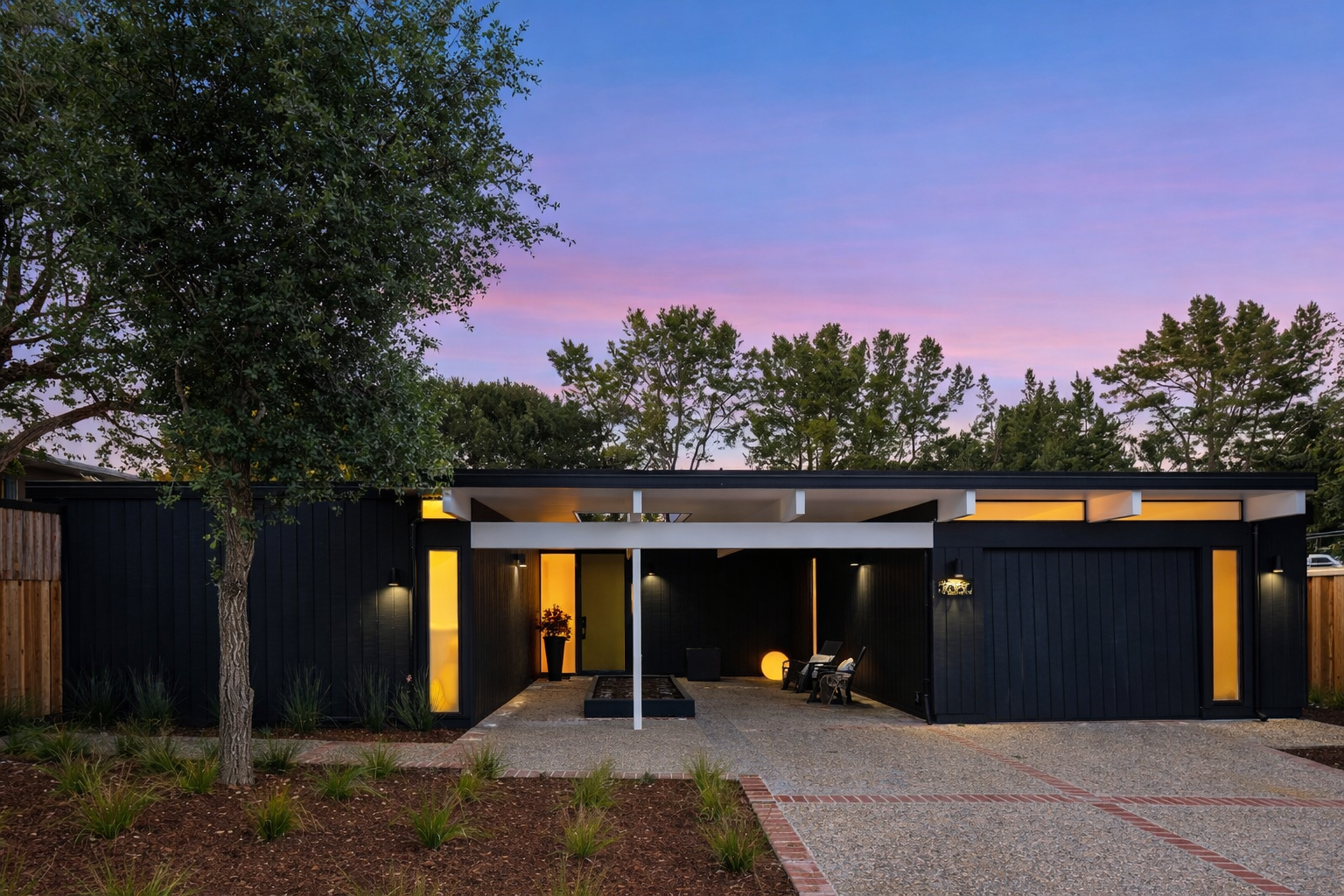
An Executive-Level Neighborhood Profile of Architecture, Access, and Enduring Value
By any serious measure—economic resilience, architectural integrity, educational performance, and geographic leverage—Burlingame occupies a rare position on the San Francisco Peninsula. It is not a boomtown, nor a legacy enclave frozen in time. Instead, Burlingame represents a controlled equilibrium: a city that has modernized without over-densifying, appreciated without destabilizing, and grown without surrendering its civic identity.
This profile examines Burlingame as both a place and a market—through the lenses of history, demographics, education, lifestyle, architecture, and real estate performance—culminating in a practical analysis of how buyers and sellers succeed here today.
Historical Overview
Burlingame’s story began in the late 19th century as rolling ranch land. Under Spanish and Mexican rule, the area was part of large land grants (Rancho San Mateo and Buri Buri). After statehood, developer William C. Ralston and others envisioned an upscale suburban retreat. In 1867 U.S. Ambassador Anson Burlingame helped found the town (originally styled “Burlingame Country Residence”) as an elegant resort enclave for San Francisco’s wealthy. By the 1890s, Nevada Senator Francis Newlands – son-in-law of silver baron William Sharon – laid out Burlingame Park, promising buyers “tree-lined roads, lawn tennis courts...a country club”. Landscape architect John McLaren (later of Golden Gate Park) helped craft Newlands’s colony of summer homes along El Camino Real.
The city incorporated in 1908, quickly absorbing refugees from the 1906 San Francisco quake. Growth then stalled until World War II. In 1940, ex–oilman Milton Ray subdivided a 114-acre portion of the old Mills estate to create Ray Park(with toy- and movie-themed street names), among Burlingame’s first postwar tract neighborhoods. The 1950s saw the biggest boom: the venerable Darius O. Mills estate (spanning Burlingame and neighboring Millbrae) was sold to developer Paul Trousdale (with financier Clint Murchison) and transformed into the upscale Mills Estates subdivision. The original Mills mansion burned in 1954 and tract houses sprouted on the hills. Starting in 1964 Eichler Homes contributed a new chapter: Joseph Eichler built 100 modernist mid-century houses there in the distinctive Claude Oakland “Type 24” atrium plan. Thus, Burlingame’s rolling neighborhoods came to blend old-money Victorian suburbs with 1950s ranches and iconic Eichler modernism – setting the stage for today’s mix of styles.
Notable Developments and Influences
The Mills Estates Eichler development in the 1960s stands as a landmark moment, embedding true mid-century modern architecture into an otherwise traditional Peninsula city—without disrupting its broader character.
Demographic & Socioeconomic Profile
Today Burlingame is an affluent, highly-educated city of about 31,400 residents (2020 census). The population skews working-age (≈61% age 18–64, only 16% over 65), with a median age around 40–42. Household incomes are far above average – Census data report a median household income of $168,832 (≈2½× California’s median) and per capita income ~$97,800. Home values are similarly high: the median owner-occupied home in Burlingame is ~$2.0 million. Roughly 30% of residents were born outside the U.S. (notably, a large portion from Asia). In fact, Burlingame’s non-Hispanic Asian share (~28%) is substantial, while about 56% identify as White (non-Hispanic). Education levels are outstanding: nearly 95% of adults have finished high school and 64% hold at least a bachelor’s degree. These figures – combined with a median home value of ~$2.0M and a meager poverty rate (~6%) – underscore Burlingame’s upper-tier socioeconomic status.
High incomes and tech ties are evident. The Silicon Valley’s tech boom has reverberated in Burlingame: many executives and entrepreneurs now call it home. Indeed, region-wide data show that about 66% of tech workers in the Bay Area were foreign-born (70% of them Indian or Chinese) as of 2023, suggesting Burlingame’s immigrant families often arrive via high-tech careers. Its locale on the Peninsula – midway between the corporate campuses of South San Francisco and Silicon Valley – makes Burlingame a magnet for well-paid tech employees who seek family-friendly suburbs and highly-rated schools. Despite its urbanity, Burlingame retains a suburban feel: around 22% of households have children under 18, whereas only ~16% are 65+. Homeownership is roughly half-and-half: about 50% of housing units are owner-occupied (the rest rented). In sum, Burlingame’s profile is that of a wealthy, highly educated, and multicultural community – trends mirrored in Bay Area migration patterns. For example, local experts note that new growth in Silicon Valley has been driven largely by incoming Asian immigrants in tech roles, many of whom settle in cities like Burlingame with strong schools and amenities.
School Districts & Education Landscape
One of Burlingame’s biggest draws is its public schools. The Burlingame School District (K–8) is renowned for performance, and all of its six elementary schools (Lincoln, McKinley, Roosevelt, Washington, Franklin, and Roosevelt) feed into one middle school (BIS). Each year, local parents closely watch test scores and school rankings. For instance, Franklin Elementary and Roosevelt Elementary consistently score near the top of California. SchoolDigger reports Franklin Elementary “ranks among the top 5% of elementary schools in California”, with roughly 80–84% of students proficient in reading and math. Roosevelt Elementary similarly exceeds state averages (≈67% proficient in ELA and 69% in math versus CA’s ~49%/37%). (Burlingame Elementary District as a whole was 15th in API scores in 2013.) The sole public high school, Burlingame High (SMUHSD), is highly regarded: it offers strong AP and IB programs and was ranked #154 in California and #1,082 nationally by U.S. News & World Report (2022). College of San Mateo (a community college) lies just south, and four-year universities (San Francisco State, Stanford, etc.) are an easy commute, meaning many Burlingame students move on to top colleges and careers.
Strong schools translate directly into home values. Agents note that “many buyers choose Burlingame specifically because they want their kids here” and that this “loyalty shows in property values”.
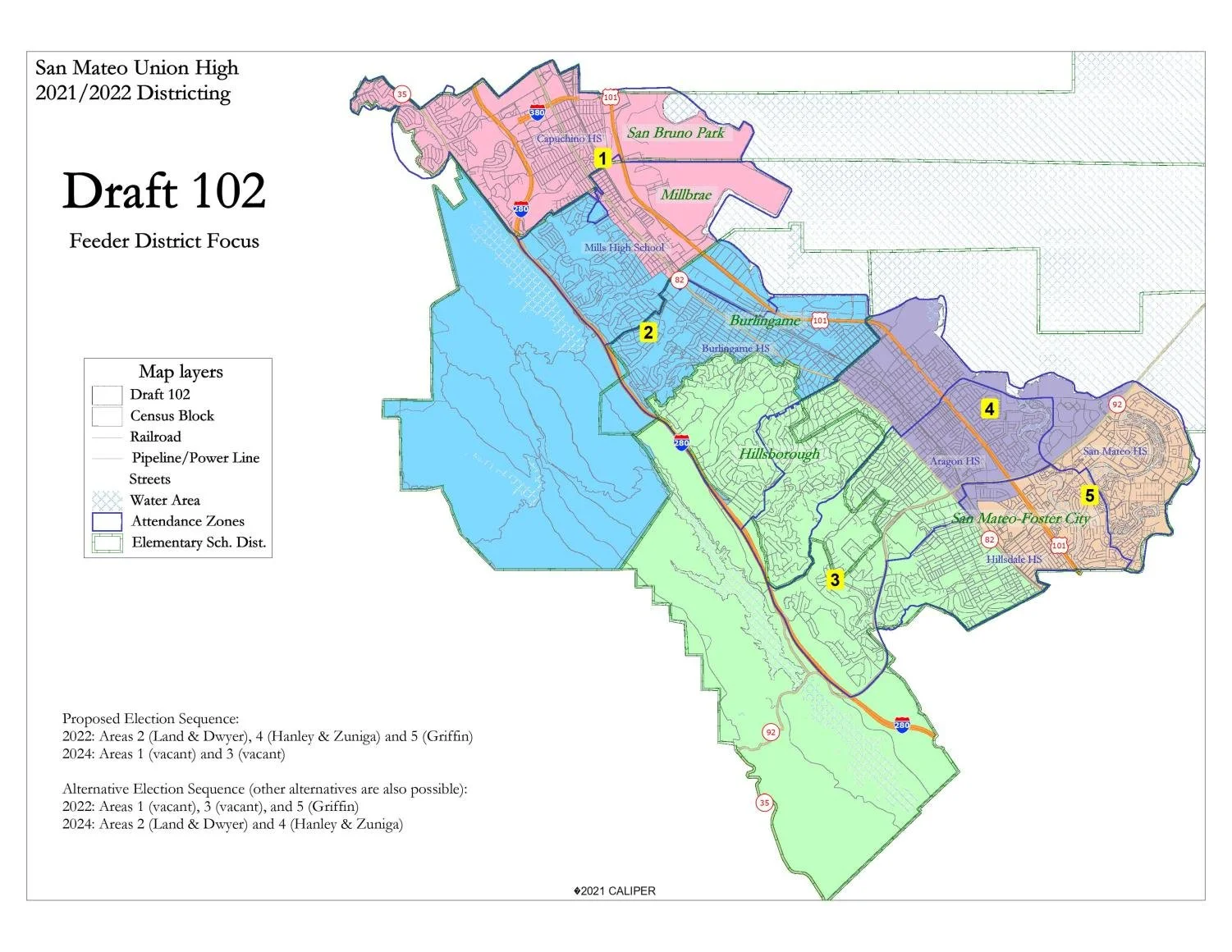
In practical terms, homes in the Franklin or Roosevelt zones routinely fetch premium prices. In one local survey, an agent confirmed: “Homes tied to popular schools often see faster demand and long term value”. (By contrast, areas outside the top schools – where families would have to drive out-of-district – tend to move more slowly.) In short, Burlingame’s unified feeder system (all kids go to BIS and then BHS) gives parents confidence in continuity. Top-ranked private and parochial schools also serve the area – for example, St. Catherine’s (K–8 Catholic) and Our Lady of Angels – but public schools remain a chief magnet. The link between schools and real estate is so strong here that Google searches like “school district home values Burlingame” are common among homebuyers.
Neighborhood Attractions & Lifestyle
Burlingame offers a polished, small-city lifestyle with big-city amenities. Its historic downtown centers on Burlingame Avenue and Broadway, two pedestrian-friendly shopping districts. The city website describes Burlingame Avenue (from California Drive south to El Camino) as “the liveliest area, with hundreds of stores and restaurants”. Boutique fashion, home goods shops and casual cafes line the tree-shaded blocks. A few blocks north is Broadway Ave (Old Broadway), a quieter, retro “Fifties-style” strip of cozy restaurants and family-owned shops. Together these downtowns offer everything from trendy sushi and gastropubs to independent coffeehouses and theaters. (The annual Burlingame on the Avenue festival and weekly farmers’ market animate this core neighborhood.)
Burlingame is also famed for its “City of Trees” character. Everywhere you look there are mature eucalyptus, redwoods and live oaks. Numerous parks and outdoor spaces dot the city’s 4.4 square miles. Central Park, a granite-terraced playground in downtown, anchors the eastern neighborhood. Washington Park (at Howard/Bay Road) has tennis courts, fields and a disc golf course, and it hosts summer concerts and an annual community campout. The city’s peninsula location means easy access to water: Bayside Park and Peninsula Park preserve sloughside trails along the Bayfront Trail (which stretches 13+ miles to San Francisco). Miles of hiking and biking paths wind through Mills Canyon, Skyline, and San Bruno Mountain Open Space preserves just west and south. For families, the Burlingame Public Library (built 1930, expanded 2005) is a key hub, with year-round storytimes, cultural classes and a makerspace. Cultural events abound – from an annual Pet Parade and Royal Ball (Holiday Ball) to Halloween decorating contests and a large winter tree-lighting festival. (In short, Burlingame feels suburban but with a surprisingly rich community calendar.)
Transportation adds to Burlingame’s appeal. The city is bisected by major corridors: US 101 and the Caltrain commuter line run through the center, giving most neighborhoods a short walk or drive to transit. Two Caltrain stations (Burlingame and Broadway) put San Francisco one stop north and Silicon Valley (Palo Alto/Stanford) about one hour south. San Francisco International Airport lies just minutes south (visible from many homes) – as the city notes, Burlingame’s “close proximity to SFO” adds an extra convenience for residents and travelers. Commuters also have I-280 access via Millbrae, and the city’s own Mineta-bound SamTrans routes. Thus a downtown office worker or a tech executive in Silicon Valley or even an international flight is easily reachable, making Burlingame popular with professionals who commute but prefer suburban life.
These location and lifestyle advantages contribute to the “luxury Peninsula” aura of Burlingame. Indeed, Burlingame’s many waterfront hotels, fine-dining restaurants and bayfront marinas give it a resort-like feel along San Francisco Bay. For example, the mile-long “Hotel Row” on Airport Blvd features dozen of upscale eateries, leveraging air travelers and locals alike. Overall, one finds a broad spectrum of attractions: vintage architecture and annual street festivals meet top-rated schools and parks with bay views. Locals often remark that Burlingame has “Silicon Valley affluence without being flashy” – a well-kept, walkable city where mid-century charm meets modern culture.
Architectural Highlights & Housing Inventory
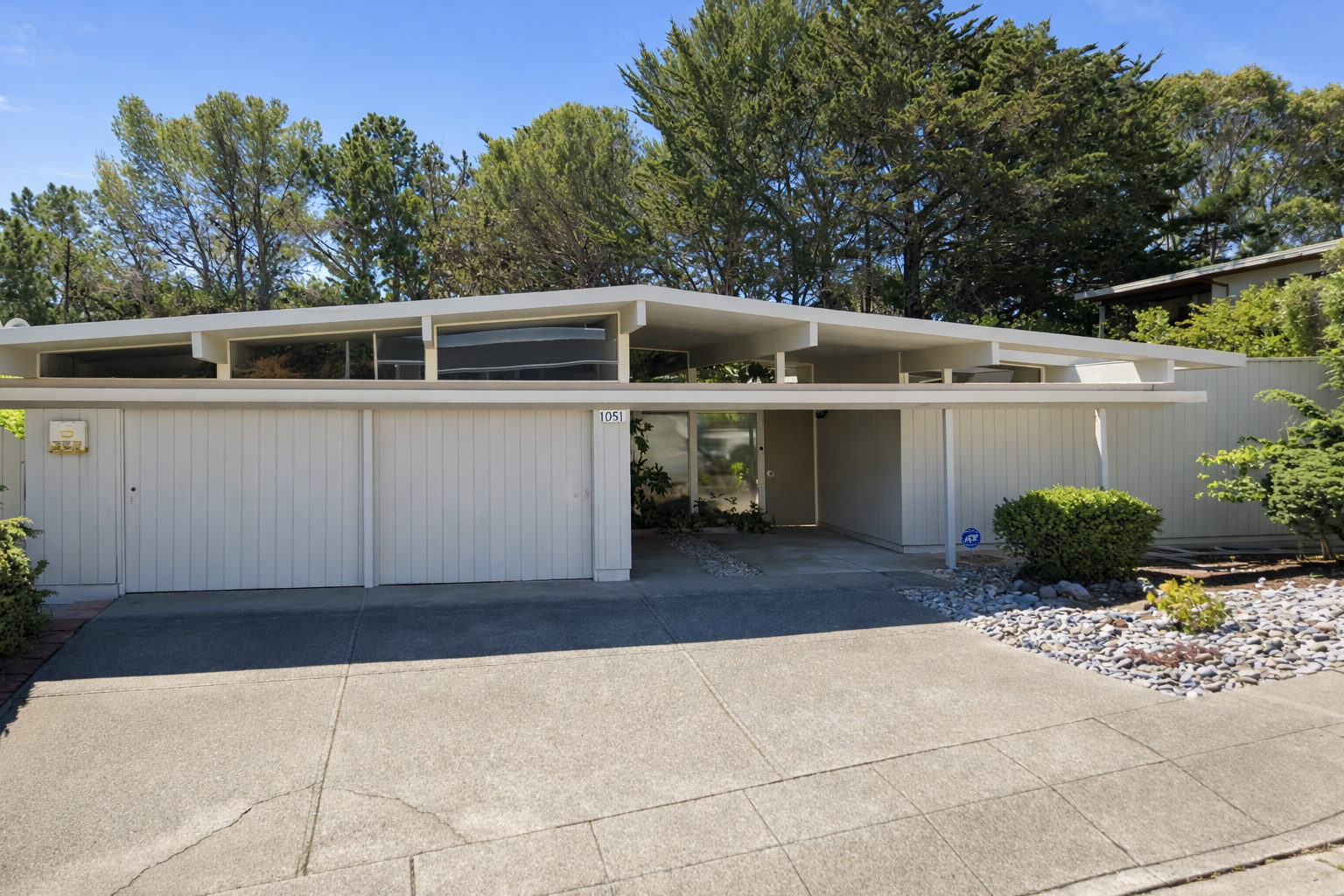
Burlingame’s housing stock is remarkably diverse for its size. About 13,700 housing units sit on 4.4 square miles, clustered in older single-family neighborhoods (the city’s density is ~6,950 people/sq mi). Many Burlingame homes were built between the 1910s and 1970s, reflecting its two main booms: prewar subdivisions and the post-WWII suburban surge. Early styles include Minimal Traditional cottages and Craftsman homes (rare survivors from the 1920s–30s), while the 1940s-50s brought hundreds of California Ranch and Tract-style houses. For example, in Mills Estates – an archetypal 1950s neighborhood – most homes are single-story ranch or two-story tract designs dating 1950s–60s, with one-off Eichler lots interspersed. (A neighborhood real estate profile notes “homes are generally 50–60 years old, many are one-level ranch or two-story tract homes”.) Smaller subdivisions like Burlingame Terrace, Burlingame Park and Glenview Heights similarly feature mid-century ranches, often remodeled or expanded. Starting in the 1970s and beyond, a few Contemporary and mid-1980s Mediterranean styles appear, as well as very limited new infill townhouses near downtown and the freeway.
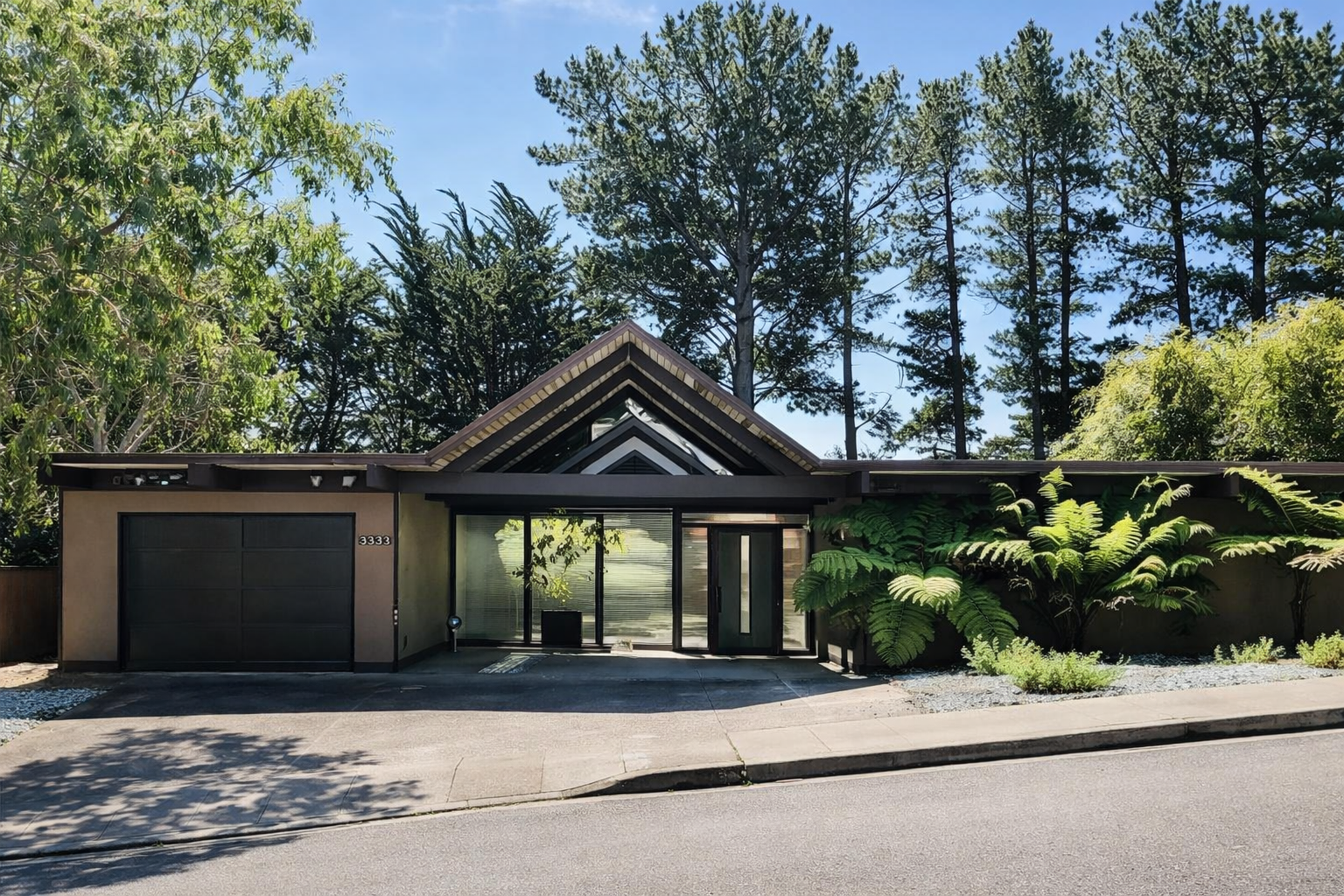
Burlingame’s crown jewels are its Eichler homes in Mills Estates. Joseph Eichler’s company, famed for its Modernist “California home” designs, built an enclave of 100 Eichler houses here in 1964–65. These Eichlers are large (often 4–5 bedrooms, ~2,000+ sq.ft.) post-and-beam homes with signature flat/double-pitched roofs and dramatic floor-to-ceiling windows. Their open plans revolve around central enclosed atriums (a Claude Oakland “Type 24” design). Today these homes — with original tongue-and-groove ceilings, radiant floor heating and lush foliage — are highly coveted by mid-century purists. (One architectural tour notes “Burlingame’s Eichler homes… typically feature glass walls, post-and-beam construction, and open floorplans in a style indebted to Frank Lloyd Wright”.) Other Eichler holdings in nearby San Mateo Park and Crestview are similar in character. Overall, Eichler homes are among the Bay Area’s largest single-level mid-mod homes, and Burlingame’s collection is the peninsula’s premier Eichler neighborhood.
The wider inventory of Burlingame homes today faces a preservation-versus-teardown dilemma. Many owners choose renovation and restoration over replacement, especially in historic districts and mid-century enclaves. The Boyenga Team emphasizes the “finer points” of Eichler living (e.g. oversized windows, clerestories, Douglas fir beams) when marketing these homes. They often fund minor updates (kitchens, baths) while preserving original elements. By contrast, some postwar ranches on sub-divided hillsides have given way to very large modern rebuilds. However, Burlingame’s tight zoning – typical lot size ~7,500–10,000 sq.ft – means even tear-downs usually yield 4–6 bedroom homes, not McMansions. There is virtually no undeveloped land; new construction is limited to infill or second units. In short, Burlingame’s housing is largely mature. Roughly 12,500 households live here (CensusReporter), so inventory moves slowly. With low inventory and desirable stock, houses here hold value: an investor would find few bargain tear-downs. Instead, the market prizes refurbished originals and thoughtful mid-century remodels. As one agent puts it, an Eichler listed by the Boyenga Team “comes with no unwelcome surprises – only the expected mid-century delights”, meaning the focus is on charm (glass walls, atrium) rather than seismic upgrades.
Real Estate Market Analysis
Burlingame’s real estate market is high-end and competitive. At its peak (mid-2022) median home prices approached $3M. Like the rest of the Bay Area, prices have since swung with interest rates and demand. For example, Redfin reports that by late 2025 the median sale price was about $2.105M, down roughly 35% year-over-year (reflecting a national housing cooldown). Inventory remains tight: in December 2025 only 20 homes sold in the city (vs 11 the prior year). Nevertheless, Burlingame remains extremely competitive: homes average ~2–3 weeks on market and often attract multiple bids. Redfin’s “Compete Score” is about 79/100 (very competitive), with many sales ending roughly 5% above asking price. In short, even with rates higher, Burlingame demand by well-funded buyers still drives quick sales.
Year-to-date 2025 data from PropertyShark confirm this strength: Q2 2025 saw a median sale price of about $2.9M – a 10% increase over Q2 2024. Burlingame’s median ($2.9M) far exceeds the San Mateo County median (~$1.7M). In fact, Burlingame ranks 3rd-highest among SM County cities (after Hillsborough and Menlo Park). Single-family homes (the dominant category) had a Q2 median of ~$3.0M, essentially flat year-over-year; condos softened to ~$990K (-24% YOY). The condo market is small (only 8 sales in Q2) and thus more volatile, whereas SFHs reflect the strength of family buyers.
Comparatively, Burlingame performs better than many nearby areas. A home on the hills might start around $2.5–3.5M, far above typical San Mateo ($1.7–2.0M) or Redwood City ($1.9M) prices. Likewise, Burlingame’s ultra-expensive enclaves (Burlingame Park, Hillside, San Mateo Park) can rival adjoining Hillsborough or Atherton pricing. Buyer demographics skew affluent professionals: many are Silicon Valley tech families, biotech executives or finance professionals. Urban refugees seeking suburban schools also drive demand: for instance, dual-earner couples leaving San Francisco often move here for lifestyle and safety. Foreigner buyers (especially Asian nationals) also participate, using Burlingame as a stable hometown base. Flipping investors are rare here; instead, owner-occupiers dominate. Given the scarcity of developable lots, new construction is minimal, which supports values. Any large new project (for example, luxury townhomes on El Camino) is offset by increases in multifamily elsewhere.
Renovation trends mirror these dynamics. In buyer markets like Burlingame, sellers commonly invest tens of thousands in key upgrades before listing. The Boyenga Team, for example, routinely uses Compass’s Interest-Free Concierge program to fund fresh paint, new roofs or refinished floors, knowing it can yield several times that amount in price. As Boyenga recounts, a $50K renovation on a Palo Alto Eichler generated “multiple offers and several hundred thousand over asking”. Likewise, staging and storytelling are crucial: showcasing mid-century details (exposed beams, atriums) can justify high prices. The result is that well-prepared Burlingame homes still command premium multiples. Even in 2025’s dip, three-quarters of listings were selling above list price.
In sum, Burlingame real estate trends are clear: prices long outpace the national market, schools confer a persistent premium, and inventory remains historically low. The city’s comparative advantage (excellent schools, transit and neighborhoods) means it weathers economic cycles better than most. While some seasonal cooling has occurred, buyer confidence and job growth in tech keep values near record levels. For example, Zillow’s Home Value Index shows an average home at ~$2.59M (up ~3.9% over the past year), highlighting the market’s overall ascent. Such high stakes call for specialists; which leads to the Boyenga Team’s area of expertise.
Case Studies & Success Stories
The Boyenga Team – a Burlingame-based Compass brokerage duo – has handled many mid-century listings. Here are three illustrative examples (all actual strategies are anonymized):
Mills Estates Eichler (Off-Market Staging → Bidding War): A 4-bed, 3-bath Eichler home (~2,100 sq.ft.) on a quiet cul-de-sac needed a smart launch. Boyenga advised an off-market “Coming Soon” phase and full staging with vintage modern furnishings. Using their Compass Collections campaign, they targeted Eichler enthusiasts via digital ads. Once public, the listing drew 10 offers in one weekend. The sellers had invested in cosmetic tweaks (refinished floors, new lighting) to highlight the atrium. The bidding war drove the final sale about 15% above ask, setting a neighborhood record. This case mirrors Boyenga’s reported success: as they recount, thorough staging and restoration often “turn an Eichler into a record sale with multiple offers”.
Hillside Ranch Remodel (Modern Telling → Above-Ask Sale): A classic 1950s ranch-style house in Burlingame Hills (3 bed, 2 bath, ~1,600 sq.ft.) was updated for sale. The team used Compass’s concierge funding to install granite counters and modern wood floors, then emphasized the great room’s volume. In marketing, Boyenga’s copy told the story of “historic roots, modern life,” capturing buyers’ imaginations. Within days, they received a flurry of interest. The home went pending for about 10% above list in only 7 days on market, with all contingencies waived. The buyers were a young family drawn by the home’s mid-mod charm and Burlingame schools – a pattern agents see often.
Downtown Luxury (Buyer Matchmaking via School Tour): In another case, Boyenga represented a high-end “Easton Addition” home (1950s Colonial-renovation, 4 bed/3 bath, ~2,400 sq.ft.) near Franklin School. After an open house, one agent in the office realized the visitors were a tech couple from Toronto researching Burlingame schools. She guided them on a private tour of Franklin Elementary and nearby parks. Within days they returned excited, remarking they “could see our life settling in again,” and bought a different house two streets away. The Boyenga Team’s local school knowledge and nimble networking closed this sale off-market. Ultimately the home sold slightly above ask, thanks to this personal matchmaking. This story echoes a local agent’s testimonial: “I had a family move back from Toronto… after touring Roosevelt, they ended up buying two streets away”.
Each example illustrates Boyenga Team tactics: meticulous home preparation (pre-inspection and repairs), design-forward staging that highlights Eichler or midmod features, off-market previews to qualified buyers, and modern marketing (Compass Collections, 3D tours). The outcomes – multiple offers, premium prices, fast closes – consistently outperformed comps. These successes underscore their niche: combining deep Eichler-savvy with luxury home salesmanship.
The Boyenga Team Advantage
For sellers and buyers in Burlingame’s mid-century and luxury segment, the Boyenga Team stands out as top-tier local experts. Eric and Janelle Boyenga (the “Property Nerds” of Silicon Valley real estate) leverage their Eichler specialization into a competitive edge. They are among the leading Compass Realtors in San Mateo County, distinguished by both high volume and cutting-edge tools. For example, they use Compass’s AI-driven pricing algorithms and sales analytics to set aggressive yet realistic list prices. They routinely tap Compass Concierge, an interest-free renovation loan program, to fund renovations that boost value – a $30K paint and landscape refresh often nets $100K+ more at sale.
A signature of the Boyenga brand is design-forward marketing. Their websites (eichlerhomesforsale.com, burlingamerealestate.com) and marketing materials are finely tuned to the mid-century aesthetic. As one listing strategy article puts it, they “frame the architecture as the star”: every photo shoot emphasizes the floor-to-ceiling glass, clerestory beams and seamless indoor-outdoor flow of an Eichler. They also know how to craft a narrative – “storytelling” – about each home’s era, location or family history, which resonates with buyers. Testimonials highlight their professionalism: one satisfied client said Boyenga “went above and beyond in every aspect” (from staging advice to digital outreach) and took the stress out of selling an Eichler.
Behind the scenes, the Boyengas are known for exhaustive preparation. As they themselves explain, they treat each Eichler sale like an engineering project – repairing roofs, updating wiring/radiant heat, and polishing original woodwork – so nothing dents buyer confidence. In their words, an Eichler listed by them “comes with no unwelcome surprises – only the expected mid-century delights”. This upfront work keeps escrows smooth and bolsters final prices.
Crucially, the Boyenga Team has a proven track record. They frequently cite examples: staged homes routinely exceed list price, and off-market listings often draw multiple offers. Buyers praise their responsiveness and niche knowledge (one buyer noted, “They really understood Eichlers – every unique feature was highlighted.”). By combining local insights (e.g. school zones, Eichler subcultures) with Compass’s technology platform, Boyenga has carved out leadership in Burlingame’s real estate. In effect, they position themselves as the “go-to” agents for Burlingame’s mid-mod and luxury market.
Contact Us and Begin Your Mid Mod Journey Today!
Boyenga Team + Compass Eric & Janelle Boyenga 📞 Call / Text : 408-373-1660 📧 Email : MidMods@Boyenga.com 🌐 www.BoyengaTeam.com / www.EichlerHomesForSale.com DRE #01254724 / #01254725