
The Luxury of Limits: Why Mid-Century Modern Homes Are Rare—and Powerful—in Monte Sereno
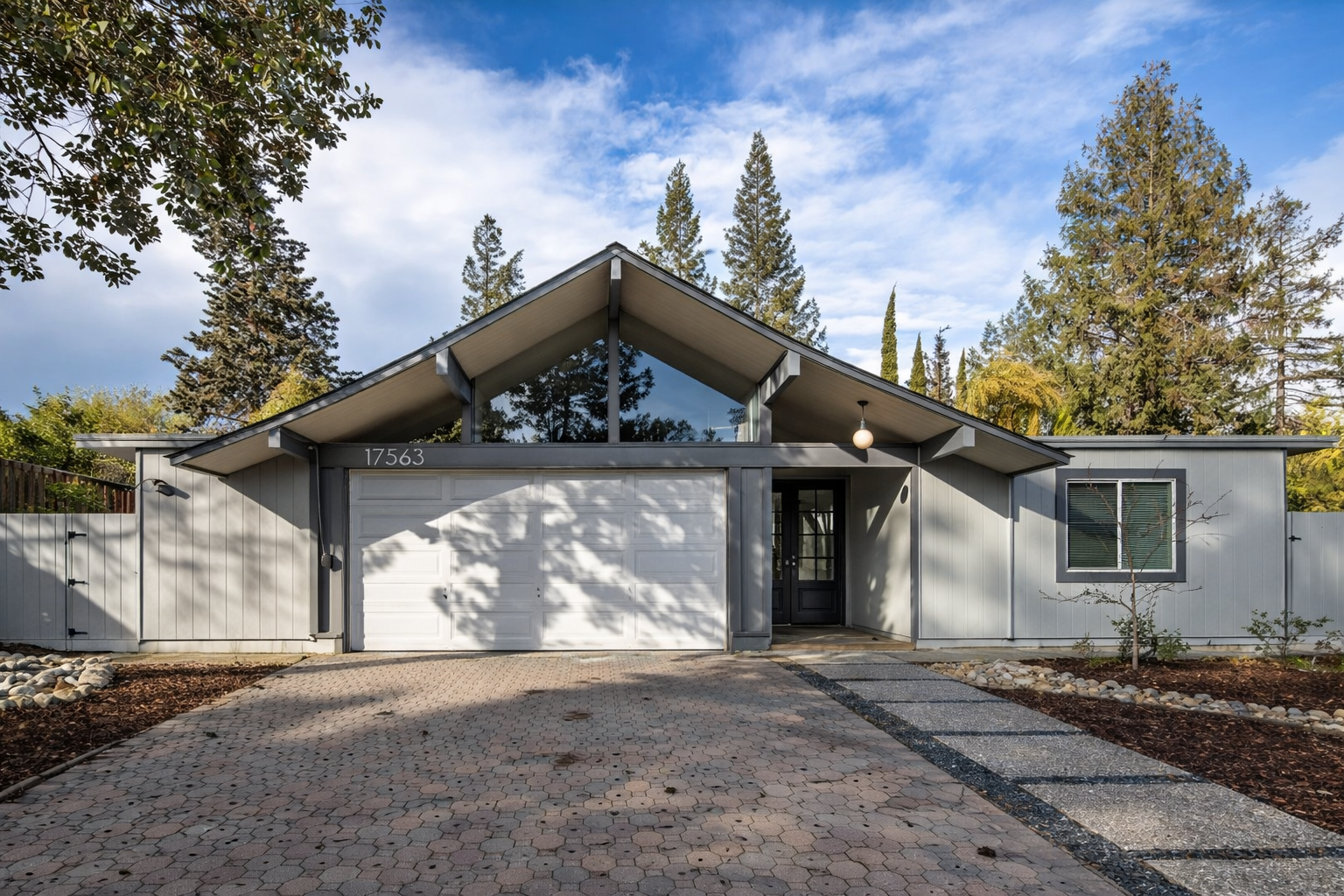
Mid-Century Modern Homes, the Via Sereno Tract, and Architectural Scarcity in Monte Sereno
Monte Sereno has always been defined less by what it built than by what it refused to become. Monte Sereno is one of Silicon Valley’s smallest and most deliberately constrained communities, a residential enclave shaped by zoning discipline, large parcels, and a near-total absence of commercial development. It is not a city associated with architectural movements or housing experiments—and certainly not with large-scale mid-century modern tracts.
And yet, mid-century modern architecture does exist here. Rarely. Quietly. And almost always by exception.
To understand mid-century modern and Eichler-adjacent homes in Monte Sereno, one must look not only within its formal borders, but also just beyond them—to the Via Sereno tract, technically located in Los Gatos, yet functionally inseparable from Monte Sereno’s geography, school influence, and market identity. Together, Monte Sereno and Via Sereno form one of the most scarcity-driven modern home submarkets in the South Bay.
This article offers a transparent, research-backed, and prose-driven examination—written in the analytical tone of a Harvard Business Review feature—of why mid-century homes are so rare here, where they do exist, how the market behaves as a result, and why specialized representation is essential in a place where inventory is measured in single digits, not neighborhoods.
A Town Built Around Limits, Not Growth
Monte Sereno’s development trajectory diverged sharply from that of its neighbors. While Los Gatos expanded with subdivisions, downtown density, and postwar tracts, Monte Sereno remained almost entirely residential, with large lots and strict land-use controls. Incorporated in 1957, the town codified its values early: privacy, low density, and architectural discretion.
These choices had consequences. When mid-century modern architecture surged across California in the 1950s and 1960s—driven by builders like Joseph Eichler—Monte Sereno simply did not offer the conditions required for tract development. Eichler’s model relied on repetition, modest lot sizes, and neighborhood cohesion. Monte Sereno offered none of those.
As a result, true Eichler tracts never formed within Monte Sereno’s city limits.
Contact Us and Begin Your Mid Mod Journey Today!
Boyenga Team + Compass Eric & Janelle Boyenga 📞 Call / Text : 408-373-1660 📧 Email : MidMods@Boyenga.com 🌐 www.BoyengaTeam.com / www.EichlerHomesForSale.com DRE #01254724 / #01254725
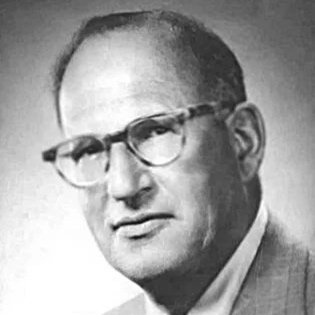
Joseph Eichler, often considered the Father of Eichler Design
Where Modernism Found a Narrow Opening
Mid-century modern architecture did not disappear entirely from this landscape; it adapted. In Monte Sereno, modernism appeared in isolated, highly contextual ways:
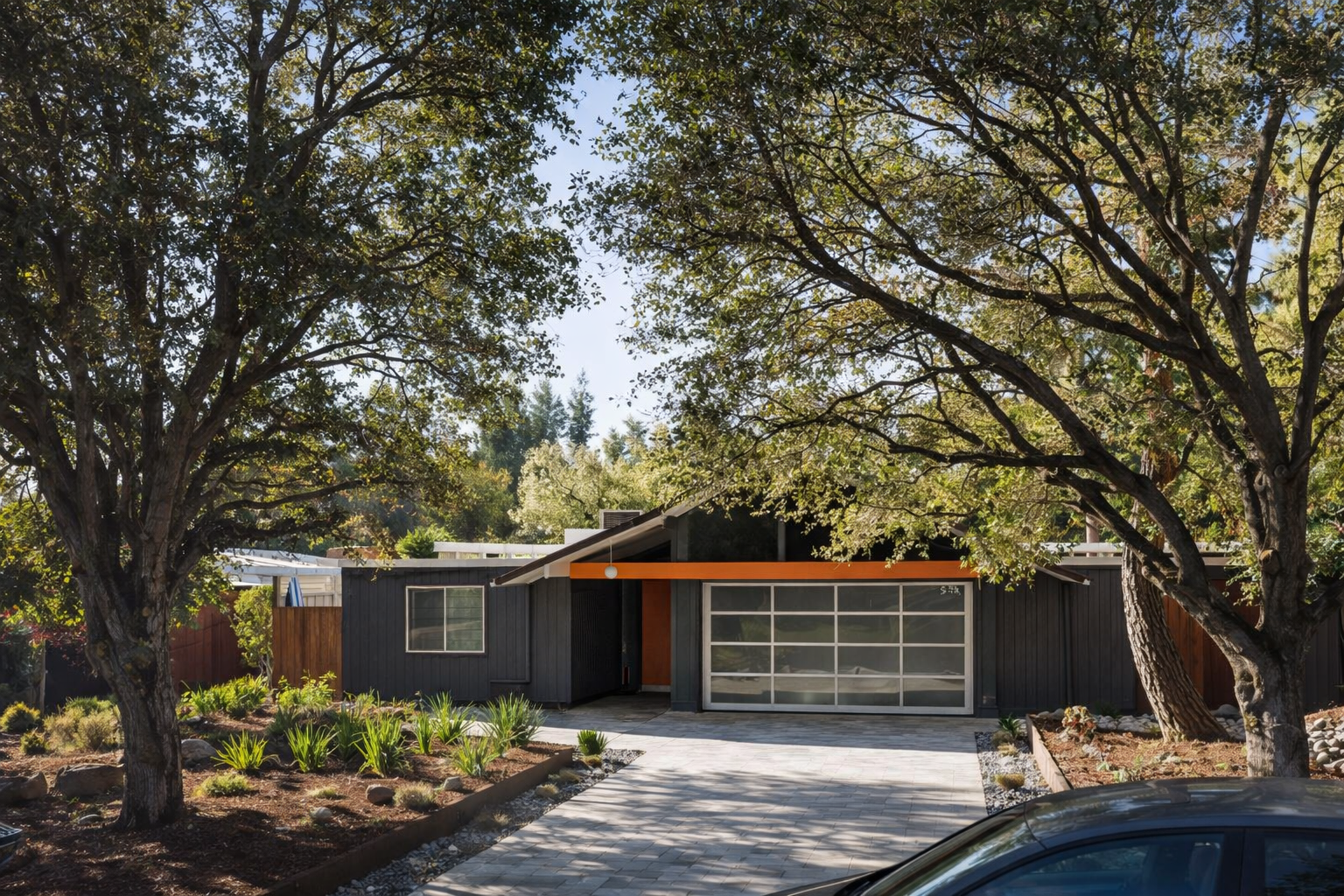
Custom mid-century homes built by architect-owners
Hillside residences from the 1960s–1980s influenced by post-and-beam principles
Later contemporary renovations that borrow heavily from mid-century vocabulary
These homes are scattered, not clustered. They do not announce a neighborhood identity. They exist as architectural outliers—valuable precisely because they are rare.
This scarcity is not accidental. It is structural.
Via Sereno: The Exception That Defines the Market
To fully understand mid-century modern homes associated with Monte Sereno, one must include the Via Sereno tract. While Via Sereno is technically within Los Gatos, it sits directly adjacent to Monte Sereno and shares the same hillside character, large parcels, and estate-scale context. In practice, it is widely regarded by buyers, agents, and appraisers as part of the Monte Sereno sphere.
Developed during the mid-century era, Via Sereno contains a small but meaningful concentration of mid-century modern and Eichler-influenced homes—some of the closest examples of tract-adjacent modernism available to Monte Sereno buyers. These homes often feature:
Low-slung rooflines
Open interior layouts
Strong indoor–outdoor flow
Privacy-forward siting
Crucially, Via Sereno homes often feed into the same highly coveted school pathways associated with Monte Sereno, reinforcing their inclusion in the broader market conversation. For buyers seeking mid-century design while prioritizing exclusivity, schools, and topography, Via Sereno is frequently considered a functional extension of Monte Sereno, not a separate alternative.
Demographics That Reinforce Scarcity
Monte Sereno’s demographic profile compounds architectural rarity. With fewer than 4,000 residents, the town is dominated by high-net-worth households, many of whom own their homes for decades. Turnover is low. Renovation is common. Replacement is rare.
Residents are typically executives, entrepreneurs, investors, and senior professionals who value privacy and control over visibility. Cultural and ethnic diversity has increased steadily, particularly among globally mobile families, but the underlying ownership pattern—long tenure, low churn—remains unchanged.
In this environment, mid-century homes are not traded frequently. They are held, curated, and passed along carefully.
Schools as a Multiplier, Not a Tradeoff
Although Monte Sereno does not operate its own school district, it benefits from access to some of the strongest public schools in the region. Homes are generally served by the Los Gatos Union School District and the Los Gatos-Saratoga Union High School District.
For mid-century and modern homes—particularly in Via Sereno—these school assignments materially elevate value. Buyers who might otherwise compromise on architecture are often willing to pay premiums when design, privacy, and education align.
Proximity to higher education institutions such as Stanford University, Santa Clara University, and San Jose State University further reinforces long-term demand.
Lifestyle Defined by What Isn’t There
Monte Sereno offers no downtown, no commercial corridor, and no destination amenities. This absence is intentional. The town’s lifestyle is built around exclusion: excluding traffic, density, and noise.
Residents rely on neighboring Los Gatos and Saratoga for dining and retail while enjoying:
Quiet, tree-lined streets
Immediate access to the Santa Cruz Mountains
Large private lots and outdoor living
For mid-century and modern homes—designed around light, views, and openness—this environment is ideal. The architecture is allowed to function as intended.
Housing Inventory: A Market Measured in Exceptions
Monte Sereno’s housing inventory is almost entirely single-family, with estate-scale homes dominating. Within this inventory:
True mid-century modern homes are extremely rare
Eichler homes do not exist as formal tracts
Via Sereno represents the closest concentration of mid-century design
Zoning constraints and community norms ensure that new supply does not meaningfully replace old supply. As a result, every architecturally significant home becomes more valuable over time, regardless of style.
Market Behavior: Precision Over Volume
Monte Sereno is a thin market. Pricing errors are magnified. Buyer pools are small but decisive. Modern and mid-century homes often trade quietly, sometimes off-market, especially when sellers prioritize discretion.
Compared with neighboring ZIP codes, Monte Sereno shows:
Lower transaction volume
Strong downside protection
Premium outcomes for well-positioned, design-forward homes
Via Sereno properties frequently benefit from this dynamic, capturing Monte Sereno-level demand while offering a slightly broader architectural palette.
Case Studies in Alignment
Successful sales of mid-century and modern homes in Monte Sereno and Via Sereno tend to share a common trait: alignment. Pricing, presentation, and buyer targeting must be precise.
Several notable transactions represented by the Boyenga Team demonstrate how:
Off-market strategies preserve privacy
Compass-powered analytics refine valuation
Architectural storytelling clarifies scarcity
In each case, success was driven not by speed, but by fit.
The Boyenga Team Advantage in Monte Sereno and Via Sereno
Monte Sereno is not a market for generalists.
Led by Eric and Janelle Boyenga, the Boyenga Team brings deep expertise in luxury real estate, architecturally significant homes, and scarcity-driven markets. Their experience across Monte Sereno, Los Gatos, and Saratoga allows them to advise clients honestly—particularly when mid-century inventory is limited and expectations must be calibrated carefully.
As part of Compass, and through exclusive partnerships such as HomeLight, the team leverages private-market access, advanced pricing tools, and discreet exposure strategies that are especially effective in low-volume, high-consideration environments.
Even in a town where mid-century modern homes are rare, expertise matters more—not less.
Scarcity as a Feature, Not a Flaw
Monte Sereno did not miss the mid-century moment. It simply chose restraint. By limiting density and prioritizing custom homes over tracts, it created a market where architectural exceptions carry extraordinary weight.
Via Sereno stands as the clearest expression of how mid-century design fits into this ecosystem—not as a contradiction, but as a complement.
For buyers, these homes are rare opportunities.
For sellers, they demand care, honesty, and expert positioning.
And in a region that often confuses abundance with value, Monte Sereno proves that scarcity, when intentional, becomes its own form of luxury.