
Living Lightly: Marin’s Mid-Century Modern Homes and the Architecture of Restraint
Historical Overview
Origins and Early Development in Marin County
Marin County’s development has been shaped by both its geography and visionary planning. For much of the early 20th century, Marin remained rural and sparsely populated – accessible from San Francisco only by ferry until the Golden Gate Bridge opened in 1937. The bridge’s completion marked a turning point, spurring a post-WWII suburban boom across Marin’s hills and valleys. By the 1950s and ’60s, new communities sprang up rapidly, driven by an influx of middle-class families seeking scenic open space within commuting distance of the city. This era saw Marin transition from dairy farms and summer estates into thriving suburban towns with a distinctive California character.
Mid-Century Modern Influence: Amid this growth, Joseph Eichler, the famed mid-century real estate developer, left an indelible mark on Marin. Eichler’s philosophy of bringing modern architecture to the masses materialized vividly here. In 1955 he launched Terra Linda North, Marin’s first large-scale modern tract – 630 homes of striking post-and-beam design in northern San Rafael. Eichler’s architects (notably Anshen + Allen and Jones & Emmons) crafted open-plan ranch houses with floor-to-ceiling glass, atriums, and seamless indoor-outdoor flow, introducing Marin to the California Modern lifestyle. These early Eichler homes in Terra Linda offered cutting-edge contemporary design unprecedented in a suburban setting. Adjacent to this tract, in 1954 the Terra Linda Development Corporation had built Alliance Homes, the nation’s first subdivision of exclusively modern-style houses – a pioneering vision that House & Home magazine projected would make Terra Linda “the largest number of contemporary houses ever built in one place”. Together, these developments set the tone for Marin’s architectural future, showcasing clean lines, open layouts, and a harmony with nature that resonated with progressive homebuyers.
Transformations Over the Decades: Planning, Architecture & Preservation
As Marin County grew through the 1960s, it simultaneously cultivated a strong environmental and architectural preservation ethos. A pivotal moment came in the late 1960s and ’70s, when an ascendant environmental movement led Marin to enact some of California’s earliest growth controls. The county famously blocked new highways, limited large-scale development, and preserved vast tracts of open space in parks and coastal preserves (today 85% of Marin’s land is protected from development). This deliberate restraint kept Marin’s rolling hills and shorelines remarkably unspoiled, but also meant that housing construction slowed dramatically after the 1970s. The Marin citizenry – often skeptical of dense construction – won battles to stop major projects, balancing progress with conservation. These policies maintained Marin’s semi-rural charm and exclusive character, albeit at the cost of high housing prices and limited new supply in later decades.
Architecturally, Marin in the 1970s and beyond continued to treasure its mid-century roots. Many Eichler neighborhoods formed homeowners’ associations to protect the modernist integrity of their homes (for example, Lucas Valley’s HOA actively prohibits stylistically incompatible alterations). At the same time, Marin became a haven for custom modern architecture. Beyond tract homes, hundreds of custom mid-century modern dwellings by prominent Bay Area architects dot Marin’s hills – from glass-walled cliffside residences in Sausalito to hillside Eichler-inspired homes in Mill Valley. And Marin’s civic architecture achieved international renown in 1962 with the completion of the Marin County Civic Center, the last commission of Frank Lloyd Wright. Wright’s futuristic civic complex (with its sky-blue roof and scalloped gold tower) put Marin on the map as an incubator of bold design and remains a National Historic Landmark – a physical testament to Marin’s embrace of architectural innovation. Over subsequent decades, Marin’s planning philosophy prioritized low-density, high-quality development: large lots, ranch-style and contemporary homes, and strict design review in upscale towns (like Ross and Belvedere) to ensure new construction respects the county’s scenic beauty and mid-century heritage.
Notable Figures and Developments Shaping Marin
Joseph Eichler stands out as a transformative figure in Marin’s story. By the mid-1960s, Eichler had built over 1,000 homes in Marin County, across multiple neighborhoods in San Rafael and beyond. From the flat-roofed early models in Terra Linda to the soaring A-frame Eichlers of Lucas Valley (built 1962–1966 with architect Claude Oakland), Eichler’s developments fundamentally altered Marin’s housing landscape. They introduced modernism at scale, fostering communities centered on open space, floor-to-ceiling glass, and indoor-outdoor living that fit Marin’s mild climate and scenic vistas. Eichler’s collaboration with talented architects – Anshen & Allen, Jones & Emmons, Claude Oakland – ensured each Marin tract had unique models and site-sensitive designs. Notably, Eichler even ventured to Marin’s more remote corners: a small enclave in Strawberry Point (Mill Valley) of just 12 custom Eichlers built in 1965 offers two-story designs with panoramic Bay views, and 15 Eichlers in Sleepy Hollow (San Anselmo) built in the early 1970s represent some of his final work. Eichler’s legacy in Marin is such that “mid-century modern” and “Eichler” are nearly synonymous in the local lexicon – a testament to his outsized influence.
Other contributors to Marin’s mid-mod tapestry include architect Cliff May, originator of the California ranch house. In Novato (northern Marin), two “forgotten” subdivisions called Orchard Park and Ferris Gardens were built in the mid-1950s with homes co-designed by Cliff May and Chris Choate. These low-slung ranch homes – often mistaken for Eichlers – feature May’s signature casual indoor-outdoor ethos and are prized by aficionados today for their historical pedigree. Developer Rudy Lang Jr. also left his mark with Lynwood Park in Novato (1954–55), a tract of ~100 modern homes designed by Eichler’s own architects, Anshen & Allen. Though less famous than Eichler’s neighborhoods, these Novato tracts provided an affordable entry into mid-century modern living and are gaining recognition as important architectural heritage. Indeed, Marin’s modernist undercurrents run deep – from these humble “forgotten Eichlers” to one-of-a-kind masterpieces. The cumulative influence of visionary developers, architects, and community activists (who established design review boards and historical preservation efforts) ensured that Marin’s built environment retained a distinct mid-century modern flavor even as it evolved. Today, driving through Marin is like touring a living museum of 1950s–70s California architecture – an experience shaped by the people who championed modern design, environmental stewardship, and controlled growth in this unique county.
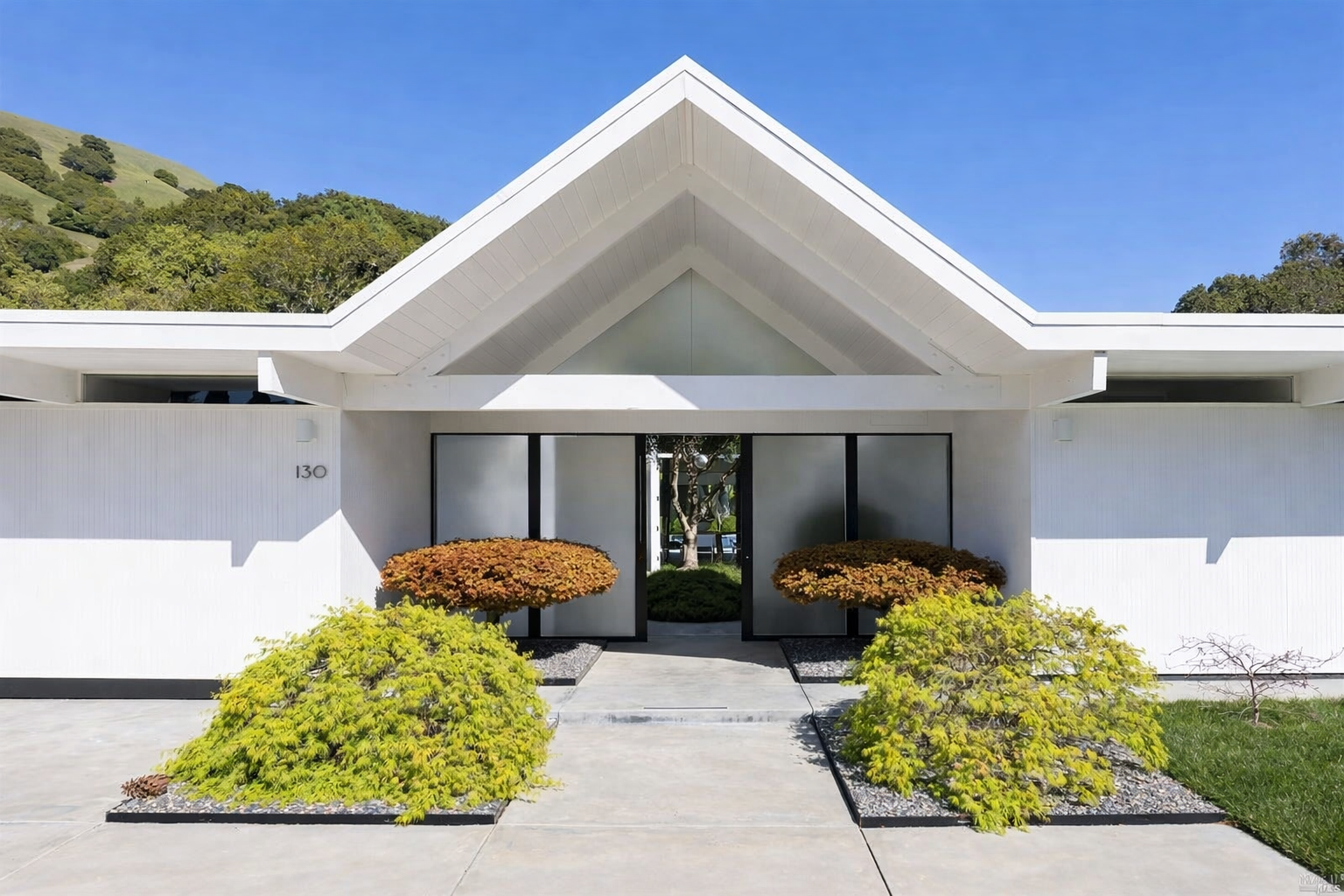
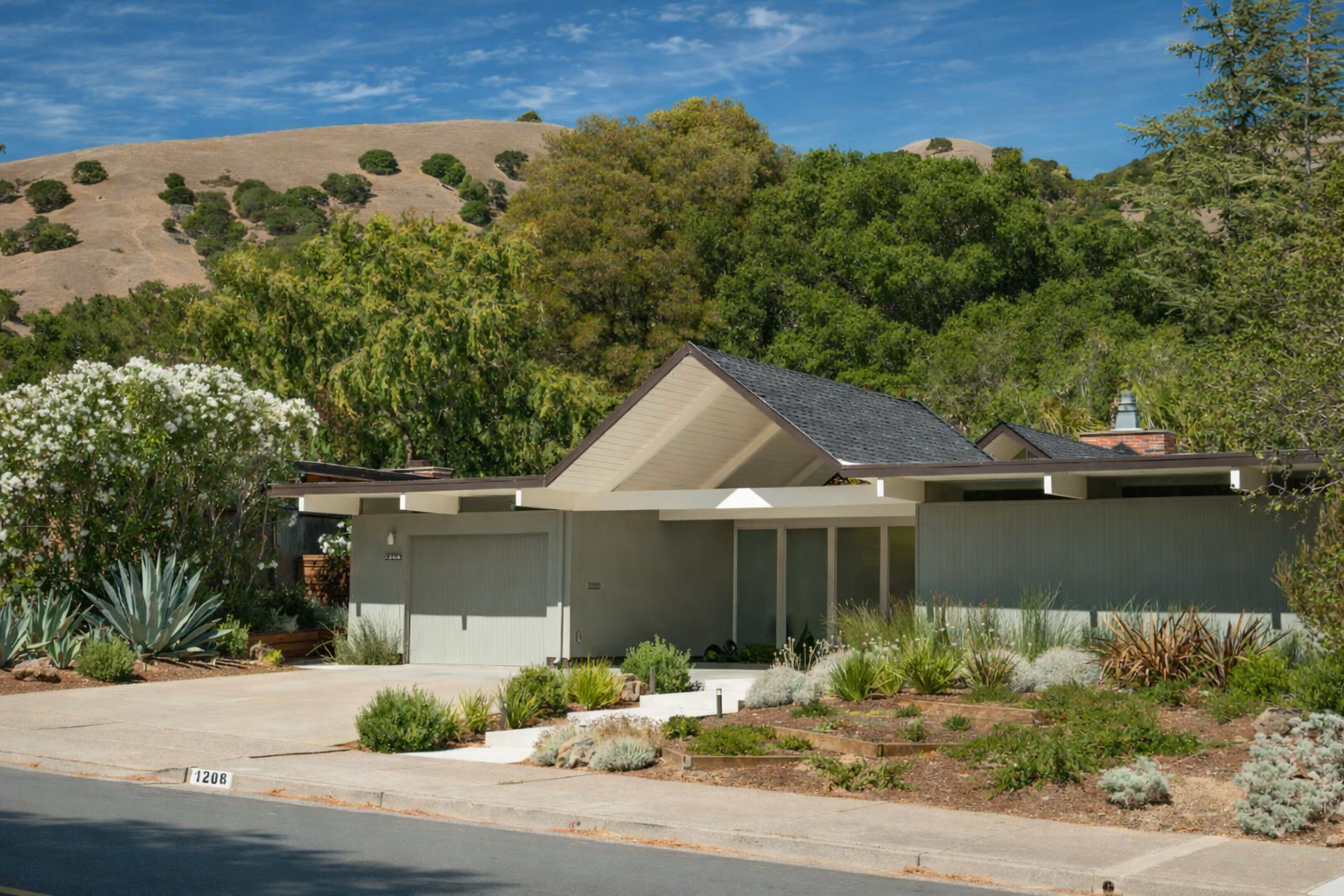
Eichler in Lucas Valley-Marinwood, Marin County, CA.
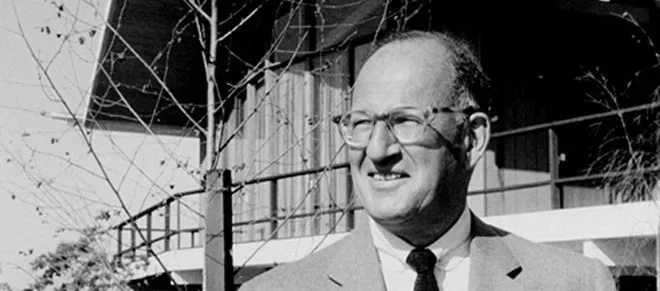
Joseph Eichler, the “Father” of Eichlers
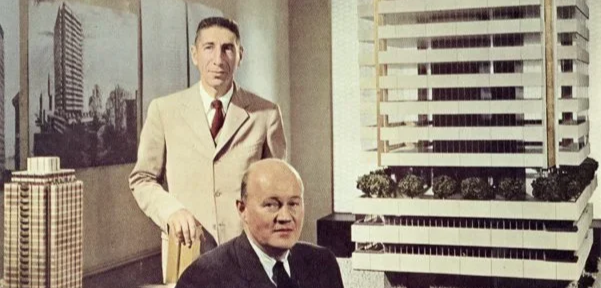
Anshen & Allen, Team of Revered Eichler Architects
Demographic and Socioeconomic Profile
Marin County today is defined by affluence, education, and a population that values quality of life. Despite its proximity to tech-fueled San Francisco, Marin’s growth has been modest and selective. Below is a snapshot of Marin’s demographic profile:
Population: ~258,000 residents (2023), with slight recent decline (−0.66% from 2022). Marin’s population peaked around 2010; since 2020 it has dipped ~2.3%, partly due to out-migration of some groups. This slow growth has kept communities close-knit.
Median Household Income: $142,785, among the highest in California. Marin households earn ~48% more than California’s median and nearly double the U.S. median. This reflects a high proportion of professional, managerial, and entrepreneurial residents. Per capita income tops $90,000, indicating significant wealth.
Education: Marin is exceptionally well-educated – 59.9% of adults hold a bachelor’s or higher degree. This is over 1.5× the national rate, placing Marin in the top tier for educational attainment. Residents also boast a ~93% high school graduation rate. A culture of learning is woven into Marin’s identity.
Ethnic/Cultural Diversity: The population is predominantly white but gradually diversifying. About 66–71% of residents are White (non-Hispanic). The largest minority is Latino/Hispanic (approximately 19% of residents), concentrated in parts of San Rafael and Novato. Asian-Americans make up ~6–7%, while African-Americans are about 2–3% of the population. Marin’s overall diversity index is lower than other Bay Area counties, a legacy of historical settlement and housing patterns. Many Marin communities remain less diverse than urban areas – one student review noted Marin is a “notoriously high-income and low-diversity” locale. However, there are pockets of rich cultural diversity, including the Hispanic community in the Canal District of San Rafael and the historically Black community of Marin City in southern Marin.
Age Distribution: Marin skews older. The median age is 47.3 years, compared to ~38 for California. Fully 25% of residents are 65 or older, reflecting both aging in place and Marin’s appeal to retirees. Youth under 18 comprise about 18–19%. Many families raise children here, but once grown, young adults often depart for education or more affordable areas. The population’s maturity contributes to Marin’s stable, established atmosphere (and also drives demand for services catering to seniors).
Economic Profile: Marin County’s prosperity is evident in its employment and lifestyle. Major industries include professional services, finance, biotech, healthcare, and tourism. Unemployment typically runs lower than state averages (around 4% in 2025). There is also a sizable cohort of remote workers and executives who reside in Marin’s tranquil environs while working in San Francisco or Silicon Valley. The poverty rate is only ~7.8% (and ~9% by some measures), much lower than California’s ~12%. Yet, inequality exists beneath the averages. Marin has some of the largest racial and economic disparities in the state. Due to high housing costs, low-income households (often renters or service workers) struggle to make ends meet – Marin’s median rent of ~$2,800 means a needed income of $112K to avoid rent-burden. The county’s own data show that after paying rent, white households have a median $60k income left, 3.5 times that of Latino households. Homeownership among White families far outstrips that of Black or Latino families, a gap stemming from past discriminatory housing policies and present affordability challenges.
Migration and Housing Trends: Marin has been experiencing a quiet demographic shift. In recent years, more people have left Marin than moved in – particularly working-class and younger residents. Net out-migration from 2010–2023 was about 18.4 per 1,000 households negative, with lower-income households leaving at nearly double the rate of higher-income households. This trend reflects people being “priced out” of the community they love. Marin’s fiercely protected housing market results in limited new housing construction (Marin consistently ranks near the bottom of Bay Area counties in meeting state housing growth targets). The outcome is a kind of socio-economic filtering: those who can afford to stay enjoy an exceptional quality of life, while many workers must commute from outside. In fact, 64% of Marin’s workforce lives outside the county, driving in from more affordable areas (e.g. Sonoma, Solano, East Bay). Every weekday, a flow of teachers, first responders, hospitality workers, and others traverse the bridges into Marin, underscoring the housing affordability gap.
At the same time, Marin continues to attract affluent new residents – often tech industry wealth or professionals – drawn by its safety, natural beauty, top schools, and upscale lifestyle. The pandemic-era remote work boom notably boosted Marin’s appeal; many San Francisco tech workers and executives relocated to Marin’s spacious homes during 2020–2022, seeking larger properties and outdoor space. This helped Marin’s real estate market surge (as discussed later) and reinforced the county’s high-income profile. In summary, Marin’s demographics paint a picture of an upper-income, educated community that is relatively homogenous but slowly evolving. The county grapples with balancing exclusivity and inclusivity: while it remains a sanctuary for prosperity and preservation, community leaders are mindful of the need to increase housing diversity and keep Marin accessible to families across income levels. These socio-economic dynamics form the backdrop for Marin’s real estate and neighborhood character.
School Districts and Education Landscape
Education is a cornerstone of Marin County’s appeal. The area’s school districts are among the top-performing in California, consistently drawing families who prioritize academic excellence. Marin’s public schools benefit from the community’s wealth and involvement – local education foundations often raise substantial funds to supplement state funding, keeping class sizes small and programs robust. The county has 19 distinct public school districts (a mix of elementary, high school, and unified districts) serving its cities and towns, which is remarkable given Marin’s size. This fragmentation means schools are highly localized and often reflect the character (and property tax base) of their specific community.
Top Public Schools: At the high school level, Tamalpais Union High School District (TUHSD) serves most of southern and central Marin and is renowned for its quality. Within TUHSD, Redwood High School in Larkspur and Tamalpais High School in Mill Valley stand out as flagship campuses. Redwood High is rated A+ by Niche and ranked #1 Best Public High School in Marin County. It boasts strong college-prep academics, extensive AP offerings, championship athletics, and modern facilities. Tamalpais High (“Tam High”) in Mill Valley is another excellent school (Niche grade A, ranked #2 in the county), known for its rigorous curriculum and an open campus culture that leverages its artsy, vibrant Mill Valley community. Both Redwood and Tam routinely send graduates to elite universities; a recent Tam alum noted that many motivated peers went on to Top 20 colleges, attesting to the high-achieving student culture. In Novato (the northern end of Marin), Novato Unified School District has two comprehensive high schools (Novato High and San Marin High) which perform solidly, though not at the level of TUHSD schools. However, specialized programs like Novato High’s STEM-focused “San Marin STEM Academy” and Marin School of the Arts (a performing arts magnet on Novato High’s campus) provide unique opportunities, attracting intra-district transfers.
Marin’s elementary and middle schools are equally esteemed. Many local elementary schools score 9 or 10 out of 10 on GreatSchools.org. For example, Ross School (a K-8 in the tiny town of Ross) is perennially ranked among the top 20 elementary schools in California, reflecting the affluent, educated community it serves. Likewise, Reed Union School District (covering Tiburon and Belvedere) and Mill Valley School District consistently post high test scores and offer enriched curricula (with Reed’s Bel Aire Elementary and Mill Valley’s Strawberry Point Elementary each boasting state-leading performance). Parents often cite these outstanding public schools as a primary reason for moving to Marin. High property taxes and local fundraising support mean schools have strong art, music, and technology programs not found in many other districts.
Private and Alternative Education: Complementing the public system, Marin has a number of prestigious private schools. Marin Country Day School (MCDS) in Corte Madera and Branson School in Ross are two of the most exclusive (MCDS is K-8, Branson 9-12). Branson, for instance, routinely sends graduates to Ivy League colleges and offers an intimate college-prep environment (around 100 students per grade, with tuition over $50k/year). Other notable private options include Marin Catholic High School in Kentfield (a Catholic college-prep with strong athletics), The Marin School (a small progressive high school), and numerous Montessori and Waldorf schools at the elementary level. These private institutions provide alternatives for families seeking specific pedagogies or smaller class sizes, though Marin’s public schools are so strong that the majority of families (even affluent ones) opt for public K-8 and reserve private schooling mainly for high school or special needs.
School Performance and Home Values: In Marin, there is a well-recognized correlation between school assignment and real estate values. Neighborhoods falling within the boundaries of the most sought-after school districts command a price premium. For example, homes in Mill Valley (served by Mill Valley SD and Tamalpais High) or in Tiburon (Reed Union SD and Redwood/Tam High via TUHSD) are consistently priced higher than similar homes just outside those zones. Being in the Ross School District (a single-school K-8 district feeding into Tam High) is such a draw that even modest homes in Ross often sell for multimillion-dollar prices – effectively “buying into” the top-ranked Ross School. In real estate listings, agents prominently feature school district info, knowing it drives demand. Marin homebuyers with children will carefully research boundary lines (which sometimes zigzag through neighborhoods) to ensure access to preferred schools. Open enrollment is limited, so owning property in the right ZIP code is usually the ticket to entry. This phenomenon mirrors Silicon Valley’s experience with Palo Alto and Cupertino schools, and in Marin it’s Redwood/Tam High and the best elementary districts that everyone wants.
Commuter and Higher Education: Marin County itself is home to a respected community college and a private university. College of Marin, with campuses in Kentfield and Novato, serves local students with two-year degrees, transfer programs, and continuing education. Its Kentfield campus, nestled beneath Mt. Tamalpais, has been recently upgraded and offers a scenic learning environment (and community events like theater performances). Many local high schoolers take summer courses or dual-enrollment classes at College of Marin to get ahead. Meanwhile, Dominican University of California in San Rafael is a small private university (about 1,800 students) known for strong nursing, business, and teaching programs. Dominican’s campus adds a college-town feel to central San Rafael and offers cultural resources (lectures, an annual dance festival, etc.) to the community. While Marin lacks a large research university, its proximity to UC Berkeley (about an hour’s drive) and San Francisco’s university scene (USF, UCSF, SFSU) means higher education is never far away. Additionally, many Marin high schools have “feeder” patterns to the University of California system; it’s common to find Marin graduates at UC Berkeley, UCLA, Davis, and Santa Barbara, owing to their strong preparation. In fact, Tamalpais High School District has such a solid academic reputation that its graduates are well-represented in elite colleges across the country (as one Tam alum wrote, the cohort felt like a feeder into top universities).
In summary, Marin’s education landscape is a major selling point. The combination of high-ranking public schools, abundant enrichment opportunities, and engaged parent communities creates an environment where children thrive. School events (from Friday night high school football games to elementary fundraisers) are integral to the social fabric. For homebuyers, understanding the school boundaries is crucial – real estate agents often say “buy the school district, not just the house.” And with Marin’s tradition of excellence in education, it’s possible to find great options at every grade level, whether public or private. This education advantage continues to attract new generations of families to Marin County’s neighborhoods.
Neighborhood Attractions and Lifestyle
Marin County offers an enviable lifestyle, often described as the perfect mix of outdoor adventure, small-town charm, and upscale amenities. Residents enjoy a quality of life that is hard to match, with scenic nature, recreational activities, fine dining, and cultural venues all within close reach. Below, we explore some of the core attractions and facets of daily life in Marin’s communities:
Outdoor Recreation – Parks, Trails, and Open Space: Marin is a paradise for nature lovers. The county contains some of the Bay Area’s most treasured green spaces. Towering above it all is Mount Tamalpais (Mt. Tam), Marin’s iconic 2,571-foot peak, which offers miles of hiking and biking trails through redwood groves and rolling grasslands. The mountain (largely protected by Mount Tamalpais State Park and Marin Municipal Water District lands) is known as the “birthplace of mountain biking,” where locals first took fat-tire bikes down old fire roads in the 1970s. On Mt. Tam’s lower slopes lies Muir Woods National Monument, an internationally famous old-growth redwood forest that draws visitors from around the world to walk among 250-foot-tall ancient redwoods. Marin’s coastline is equally spectacular: Point Reyes National Seashore, comprising the county’s western peninsula, offers beaches, rugged cliffs, and pastoral dairy farms preserved in time – a haven for weekend hikers and wildlife enthusiasts (elk, whales, and sea lions are commonly sighted). Between Point Reyes and the Golden Gate, the Marin Headlands (part of Golden Gate National Recreation Area) provide dramatic coastal trails with views of the bridge and city, plus attractions like the historic Point Bonita Lighthouse and the Headlands Center for the Arts.
Within suburban areas, numerous local parks and multi-use paths encourage an active lifestyle. Almost every town has beloved open spaces: Mill Valley residents enjoy trails up Mount Tam via the Dipsea Trail, Corte Madera has the Ring Mountain Preserve (with rare wildflowers and petroglyphs), and Novato boasts the extensive Indian Valley open space. For cyclists, Marin is crisscrossed by scenic routes – weekend riders challenge themselves on Alpine Dam or the Seven Sisters road, while families pedal along the flat Mill Valley–Sausalito bike path. Water-based recreation is also big: the Bay shoreline affords kayaking in Sausalito’s Richardson Bay and kite-surfing off Crown Beach, whereas inland, Phoenix Lake and Bon Tempe Lake (near Ross) are popular for trail walks and fishing. With roughly 150 miles of trails on Mt. Tam alone and countless more across parks, Marin residents have an outdoor playground at their doorstep. It’s no wonder Marin consistently ranks as one of the healthiest counties in California – staying active is a way of life here.
Community Lifestyle and Cultural Landmarks: Despite being geographically spread out, Marin’s communities share a friendly, laid-back vibe. Each town has a distinct flavor. Sausalito, just across the Golden Gate Bridge, offers a Mediterranean ambiance with its hillside homes and houseboat communities overlooking the Bay. Tourists and locals alike stroll Sausalito’s waterfront, enjoying art galleries, cafes, and seafood restaurants (Scoma’s, Spinnaker) with postcard-worthy views. Mill Valley, nestled beneath redwoods, exudes bohemian charm – its walkable downtown has independent bookstores, the historic Sweetwater Music Hall (a famed venue where music legends have played), and an annual Mill Valley Film Festival that attracts international filmmakers and celebrities. San Rafael, Marin’s oldest city, features a lively downtown along Fourth Street with a mix of Latin eateries (owing to its diverse population), brewpubs, and the 19th-century Mission San Rafael Arcángel – a reminder of California’s early history. San Rafael is also home to the Marin County Civic Center (Frank Lloyd Wright’s masterpiece), which hosts the Marin County Fair each summer. Attending the fair is a local tradition – families come for the carnival rides, art exhibits, and live concerts under the arching dome of Wright’s structure.
Other communities offer their own highlights: Larkspur has the charming Larkspur Landing with upscale shopping and the historic Lark Creek Inn restaurant, as well as the Golden Gate Larkspur Ferry terminal (where commuters and day-trippers catch ferries to San Francisco). Corte Madera and Novato cater to shoppers with high-end outdoor malls (The Village at Corte Madera and Vintage Oaks, respectively), featuring stores like Nordstrom, Restoration Hardware (headquartered in Corte Madera), and local boutiques. Foodies delight in Marin’s farm-to-table dining scene, influenced by proximity to Sonoma and Napa farms. Restaurants like Farmshop Marin (Larkspur), Sol Food (Puerto Rican cuisine in San Rafael), and Buckeye Roadhouse (Mill Valley) are perennial favorites. Weekend farmers markets – especially the big Sunday Civic Center Farmers Market – supply fresh organic produce, artisan cheeses, and baked goods, reflecting Marin’s emphasis on healthy living and gourmet tastes.
Culturally, Marin punches above its weight: The Marin Symphony performs at the Marin Center, there’s a robust network of local theater companies (Marin Theatre Company in Mill Valley, College of Marin Drama, etc.), and art lovers enjoy venues like the Bolinas Museum and myriad open studio events for Marin’s many artists. A quirky claim to fame: Marin is the birthplace of the “Star Wars” saga – filmmaker George Lucas established Lucasfilm’s Skywalker Ranch in the Marin hills, and many movie soundtracks have been recorded there. While Skywalker Ranch is private, Lucas’s influence is felt; for instance, he funded the Downtown San Anselmo park that features a Yoda statue. Marin’s pop culture cred continues with many music and film stars quietly residing in its tranquil enclaves (e.g., in Ross or Tiburon), drawn by privacy and beauty. Yet, the overall social scene remains low-key and family-oriented. Evening entertainment often means dinner parties, local concerts, or enjoying sunset at the beach, rather than clubbing (for big nightlife, San Francisco is just a short trip away).
Recreation and Family Amenities: For families, Marin is idyllic. There are countless playgrounds and sports fields (from the venerable Boyle Park in Mill Valley to Piper Park in Larkspur). Youth sports are big – soccer, Little League, swimming, and lacrosse leagues abound – leveraging Marin’s great weather. The Mill Valley Community Center and Corte Madera’s Town Center host classes from yoga to toddler tumbling. Teenagers have safe hangouts like the Fortnite Arcade (just kidding – more likely the mall or local cafes). Parks like China Camp State Park near San Rafael offer bike trails and even a historic Chinese shrimp-fishing village site to explore. Marin’s coastline provides family adventure too: sunny weekends might involve a picnic at Stinson Beach, surfing lessons in Bolinas, or tidepooling at Duxbury Reef. For commuters and day trips, Marin’s location is strategic – San Francisco is 30 minutes away (by car or ferry), and Napa/Sonoma wine country is just an hour north. Many Marin professionals commute to SF’s Financial District via the Golden Gate Ferry (a picturesque 30-minute ride from Larkspur or Sausalito), avoiding traffic and enjoying a morning coffee on the Bay. Others use the Golden Gate Transit buses which link the county’s transit hubs to downtown SF. And with the 2017 introduction of the SMART train (Sonoma-Marin Area Rail Transit), residents can now take a train from San Rafael or Novato up to Sonoma County (and eventually connect to the ferry for SF), representing Marin’s first passenger rail service in decades.
Proximity to Tech Hubs: While Marin itself isn’t a major tech employment center, its lifestyle attracts many tech sector folks. In recent years, several major tech CEOs and investors have purchased homes in Marin – finding refuge in Marin’s quiet hills while maintaining offices in Silicon Valley or San Francisco. The commute to Silicon Valley (Santa Clara County) is roughly 1–1.5 hours each way, which is non-trivial, but some executives do it a few times a week or use helicopters or small planes (the county has two general aviation airports) in a pinch. More commonly, Marin residents work in San Francisco (for companies like Salesforce, Uber, Google’s SF offices, etc.) or increasingly work remotely. The widespread adoption of flexible work has boosted Marin’s daytime population and patronage of local cafes and co-working spaces. Importantly, Marin’s connectivity has improved – high-speed broadband is nearly ubiquitous (over 94% of households have broadband internet), enabling remote work from a home office overlooking the redwoods. Additionally, Marin’s relative proximity to the burgeoning tech scene in Oakland/Berkeley (East Bay) via the Richmond Bridge means some residents commute east for jobs at UC Berkeley, Lawrence Berkeley Lab, or startups in the East Bay’s tech corridor.
In essence, the Marin lifestyle is one of comfort, culture, and closeness to nature. It’s common for a Marin professional to start the day with a trail run or stand-up paddleboarding session, head to work (whether in the city or a home office), then come home and take the family to a local pizza night or outdoor movie in the park. The pace is relaxed – you won’t find the frantic hustle of a big city here. Instead, Marin offers an upscale small-town life: farmer’s markets, block parties, school fundraisers, and neighbors who know each other. Crime rates are low, and community involvement is high (Marin has among the highest volunteerism and voter participation in the state). For those who want cosmopolitan experiences, San Francisco’s theaters, museums, and restaurants are an easy jaunt across the Golden Gate, but many Marin residents find plenty to do right at home. Whether it’s hiking Mount Tam on a Sunday morning, dining in downtown Larkspur on Friday night, or browsing Sausalito’s art festival, the county provides a rich tapestry of experiences. It’s a lifestyle that blends luxury and leisure, and it’s a key reason why Marin’s real estate remains so prized.
Architectural Highlights and Housing Inventory
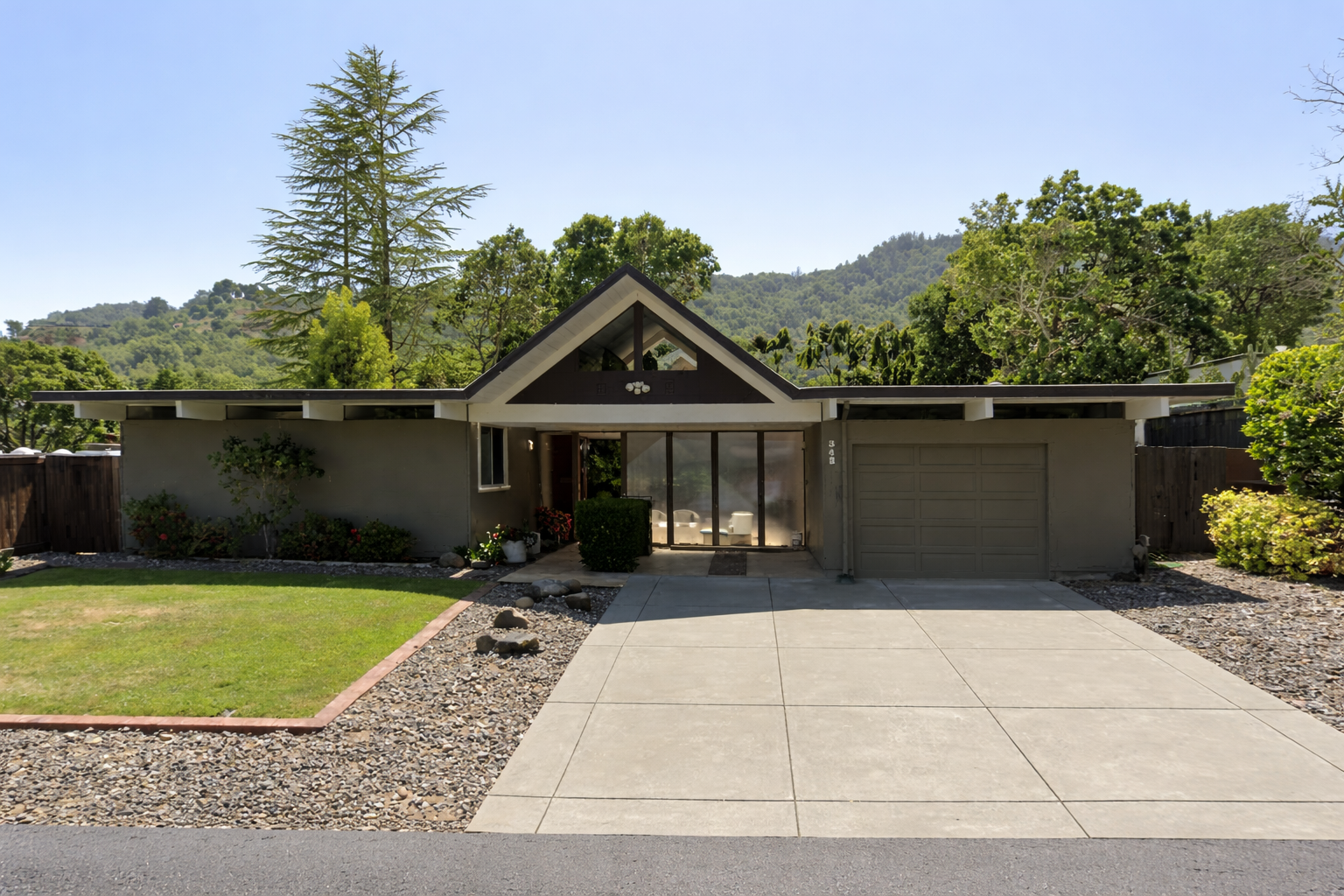
One of Marin County’s defining features is its unique architectural character, shaped largely by the mid-century modern movement and preserved by decades of conscientious homeowners. The housing stock in Marin is diverse yet distinct: you’ll find everything from iconic 1950s modernist tract homes to grand contemporary estates perched on hillsides. The unifying theme is a respect for design and an integration with the natural environment.
Mid-Century Modern Heritage: Marin arguably has one of the richest concentrations of mid-century modern homes in Northern California. The county’s residential architecture from the 1950s–1960s was heavily influenced by Eichler Homes and similar modernist developers, as detailed earlier. Key mid-century neighborhoods include:
Terra Linda (San Rafael): Marin’s largest Eichler community, split into Terra Linda North (~630 Eichlers built 1955–61) and Terra Linda South (220 Eichlers built 1958–60). These flat-roofed or low-gabled homes epitomize Eichler’s California Modern style – open courtyards, mahogany walls, and in-floor radiant heating. Notably, Terra Linda North also has ~200 “Alliance” homes from 1954 with similar modern aesthetics. Driving through Terra Linda, one sees row after row of mid-century post-and-beam silhouettes against the rolling hills – a veritable open-air museum of MCM design.
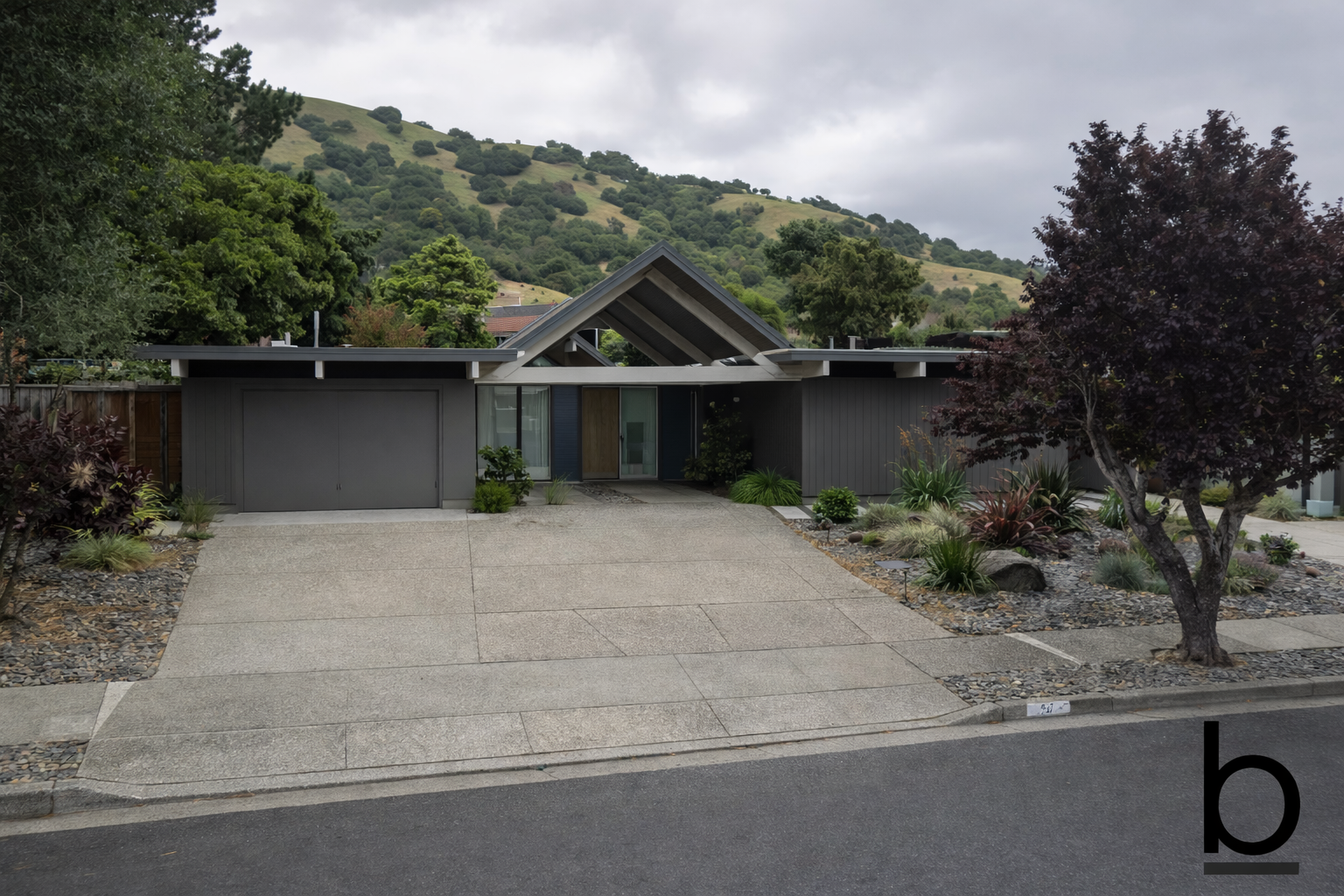
Lucas Valley and Marinwood (San Rafael): Often collectively referred to as Lucas Valley (ZIP 94903), this area boasts Claude Oakland-designed Eichlers from the 1960s. Upper Lucas Valley (also called Lucas Valley Estates) has larger Eichler models (3–5 bedrooms, some over 2,000 sq ft) built 1962–66, distinguished by their high A-frame roofs and atriums. The neighborhood’s picturesque streets (like Idylberry Road and Mount Shasta Dr.) and buried utility lines create a pristine mid-century ambiance. Lower Lucas Valley/Marinwood (built 1957–58) contains ~375 Eichlers known as the “Berry Patch” for its fruit-named streets (e.g., Appleberry, Huckleberry). These homes are slightly smaller and more modest than Upper Lucas, but equally cherished. Many have been sensitively updated by owners who “cherish architectural heritage,” sparking a wave of renovations that preserve original features. Lucas Valley’s Eichler tract (Upper + Lower) totals about 538 homes and remains one of the best-preserved mid-century neighborhoods in California.
Strawberry Point (Mill Valley/Tiburon): A tiny enclave of just 12 Eichler homes built in 1965 near Strawberry Circle. These are among the largest Eichlers ever built – some two-story, ~2,500+ sq ft, with towering glass walls looking out to the Bay. Because of their rarity and prime waterfront view location, Strawberry Eichlers are incredibly sought-after; they seldom hit the market and often command prices in the $2.5–3.5 million range. This tract exemplifies Eichler’s ability to adapt his style to a luxury context, combining mid-century ethos with upscale features.
Sleepy Hollow (San Anselmo): Another exclusive pocket – 15 Eichler homes built 1972–74 on Catskill Court and Katrina Lane. These late-model Eichlers were designed by Claude Oakland and are all single-story, spacious homes (4 or 5 bedrooms). They feature refinements like underground utilities and unique floor plans not seen elsewhere, as Eichler was innovating until the end. Sleepy Hollow’s Eichlers have “low turnover” and a tight-knit atmosphere, reflecting their status as prized heirlooms.
Novato’s Hidden MCM Tracts: As highlighted by CA-Modern/Eichler Network, Novato holds three lesser-known mid-century modern tracts: Lynwood Park, Orchard Park, and Ferris Gardens. These were not built by Eichler but often mistaken for his work. Lynwood Park (1954) was designed by Eichler’s architects, which explains its Eichler-like appearance. The homes have L-shaped layouts, glass on both sides of living areas, and even radiant heat – prompting some locals to call them “poor man’s Eichlers”. Meanwhile, Orchard Park and Ferris Gardens (also mid-’50s) were co-designed by Cliff May, featuring low-pitched ranch roofs and indoor-outdoor patios. Over the years, these Novato MCM homes were a bit “forgotten” and many were modestly altered, but a new generation of buyers is rediscovering them. As one new Lynwood Park homeowner put it, this is “one of the last affordable frontiers” for mid-century modern in Marin – offering MCM style at a relative bargain compared to Eichler tracts.
Beyond tract housing, Marin also contains numerous custom-built mid-century homes by noted architects such as Richard Neutra, William Wurster, and Charles Moore, especially in affluent communities. For instance, in Belvedere and Sausalito, it’s not uncommon to find stunning 1960s modernist one-offs with panoramic views, designed to client specifications. These custom homes, along with the Eichlers, contribute to Marin’s reputation as a mid-century modern haven. It’s worth noting that Marin’s modern homes tend to blend with nature – lots of redwood, stone, and glass, matching the county’s forests and ridgelines. This organic modernism is a hallmark of Marin design.
Other Predominant Styles: Not all Marin homes are mid-century modern, of course. There’s a rich tapestry of architectural styles across the county’s neighborhoods:
California Ranch & Traditional: Many houses from the 1950s–1970s are classic California ranch homes (single-story, gable roof, attached garage, large yard). These are prevalent in areas like Terra Linda (alongside Eichlers), Novato’s suburban tracts, and parts of Corte Madera and Tiburon. Ranch homes’ single-level layouts remain popular for their practicality. Marin’s ranches often have a mid-century vibe too, with open beam ceilings or picture windows. In older town centers (San Rafael’s Gerstle Park, downtown Larkspur), you’ll also find Craftsman bungalows and Victorian cottages dating to the early 1900s, lovingly maintained and often painted in cheerful colors. For example, San Rafael’s Dominican neighborhood is known for its mix of Craftsman and Mediterranean Revival homes on tree-lined streets.
Mediterranean and Spanish Influence: Thanks to California’s architectural heritage, some Marin neighborhoods feature Spanish Colonial Revival or Mediterranean-style homes. Terra Linda and Lucas Valley have a few streets of 1960s homes with terra-cotta roofs and arches (often built by builders competing with Eichler back in the day). In upscale hillside areas like Tiburon and Sausalito, luxury homes sometimes adopt an Italian villa style – stucco exteriors, balconies, and columned patios – to complement the riviera-like bay views.
Modern Contemporary: In recent decades, Marin has seen construction of large contemporary homes that incorporate modern design elements (though not mid-century). Especially from the 1990s onward, wealthier buyers in towns like Kentfield, Ross, and Mill Valley have built custom estates with cutting-edge architecture: think walls of glass, steel and wood exteriors, green roofs, and smart-home technology. Some of these are architecturally significant new builds by famous modern architects. Yet, even these contemporary homes often nod to mid-century principles – open floor plans, extensive glazing, integration with nature – essentially a 21st-century take on Eichler’s ethos. A notable trend is “modern farmhouse” style homes popping up in family-oriented areas like Kentfield and Novato, blending rustic charm with sleek lines for a design-forward feel.
Luxury Estates: Marin’s topography lends itself to secluded estates. In areas like Tiburon’s Paradise Cay, Belvedere Island, or Ross, you’ll find gated multi-acre estates featuring everything from classic Georgian mansions to ultra-modern compounds. For example, Belvedere’s waterfront is dotted with bespoke estates (one even has its own funicular). These luxury properties, often architect-designed, make up a small but significant portion of Marin’s housing – catering to CEOs, celebrities, and those seeking privacy. The Boyenga Team, with their focus on design-forward luxury, often highlights such properties in their marketing as examples of Marin’s high-end real estate options.
Noteworthy Builders and Developers: In Silicon Valley and the Peninsula, names like Joseph Eichler, John Mackay, Brown & Kaufman, Stern & Price, or Bahl are associated with mid-century tract developments. In Marin, Eichler is by far the dominant name for tract developments, but it’s worth noting a few others:
The Alliance Development Co. in Terra Linda (mentioned earlier) was notable for introducing contemporary tract homes to Marin just before Eichler. Though Alliance built only in that area, their homes are an important part of Marin’s mid-mod fabric.
Roy Brannigan was a local developer who built some mid-century homes in Mill Valley and Corte Madera in the 1950s, often more traditional ranchers.
Marin’s Custom Builders: In high-end communities, individual builders like Polsky Construction or Rempe Construction (active in the 1970s–1990s) built many custom homes. While not household names, they are respected locally for quality work on challenging hillside sites. Many modern remodels or new builds are by noted Bay Area firms (Butler Armsden, Pfau Architecture, etc.), which the design-conscious Marin buyer will recognize.
Interestingly, some South Bay mid-century builders did not operate in Marin – for example, Gavello or Stern & Pricebuilt Eichler-esque homes in Silicon Valley but Marin’s market was largely claimed by Eichler himself and a few local players. This makes Marin’s mid-century stock relatively cohesive and easier to identify by its Eichler lineage.
Housing Inventory Breakdown: As of the latest data, Marin County has about 126,000 housing units. The inventory skews towards single-family homes, reflecting Marin’s suburban nature and zoning preferences. Approximately 64% of all units are detached single-family houses – typically 1-2 story homes on their own lot. An additional ~7.6% are single-family attached (duplexes, townhouses), and the rest (around 25%) are multi-unit structures (apartments or condos) or other (mobile homes). In other words, roughly 70+% of Marin’s housing stock is single-family residences, a much higher proportion than dense urban counties. This aligns with Marin’s history of favoring low-density development; in fact, over 70% of Marin’s homes are single-family even though one-third of households are single-person, highlighting a potential mismatch but also the premium on space and privacy here.
Breaking it down by type: You have everything from condominium complexes (e.g., Smith Ranch Homes, a luxury 55+ condo community in San Rafael; or smaller condo clusters in Novato and Marin City), to rental apartments (mostly in downtown areas like San Rafael or older complexes from the 1960s–70s in Corte Madera, etc.). But Marin has far fewer large apartment buildings than other Bay Area regions – buildings over 50 units are only ~4% of the housing stock. Multi-family dwellings tend to be low-rise and spread out. This is partly due to historical resistance to big developments: as noted, Marin’s policies once “limited home building on large plots” and steered growth away from high-density projects. Thus, the typical Marin neighborhood is comprised of single-family homes, often on generous lot sizes (a quarter-acre or more is common in many towns).
Home Sizes and Features: Marin homes overall are spacious. The median home size is around 1,800 sq. ft., but many houses in upscale areas range 3,000–5,000 sq. ft or larger. Postwar tract homes (Eichlers, ranchers) originally were 1,200–1,600 sq. ft., though many have been expanded. The median home value is about $1.5 million (for owner-occupied units), reflecting both the size and desirability. Architectural features often include large yards or decks (outdoor living is big in Marin), swimming pools (especially in warmer micro-climates like Novato or San Rafael), and view windows – lots of homes capitalize on Marin’s vistas, be it Mt. Tam, the Bay, or rolling hills. There’s also a trend of green building in Marin: solar panels are common, and new construction often follows sustainable design principles (some homes are LEED certified).
Preservation vs. Renovation: Marin homeowners generally value architectural character. In mid-century enclaves, there’s a strong preservationist streak – for instance, many Eichler owners have kept or restored original elements like Philippine mahogany walls and globe lighting, knowing it adds both historic value and market value (Eichler enthusiasts will pay a premium for unmolested design). Entire businesses in Marin specialize in mid-century home restoration, and neighborhoods like Lucas Valley have guidelines to prevent unsympathetic alterations (no McMansions in place of Eichlers!). Conversely, in some parts of Marin, older homes have given way to modern rebuilds. For example, in Tiburon, small 1950s cottages have been torn down and replaced with 21st-century luxury homes as the market demanded. Marin’s design review boards often require that new homes or remodels fit the area’s aesthetic (which can mean keeping a low profile, natural colors, etc.). This results in a housing stock that, even when upgraded, remains visually harmonious with Marin’s environment and heritage.
In conclusion, Marin’s housing inventory is characterized by quality and character. Whether it’s a classic Eichler atrium home in San Rafael or a hillside contemporary in Mill Valley, Marin homes exude a sense of place. The mid-century modern legacy is a strong selling point, attracting buyers who appreciate design. At the same time, the prevalence of single-family homes on sizable lots speaks to the privacy and space that Marin residents enjoy. For prospective buyers, Marin offers choices from entry-level condos (though “entry-level” still often means $600k–$800k) to family-friendly ranch homes (~$1M+), all the way to showcase estates ($5M and up). It’s a diverse market, yet one with a consistent thread: an emphasis on architectural integrity, natural beauty, and a high standard of living manifested in the very homes themselves.
Real Estate Market Analysis
Marin County’s real estate market is robust, upscale, and often competitive, characterized by high demand and limited supply. Over the past few years, Marin has seen significant shifts – a whirlwind pandemic boom, a cooling off in 2022 as interest rates rose, and a resilient performance into 2024–2025. Below is a detailed analysis of home prices, market trends, and how Marin compares with neighboring areas:
Median Home Prices and Appreciation: Marin’s home prices are among the highest in California. As of mid-2025, the median sale price for a home in Marin County is around $1.4 million. This figure includes all property types; for single-family houses specifically, the median is higher (roughly in the $1.5–$1.7 million range, depending on the month). Marin’s median price reached a peak in early 2022 (during the pandemic-fueled buying frenzy) at or above ~$1.7–$1.8M. In fact, Q2 2022 saw record highs – median house prices around $1.89M – before the market corrected.
In 2023, as interest rates spiked above 6%, Marin’s median dipped about 7–10% from that peak. For example, Q2 2023 median sales price was $1.789M, down 10.6% year-over-year. One annual analysis noted Marin’s median price fell ~7.3% in 2023 compared to 2022. This pullback was modest and healthy, keeping prices well above pre-pandemic levels (for context, Marin’s median in 2019 was around $1.2M, so even after the dip, 2023 was still ~35-40% higher than 4 years prior). By 2024, the market stabilized – Marin actually saw slight appreciation in late 2024 into 2025. In August 2025, the median sold price was $1.395M, up 2% year-over-year, indicating a gentle recovery. The average sale price(which can be skewed by high-end sales) jumped even more, ~+17% in that period, suggesting renewed strength in the luxury segment.
Over the long term, Marin real estate has been a stellar investment. According to the FHFA house price index, Marin home values roughly doubled in the 2000s bubble, corrected in 2008-2011, and then climbed strongly through the 2010s and 2020s. A data point: between 1990 and 2021, Marin’s median house price increased about 350% (from around $360k to $1.62M). Even adjusting for inflation, that’s robust appreciation. The pandemic period (2020–2021) alone saw a surge – median price up ~20%+ in two years. Such appreciation reflects Marin’s desirability and the chronic undersupply of homes relative to high-income buyer demand.
Current Market Dynamics (2025): The Marin market in 2025 can be characterized as balanced leaning towards seller’s market, with some variability by price point. Inventory, while up from extreme lows, remains relatively tight. In August 2025, Marin had about 486 active listings on the market and a 3.2 months’ supply of inventory. A 3.2-month supply is below the 5–6 months that analysts consider a truly balanced market; it indicates that if no new listings came up, the current inventory would sell out in just over 3 months – a sign of ongoing demand outpacing supply. Indeed, that 3.2-month figure was the highest since early 2023, showing inventory has built up slightly, but it’s still a low absorption ratehistorically. During the 2021 boom, inventory often fell under 2 months in Marin, leading to intense bidding wars.
Market Velocity: Homes in Marin tend to sell quickly, especially those that are turnkey and priced right. In mid-2023, the average Days on Market (DOM) was astonishingly low – e.g., Q2 2023 saw an average DOM of just 14 days. That was up from around 9 days a year prior (hence a 55% increase, but 14 days is still incredibly fast). This means many homes were going into contract in one to two weeks. By 2025, with slightly more inventory and higher rates, DOM has lengthened but remains reasonable. August 2025 averaged 50 days on market for sold homes, essentially flat from 50 days the previous year. So we’ve gone from houses flying off in a week to now taking about 7 weeks on average. That 50-day average includes all properties; turnkey homes in hot neighborhoods still sell far faster (often in 1–3 weeks with multiple offers), whereas ultra-luxury $5M+ estates or uniquely located properties might take longer, skewing the average. Importantly, sellers on average received 96% of their original list price in late 2025, unchanged year-over-year – indicating that pricing power remains in sellers’ favor for desirable homes. Many listings still attract multiple offers and go over asking, particularly in the mid-market ($1M–$2M range) where buyer demand is fiercest.
Demand Patterns: Marin’s demand is fueled by a mix of local move-up buyers, San Francisco transplants, and incoming out-of-area buyers (often from Silicon Valley or out-of-state high earners seeking Bay Area lifestyle). Certain segments see especially high demand:
“Golden Triangle” Neighborhoods: Areas like Belvedere, Tiburon, Mill Valley, Corte Madera, and Larkspur (all southern Marin, close to San Francisco) have remained white-hot. In Q2 2023, these communities were cited as “beacons of resilience,” where well-prepared homes sold quickly despite market headwinds. Their appeal lies in commute convenience, views, and top schools. It’s common for a new listing in Mill Valley or Tiburon, if attractively priced, to receive several offers (sometimes including all-cash bids) and sell above asking. For instance, in mid-2023, many desirable properties were still seeing multiple offers and overbids – as Own Marin reported, turnkey homes in walkable locations “continue to sell quickly and with multiple offers”.
Luxury Segment: High-end homes (let’s say $3M and up in Marin) experienced a bit of a cooling in late 2022, but have since picked up. A report from 2024 noted that Marin’s luxury market (over $2M) had fewer sales, but the median price in that segment held around $2.75M, and by 2025 the top end was energized by renewed tech wealth. The average sold price jumping ~18% YOY by Aug 2025 suggests more high-end transactions (where one $10M sale can sway the average). Tech sector optimism, particularly with the surge in AI and venture capital in 2025, has “renewed energy in both San Francisco and Silicon Valley” that is “reaching housing markets across the Bay Area”, including Marin. The Boyenga Team has observed that tech-driven wealth remains one of the strongest demand drivers for Marin luxury homes, especially those with easy SF access. It’s not unusual now to see competitive bids on properties in the $4M–$5M range if they check all the boxes (views, design, location). For example, a recent listing in Lucas Valley (San Rafael) – a $6.85M estate on 4+ acres – sold within one week over asking, indicating that well-priced luxury offerings can move quickly when targeted to the right affluent buyers.
Entry-Level and Condos: Marin’s entry-level (by Marin standards) might be condos under $800k or small homes under $1M, which are relatively scarce. These often attract multiple bids from first-time buyers who want into Marin for the schools and lifestyle. With interest rates higher, some marginal buyers have stepped back, but the limited inventory in this tier keeps it competitive. Investors also show interest since Marin rents are high (a landlord can charge premium rents given low vacancy and high-income tenants). However, institutional investors have minimal presence in Marin single-family (virtually 0% per studies) – it’s mostly individuals.
Inventory and Supply Challenges: Marin’s supply of homes for sale has been constrained for years and remains so. New construction contributes very little (<0.5% annual stock growth). Many Marin homeowners are “locked in” by low property tax (Prop 13) and low mortgages, so they only sell if they have to or are trading locally. In 2022–2023, the phenomenon of rate lock-in (owners with sub-3% mortgages not wanting to sell and lose that rate) further strangled inventory. As a result, by early 2023 Marin saw record-low sales volume – Q1 2023 was notably slow, with a 30-year low in sales across some Bay Area markets. In Marin, 2022 sales were down ~22% from 2021, and 2023 was on track to be low as well. Realtors noted that while buyer demand existed, there simply were not enough listings. This dynamic favored sellers of the few available good homes, as multiple buyers would pounce when something hit the market.
Going into late 2023 and 2024, Marin saw a seasonal uptick each fall and spring (typical patterns: inventory rises August–October and Feb–June, with lulls in winter holidays and midsummer). The forecast was for another inventory spike in Fall 2023, but still historically low number of transactions. Indeed, agents have adjusted strategies, leveraging off-market networks and pre-marketing to drum up listings. The Boyenga Team has expertise in this, using Compass’s Private Exclusive platform to match sellers and buyers off-market when inventory is tight – an approach that has led to quiet sales above asking without MLS competition.
Outlook and Investment Perspective: The outlook for Marin real estate remains positive yet measured. Economists project Marin home values to remain stable or gently appreciating in the next few years, assuming interest rates stay in a moderate range. Marin’s fundamentals are rock-solid: limited land, highly desirable lifestyle, and wealthy demographics. These factors insulate the market from deep price declines. Even during the 2008 downturn, Marin prices dropped, but less severely and rebounded faster than many areas. Today, with Bay Area tech wealth back on the upswing (AI boom, etc.), Marin stands to benefit from increased high-end demand. Real estate here is seen as a long-term store of value. Many buyers plan to hold for decades, not flip, which adds stability.
One interesting comparison is Marin vs. its neighbors: Sonoma County (just north) offers more affordability – its median price was about $835,000 in 2023, roughly half of Marin’s. That gap underscores Marin’s premium. Some would-be Marin buyers have looked to Sonoma for value, but those are typically different lifestyle choices (Marin for SF commute and schools, Sonoma more rural or second-home vibe). San Francisco, on the other hand, had a median house price around $1.5M in 2023 (and condo ~$1.2M). After a 12% dip in SF’s median in 2023, Marin and SF are nearly on par median-wise. However, SF’s market is bifurcated (condos vs houses, city dynamics), whereas Marin’s is uniformly high for almost any decent property. Compared to Silicon Valley counties: Santa Clara County’s median is about $1.38M and San Mateo’s $1.61M as of early 2024. Marin’s median ~$1.4M sits among these, making it one of the top 5 most expensive counties in California. Only San Mateo, San Francisco, Santa Clara, and maybe Orange County are in the same tier, and Marin often outranks all but San Mateo in median price.
Within Marin, price differences by ZIP code are significant. For example, the 94920 ZIP (Belvedere/Tiburon) frequently has the highest median – often $3 million+ – thanks to concentrations of luxury estates. 94941 (Mill Valley) and 94939/94904 (Larkspur/Greenbrae/Kentfield) see medians well over $2M due to upscale family homes and limited supply. Meanwhile, 94947/94945 (Novato) are more moderate, with medians in the $1.0–1.2M range, as Novato offers more entry-level houses and a hotter climate that historically was slightly less in demand. Yet even Novato saw strong appreciation in recent years (e.g., some Novato neighborhoods increased ~10% in 2021 alone). First-time buyers priced out of Mill Valley often turn to San Rafael or Novato for relatively better value. San Rafael’s 94903 (Terra Linda/Lucas Valley) is an interesting mid-priced area; with all its Eichlers and good schools, the area commands medians around $1.3–1.5M, and homes there sell briskly if updated (MCM enthusiasts flock to these). The Eichler effect can be seen where updated Eichler homes sometimes fetch higher per-square-foot prices than larger conventional homes – a testament to the demand for design.
In terms of market velocity by price band: below $1.5M = very fast (many buyers, multiple offers), $1.5M–$3M = steady (still competitive, especially $2M-ish sweet spot for dual-income professional families), above $3M = more balanced (fewer buyers at this tier but also fewer listings; exceptional properties still move quickly). Properties that check all the boxes (remodeled, view, location) are scarce in any price range, so those often spark bidding wars regardless of list price. Conversely, homes with location or condition challenges might sit longer now that buyers have slightly more choice than in 2021.
Market Challenges and Opportunities: Marin’s market isn’t without its challenges. Affordability is a serious issue – few options exist for middle-class buyers or essential workers, raising questions about community diversity and workforce sustainability long-term. There’s also the potential impact of remote work normalization: if commuting is less of a constraint, Marin could see even more interest from people who previously needed to live in Silicon Valley or SF for work. On the flip side, if companies demand a return to office in Silicon Valley, Marin’s distance could pose an issue for daily commuters (though many would then simply rent a pied-à-terre in the city or endure a longer commute a few days a week).
From an investment perspective, Marin real estate historically yields strong appreciation rather than high rental cash flow. The average rent in Marin is extremely high (median ~ $4,300 for a house, and around $3,000 for a 2-bedroom apartment), but purchase prices are correspondingly huge, so rental yields are modest. Most investors buy here for appreciation and asset stability – Marin’s vacancy rates are low and tenant quality is high, making it a low-risk landlord environment if one can accept a 3-4% cap rate. Single-family zoning dominance means short-term rental potential is limited by local regulations, though some coastal areas (Stinson Beach, Dillon Beach just outside Marin) see vacation rentals.
Overall, Marin’s real estate market as of 2025 is healthy and poised for continued growth. It weathered the interest rate storm of 2022–2023 with only minor bruises and appears to be back on a gentle upward trajectory. Buyers remain eager, especially with the stock market recovery fueling down payments, and sellers remain confident (but need to price realistically; the overzealous pricing of mid-2022 has given way to more data-driven pricing). The Boyenga Team closely monitors these trends – for instance, noting that well-prepped, turnkey homes still garner multiple offers even in a slightly cooler market. Their strategy emphasizes making a home “show-ready” to command top dollar in this landscape where buyers will pay a premium for move-in-ready, beautifully presented properties.
In comparison to neighboring counties, Marin offers a luxury haven with resilient values – it’s often said Marin real estate “holds value like blue-chip stock” in downturns (limited supply, unlimited views!). A Bay Area market cycle analysis would show Marin’s peaks and troughs less volatile than, say, San Francisco condos or Silicon Valley tract homes. As long as Marin maintains its allure – excellent schools, safety, natural beauty, and proximity to urban centers – its real estate will remain a sound long-term investment and a coveted asset. For buyers and investors eyeing Marin, the key is understanding the micro-markets (each town’s nuances) and being prepared to act decisively when the right opportunity arises, given the perennial inventory squeeze.
Case Studies and Success Stories
To illustrate Marin’s real estate landscape in action, let’s explore a few notable case studies of home sales – with a focus on mid-century modern properties – and highlight strategies that led to success. These examples, drawn from the Boyenga Team’s experience and recent market activity, showcase how savvy preparation and innovative tactics can achieve outstanding results for both sellers and buyers:
Case Study 1: Off-Market Eichler Sale Above Asking – San Rafael, 2023. The Boyenga Team represented the sellers of an impeccably preserved Eichler home in Lucas Valley. Eichlers in this area are highly prized, and the sellers were interested in a discreet transaction without the frenzy of public open houses. Leveraging their Compass affiliation, the Boyenga Team listed the property as a “Private Exclusive” – marketing it quietly through Compass’s internal network and their database of Eichler enthusiasts. Within 48 hours, they identified an out-of-state buyer (a tech executive relocating from NYC, drawn by mid-century design) and arranged a private showing. The buyer fell in love with the home’s authentic mahogany paneling and indoor/outdoor atrium. Thanks to the Boyenga Team’s matchmaking, the home went into contract entirely off-market in just 2 days, and sold for above the asking price. This success demonstrated how the Boyengas’ exclusive network and marketing platform can create a bidding-war atmosphere even off-market. It also highlighted their expertise in Eichler properties – they knew exactly how to showcase the home’s architectural pedigree to the right audience. The sellers were thrilled to achieve a top-dollar sale ($X over list) with minimal disruption, and the buyer was delighted to secure a rare Marin Eichler without battling in an open competition.
Case Study 2: Record-Breaking Modern Ranch Sale with Make-Ready Strategy – Novato, 2022. In a “move-up” neighborhood of Novato, the Boyenga Team listed a 4-bedroom 1970s ranch home that had great bones but was dated. To maximize value, they implemented their concierge strategy: coordinating strategic renovations and staging upfront. Using Compass Concierge (an exclusive program that fronts the cost of home improvements with no fees), they oversaw new interior paint in chic neutral tones, refinished the hardwood floors, updated light fixtures, and landscaped the yard for better curb appeal. They also brought in mid-century modern staging furniture to accentuate the home’s vaulted ceilings and open layout, appealing to the design-conscious buyer. The result was transformational – the home looked magazine-worthy. The Boyenga Team’s pricing expertise kicked in, as they deliberately listed the home slightly below the projected value to generate buzz. The plan worked: within one week on market, over 80 groups toured the open houses. The home received 7 offers, ultimately selling to a young family from San Francisco who stretched their budget to win the house. The final sale price was 15% over the asking and set a neighborhood record for a non-Eichler home. The key to this success was the Boyenga Team’s end-to-end service: identifying high-ROI upgrades, leveraging their Compass partnership to fund improvements, and employing aggressive digital marketing to drive foot traffic. This case exemplifies how the Boyengas marry design-forward presentation with data-driven pricing to deliver exceptional outcomes (in this case, a $XXX,000 above asking sale and a very happy seller).
Case Study 3: Tech Buyer’s Dream Home Secured Through Pre-emptive Offer – Mill Valley, 2025. A couple working in Big Tech, armed with a healthy equity windfall, had their hearts set on a mid-century modern home in Mill Valley – a tough order given low inventory. When a 1965 architect-designed home (not an Eichler, but a custom modern gem with panoramic views) was listed, the Boyenga Team knew competition would be fierce. Drawing on their market intel and relationships, they got their clients in to see the home on Day 1 and closely communicated with the listing agent (hinting at the strength of their buyers). The couple, coached by the Boyengas, made a bold pre-emptive offer within 24 hours – well above asking, with no contingencies and a flexible rent-back for the seller. To sweeten it, the Boyenga Team presented not just a price, but also a personal letter and a fully underwritten loan approval from Compass’s lending partner, instilling confidence in a smooth close. The sellers, impressed by the organization and commitment, accepted this pre-market offer, canceling the planned open house. While the price was record-setting for that subdivision, the buyers were elated to avoid a bidding war and secure their dream mid-century home. This success story underscores the Boyenga Team’s advocacy for buyers – by being proactive, strategic, and fast, they helped their clients win in a highly competitive situation. It also highlights their deep understanding of Marin’s mid-mod homes; they identified the hidden value (the home had an unadvertised ADU and expansion potential) and advised their clients on a strong yet justified offering price.
Each of these cases reflects some of the Boyenga Team’s signature strategies:
Off-market networking and Private Exclusives to make matches that others can’t.
Compass Concierge and staging to elevate a property’s appeal for maximum return.
Data-driven negotiation and timing (knowing when a pre-emptive strike can work, when to list low vs. high, etc.).
Mid-century modern specialization, enabling them to market and value these unique properties better than anyone.
In all, sellers who worked with the Boyengas achieved faster sales and higher prices than they thought possible, and buyers who partnered with them often beat the odds in Marin’s tight market. These success stories reinforce why the Boyenga Team has a proven track record in Marin and Silicon Valley alike – they combine traditional hustle with next-gen tools to create win-win outcomes.
The Boyenga Team Advantage
In the realm of Bay Area real estate – especially for mid-century modern and luxury homes – Eric and Janelle Boyenga have emerged as industry leaders by embracing innovation without losing the personal touch. Known as “Property Nerds” for their data-driven approach, the Boyenga Team delivers a unique blend of market savvy, architectural expertise, and cutting-edge technology to benefit their clients. Here’s what sets them apart:
The Boyenga Team are Silicon Valley real estate experts: With over 20 years in the business and as founding partners of Compass Silicon Valley, Eric and Janelle Boyenga have deep roots in the region. They’ve built a top-producing team that intimately understands the dynamics of tech-driven markets – from San Jose and Palo Alto up through the Peninsula and into Marin. This broad coverage is crucial, as many buyers and sellers make moves between Silicon Valley, San Francisco, and Marin. The Boyengas leverage their Silicon Valley insight (where they’ve been ranked among the top 100 Realtors nationally) to inform strategies in Marin’s market, which increasingly intersects with tech wealth migration. Being Silicon Valley experts means they’re adept at serving high-profile, high-net-worth clients (think startup founders or Google executives), negotiating with precision and discretion. Their affiliation with Compass – a technology-forward brokerage – further amplifies their expertise, giving clients access to proprietary market analytics, the latest sales data, and a seamless digital transaction platform.
The Boyenga Team are Eichler and mid-century modern specialists: Few agents can claim a true specializationin architectural homes; the Boyenga Team has not only claimed it, but earned it. They have a genuine passion for Eichler homes and mid-century modern design – a passion that translates into results. Eric and Janelle have personally restored mid-century homes, contributed articles to Eichler Network, and even run dedicated websites like EichlerForSale.com. As noted in the Eichler Network Realtor Directory, they offer “persistent and aggressive Eichler marketing and the best web exposure in Silicon Valley”. In practice, this means if you’re selling a mid-century home, the Boyengas already have a rolodex of architects, historians, and enthusiast buyers to tap into. They highlight the unique features that make these homes special (post-and-beam construction, original details) and can often secure a premium from buyers who appreciate the pedigree. Conversely, for buyers seeking that perfect MCM gem, the Boyenga Team often knows about “off-market” Eichlers or underrated neighborhoods (they might guide a buyer to, say, Lucas Valley in Marin or Rancho San Miguel in Walnut Creek as “hidden Eichler gems”). Their marketing for mid-century homes is unparalleled – they create storyboards of the home’s history, use twilight photography to capture the vibe, and advertise in niche channels where design-oriented buyers lurk. This specialization has earned them a reputation as the go-to agents for Eichler and architectural homes in the Bay Area.
The Boyenga Team are leaders in luxury, design-forward real estate: Beyond mid-century niches, the Boyenga Team excels in the luxury market, particularly properties that boast unique design or high-end renovations. They understand that selling a multi-million-dollar home requires white-glove service and global reach. As part of Compass, they tap into an international network of 340,000+ agents (post-merger with Anywhere) to connect luxury listings with qualified buyers around the world. Their marketing arsenal for luxury homes includes bespoke property websites, cinematic video tours (often with aerial drone footage of Marin’s stunning landscape), virtual 3D staging, and targeted digital advertising to cosmopolitan audiences in New York, London, and Asia. The Boyengas are also innovators – early adopters of tools like Compass Collections (a curated Pinterest-like platform for buyers) and AI-driven analytics to identify buyer trends. For example, their team uses Compass’s AI to spot where potential luxury buyers are coming from and what features they search for, then tailors the marketing narrative accordingly. Being leaders in design-forward real estate also means the Boyenga Team appreciates architecture and quality: they frequently collaborate with interior designers and architects to consult on how to best present a home (whether it’s mid-century modern, contemporary, or a classic estate). This eye for design helps them engineer value – often advising on modest tweaks that can significantly boost appeal (such as updating a lighting scheme or repurposing a space as a home office/gym to meet post-2020 lifestyle needs). Clients benefit from this nuanced approach; the Boyengas don’t just list a property, they curate an experience around it, showcasing an aspirational lifestyle that luxury buyers desire.
Next-Gen Technology and Data-Driven Strategy: Nicknamed #NextGenAgent by industry peers, the Boyenga Team embraces technology at every step. They use real-time market data to guide pricing – for instance, employing Compass’s AI-powered Comparative Market Analysis tool that can identify mid-century comps beyond the immediate neighborhood. This ensures sellers don’t leave money on the table and buyers don’t overpay. Their data-driven approach was evident in the Compass + Anywhere merger insights: with newfound access to nationwide data, the Boyengas can now benchmark Marin’s Eichler sales against modernist sales in L.A. or even beyond, quantifying the “architectural premium” accurately. The team’s use of predictive analytics can even anticipate where the next buyer might come from – for example, spotting a trend of tech professionals moving from Silicon Valley to Marin for more space (something that indeed happened during the pandemic). By staying ahead of such trends, they advise clients on when to list or what upgrades to invest in. It’s a marriage of art and science: the art of staging and storytelling with the science of market stats and behavioral analytics.
Unmatched Local Knowledge and Network: While technology is great, real estate is still a people business. The Boyenga Team has built an extensive network across San Jose, Silicon Valley, and up through Marin. They frequently collaborate with other top agents (as evidenced by their referrals and joint efforts via Compass’s network). In Marin specifically, they have partnerships – for example, they might team up with a local stager who knows Marin’s aesthetic or co-host Eichler open house tours with designers to draw crowds. As active members in the community (Eric and Janelle have been involved in local philanthropic events and real estate boards), they often get early intel on upcoming listings or buyer needs. This insider knowledge gives their clients a leg up. Their negotiation skills are honed from hundreds of deals – the Boyengas are persistent but professional, known for “leveraging the laws of supply and demand in your favor,” as Eichler Network put it. Perhaps one of the strongest testaments to their local prowess is client testimonials: many note how the Boyenga Team engineered multiple offers or secured over-asking sales even in challenging markets, or how they found an off-market home that was perfect when nothing was publicly available. The trust they’ve earned translates into a steady stream of repeat and referral business. They’re not just salespeople; they often become long-term real estate advisors for families, helping with everything from the first starter home to subsequent trades and investment properties.
In summary, the Boyenga Team advantage lies in their ability to seamlessly blend high-tech tools with high-touch service. They are equally comfortable analyzing MLS absorption rates as they are discussing the merits of an Eichler atrium or a LEED-certified new build. This comprehensive approach is particularly beneficial in San Jose’s finer communities and Marin’s luxury enclaves, where clients expect both sophisticated strategy and personalized attention. By positioning themselves at the nexus of Silicon Valley innovation and classic real estate practice, the Boyengas have created a powerhouse team. They ensure that whether a client is buying a mid-century modern gem in Lucas Valley or selling a luxury estate in Tiburon, they receive next-generation real estate service backed by a proven track record. And ultimately, that’s the Boyenga promise: to deliver results that exceed expectations, powered by expertise in the very niches that define Bay Area real estate.
Contact Us and Begin Your Mid Mod Journey Today!
Boyenga Team + Compass Eric & Janelle Boyenga 📞 Call / Text : 408-373-1660 📧 Email : MidMods@Boyenga.com 🌐 www.BoyengaTeam.com / www.EichlerHomesForSale.com DRE #01254724 / #01254725