
Mid-Mod Materials & Craftsmanship
Mid-century modern design is often described through its silhouettes — low rooflines, open floor plans, dramatic glass walls — but its true soul lives in its materials. The beauty of mid-mod architecture is not decorative. It is structural. It is tactile. It is honest.
This movement was never about excess. It was about restraint, integrity, and the belief that materials themselves could create emotion. When done properly, craftsmanship becomes quiet — but unmistakable.
The Warmth of Wood
In a true mid-century home, wood is not an accent — it is architecture.
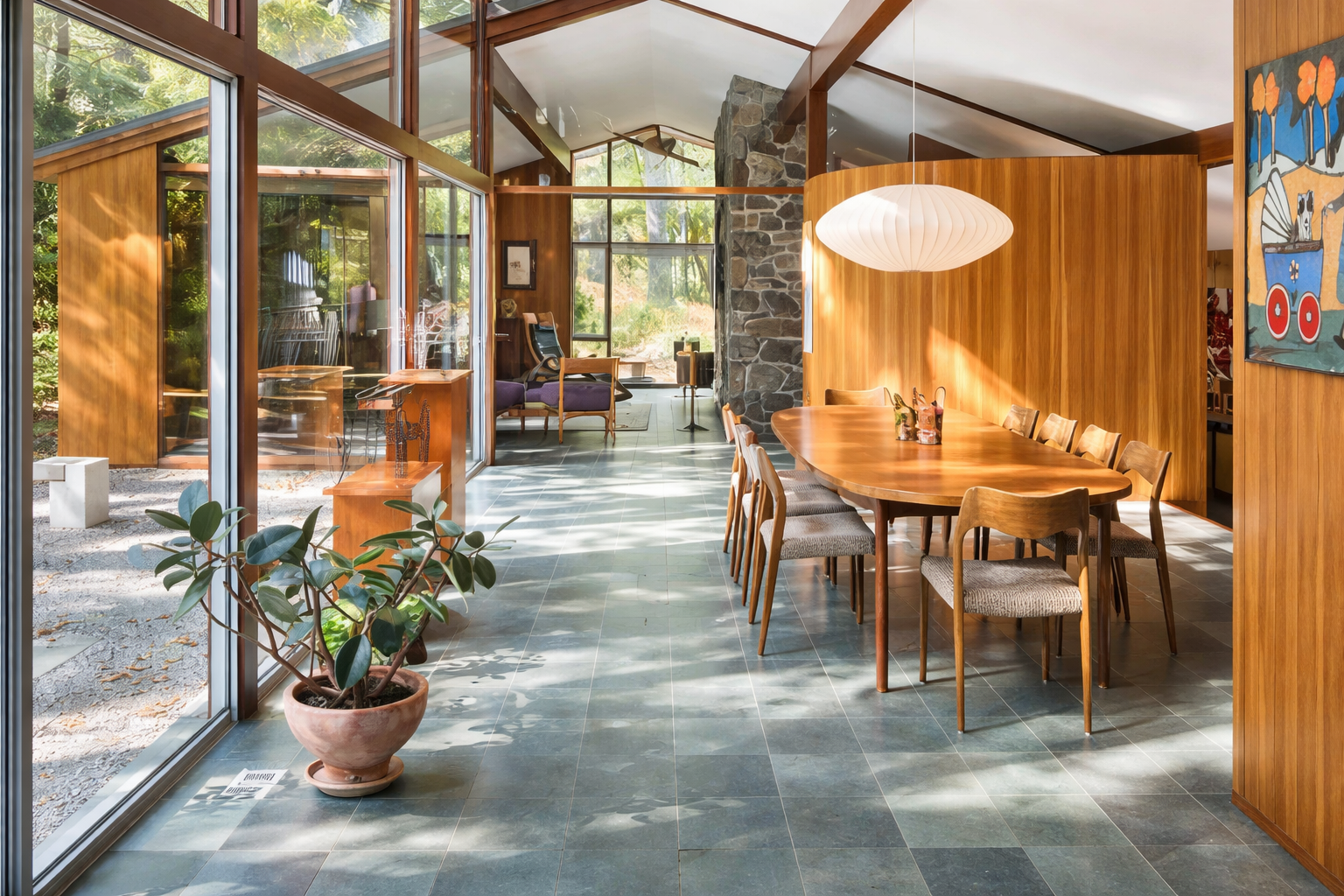
Walnut paneling wraps walls in warmth. Teak cabinetry integrates seamlessly into living spaces. Oak beams stretch across ceilings, left exposed not just for structure but for rhythm and visual grounding. Even room dividers were often crafted from vertical wood slats, creating privacy without sacrificing openness.
The grain remains visible. The joinery is intentional. Nothing is hidden behind layers of ornamentation. Wood ages gracefully, developing a patina that deepens with time. It softens light. It absorbs sound. It makes even expansive, open spaces feel intimate.
This is warmth without clutter.
Stone & Brick as Anchors
If wood brings warmth, stone and brick bring permanence.
A floor-to-ceiling stone fireplace becomes the emotional center of the home. Brick feature walls create contrast against expansive glass. Hearths are broad and grounded, designed as gathering spaces rather than decorative elements.
These materials were chosen for their texture, weight, and authenticity. You can feel their presence. They connect the interior to the landscape beyond — desert rock, forest stone, coastal terrain — grounding modernism in nature rather than separating it from it.
Over decades, these surfaces do not fade; they evolve. Edges soften. Tones deepen. The home becomes more itself with time.
Glass as Architecture
Perhaps no material defines mid-century modern more than glass.
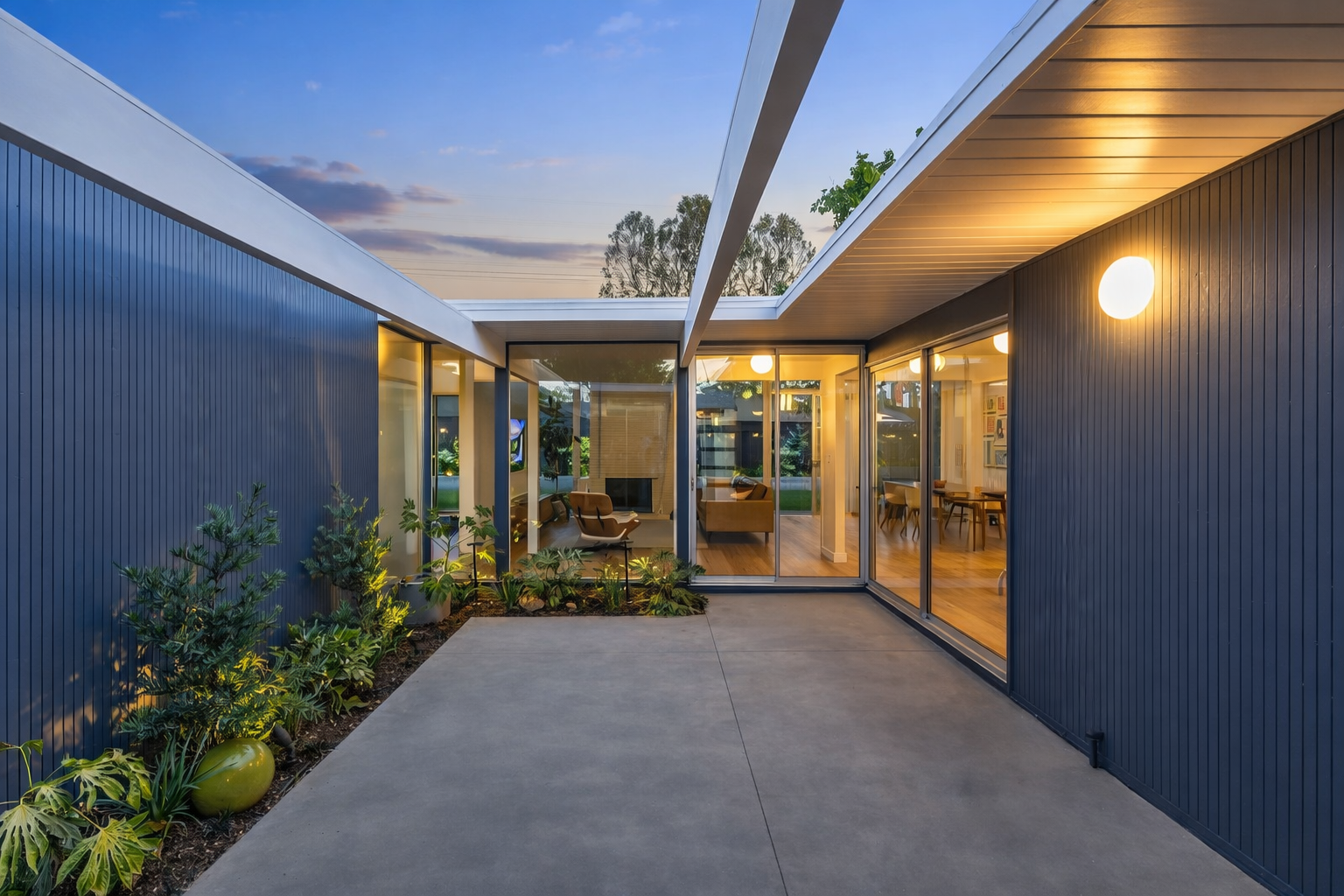
Expansive floor-to-ceiling windows dissolve the boundary between indoors and outdoors. Sliding glass walls open entire living spaces to patios and gardens. Atriums bring sky and greenery into the heart of the home.
Steel frames and minimal mullions keep sightlines clean. Structure becomes elegant rather than concealed. The result is transparency — a feeling of freedom and continuity.
Light is not merely allowed inside; it is invited to shape the experience of the home. Morning sun casts long lines across hardwood floors. Evening light warms brick and stone. The architecture becomes a canvas for the natural world.
Precision in the Details
True craftsmanship reveals itself in what many never consciously notice.
Custom millwork is built into the architecture — not added later. Cabinetry aligns precisely with wall planes. Shelving appears to float. Hardware is minimal and often concealed. Staircases seem suspended in space, engineered with exacting balance.
Every corner meets with intention. Every surface transitions with clarity.
Mid-mod homes were often designed holistically, with architects and craftsmen collaborating closely. The result is cohesion — a home where materials, layout, and structure feel inseparable.
The Philosophy of Honest Materials
At its core, mid-century craftsmanship rests on a simple principle: materials should be what they are.
Wood should look like wood.
Concrete should feel like concrete.
Steel should express strength.
Glass should remain transparent.
There is no artificial veneer masking something else beneath. No decorative flourishes competing for attention. Instead, there is confidence — a belief that quality and proportion alone are enough.
This honesty creates a timelessness that trends cannot replicate.
Built to Endure
Many mid-century homes stand today not just because of their design, but because of their construction. Solid hardwoods. Structural steel. Hand-laid masonry. Thoughtful integration of materials that were meant to last.
Unlike fast-finish construction, these homes were crafted with longevity in mind. The aging process enhances rather than diminishes them. The patina of wood deepens. Stone grows richer. Brick settles into character.
They do not chase relevance — they simply endure.
Why Craftsmanship Still Matters
In an era dominated by speed and surface aesthetics, mid-century materials remind us of something foundational: beauty is built, not applied.
There is a quiet luxury in weight.
A quiet confidence in simplicity.
A quiet strength in precision.
Mid-mod design is not nostalgic. It is enduring because it was always rooted in craftsmanship. And craftsmanship, when done right, never goes out of style.
The Boyenga Team: Property Nerds & Eichler Experts
For those who truly understand mid-century modern homes — especially Eichlers — the difference is in the details. And few understand those details like the The Boyenga Team.
Self-described “property nerds,” the Boyenga Team approaches mid-mod homes not just as listings, but as living architectural case studies. Their deep appreciation for design, materials, and structural integrity goes far beyond surface-level aesthetics. They understand post-and-beam construction. They recognize the value of original mahogany paneling. They can spot authentic globe lighting, original slab heating systems, and period-correct details at a glance.
When it comes to Eichlers — the iconic homes developed by Joseph Eichler — expertise matters. Eichler homes are distinct in their atriums, floor-to-ceiling glass, radiant slab floors, and indoor-outdoor flow. They require nuanced knowledge when buying, selling, restoring, or modernizing. Not every agent understands their construction methods, material sensitivities, or architectural significance. The Boyenga Team does.
Their experience spans decades of representing mid-century modern properties throughout Silicon Valley and the greater Bay Area. They understand what purists value, what modern buyers prioritize, and how to protect the architectural integrity of these homes while positioning them competitively in today’s market.
But beyond experience, what truly sets them apart is enthusiasm. They genuinely love these homes. They study them. They document them. They advocate for their preservation. Their passion is evident in the way they market properties — highlighting craftsmanship, architectural lineage, and historical context rather than simply square footage and finishes.
In a market where mid-century modern has become a trend, the Boyenga Team remains rooted in authenticity. They understand that an Eichler isn’t just a house — it’s a design philosophy. It’s a lifestyle built around light, openness, and material honesty.
And for buyers and sellers who value those qualities, working with true specialists makes all the difference.