
The Architectural Premium: Strategic Value and Socioeconomic Dynamics of San Rafael’s Mid-Century Modern Enclaves
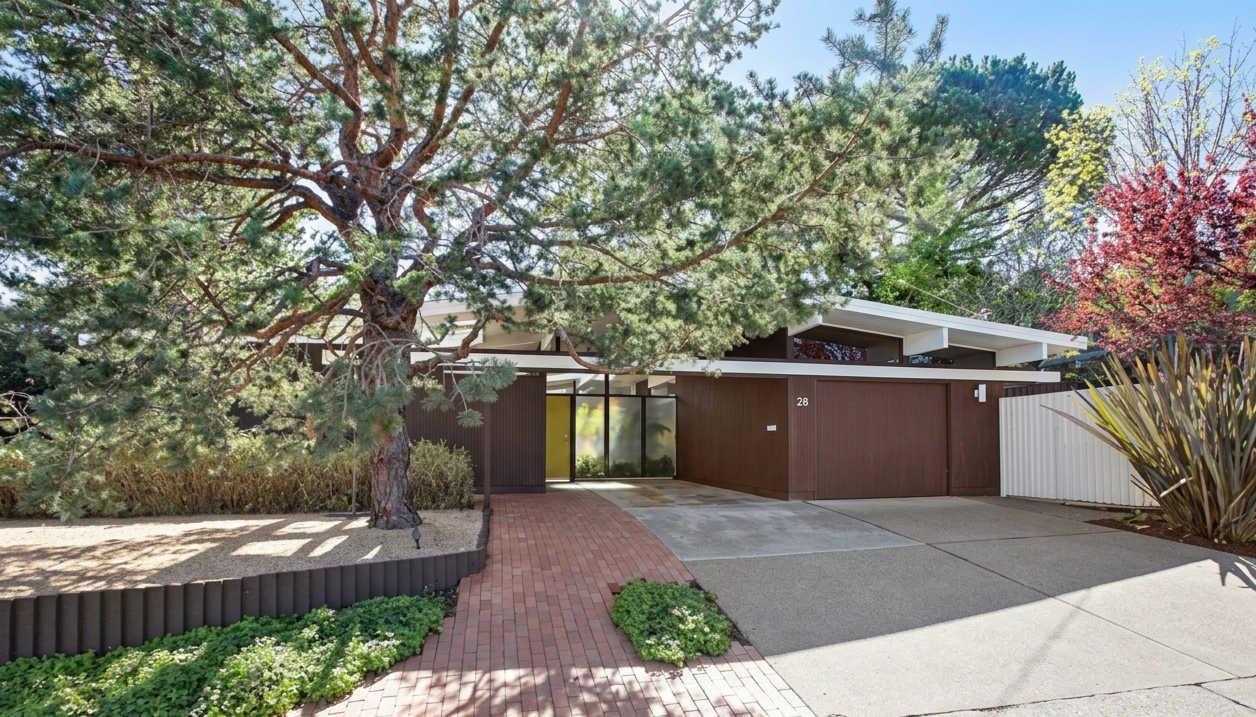
The intersection of modernist architectural integrity and contemporary real estate valuation has created a unique asset class within the San Francisco Bay Area: the mid-century modern residential neighborhood. In San Rafael, California, this phenomenon is most acutely observed in the legacy developments of Joseph Eichler, where the "California Modern" aesthetic has transitioned from a mid-century suburban experiment into a high-performance investment vehicle. As the global economy increasingly values "lifestyle assets"—properties that offer both functional utility and cultural resonance—the neighborhoods of Terra Linda and Lucas Valley have emerged as primary case studies for architectural capital appreciation.
In navigating this complex landscape, the role of specialized representation becomes paramount. The Boyenga Team are Silicon Valley real estate experts who have pioneered a data-driven approach to architectural sales. Recognized globally as Eichler and mid-century modern specialists, the team—led by Eric and Janelle Boyenga—redefines the traditional brokerage model through their "Property Nerd" philosophy. As leaders in luxury, design-forward real estate, their strategic integration of technological innovation and architectural scholarship provides a blueprint for value maximization in Marin County’s most prestigious modernist tracts.
Historical Overview: The Evolution of North San Rafael
The structural identity of North San Rafael is a direct consequence of a century-long transition from indigenous stewardship to visionary industrial-era development. The narrative of these lands is one of intentional transformation, where early agricultural patterns provided the spatial framework for Joseph Eichler’s master-planned communities.
Indigenous Foundations and the Mexican Rancho Era
Before the arrival of European settlers, the region was home to the Coast Miwok, who established small, sustainable communities in the Santa Margarita and Las Gallinas valleys. These inhabitants relied on the fertile soil and local streams, practicing land management that fostered a balance with the natural environment. Archaeological findings, including tools and ancient settlements, indicate a deep, thousand-year connection to the topography that would later define the low-slung profiles of modernist homes.
In 1817, Spanish missionaries established Mission San Rafael Arcangel as a hospital, marking the beginning of organized European colonial influence. Following Mexican independence, large land grants—known as ranchos—were awarded to influential individuals. In 1844, Timothy Murphy (Don Timoteo Murphy), the administrator of the mission, received the 21,679-acre Rancho San Pedro, Santa Margarita y las Gallinas. Murphy’s nephew, John Lucas, inherited a 7,600-acre portion that encompasses what is now Lucas Valley.
The Industrialization of the Valley: From Dairy to Design
By the late 19th century, the landscape shifted toward cattle ranching and dairy production. In 1880, the Marin County Board of Supervisors established a county farm on land purchased from John Lucas to care for the indigent elderly, introducing institutional infrastructure to the valley. In 1922, Frank Patrick Grady acquired 2,200 acres to found the Lucas Valley Dairy, an operation that flourished during an era when Marin County supported over 30,000 dairy cows.
The post-World War II housing shortage and the burgeoning middle class provided the catalyst for Joseph Eichler’s entry into the Marin market. Eichler, who founded Eichler Homes, Inc. in 1949, was inspired by Frank Lloyd Wright’s Usonian vision: affordable, high-design homes that emphasized an "inside-out" relationship with nature. Between 1955 and 1966, Eichler’s company developed approximately 900 homes in San Rafael, creating a contiguous corridor of modernist architecture that remains largely intact today.
Terra Linda North (1955–1961)
Architect: Anshen & Allen
Significance: Eichler’s first major Marin project; includes approximately 630 homes.
Terra Linda South (1958–1960)
Architects: Jones + Emmons; Anshen & Allen
Significance: Designed for commuters; 220 homes near the ferry terminal.
Lower Lucas Valley (1957–1958)
Architects: Jones + Emmons; Anshen & Allen
Significance: Known as the “Berry Patch”; 375 homes with a strong preservation culture.
Upper Lucas Valley (1962–1967)
Architects: Claude Oakland; Jones + Emmons
Significance: Crowning phase; 435 homes; integrated open space and buried utilities.
The preservation of these tracts was not accidental. In the 1960s, residents of Upper Lucas Valley organized the Lucas Valley Homeowners Association (LVHA) to combat encroaching development and ensure fire protection. In a landmark decision, the LVHA purchased adjacent open space and donated it to the county, guaranteeing that the hillsides surrounding the Eichler homes would remain undeveloped in perpetuity.
Demographic and Socioeconomic Profile: The Modernist Cohort
The current demographic landscape of San Rafael—particularly within the 94903 ZIP code—is characterized by a high-income, highly educated population that values architectural authenticity and environmental integration. The transition of these neighborhoods from middle-class tracts to luxury enclaves mirrors the broader economic shifts in the Bay Area.
Population Dynamics and Economic Stature
As of 2024, San Rafael’s population is estimated at 59,961, with a median age of 43.5 years. This mature age profile reflects a “move-up” market, where buyers often possess significant home equity and are seeking long-term stability.
Economic indicators underscore the area’s strong purchasing power. Median household income stands at approximately $119,435—significantly higher than the national average. Educational attainment is also elevated, with roughly 49.7% to 52.05% of residents holding a bachelor’s degree or higher, signaling clear professional-class dominance. High-earning households are common: about 26% of households earn more than $200,000 annually, which is roughly 36% higher than the California average. Meanwhile, unemployment remains low at approximately 3.8% (as of December 2025), reflecting resilience driven by technology and service sectors.
Workforce concentration further reinforces the area’s economic profile. Major employment clusters include Professional, Scientific, and Technical Services (4,567 jobs) and Retail (4,545 jobs). This technical talent base has fostered a design-literate buyer pool that views Eichler homes not merely as residences but as structural embodiments of mid-century optimism.
Ethnic Diversity and Cultural Shifts
While San Rafael maintains a traditional demographic core—approximately 51.2% White, non-Hispanic—the city has experienced meaningful diversification. Hispanic or Latino residents now comprise about 35.5% of the population, while Asian residents account for roughly 4.9% to 5.1%. A substantial foreign-born population (28.3%) supports the vibrant culinary and cultural energy of the Fourth Street corridor.
The region has also benefited from “tech-driven migration.” As Silicon Valley professionals search northward for larger lots and better price-per-square-foot value, San Rafael has emerged as a primary destination. This influx has produced what can be described as preservationist gentrification, with new homeowners investing heavily in restorative construction and often partnering with specialists like the Boyenga Team to ensure modern upgrades respect original post-and-beam architecture.
School Districts and the Education Landscape: The Equity Anchor
In Marin County’s high-stakes real estate environment, school district performance remains one of the most reliable predictors of long-term property value stability. San Rafael is served by two primary public systems, with the Eichler neighborhoods positioned squarely within the highly sought-after Miller Creek School District.
Miller Creek School District (North San Rafael)
The Miller Creek School District (formerly the Dixie School District) consistently ranks among the top K-8 districts in Marin County. Its boundaries closely align with the Terra Linda and Lucas Valley Eichler tracts, creating a powerful school-home value loop.
Academically, the district maintains an overall “A-” grade on Niche. Approximately 59% of students demonstrate math proficiency and 69% demonstrate reading proficiency, with standout campuses such as Miller Creek Middle School reaching reading proficiency near 73%.
Financially, the district performs efficiently despite receiving only about $12,338 per student—the second-lowest funding level in Marin County. Parent satisfaction is notably strong, with elementary families responding positively to connection and respect indicators 93% of the time.
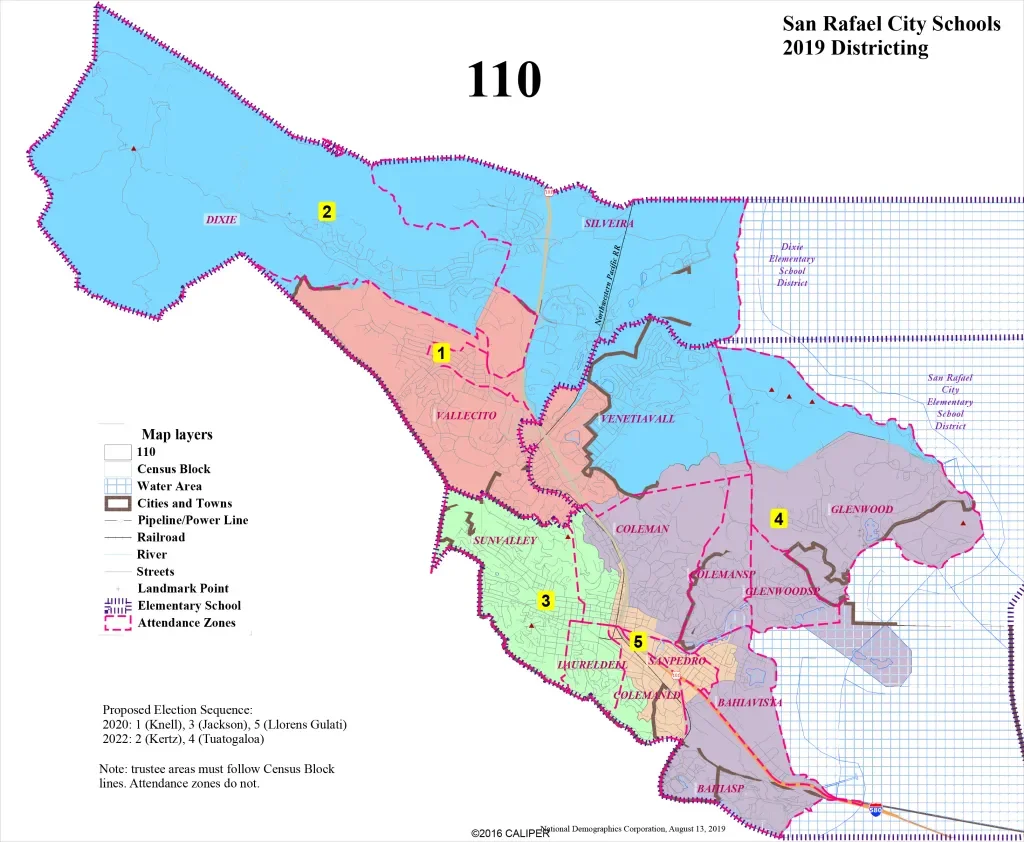
Key feeder schools further anchor neighborhood demand. Lucas Valley Elementary, serving the Upper Lucas Valley enclave, holds an “A-” rating and maintains a 24:1 student-teacher ratio. Mary E. Silveira Elementary is widely recognized for its inclusive environment and strong community engagement. Vallecito Elementary, located in Terra Linda, sustains high academic standards alongside a distinctive “village” atmosphere.
Secondary and Private Options
After eighth grade, most students matriculate into the San Rafael City High School District, typically attending either Terra Linda High School or San Rafael High School. Private education also plays a meaningful role locally, with 15 private schools and one charter school offering alternative pathways.
Higher-education proximity enhances the area’s intellectual appeal. Dominican University of California and the Ali Akbar College of Music contribute academic prestige and attract educators, researchers, and culturally engaged families.
Neighborhood Attractions and Lifestyle: The “In-Town” Sanctuary
San Rafael delivers a rare “village” lifestyle that balances suburban calm with urban sophistication—especially within North San Rafael’s 94903 ZIP code, where architecture, nature, and commerce intersect.
Parks, Trails, and Environmental Assets
Immediate access to open space defines the Terra Linda and Lucas Valley lifestyle. China Camp State Park offers hiking and cycling trails along with waterfront recreation such as sailing and windsurfing. Surrounding open-space preserves provide daily outdoor opportunities that reinforce the area’s active culture. McNears Beach County Park remains a popular destination for fishing, swimming, and picnicking along San Pablo Bay.
Dining, Retail, and Cultural Landmarks
Downtown’s Fourth Street corridor functions as San Rafael’s cultural core, while the Northgate area is undergoing a transformative evolution. The Northgate Town Square redevelopment is converting the former mall into an open-air main street concept featuring approximately 1,422 residential units, refreshed retail, and community gathering amenities including a town square and public library. Phase 1—focused on the central square—began demolition in late 2025.
Culinary standouts reinforce the area’s lifestyle appeal. Sol Food draws regional visitors for its Puerto Rican comfort cuisine. Il Davide has remained a local Italian favorite since 1995. Lou’s Takeaway serves Terra Linda with gourmet offerings sourced from the Marin Farmers Market. Marinwood Market functions as both a neighborhood grocer and a social hub for Lucas Valley residents.
Regional Connectivity and Tech Commuting
Proximity to employment centers continues to drive demand. The Larkspur Ferry—located roughly 5 to 11 miles from the Eichler neighborhoods—offers a scenic 30-minute commute to San Francisco’s Financial District. Meanwhile, the SMART Train recorded a record 1.1 million passenger trips in fiscal year 2025, linking San Rafael to Santa Rosa and the ferry terminal.
Infrastructure upgrades are also underway. The Richmond-San Rafael Bridge is being reconfigured with overhead toll gantries, a project expected to ease the Marin-Contra Costa bottleneck by late 2026.
Architectural Highlights and Housing Inventory: The Modernist Asset Class
North San Rafael’s architectural identity is firmly anchored in the legacy of Joseph Eichler. His homes represent a distinct and highly valued branch of modernist design, though the housing stock is complemented by other mid-century builders influenced by his vision.
The Eichler Home: Structural Analysis
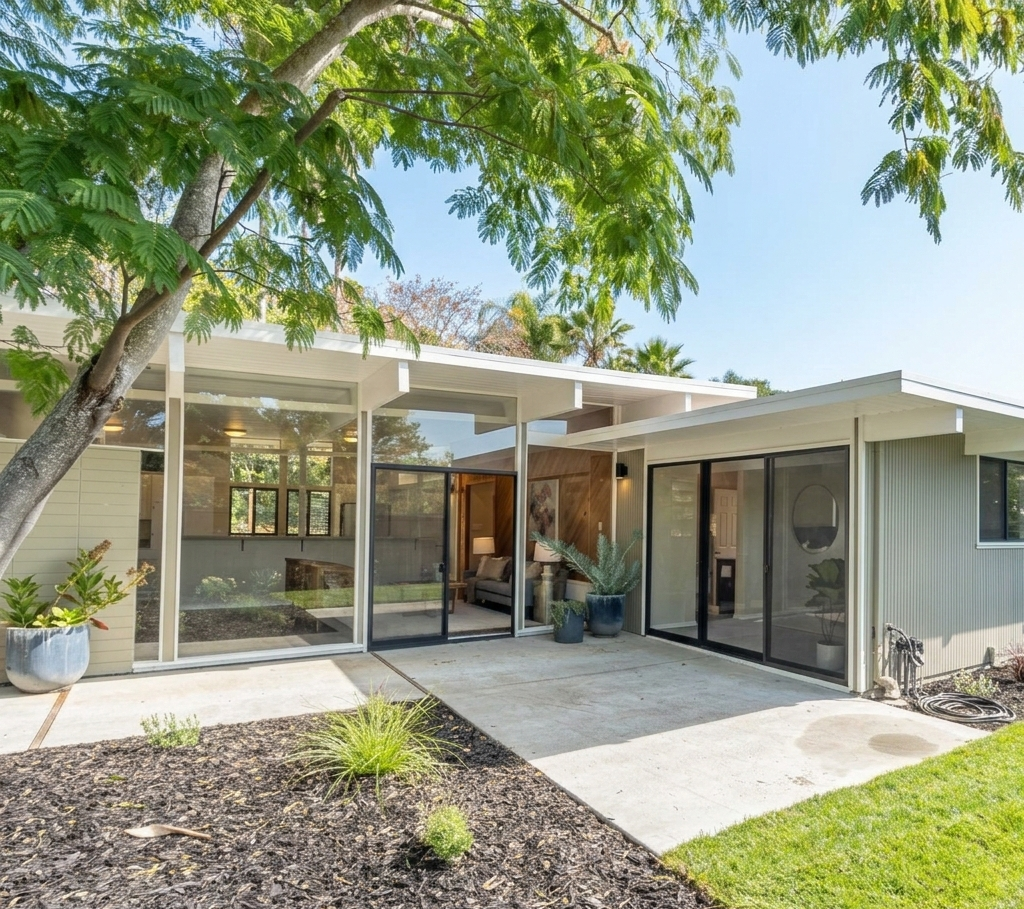
Eichler homes embody California Modern principles that emphasize seamless indoor-outdoor integration. Their post-and-beam construction eliminates load-bearing interior walls, enabling expansive glass walls and open floor plans. Signature open-air atriums create dramatic entry experiences that blur the boundary between interior and exterior space.
Radiant heating embedded in concrete slab floors was considered a luxury innovation in the 1950s and remains prized today for its quiet, dust-free efficiency.
Terra Linda also contains a rare enclave of two-story Eichlers—representing less than 1% of the approximately 11,000 homes Eichler built. Often positioned on hillside lots to maximize views, these homes are widely regarded as architectural collectibles.
Other Mid-Century Builders
Several contemporaries expanded on Eichler’s ideas across Northern California. Alliance Homes produced Eichler-influenced residences—about 200 units in Terra Linda North—often featuring flat-roof modernist styling. Mackay Homes, frequently designed by Anshen & Allen, utilized post-and-beam construction but commonly built on raised foundations rather than slabs, with concentrations in Silicon Valley.
Bahl Homes emphasized ultra-private, patio-centric layouts that minimized street-facing windows, particularly in Sunnyvale and Cupertino. Gavello Homes introduced more expressive rooflines—such as A-frames and butterfly roofs—often on larger lots in Willow Glen and Sunnyvale.
The Boyenga Team’s specialization in Eichler and mid-century homes allows them to distinguish true Eichlers from Eichler-influenced properties—an important factor for buyers focused on long-term architectural appreciation.
Real Estate Market Analysis: 2025–2026 Trends and Projections
San Rafael’s housing market is currently experiencing what can best be described as stabilized growth. Although the broader Marin market has recorded a 10.3% year-over-year decline in median sold prices, this shift appears largely attributable to changes in the mix of homes sold rather than weakening individual property values.
From January 2025 to January 2026, the median sale price in San Rafael increased from $1,000,000 to $1,075,000—an 8.0% gain. Median price per square foot rose from $578 to $621, up 7.5%. Market pace has slowed somewhat, with median days on market expanding from 63 to 93 days (a 47.6% increase), while the sale-to-list ratio softened slightly from 98.7% to 95.8%.
North San Rafael’s 94903 submarket remains particularly resilient. Median sale prices reached approximately $1,440,000 in mid-2025, with average price per square foot near $820. This premium is closely tied to the scarcity of well-maintained Eichler inventory and strong demand for Miller Creek School District access.
Investment Outlook and “Renovation Arbitrage”
Both investors and homeowners are increasingly pursuing renovation arbitrage—modernizing aging mid-century infrastructure to unlock equity.
High-ROI upgrades often include replacing original copper radiant systems with modern hydronic heating and upgrading tar-and-gravel roofs to Spray Polyurethane Foam (SPF), which improves efficiency while preserving clean rooflines. Homes that retain authentic open-air atriums consistently command faster sales and higher prices than those with enclosed courtyards.
Despite overall market normalization, properly prepared “hot homes” can still move quickly, often going pending within 11 to 24 days.
The Boyenga Team has refined a project-management-driven sales approach. Through Compass Concierge, they help sellers front renovation costs to maximize eventual market value.
Case Studies and Success Stories: The Boyenga Team Methodology
The Boyenga Team’s performance across Silicon Valley and Marin County reflects a highly analytical, design-forward philosophy rooted in what they call the “Property Nerd” mindset.
Strategy: Unlocking Value Through Technology and Staging
Leveraging Compass technology, the team precisely targets qualified buyer pools. In Sunnyvale’s Fairbrae neighborhood, a four-bedroom Green Build Eichler sold for $327,000 over asking after being marketed with an Eco-Modern narrative tailored to sustainability-focused tech buyers.
In San Jose’s Rose Glen neighborhood, an original courtyard Eichler generated multiple offers and closed at $745,000—approximately $116,000 above asking—by emphasizing the home’s architectural provenance.
Through Compass Concierge, the team recently supported a Los Angeles seller with a full pre-sale renovation—including HVAC, electrical, and high-end staging—resulting in a $239,000 premium over asking.
The HomeLight Partnership
Their partnership with HomeLight adds further flexibility through programs such as Buy Before You Sell, enabling homeowners to unlock equity and make non-contingent offers—an important advantage in markets where desirable homes can sell in under two weeks.
The Boyenga Team Advantage: Engineering Happiness in San Rafael
Eric and Janelle Boyenga—recognized as Next-Gen Agents—bring more than 30 years of combined experience to the San Rafael market. Their Modern Representation approach departs sharply from traditional brokerage models.
As Silicon Valley experts with more than $2.1 billion in represented sales, the team provides deep architectural stewardship, advanced market analytics, and full concierge presentation services. Eric Boyenga’s data-driven micro-market analysis gives clients clarity on pricing and buyer behavior, while Janelle Boyenga’s interior design and communications background ensures each listing maximizes emotional appeal.
As founding partners of Compass Silicon Valley, the team ranks among the top 0.0001% of agents nationwide and has built a reputation for handling architecturally significant homes with exceptional precision and discretion.
By positioning themselves as Eichler and mid-century modern specialists—and leaders in design-forward luxury real estate—the Boyenga Team speaks directly to the modern buyer mindset. In a market like San Rafael, where architecture, history, and tech wealth intersect, this specialization has become the new standard.
The Strategic Future of San Rafael’s Modernist Enclaves
San Rafael’s mid-century neighborhoods represent far more than nostalgic postwar housing—they constitute a resilient and appreciating asset class within the 21st-century Bay Area economy.
The combination of architectural pedigree, the Northgate Town Square redevelopment, and the academic strength of the Miller Creek School District positions Terra Linda and Lucas Valley firmly at the forefront of Marin’s luxury market.
For today’s homeowner or investor, success in this niche requires fluency in both data and design. The Boyenga Team’s Property Nerd philosophy delivers the analytical rigor and aesthetic sensitivity necessary to navigate this specialized market.
As San Rafael continues attracting Silicon Valley’s professional class, the architectural premium associated with the Eichler lifestyle is poised to expand further—cementing these neighborhoods as one of California real estate’s most compelling long-term plays.