The History of Mid-Century Modern Architecture: From Post‑WWII Origins to Now
Mid-century modern architecture emerged in the aftermath of World War II as a bold new design movement that reshaped homes and lifestyles around the world. Characterized by clean lines, open plans, and an “indoor-outdoor” harmony, this architectural style revolutionized suburban living from the 1940s through the 1960. Today, mid-century modern (MCM) design is experiencing a renaissance – influencing contemporary homebuilding and captivating a new generation of homeowners drawn to its timeless blend of form and function. In Silicon Valley and the Bay Area, mid-century modern homes (particularly Eichler homes) have a cult following, and local experts like the Boyenga Team at Compass are leading the charge in preserving and reimagining this architectural legacy for the 21st century.
This comprehensive exploration will delve into the history of mid-century modern architecture – from its post-WWII roots to its enduring impact today. We’ll examine the movement’s global influences, highlight the quintessential features of a mid-century modern home, and compare those features with a conventional contemporary home. We’ll shine a spotlight on Joseph Eichler’s California modern vision and how it shaped Silicon Valley neighborhoods. Throughout, we’ll see how mid-century principles (open layouts, walls of glass, etc.) have become mainstream in today’s designs. Finally, we’ll discuss why the Boyenga Team is recognized as the Bay Area’s mid-century modern real estate specialists – Silicon Valley leaders in Eichler home sales – and how their marketing prowess, local insight, and proven results benefit both buyers and sellers.
Let’s journey through time – from the optimistic postwar boom that birthed these “futuristic” homes, to the present-day revival that keeps mid-century modern more relevant than ever.
Post-WWII Origins of Mid-Century Modern Design
The seeds of mid-century modern architecture were planted in the post-World War II era, a time when societies craved innovation, optimism, and new housing for growing families. Traditional ornate styles gave way to a modernist ethos emphasizing simplicity, functionality, and honesty of materials. Influenced by the earlier International Style and Bauhaus movements, architects across Europe and America sought to design efficient homes that reflected a fresh start for the mid-20th century.
Globally, modernist luminaries like Walter Gropius, Le Corbusier, and Ludwig Mies van der Rohe had championed the idea that form should follow function, stripping architecture of unnecessary ornament. Mid-century modern (MCM) architecture was essentially an American reflection of these ideals. In Europe, the postwar rebuilding embraced avant-garde modernism – from Le Corbusier’s Unite d’Habitation in France to the sleek Scandinavian designs of Alvar Aalto and Arne Jacobsen. Scandinavian modernism in particular, with its warm minimalism and integration with nature, heavily influenced mid-century aesthetics. Meanwhile in Latin America, architects like Oscar Niemeyer employed dramatic modern forms (Brasília’s swooping concrete structures are a prime example of mid-century boldness).
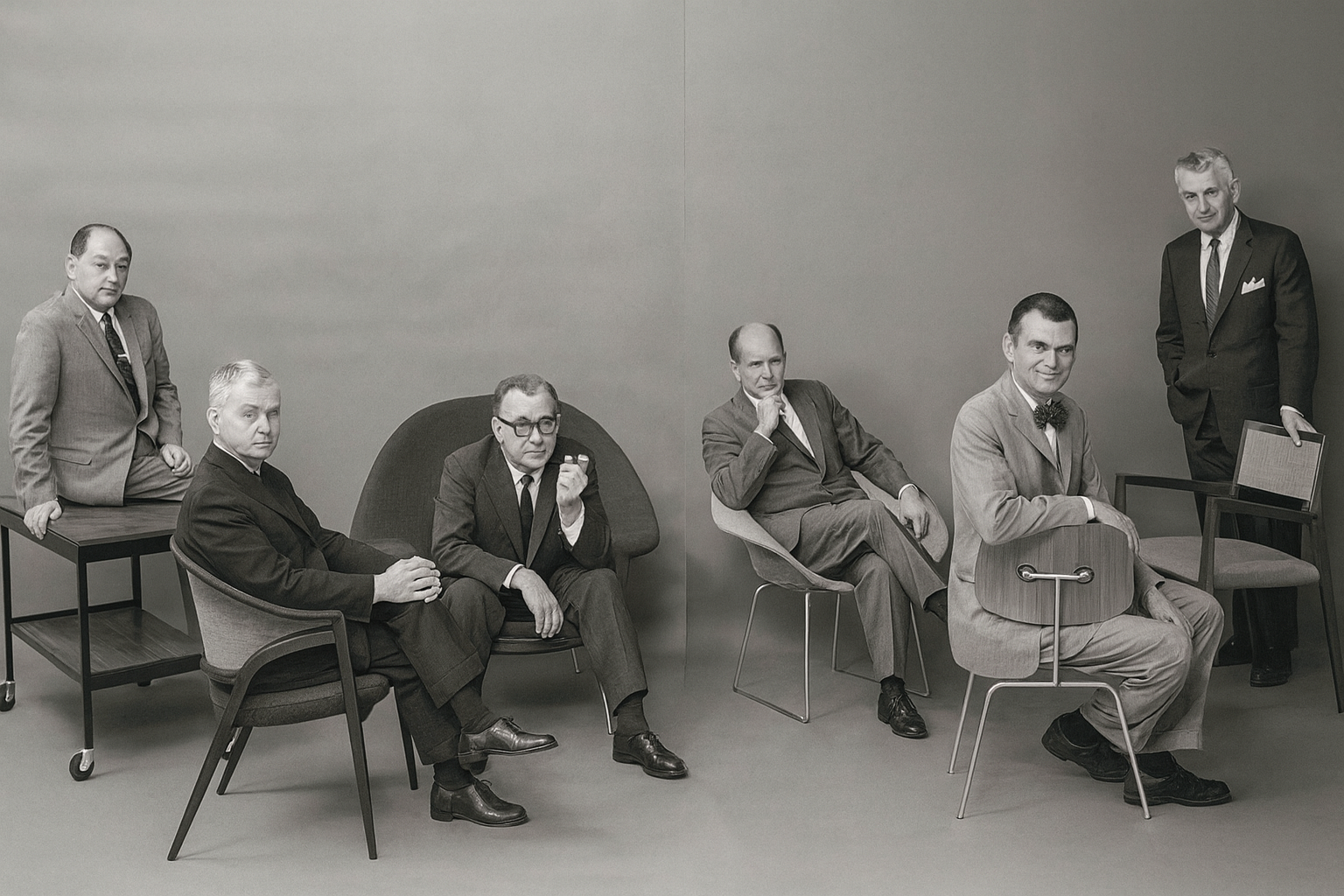
The Most Iconic Mid-Century Designers Ever
In the United States, mid-century modern took on its own flavor. It became more organic and playful compared to the austere International Style. Importantly, it wasn’t limited to high-profile projects – it extended into everyday American suburbs. The concept was modern design for the masses. As one historian noted, after WWII “American companies started making products that looked sleek and futuristic… a sign the country was entering a new chapter,” and promoting this style was also about sparking economic growth through consumerism. In housing, this translated to innovative, efficient homes that middle-class families could afford.
California emerged as a crucible of mid-century modernism in the 1940s–1960s. The state’s booming population, expansive land, and progressive mindset provided fertile ground for architectural experimentation. A group of forward-thinking architects and developers in California – inspired by earlier modernists – began creating what we now celebrate as “California Modern” design. The climate and lifestyle in California lent itself to flat roofs, sprawling single-story plans, and a seamless flow between indoors and outdoors, which would become hallmarks of the style.
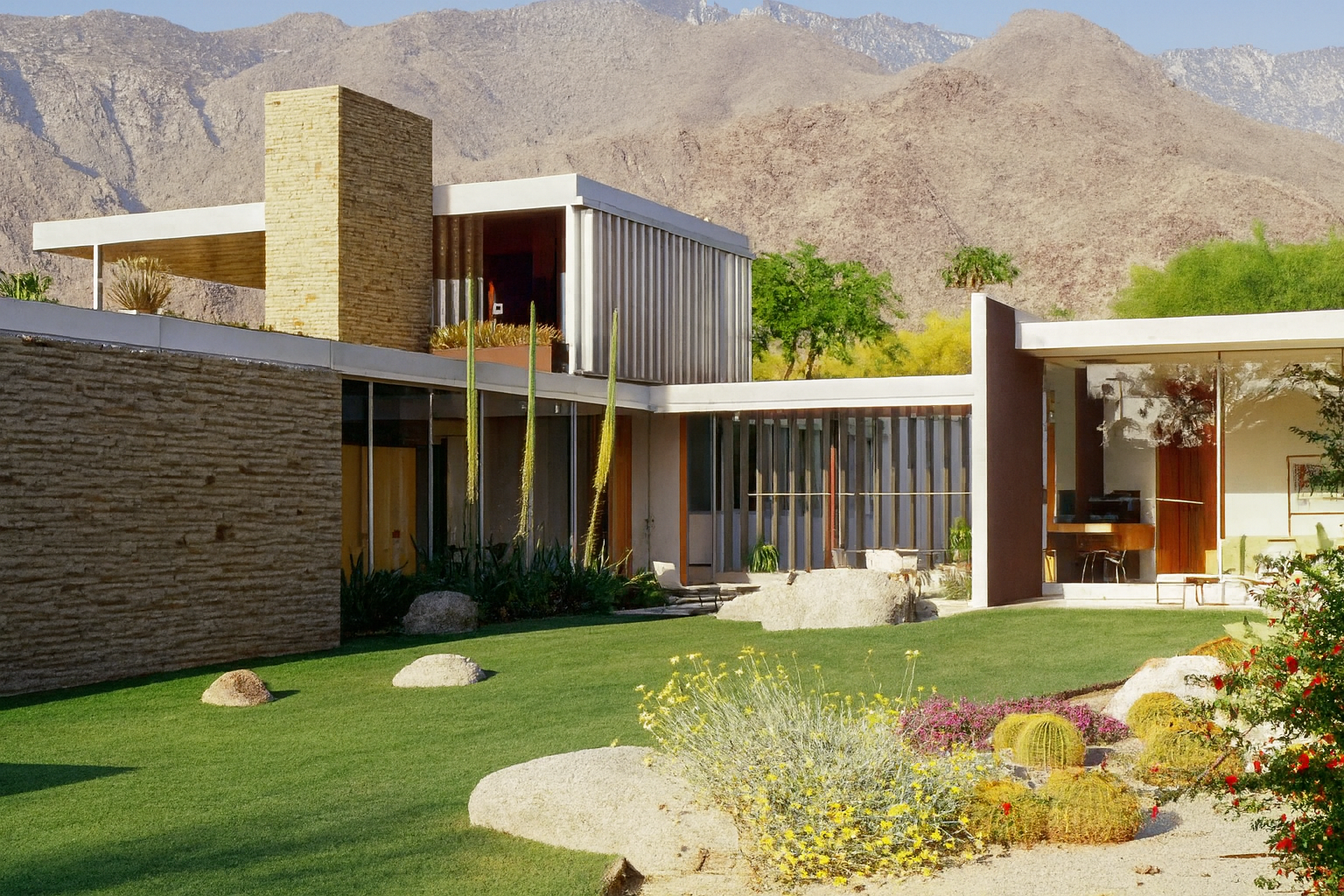
Palm Springs, for example, became an open-air museum of mid-century architecture, attracting visionary architects like Richard Neutra, John Lautner, and Albert Frey. Landmark homes such as Neutra’s Kaufmann Desert House (1946)in Palm Springs remain defining images of the mid-century aesthetic – with their low-slung profiles, glass walls, and desert mountain backdrops, they exemplify how modern architecture embraced and enhanced natural landscapes. (Palm Springs today boasts one of the world’s largest concentrations of preserved mid-century modern buildings.)
In Los Angeles, the famed Case Study House program (sponsored by Arts & Architecture magazine) enlisted top architects to design affordable modern homes for postwar living. Icons like the glass-walled Stahl House (Case Study #22) in the Hollywood Hills, or the Eames House in Pacific Palisades, demonstrated the chic simplicity of the new style – influencing homebuilders across the country.
By the mid-1950s, the mid-century modern movement was in full swing in America. It represented not just an architectural style, but a forward-looking mindset: embracing technological advances (like steel framing and large-scale glass), new materials (like plywood and plastics in furnishings), and a casual, optimistic lifestyle. Homes were “machines for living” but also warm, family-oriented spaces that rejected stuffy formalities. The aesthetic was minimalist but not cold – it emphasized human scale, comfort, and connections between people and nature.
Key features began to define mid-century modern homes, setting them apart from the traditional houses of previous generations. Before we compare a typical mid-century home to a contemporary one, let’s first outline what those signature features are.
Key Features of a Typical Mid-Century Modern Home
An iconic mid-century modern Eichler home (Foster Residence, Granada Hills, CA) exemplifies the style’s signature features: flat rooflines, broad eaves, vertical wood siding, and walls of glass that blur indoor and outdoor living.
While mid-century modern architecture spans a variety of designs, most homes of this era share a common design language. Here are the hallmarks of a typical mid-century modern home – characteristics that enthusiasts still adore today:
Clean, Simple Lines & Minimal Ornamentation: Mid-century modern homes embrace a “less is more”philosophy. Facades are clean and geometric, free of the fussiness that characterized earlier styles. You’ll rarely find decorative cornices or excessive trim. Instead, the beauty lies in simple forms and honest materials. Flat or gently sloped rooflines with broad eaves give the homes a low, horizontal profile, hugging the ground in harmony with the landscape. This simplicity creates an uncluttered, calm aesthetic – both inside and out.
Open Floor Plans: One of the revolutionary changes mid-century homes introduced was the open concept layout. Formal dining rooms and parlor rooms were replaced by free-flowing living spaces. Living, dining, and kitchen areas often merge without full walls between them. This was a radical departure from the compartmentalized rooms of pre-war houses (like Colonial or Tudor homes). The open plan encouraged family togetherness and casual living, and it feels completely natural to us now – in fact, today’s homeowners expect open layouts, a direct legacy of mid-century design. Mid-century homes were among the first to make the “open concept” mainstream.
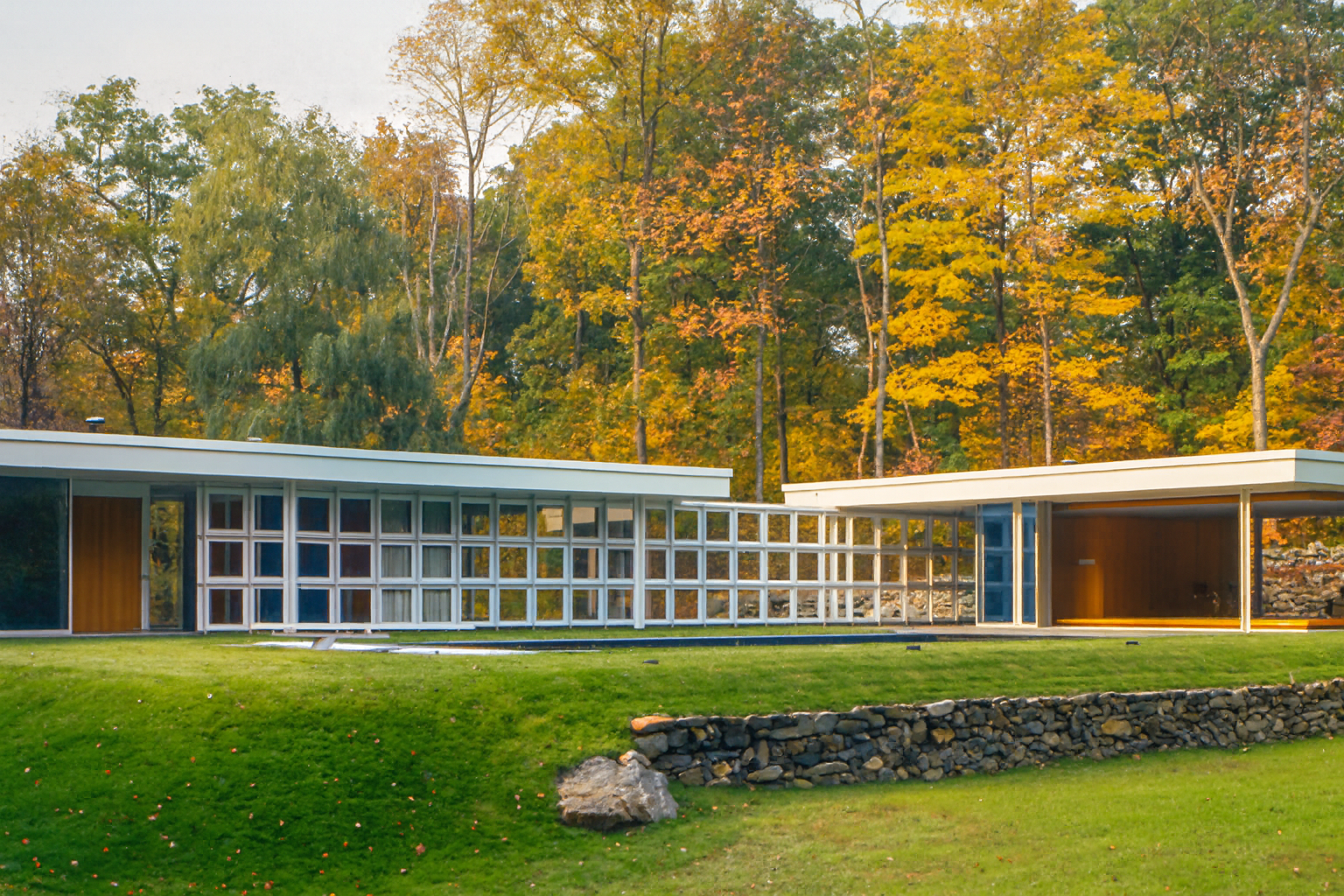
Walls of Glass & Indoor-Outdoor Connection: Ask any mid-century homeowner their favorite feature, and many will point to the expansive windows. Floor-to-ceiling glass panels, sliding glass doors, and entire walls made of glass are common in these homes. The goal was to “bring the outside in,” dissolving the barrier between indoors and outdoorseichlerhomesforsale.com. Many mid-century houses orient around patios, gardens, or central courtyards/atriums, with large panes of glass providing views and sunlight from multiple angles. This indoor-outdoor flow was democratizing modern luxury – features once seen only in extravagant estates (like glass walls opening to a pool) were now in middle-class suburbs. The result is a bright, airy interior where nature is always in sight. Today, this feature is beloved not just for style but for wellness – natural light and views are proven to boost mood and make spaces feel larger and more connected to the environment.
Post-and-Beam Construction: Architecturally, mid-century modern homes often use a post-and-beam structure(vertical posts and horizontal beams) instead of relying on many interior load-bearing walls. This engineering approach – inspired by Mies van der Rohe and Frank Lloyd Wright – enabled those open interiors and big glass expanses. You’ll notice exposed beams in many mid-century homes, along with tongue-and-groove wood ceilings that celebrate the structure as part of the design. By eliminating the need for thick walls everywhere, builders could open up sightlines dramatically. Exposed beams and natural wood ceilings also add warmth and texture, exemplifying the mid-century love of “honest” materials. Modern builders today still emulate post-and-beam designs to achieve that same spaciousness and mid-century vibe.
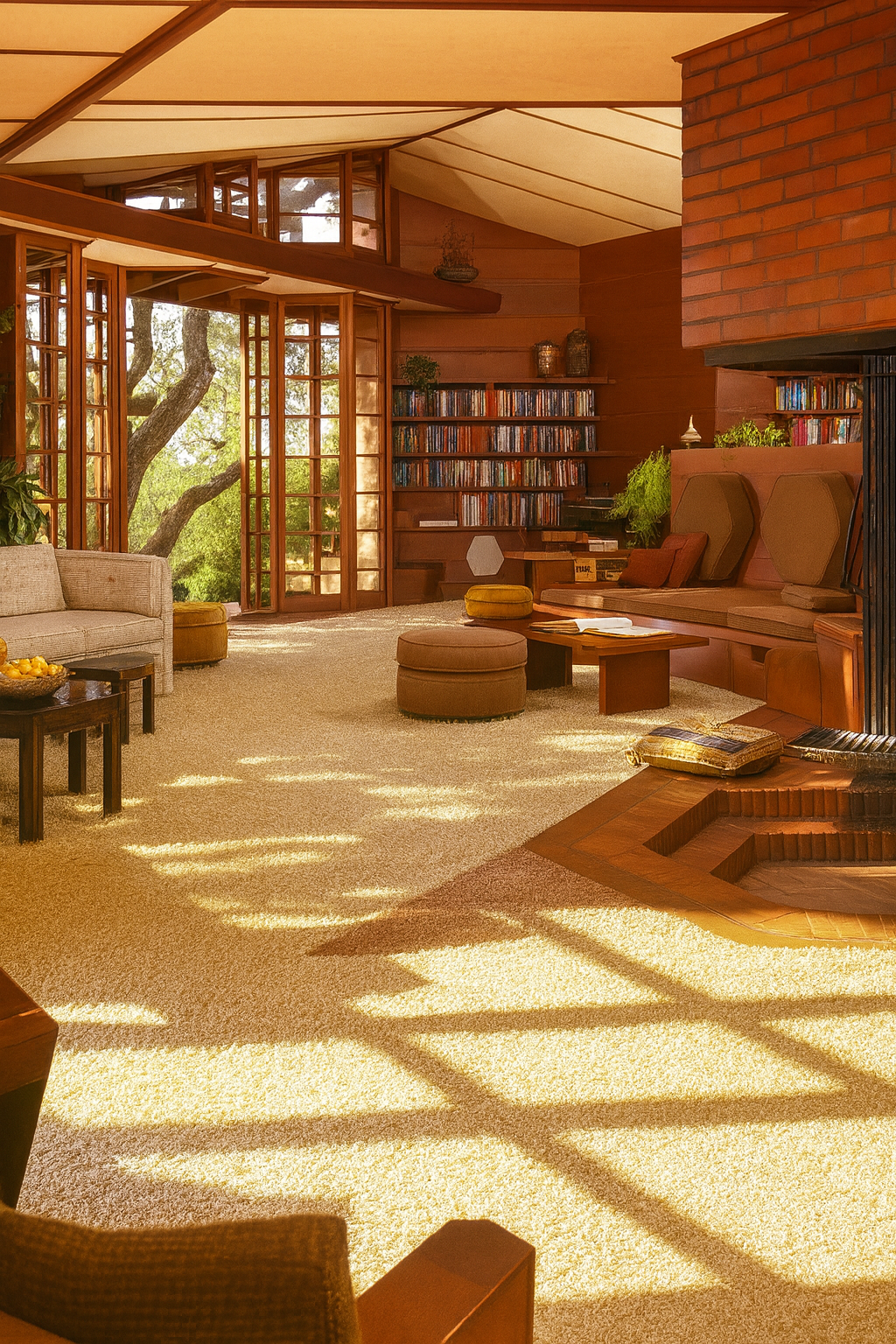
Natural Materials and Warm Textures: Mid-century modern design strikes a balance between new and old – sleek and organic. Alongside modern steel and glass, these homes feature plenty of natural materials. Think wood paneling (many Eichler homes have rich mahogany panel walls), stone or brick fireplaces, and terrazzo or concrete floors. The palette tends to be warm and earthy: unpainted redwood siding, stone accent walls, cork tiles, etc. This grounds the design in nature, preventing minimalism from feeling cold. Inside, mid-century interiors often included built-in furniture (bookcases, benches, room dividers) crafted from wood, which optimized space and kept the look cohesive. This focus on built-ins and simple materials resonates with today’s preference for uncluttered, high-quality interior design – it’s the opposite of the oversized, faux-ornate look of the later “McMansion” era. Mid-century homes were modest in size and purposeful in design, a concept many homeowners are returning to in pursuit of simplicity and authenticity.
Distinctive Rooflines: From the curb, mid-century homes are immediately recognizable by their roofs. Many exemplify the “California modern” look with flat roofs or very low-pitched gable roofs, emphasizing horizontal lines. Others experiment with dramatic forms: butterfly roofs (inverted peaks), A-frame peaks over entries, or cantilevered carport covers. An Eichler or mid-century tract home often presents a nearly blank face to the street – a flat roof, minimal windows facing front (for privacy), and a plain facade with vertical wood siding or concrete block. The visual “wow” is saved for the inside and the rear, where floor-to-ceiling glass opens to the backyard. These understated fronts feel surprisingly modern even today; many contemporary homes mimic this minimalist curb appeal with clean lines and muted materials. Notably, the generous roof overhangs (eaves) on mid-century homes weren’t just style – they provide shade and passive cooling, an energy-efficient touch that modern sustainable design recognizes as valuable.
Atriums and Courtyards: A special feature, found especially in Joseph Eichler’s homes, is the atrium – an open-air courtyard at the center of the home. Eichler introduced the idea of a private atrium foyer, essentially a small outdoor room you walk through before entering the house proper. It’s a magical little space: open to the sky, often adorned with plants or even a tree, sometimes with a fountain. The atrium brings light and nature into the core of the home, and all the main rooms might open onto it via glass walls. This design was ahead of its time in the 1950s, and remains enchanting today. Many owners have turned their atriums into mini tropical gardens, zen retreats, or outdoor dining rooms – extending their living space under the open sky. The popularity of features like interior courtyards, sunrooms, and indoor planters in modern design owes much to this mid-century innovation – it’s about “centering” the home around nature.
Innovation in Home Technology: Mid-century modern homes also embraced new residential technologies of the era. For example, radiant floor heating was a common feature – Eichler homes famously ran hot water pipes under the concrete slab to gently heat the home from the floor up. This eliminated the need for bulky radiators or loud furnaces, aligning with the clean, uncluttered aesthetic. Homeowners loved being able to walk barefoot on warm floors on a chilly morning. (Tech icon Steve Jobs, who grew up in a mid-century tract home, recalled “we had nice toasty floors when we were kids”) Though some early radiant systems posed maintenance issues decades later, the concept has made a comeback – modern luxury homes and eco-friendly builds often include radiant heat for its efficiency and comfort. This is just one example of how mid-century designers were forward-thinking, integrating comfort and technology in ways that were uncommon at the time.
In sum, a mid-century modern home was radically different from a pre-war home: open, airy, and unabashedly modern. It favored “functional beauty” over decoration – every element had a purpose, from the broad eaves (for shade) to the open plan (for family togetherness). And yet, mid-century homes never lost sight of warmth and livability. They were high-design houses made accessible to the average family – truly “homes for everyone” that reflected an optimistic vision of the future.
It’s interesting to compare these features with those of a typical contemporary home today. Many of the ideas that were novel in 1955 are now standard practice, while other aspects differ due to new trends, technologies, and lifestyles. Let’s explore how a classic mid-century modern home stacks up against a 21st-century modern home.
Mid-Century Modern Home vs. a Contemporary Modern Home
Mid-century modern architecture is actually the ancestor of most modern home design today – but there are still some contrasts between a vintage mid-century home and a newly built “modern” home. Understanding these differences highlights how influential mid-century design has been, and also where design has evolved.
Era and Philosophy: A mid-century modern home was a product of the 1940s–1960s, encapsulating the post-war ideals of progress and democratic design. The philosophy was to bring modernism into everyday life – to improve how families live through good design. In contrast, a contemporary modern home (built in the last decade or so) is influenced by a mix of styles including mid-century, but also responds to today’s world – which includes advanced building technology, different spatial needs (home offices, media rooms), and a greater emphasis on sustainability and smart home tech. Contemporary design is ever-evolving, whereas mid-century design refers to a specific historic period that nonetheless remains perennially stylish.
Exterior Form: Mid-century homes tend to be low-slung and horizontal. Many are single-story, or if two-story (like some Eichler-built homes and townhomes), the upper level is often set back, maintaining a low profile street presence. Yards are integrated with the house rather than dominated by it. By comparison, many modern homes today (especially in urban or high-cost areas) are built taller – two or three stories to maximize space on smaller lots, often with bold geometric massing. Contemporary homes might have flat roofs as well, but also might play with multiple roof planes, cantilevers, and asymmetrical facades to create visual interest. In essence, contemporary architecture can be flashier or more sculptural, whereas mid-century modern often strives for unobtrusive elegance, blending into the neighborhood and landscape.
Materials and Finishes: Both mid-century and contemporary homes value clean lines, but their material palettes can differ. Mid-century modern homes heavily used natural materials: wood siding or paneling (often redwood or cedar in California), stone or brick accents, and lots of glass. Interiors featured wood cabinetry, stone hearths, and period innovations like Formica countertops or cork flooring – materials that were cutting-edge at the time. Modern homes today continue to use wood and glass, but also incorporate more industrial materials like exposed steel, concrete, and composites. For example, a contemporary home might feature steel beams or a polished concrete floor for an ultra-minimalist look. Color-wise, mid-century exteriors often had earthy tones (or occasionally bright front doors for a pop of character), while today’s modern exteriors might use stark whites, charcoals, or bold color blocking. That said, the current trend leans back toward warmth – mid-century’s influence is seen in the return of walnut woods, brass accents, and organic finishes in new homes, softening the once-ubiquitous all-white modern interiors.
Ornamentation and Decor: Both styles favor minimal ornamentation, but mid-century modern allowed for playful touches. For instance, while the architecture was spare, mid-century decor might include a starburst clock, patterned room divider, or funky lighting fixture as a sculptural accent. Modern-day homes also stay minimal, but contemporary design sometimes introduces elements of other styles (e.g., a touch of industrial or a bit of farmhouse modern mix). Generally, though, the mid-century approach to decor – “functional but with personality” – can be seen in how people furnish modern homes now. It’s no coincidence that mid-century furniture (like Eames chairs or Nelson benches) are staples in fashionable contemporary homes; the two styles blend well. One subtle difference noted by designers is that pure modernist (International Style) design was almost totally minimal and serious, whereas mid-century modern could be a bit more “fun” – it embraced vibrant colors and geometric patterns in furnishings, which today’s contemporary style sometimes eschews in favor of monochrome palettes. However, with the renewed interest in mid-century, many new homes happily incorporate, say, a teal tufted sofa or geometric rug as a mid-mod wink amid their modern décor.
Floor Plan and Function: As discussed, open floor plans were pioneered by mid-century homes, and that’s something contemporary homes have fully adopted. It’s hard to find a new build today with a boxed-in kitchen or formal dining separate from everything – developers know buyers want that open, airy feeling. Where a mid-century home might differ is in scale and utility spaces. Many mid-century houses were relatively modest in size (e.g., 1,500–2,000 sq ft for a 3-4 bedroom Eichler), often with a single carport or small garage, and minimal closet space by today’s standards. They prioritized design over sheer size. New modern homes (especially luxury builds) tend to be larger, with features like expansive primary suites, walk-in closets, 3-car garages, and specialized rooms (home theater, gym, etc.) that were not considerations in the 1950s tract home. Contemporary living also demands more integration of tech – from built-in smart speakers to security systems – things mid-century builders couldn’t have imagined. That said, the essence of how space is used – casually and fluidly – remains more similar than different.
Sustainability and Efficiency: One area where contemporary homes diverge is in energy efficiency and codes. Mid-century homes, with their huge single-pane windows and minimal insulation, can be inefficient to heat/cool (Palm Springs’ all-glass gems get toasty without AC!). Many owners have had to retrofit insulation or double-glazing. Today’s building codes mandate high-efficiency windows, thick insulation, and often solar readiness. Modern architects still love glass, but they use advanced glazing and incorporate features like deep eaves (just as mid-century homes did) or automated shades to manage heat. There’s also a stronger eco-consciousness: new materials like composite decking, recycled countertops, on-demand water heaters, and solar panels on the roof are common in high-end modern homes. Interestingly, mid-century modern’s passive design strategies – shading, cross-ventilation, modest house size – are quite eco-friendly inherently. New homes are rediscovering those principles to meet green design goals (for example, positioning a house to catch prevailing breezes, just as some mid-century architects did). So in a way, the gap is closing, as contemporary design circles back to mid-century wisdom in pursuit of sustainability.
In summary, a “regular” modern home today owes a great debt to mid-century modernism. The open layouts, large windows, integration with nature, and minimalist look all trace back to that era. The differences are mainly in scale, technology, and some stylistic flourishes. A new home might be bigger, smarter, and use different materials, but step back and you’ll see the spirit of mid-century design everywhere. It’s no surprise that terms like “light-filled,” “open-plan,” and “indoor-outdoor flow” are huge selling points in real estate listings – these concepts were first popularized by mid-century architects and have become benchmarks of good design in any era.
Next, we’ll zoom in on the story of mid-century modern in California, and one name in particular that is synonymous with bringing this style to everyday homes: Joseph Eichler. His vision not only transformed Bay Area neighborhoods in the mid-20th century, but continues to influence how Silicon Valley lives and builds today.
Joseph Eichler and California’s Mid-Century Modern Movement
No discussion of mid-century modern architecture – especially in California – is complete without Joseph Eichler. While not an architect himself, Eichler was a visionary real estate developer who almost single-handedly brought modern architecture into the postwar American suburb. Between 1950 and 1974, Eichler’s company built over 11,000 modern homes in California, primarily in the San Francisco Bay Area and around Los Angeles. In an era when the typical new house was a simple ranch or Cape Cod style, Eichler homes stood out as glass-walled, flat-roofed futurist abodes nestled in tract neighborhoods. They offered high design at relatively affordable prices – fulfilling Eichler’s mission to make modern living accessible to the middle class.
What made Eichler homes special? In short, Eichler hired talented modernist architects (the likes of Anshen & Allen, Jones & Emmons, and Claude Oakland among others) to design his developments. These architects gave Eichler’s tract homes the same attention to design that one might give a custom modern residence. The result: entire neighborhoods of thoughtfully designed mid-century modern houses, each featuring the elements we described earlier – open plans, post-and-beam construction, indoor courtyards, and walls of glass. Homebuyers in the 1950s were astonished: these “tract houses” looked like something out of an architecture magazine, yet were within reach for young families. As architect Paul Adamson noted, “the significance of Eichler houses is that they were homes for middle-class people designed by good architects,” not just mass-produced boxes.
Eichler’s California modernism wasn’t just about style; it embodied a lifestyle and a set of ideals. He envisioned neighborhoods that felt communal and optimistic. In Eichler subdivisions (found in cities like Palo Alto, Sunnyvale, San Mateo, San Jose, Walnut Creek, as well as Orange County and even a few in New York), you’ll notice certain commonalities: curving streets and cul-de-sacs (discouraging traffic, encouraging walking), often a community park or pool at the center, and houses that face the street with modest, unassuming facades while their hearts open wide to private backyards or atriums. Importantly, Eichler was socially progressive – he was one of the first builders to sell homes to people of all races and religions, outright rejecting the discriminatory housing practices of his time. In the 1950s, many communities had racial covenants or unwritten rules barring non-white buyers; Eichler famously refused to tolerate such policies, even quitting the National Association of Home Builders when it wouldn’t support a non-discrimination clause. He wanted his modern neighborhoods to embody American inclusiveness. This forward-thinking attitude was literally built into Eichler communities that were designed to be neighborly – with common amenities and open front yards (often no front fences) to foster interaction.
In Silicon Valley, Eichler’s impact is particularly pronounced. Postwar growth in the Valley coincided with Eichler’s building spree. Iconic Eichler enclaves sprouted in areas like Palo Alto’s Greenmeadow and Fairmeadow neighborhoods, Sunnyvale’s Fairwood and Rancho San Miguel (now Fairbrae) tracts, Mountain View’s Monta Loma, Santa Clara’s Mackay/Eichler communities, and many more. Sunnyvale alone has over 1,100 Eichler homes – earning it the nickname “the home of the Eichlers”. These developments were highly sought-after then and remain so now. Driving through an Eichler tract, you’ll often see original mid-century details proudly maintained: globe pendant lights glowing on front porches, period address numbers, and of course the distinctive silhouettes of the houses themselves.
A quintessential Eichler house is typically a single-story 3-4 bedroom, around 1,500–1,800 square feet (though there are larger models and a few two-story models in later years). It has a low-pitched or flat roof, exposed post-and-beam ceilings, an open great room looking onto an atrium or backyard through floor-to-ceiling glass, and an attachment to the outdoors via patios and gardens. Eichlers often have clerestory windows just below the roofline that let in additional light. The material palette: vertical grooved plywood or board-and-batten siding (often stained brown or painted in earth tones), mahogany wall panels inside, and Philippine mahogany used for sliding cabinet doors. Many had integrated radiant floor heating and a central brick fireplace. Bedrooms and baths were usually modest; the emphasis was on the communal areas and the connection to nature. While some 1950s homebuyers initially found Eichlers “too modern” or strange compared to traditional homes, those who bought them quickly fell in love with the airy, “California living” feel.
Over time, Eichler homeowners became a tight-knit community themselves. Even as Silicon Valley exploded into a tech hub in the late 20th century, many Eichler neighborhoods retained a sort of time-capsule charm. It’s not uncommon to hear residents say their Eichler enclave feels like a 1950s small town in the middle of the city – kids biking in cul-de-sacs, neighbors organizing block parties and holiday parades. This speaks to how well Eichler’s designs have aged both physically and socially. The homes still look modern and function beautifully for today’s lifestyles, and the neighborhoods foster community in a way many newer developments strive to emulate.
Globally, Joseph Eichler’s approach has become a case study in successful modernist community building. He proved that modern architecture could be commercially viable and broadly appealing. In doing so, he helped cement California’s image as a center of mid-century modernism, alongside places like Palm Springs and Los Angeles. Today, Eichler homes are celebrated as architectural gems. Several Eichler tracts or individual homes have attained historic status (for instance, the Foster Residence in Granada Hills, Los Angeles – shown above – is a designated Historic-Cultural Monument). Preservation societies and enthusiasts work to protect Eichlers from unsympathetic remodels or tear-downs. The term “Eichler” itself has become shorthand for a certain cool, retro-modern California lifestyle.
As we’ll see in the next section, the influence of Eichler and his mid-century contemporaries extends far beyond the mid-1900s. The resurgence of mid-century style and the way new homes are designed in the 2020s are directly linked to the innovations pioneered in that era. Before concluding, let’s explore how mid-century design is influencing current builds and interior design trends, both in California and around the world.
Mid-Century Design’s Influence on Today’s Architecture and Lifestyles
It’s often said that “what’s old is new again,” and nowhere is that more true than in home design. The mid-century modern movement might have peaked by the 1960s, but its principles are thriving in contemporary architecture and decor. In fact, many features we now consider essential for a stylish home were radical when mid-century architects introduced them. The current revival of all things mid-century – from TV shows like Mad Men popularizing the furniture, to new houses consciously mimicking Eichler plans – highlights the enduring appeal of this design language.
Here are several key ways mid-century modern design is shaping today’s homes and lifestyles:
Mainstream Home Design Trends: The open-plan, “great room” layout is arguably the default in modern homebuilding, and we largely have mid-century innovators to thank for that. Buyers today almost expect the kitchen, dining, and living spaces to flow together for easy interaction – a stark contrast to pre-1950s houses. Also, the emphasis on indoor-outdoor living is stronger than ever. Architects and developers market huge sliding glass doors that open to patios, covered outdoor living rooms (sometimes termed “California rooms”), and expansive windows as luxury features – all echoing Eichler’s ethos of transparency and openness. Even in regions with colder climates, elements like courtyards, skylights, and large decks are used to bring nature in, reflecting a broad acceptance of the idea that homes should connect to the outdoors. The popularity of single-story living for both young families and aging homeowners also ties back to the ranch and mid-century homes that made one-level living ubiquitous. In essence, much of what sells a new home in 2025 – “light-filled!”, “open concept!”, “indoor-outdoor flow!” – reads like a checklist of mid-century design concepts.
Resurgence of Mid-Century Aesthetics in New Builds: There’s a distinct “mid-century revival” happening in architecture. In places like California, some new residential developments deliberately channel mid-century style with updated materials – flat roofs, clerestory windows, breeze block screens, and minimalist landscaping with succulents and palms to give that 1950s vibe. Custom home architects are also increasingly drawing inspiration from mid-century masters when designing for design-savvy clients. It’s not unusual to see a newly built house in Silicon Valley or LA that features an atrium floorplan or post-and-beam detailing as an homage to Eichler or the Case Study houses. This is partly aesthetic fashion, but also a recognition that those designs work well – they are climate-appropriate, graceful, and lend themselves to modern tweaks like solar panels on flat roofs or modular construction. Additionally, preservation and renovation of original mid-century homes is big business. Instead of tearing down an old 1955 modernist home, many buyers now lovingly restore them – updating the kitchens and bathrooms for modern convenience but keeping the architectural integrity. Whole companies (and HGTV shows) specialize in “mid-century modern remodels,” reflecting how prized these homes have become.
Interior Design and Furniture: Step into a West Elm, Crate & Barrel, or IKEA showroom today, and you’d be forgiven for thinking you time-traveled to 1962. Mid-century modern interior design has become timeless and extremely popular across demographics. Hallmark pieces like the Eames Lounge Chair, Nelson bubble lamps, Saarinen Tulip tables, and credenzas with tapered legs are ubiquitous in stylish homes – whether those homes are mid-century era or brand new. Even budget-friendly retailers offer their take on mid-century furniture (often dubbed “mid-century inspired” collections). The allure is the sleek yet inviting look of these pieces: wood mixed with metal, geometric shapes, and a lack of clutter. Younger generations appreciate the retro flair and quality design – a well-placed mid-century piece can elevate a whole room’s look. There’s also an element of sustainability: buying a 60-year-old teak sideboard or a new replica of one is a stand against disposable, trend-driven furniture. In staging homes for sale, realtors frequently use mid-century style decor because it’s broadly appealing – it signals “modern, sophisticated, and open,” which can help any home (even an older ranch) feel more current and cool. In summary, mid-century modern’s clean interior look has essentially become a baseline for contemporary interior design, especially in the realm of “minimalist” or “Scandinavian” influenced decor.
Wellness and Biophilic Design: A more recent angle is how mid-century design aligns with the modern focus on wellness and biophilic design (design that connects occupants with nature). Today, homeowners and designers talk a lot about creating spaces that enhance well-being – through natural light, ventilation, greenery, and views of nature. These were exactly the points mid-century architects were already addressing. For instance, Eichler’s goal of bringing the outside in was fundamentally about improving quality of life, making small homes feel expansive and calm with sunlight and gardens visible from every room. Recent studies show that daylight and nature views boost mood and health, so architects now prioritize big windows and indoor-outdoor spaces in wellness-oriented design. Some mid-century homes even had built-in planters inside (such as beneath the staircases or in entryways), a trend that is mirrored by today’s love of houseplants and green walls. Additionally, mid-century homes’ uncluttered layouts and visual simplicity contribute to a sense of mental clarity – something that resonates in the age of Marie Kondo and mindfulness. One could say mid-century modern’s “less is more” approach was a precursor to the contemporary push for calming, minimalist environments that reduce stress. Little wonder that many yoga studios, tech offices, and modern cafes dress in mid-century modern decor to evoke that serene, stylish simplicity.
Pop Culture and Social Media Influence: The mid-century modern revival has also been fueled by pop culture and social media. TV shows set in mid-century settings (like the aforementioned Mad Men) romanticized the style, while Instagram and Pinterest are loaded with envy-inducing images of restored mid-century homes and Eichler interiors. A quick scroll will show thousands of posts celebrating the “Eichler aesthetic”: sun-drenched atriums, perfectly preserved vintage furniture, and indoor-outdoor living scenes. This has made mid-century modern design aspirationalwell beyond California. A young couple in New York or a family in North Carolina might specifically seek out a mid-century house or renovate their home to incorporate mid-century elements after being inspired online. The term “mid-century modern” is consistently one of the top-used in design hashtags, indicating its vast popularity. In new constructions, architects know that including a few mid-century-inspired touches can make a project more buzzworthy (for example, the trend of butterfly roof additions or blocky mid-century style exterior paint schemes on remodels). Essentially, mid-century modern has transcended its era to become a lifestyle brand of sorts – synonymous with tasteful, creative, and enlightened living. This Zeitgeist even influences how people brand their homes on short-term rental sites (you’ll see listings advertising “mid-century modern retreat” to attract design-aware guests). It’s amazing to think that the aesthetic from 70 years ago is now a benchmark of hipness and good taste for millennials and Gen Z, but that is the power of great design.
From architecture schools, where students study Charles and Ray Eames or Pierre Koenig for inspiration, to tech campuses that incorporate mid-century campus designs (witness how Apple’s new campus in Cupertino, though ultra-futuristic, nods to mid-century ideals of a circular, park-like layout), the influence is undeniable. The resurgence is also driving preservation: cities like Palo Alto, Sunnyvale, and Orange have enacted Eichler preservation guidelines to ensure remodels are in character and these neighborhoods’ mid-century character is retained. Far from being tear-down candidates, many mid-century modern homes are now prized jewels in real estate, often commanding premiums due to demand from aficionados.
In Silicon Valley, this confluence of history and modern living is especially evident – which brings us to the Boyenga Team, who stand at the intersection of past and present as champions of mid-century modern homes in the Bay Area.
The Boyenga Team – Silicon Valley’s Eichler & Mid-Century Modern Specialists
If you’re captivated by mid-century modern architecture and are looking to buy or sell an Eichler home (or any mid-century property) in the Bay Area, the Boyenga Team at Compass is the go-to expert resource. Led by Eric and Janelle Boyenga, the Boyenga Team has earned a reputation as Silicon Valley’s leading Eichler and Mid-Century Modern real estate specialists. With over two decades of experience, this top-producing team has deep knowledge of every Eichler enclave and mid-century pocket in the region – from the tract layouts and architectural nuances to the unique market dynamics these homes command.
Silicon Valley Real Estate Leaders: The Boyenga Team isn’t just niche experts; they are recognized as one of Silicon Valley’s premier real estate teams overall. In fact, they hold the #1 position for Compass in Silicon Valley, a testament to their volume of sales and satisfied clientele. Since founding their partnership in 1996 (pioneering the team concept in local real estate), Eric and Janelle have built a dynamic group now comprising 25 specialists, collectively boasting over 100+ years of experience. They have successfully sold 2,100+ homestotaling over $2.1 billion in volume – impressive proof of their capabilities. This track record means whether you’re a seller entrusting them with your property or a buyer relying on their guidance, you’re in very capable hands. The Boyenga Team has seen multiple market cycles and negotiated countless deals, so they know how to deliver exceptional outcomes for both sellers and buyers in any environment.
Eichler Home Experts with Unparalleled Insight: Mid-century modern homes, especially Eichlers, require a nuanced understanding to buy and sell effectively. Features like post-and-beam construction, atriums, and original radiant heating can be foreign to agents who lack experience with these homes. The Boyenga Team not only understands these features – they embrace them. They have made mid-century architecture a pillar of their business, even running Eichler-focused websites and blogs that serve as knowledge hubs for the community. Clients often comment that Boyenga agents can identify the model and architect of an Eichler by sight, recall renovation histories of specific properties, and even know which streets have intact originals versus heavy remodels. This granular local insight is invaluable. For buyers, it means getting candid advice on which Eichler neighborhoods might suit their lifestyle (schools, commute, vibe) and which homes have “good bones” or investment potential. For sellers, it means pricing the home correctly given its design attributes and leveraging the home’s story in marketing. The Boyengas have proprietary lists of Eichler owners and past clients, giving them a network to tap for off-market opportunities or eager buyers specifically seeking mid-century gems. In tight Eichler markets where many sales happen quietly off-MLS, the Boyenga Team’s connections can make the difference in finding or selling a home quickly.
Innovative Marketing & Tech-Driven Strategies: Nicknamed “Next-Gen Agents” and even self-described “Property Nerds,” Eric and Janelle have always been ahead of the curve in real estate marketing. They leverage the industry-leading tools of Compass – including the Compass Concierge program, which front-funds cosmetic improvements or staging to maximize a home’s value, and Compass’s analytics platforms – to give their clients a competitive edge. When marketing mid-century homes, the Boyenga Team goes beyond the basics of listing on MLS. They employ cutting-edge marketing tactics: high-end architectural photography and even drone videos to capture a home’s indoor-outdoor flow, targeted digital ad campaigns aimed at design-minded buyer demographics, and social media promotion tapping into mid-century enthusiast groups. Additionally, they utilize Compass’s Private Exclusives network to quietly shop properties to a curated list of qualified buyers before going public. This can be especially advantageous for unique Eichler homes that might fetch a premium by targeting the right niche audience first. In fact, the Boyenga Team notes that “many of the best Eichlers sell off-market, never hitting the public MLS”– thanks to their efforts, their clients often either find a home or secure a buyer through these exclusive channels.
Proven Results for Sellers and Buyers: The Boyenga Team’s specialized approach yields results. They have brokered record-setting Eichler sales in multiple neighborhoods – for instance, selling a fully remodeled Sunnyvale Eichler atrium-model home for $2.88M in 2025 (a price on par with luxury new builds), and facilitating off-market deals such as a Redwood City Eichler that closed at $2.3M after limited private showings to their network. In each case, Boyenga clients benefit from both higher sale prices and smoother transactions. Sellers gain from the team’s expert pre-listing guidance – the Boyengas will advise on strategic improvements (often leveraging Compass Concierge to pay upfront for staging, paint, landscaping, etc.), which can significantly boost appeal and price. They also navigate Eichler-specific issues (like inspecting and showcasing an older radiant heating system, or knowing how to advertise an upcoming Eichler to the right buyer pool) with ease.
Buyers working with Boyenga agents equally rave about the experience. The team’s patience and willingness to educate sets them apart. An Eichler purchase can come with questions about maintenance (flat roof care, upgrading single-pane windows while preserving the look, etc.). Boyenga’s agents have seen it all and maintain a roster of trustworthy contractors and resources for mid-century homes. They ensure buyers understand what they’re getting and help them envision how to make the home their own without losing character. And because they truly love these homes, the excitement they convey is contagious – making the search process enjoyable. It’s not uncommon that tech executives and relocating families specifically seek out the Boyenga Team due to their Eichler reputation. Many Boyenga clients are in the tech industry and appreciate the team’s data-driven, efficient approach (it’s not just gut feeling – they provide market stats and investment analysis, very much like a Harvard Business Review-esque rigor applied to real estate decisions).
Client-Centric Philosophy: Despite high volume, the Boyenga Team prides itself on tailored, client-first service. Their motto, as Eric Boyenga puts it, is “We always do what is best for our clients.”. They understand that selling or buying an architectural home is an emotional process as much as a financial one – especially with unique properties like Eichlers that owners cherish. Thus, they approach every transaction with empathy, transparency, and professionalism. They also have experience with complex situations like trusts and estates, helping families navigate transactions during challenging life transitions. This level of care has earned them 450+ five-star Zillow reviews and a spot in HomeLight’s elite network, reflecting deep trust from the community. In short, they aim to be not just brokers but true advisers, guiding clients to sound decisions and smooth closings. It’s telling that much of their business comes from referrals and repeat clients – a sign of consistent excellence.
Ultimately, the Boyenga Team combines old-school expertise in mid-century architecture with new-school marketing and tech savvy. This blend makes them uniquely equipped to maximize results for sellers (by reaching the right buyers and showcasing a home’s design pedigree) and to help buyers (by unearthing opportunities and providing deep knowledge). It’s no wonder they’ve positioned themselves as “the smarter way to buy or sell an Eichler” in Silicon Valley.
Embracing Mid-Century Modern Living in the Bay Area – Conclusion & Next Steps
Mid-century modern architecture is far more than a historic style – it’s a living, breathing influence on how we build and live today. From the post-WWII ingenuity that gave us open-plan Eichlers, to the Instagram feeds of millennials coveting Eames chairs and sun-filled atriums, the mid-century ethos continues to inspire. In California, we’re lucky to be surrounded by this legacy: neighborhoods where “Mad Men”-era homes stand as functional art pieces, reminding us that good design is truly timeless. These homes offer a lifestyle that resonates in the modern world – casual yet elegant, connected to nature and community, focused on quality over excess.
For those drawn to this mid-century modern lifestyle, the Silicon Valley real estate market offers opportunities both to own a piece of history and to benefit from a design that enriches daily living. Whether it’s a lovingly preserved Eichler home with original wood paneling and a sparkling atrium, or a tastefully updated mid-century ranch with contemporary comforts, these properties offer something special in the sea of ordinary houses. They tend to appreciate well (their scarcity and iconic appeal drive value) and attract like-minded neighbors who value architecture and community.
If you’re considering buying an Eichler or mid-century modern home in the Bay Area – or if you’re fortunate enough to own one and are thinking of selling – partnering with true experts will make all the difference. This is where the Boyenga Team at Compass shines. As we’ve detailed, their unparalleled experience with Eichler and mid-century properties, combined with their marketing prowess and client-first approach, delivers results that ordinary agents simply can’t match. They not only understand the financial side of the transaction but also the emotional connection people have with these homes and the unique audience that seeks them.
Ready to take the next step? We invite you to experience the Boyenga Team’s expertise for yourself. If you’re intrigued by a particular listing or want to explore mid-century modern homes in Silicon Valley, reach out to the Boyenga Team to schedule a private showing. They’ll happily arrange a tour at your convenience and walk you through the features that make these homes so extraordinary. If you’re a homeowner contemplating selling, contact the Boyenga Team for a consultation – they can provide a personalized market analysis and a game plan for maximizing your sale, from Compass Concierge preparations to targeted promotion aimed at their extensive network of Eichler enthusiasts.
Discover why countless buyers and sellers have trusted Eric & Janelle Boyenga and their team for top-tier representation in the mid-century modern market. Whether you’re looking to buy your dream Eichler or sell your treasured mid-century home for an optimal price, the Boyenga Team will ensure your goals are met with professionalism, innovation, and care. Connect with the Boyenga Team at Compass today to turn your mid-century modern real estate dreams into reality.