Mid-Century Modern Enclaves of Silicon Valley: Eichler Neighborhoods and Beyond

Mid-century modern (MCM) homes hold a special allure in Silicon Valley, where the postwar boom of the 1940s–1970s left a legacy of striking modernist neighborhoods. From the iconic Eichler tracts that revolutionized suburban design to lesser-known enclaves by other visionary builders, the region is dotted with living time capsules of glass, wood, and optimism. Hallmarks like open-concept layouts, post-and-beam construction, walls of floor-to-ceiling glass, and seamless indoor-outdoor flow define these homes boyengarealestateteam.com. Once sold as modest “atomic age” houses (early Eichlers cost as little as ~$10,000 in the 1950s boyengarealestateteam.com), today they are coveted gems often worth millions in Silicon Valley’s market, boyengarealestateteam.com. Their timeless design – clean lines, butterfly or low-gable roofs, private atriums – continues to inspire modern living. Even Apple’s Steve Jobs credited growing up around Eichler’s elegant yet mass-market homes with sparking his passion for great design, and co-founder Steve Wozniak was raised in an Eichler in Sunnyvale, a testament to how deeply these neighborhoods shaped local culture.
Silicon Valley’s mid-century enclaves are concentrated in the Santa Clara Valley, especially in Santa Clara County cities like Palo Alto, Sunnyvale, Cupertino, Mountain View, Los Altos, Saratoga, Monte Sereno, and San Jose boyengarealestateteam.com. Palo Alto alone once had around 2,700 Eichler homes (the most of any city), and Sunnyvale had over 1,100 (boyengarealestateteam.com), with hundreds more sprinkled across the Valley. Many of these neighborhoods have actively preserved their mid-century character through historic districts, single-story overlay zoning, and Eichler-specific design guidelines, boyengarealestateteam.com. The result is a collection of welcoming neighborhoods where stepping onto a cul-de-sac of MCM homes can feel like stepping back into 1950s–60s California – yet these areas remain highly livable and sought-after by today’s tech families and design enthusiasts alike. Importantly, Eichler wasn’t the only player: other architects and builders also contributed to the mid-century landscape. Cliff May’s ranch-style “Miracle House” designs, for example, can be found in Cupertino’s Rancho Rinconada tract, and developer Mackay Homes (with architects Anshen & Allen) built Eichler-esque modern homes in Mountain View’s Monta Loma neighborhood. Below, we explore the most notable mid-century modern enclaves throughout Silicon Valley, city by city – highlighting their history, design features, community vibe, and enduring appeal.
(For enthusiasts ready to find their own piece of mid-century paradise, keep in mind that partnering with local experts – like the Boyenga Team, Silicon Valley’s premier Eichler & MCM specialists – can make all the difference in navigating these unique real estate treasures. More on that at the end.)

Palo Alto: Eichler Heartland with Historic Mid-Century Neighborhoods
It’s impossible to talk about mid-century modern homes in Silicon Valley without starting in Palo Alto. This city was Joseph Eichler’s heartland, boasting the highest concentration of Eichler residences anywhere. From the early 1950s through the 1960s, Eichler built multiple tracts here – in total, about 2,700 Eichler homes across several neighborhoods boyengarealestateteam.com. Many of Palo Alto’s Eichler communities were among the first ever built, and today, they remain some of the best-preserved examples of Eichler’s vision. In fact, two Palo Alto Eichler neighborhoods – Green Gables (in north Palo Alto) and Greenmeadow (in south Palo Alto) – have even been listed on the National Register of Historic Places for their architectural and community significance boyengarealestateteam.com. Strolling these quiet, tree-lined streets of low-slung modern homes, one truly feels transported to a circa-1955 California postcard.
Notable mid-century neighborhoods in Palo Alto include:
Greenmeadow: A flagship Eichler tract in South Palo Alto (near Charleston Road), built in the mid-1950s. Greenmeadow is renowned for its strong neighborhood cohesion and time-capsule authenticity. In 2005, it became one of the first Eichler subdivisions recognized on the National Register boyengarealestateteam.com. Many homes here were designed by Anshen & Allen (Eichler’s favored architects) and feature signature elements like glass-walled atriums, open-beam ceilings, Philippine mahogany paneling, and radiant-heated floors. The tract was planned with a community feel in mind – it centers around a mid-century modern community center, park, and swim club that remain social hubs for residents boyengarealestateteam.com. Greenmeadow’s voluntary association hosts block parties and holiday events, keeping the friendly 1950s atmosphere alive boyengarealestateteam.com. Families are drawn not only to the architecture but also to the top-rated Palo Alto schools serving the area boyengarealestateteam.com. Limited inventory and historic status mean competition for Greenmeadow Eichlers is fierce, and prices often range in the multi-millions for an intact 3–4 bedroom MCM homeboyengarealestateteam.com.
Fairmeadow (“The Circles”) and Charleston Meadows: Located just northwest of Greenmeadow, Fairmeadow is fondly nicknamed “The Circles” for its unique street layout of concentric cul-de-sacs. Developed in the early 1950s, Fairmeadow – together with the adjacent Charleston Meadows tract – showcases classic one-story Eichler homes (many designed by architects Jones & Emmons and Claude Oakland) with open floor plans and floor-to-ceiling windows boyengarealestateteam.com. The circular street design is a mid-century curio that discourages through traffic and gives the area a calm, kid-friendly feel. Children still play on these quiet loop streets as they did 60+ years ago, and neighbors enjoy walking to nearby Mitchell Park or the Charleston Shopping Center boyengarealestateteam.com. Fairmeadow also feeds into excellent local schools. The community successfully fought to preserve its character – for example, preventing two-story “pop-ups” that would loom over Eichler roofs. The result is a neighborhood where mid-century modern aesthetics dominate, and the original suburban-modern vision is largely intact.
Green Gables (Duveneck/St Francis neighborhood): In north Palo Alto, Green Gables represents Eichler’s early foray (circa 1950) into modern tract development. The neighborhood (around Embarcadero Road and Greer Road) includes some of the earliest Eichler homes ever built. These modest 3-bedroom homes – with trademark open courtyards and simple post-and-beam construction – proved wildly popular with postwar buyers and set the stage for Eichler’s expansion. Today, Green Gables’ Eichlers (along with some neighboring tracts like Garland Drive) form a designated historic district due to their well-preserved state and significance in architectural history boyengarealestateteam.com. Living here offers a mix of mid-century charm and proximity to downtown Palo Alto and Stanford University. Residents have maintained many original features (globe lights, clerestory windows), and local guidelines encourage keeping the classic Eichler look. The community spirit is strong, with active neighborhood groups dedicated to preserving the Eichler legacy.
(Palo Alto is also home to a few custom mid-century modern homes by other architects – for instance, Frank Lloyd Wright’s one-and-only Bay Area tract home project was the Bazett House in 1939 (a precursor to Eichler’s ideas), and developer Stern & Price built some Cliff May-inspired ranch homes off Oregon Ave in the 50s. However, Eichler’s influence dominates the city’s MCM scene.)
Why Palo Alto’s MCM homes endure: As an “Eichler heartland,” Palo Alto offers mid-century enthusiasts a rare combination of historic significance, intact architecture, and high-end modern living. These neighborhoods are prestigious (with correspondingly high market values), yet they retain an unpretentious, family-friendly vibe rooted in Eichler’s ethos of accessibility and community. Living in a Palo Alto Eichler means enjoying floor-to-ceiling glass walls that frame lush courtyards, summers at the community pool, and a like-minded community that truly values architecture. It’s the quintessential mid-century Silicon Valley lifestyle – one that even decades of tech boom haven’t managed to displace.
Sunnyvale: Family-Friendly Eichler Communities with Retro Community Spirit
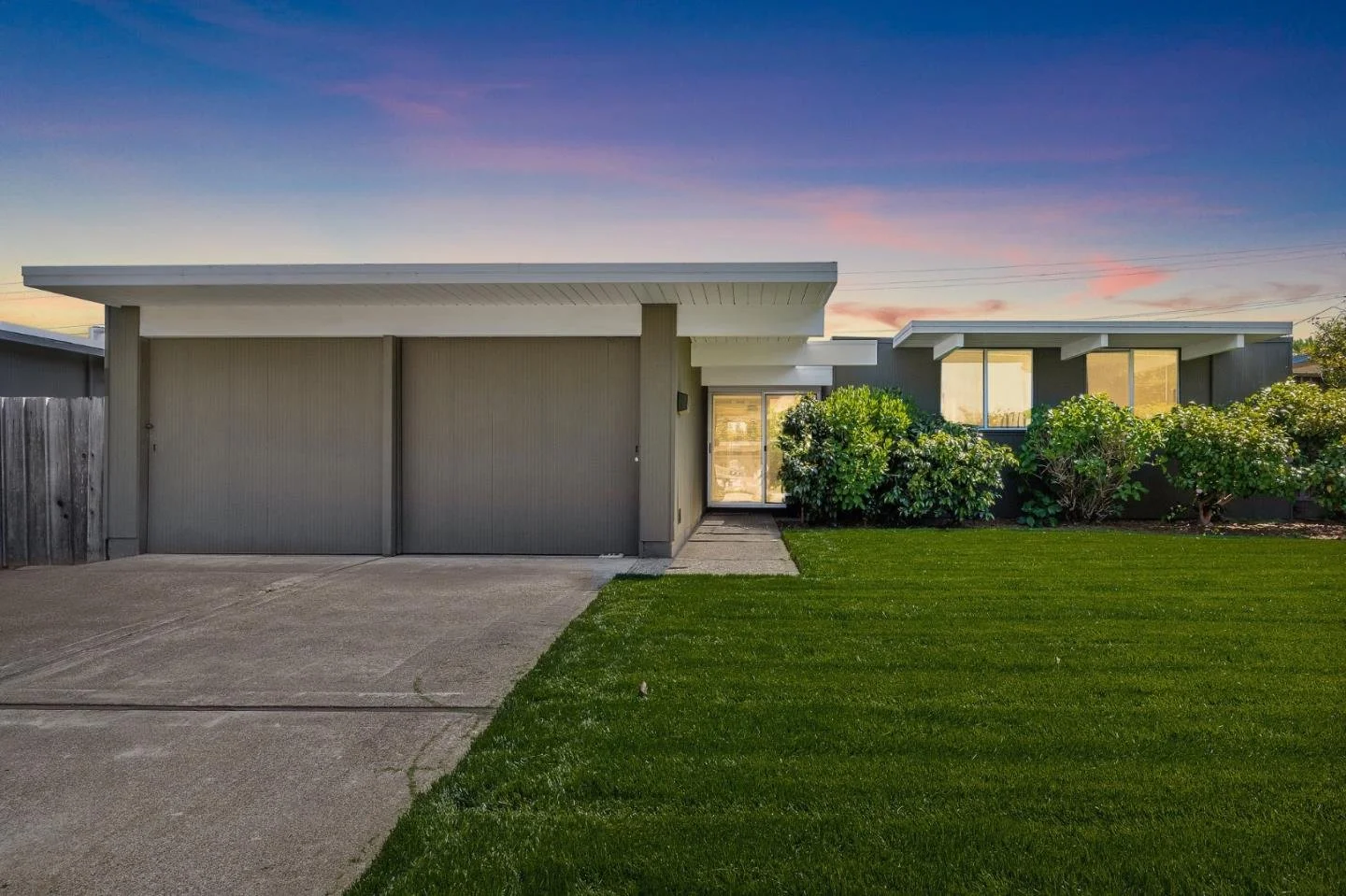
Heading down the Peninsula into the South Bay, the city of Sunnyvale boasts the second-largest concentration of Eichler homes in Silicon Valley – approximately 1,125 Eichlers were built here in the 1950s and 60s boyengarealestateteam.com. While Sunnyvale today is a bustling tech hub (home to campuses for Apple, LinkedIn, Google, and more), its mid-century neighborhoods harken back to an earlier era of peaceful cul-de-sacs and neighborhood swim clubs. Families especially prize Sunnyvale’s Eichler enclaves for their blend of mid-century charm, top-rated schools, and neighborly camaraderie boyengarealestateteam.com. Many residents are second-generation Eichler owners and MCM enthusiasts who lovingly maintain original features such as mahogany walls and in-floor radiant heating. Living in one of these tracts often comes with an old-fashioned community vibe – think block parties, holiday parades, and volunteers who organize to preserve the neighborhood's look. The city government has also been supportive with measures like single-story overlay zoning to prevent McMansions from replacing the classic one-story homes, ensuring Eichler rooflines and modernist profiles continue to define the streetscape.
Sunnyvale’s top mid-century neighborhoods include:
Fairbrae: Located in central Sunnyvale (around Fremont Ave and Hollenbeck), Fairbrae is one of the city’s most cohesive Eichler neighborhoods. Developed in the late 1950s, Fairbrae (and an adjacent tract called Fairbrae Addition) comprises over 270 Eichler homes set amid wide, tree-lined streets. The hallmark here is strong community: Fairbrae has its own private swim and racquet club (founded by Eichler owners in the '60s) that remains a social centerpiece each summer. Many homes sit on larger lots (~8,000+ sq ft), giving owners ample backyard space for pools, gardens, or expansions boyengarealestateteam.com. Architecturally, the tract features both courtyard-entry models and the iconic atrium models. Huge panes of glass bring in light and outdoor views, exemplifying Eichler’s indoor-outdoor living concept. Fairbrae residents have been proactive in preserving their neighborhood’s character – notably, after a controversial two-story rebuild threatened to loom over its neighbors, locals successfully petitioned the city for a single-story zoning overlay across the area boyengarealestateteam.com. Thanks to those efforts, new construction is limited to one story, protecting the mid-century aesthetic for the future. Families here also enjoy excellent schools (the neighborhood feeds into top-rated Cherry Chase Elementary, Sunnyvale Middle, and Homestead High), and it’s common to see kids biking to school or to nearby De Anza Park, adding to the charming community feel boyengarealestateteam.com. In today’s market, a 1,500–2,000 sq ft Eichler in Fairbrae typically sells in the ~$2.1–$3.4 million range, depending on size and upgrades, boyengarealestateteam.com – and bidding wars are not uncommon when these gems hit the market.
Fairwood: Just east of Fairbrae is Fairwood, another sizeable Eichler tract (about 215 homes) built in the early 1960s boyengarealestateteam.com. Bordered roughly by Wolfe Rd and Duane Ave, Fairwood benefits from the same passionate ownership that pushed for preservation – it was among the first Sunnyvale tracts to secure a single-story overlay to keep out-of-scale rebuilds at bay boyengarealestateteam.com. The result is a pleasantly uniform neighborhood of low-slung mid-century homes under a mature canopy of trees. Fairwood Eichlers are similar in style and floor plans to Fairbrae’s (in fact, some models repeat), featuring open beams, courtyards, and “front-to-back” window lines that let light flow through the home. A unique perk of Fairwood is its proximity to Raynor Park and the Apple Park campus – some Apple employees have snapped up Fairwood Eichlers to own a piece of local history, just a five-minute drive from work boyengarealestateteam.com. Schools serving Fairwood (such as Cumberland Elementary and Fremont/Homestead High) are strong, adding to the appeal boyengarealestateteam.com. With many homes still in near-original exterior condition (thanks to design guidelines), Fairwood feels like a mid-century time capsule tucked amid Silicon Valley’s sprawl. Home prices here are comparable to Fairbrae – often in the high $1M to mid-$2M range – making them relative bargains next to Palo Alto Eichlers while offering the same iconic design (boyengarealestateteam.com).
Rancho Verde: In southern Sunnyvale near the Los Altos border (around Fremont Ave and Wright Ave) lies the Rancho Verde Eichler tract. This “lesser-known gem” features broad, curving avenues with some of the best-preserved Eichler homes in the city, boyengarealestateteam.com. Developed in the mid-1960s, many Rancho Verde owners resisted the urge to heavily remodel; instead, they’ve restored original elements. It’s not unusual to spot period-perfect touches like globe pendant lights, unpainted wood ceilings, or original Eichler kitchen cabinetry in these homes. boyengarealestateteam.com. Lots here are generous, and some properties back onto open space or parks (Serra Park and Las Palmas Park are nearby), giving a bit of extra privacy and greenery boyengarealestateteam.com. Tucked away from busy roads, Rancho Verde sees little through-traffic – neighbors often greet each other on evening walks or at the local tennis courts, enjoying the tranquility Eichler intended. The tract feeds into excellent schools (Cumberland Elementary, Sunnyvale Middle, Homestead High), making it popular with families boyengarealestateteam.com. Real estate values are on par with Fairbrae; recent listings have ranged roughly $2.0–$3.3M boyengarealestateteam.com – still a relative value next to similar homes in Los Altos boyengarealestateteam.com. For Eichler aficionados who want the suburban-modern vibe without as much competition, Rancho Verde is definitely worth a look boyengarealestateteam.com.
Sunnyvale Manor / Sunnymount Gardens: Significantly, Sunnyvale is also home to Joseph Eichler’s earliest tract of homes, built in 1949–1950. Known as Sunnyvale Manor (or Sunnymount Gardens), this small cluster of 36 Eichlers near South Mary Ave and Remington Drive represents Eichler’s pilot project for modern living. These homes are more compact and simpler than later models, but they established the Eichler formula of atriums, open beams, and progressive design. Amazingly, Sunnymount Gardens remains one of the best-preserved and most architecturally authentic Eichler enclaves in Silicon Valley, a true testament to the pride of ownership here. Strolling down Dawn Drive or Sunnymount Avenue, one can still see original façades and carports virtually unchanged since 1950. For history buffs, this neighborhood is a must-see, as it illustrates how Eichler’s big experiment began. The fact that these homes still delight owners 75 years later speaks volumes about their design.
Ponderosa Park (Stern & Price/Gavello Homes): Beyond the Eichlers, Sunnyvale also has notable mid-century modern “Eichler-alternative” neighborhoods. One example is Ponderosa Park, developed in the mid-1960s by builders Stern & Price and Gavello (who were Eichler contemporaries) eichlerhomesforsale.com. This tract (near Lawrence Expressway and Ponderosa Ave) features MCM ranch homes that mirror Eichler principles – strong horizontal lines, abundant windows, integrated courtyard patios, and natural materials like redwood siding. Streets such as Quail Ave and Daffodil Way showcase cohesive mid-century streetscapes, with homes averaging 1,400–2,100 sq ft on 6,000–9,000 sq ft lots eichlerhomesforsale.com. Many original owners in Ponderosa Park were engineers and professionals fueling the tech revolution, and the neighborhood was conceived as a model for “livable modernism” in suburbia eichlerhomesforsale.com. The community revolves around the namesake Ponderosa Park – a 9-acre green space with tennis courts, ball fields, and a school – reinforcing the postwar ideal of communal well-being eichlerhomesforsale.com. Today, Ponderosa Park remains a coveted enclave for buyers who appreciate mid-century architecture and a tight-knit community. The Boyenga Team has been involved in marketing homes here, underscoring the demand for these non-Eichler MCM gems eichlerhomesforsale.com. For those seeking “California modern” style outside of Eichler tracts, Sunnyvale’s Ponderosa Park offers an enticing blend of design and lifestyle.
Sunnyvale’s enduring appeal: In summary, Sunnyvale’s mid-century neighborhoods offer an appealing blend of comfort, community, and design. They tend to be a bit more affordable than Palo Alto’s, often with larger lot sizes, while delivering that classic Eichler look and a strong neighborhood social scene boyengarealestateteam.com. Many young tech families have gravitated here as an ideal place to raise kids – you get architecture that’s anything but cookie-cutter, plus the practical perks of safe streets and great schools boyengarealestateteam.com. The City of Sunnyvale has been proactive in helping Eichler owners maintain their tract’s character (through zoning changes and exploring historic districts), which bodes well for the long-term integrity of these enclaves boyengarealestateteam.com. In Sunnyvale, the mid-century modern lifestyle isn’t just preserved – it’s thriving, with block BBQs, community swim clubs, and holiday events keeping the 1950s spirit alive in the 2020s.
Cupertino: Fairgrove Eichlers and Rancho Rinconada’s “Miracle” Ranches
Cupertino might be world-famous as the home of Apple’s spaceship-like headquarters, but tucked within this high-tech city are a couple of fascinating mid-century oases. The most notable is the Fairgrove Eichler tract, an island of 1960s modernism amid otherwise traditional suburbs. Additionally, Cupertino harbors one of the region’s unique Cliff May–designed ranch neighborhoods, Rancho Rinconada, dating to the early 1950s. Both enclaves showcase how mid-century design can flourish even in a rapidly evolving city.
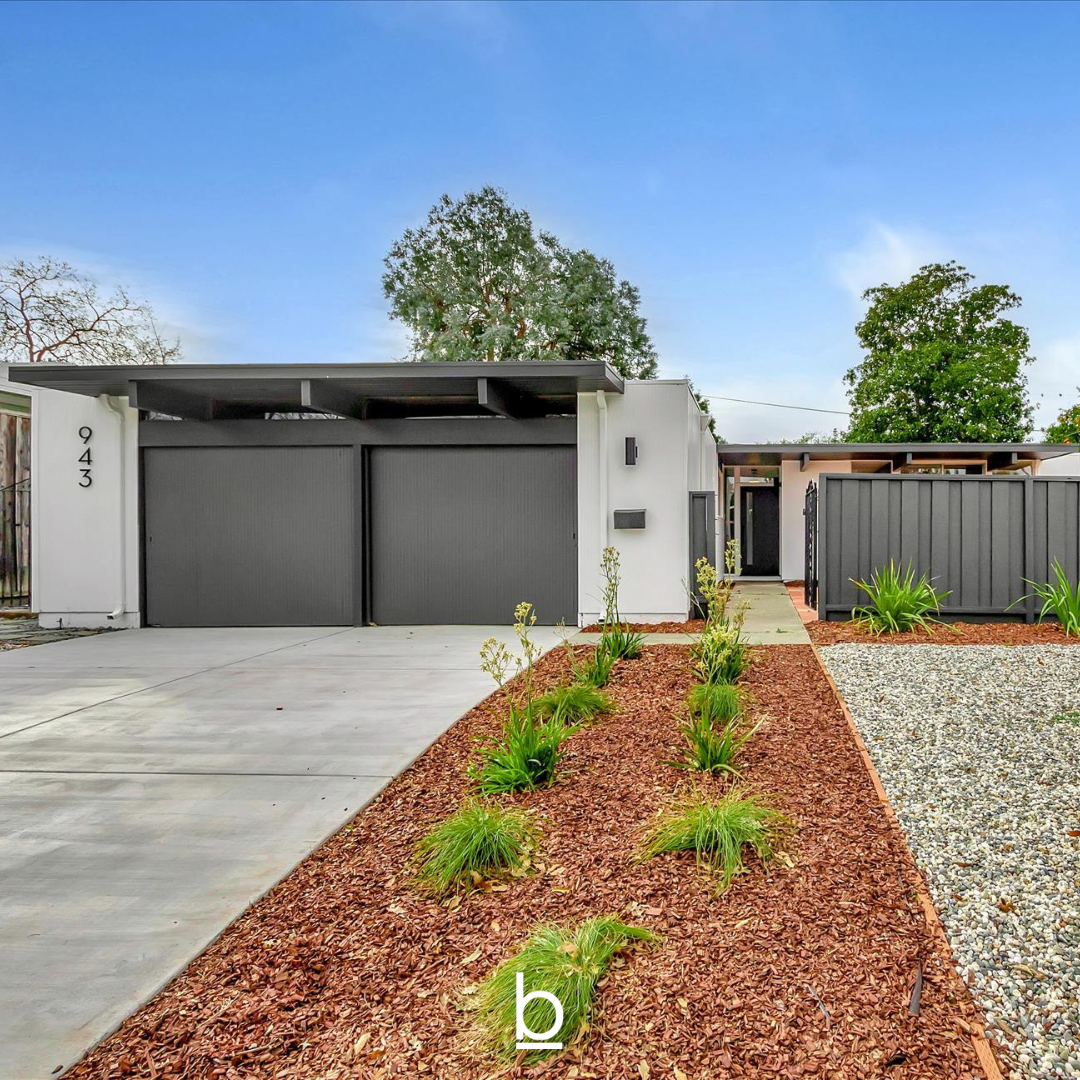
Fairgrove Eichler Tract: In the early 1960s, Joseph Eichler built approximately 225 homes in Cupertino, nearly all of them in one neighborhood known as Fairgrove (located around Miller Ave, Phil Lane, and Bollinger Road) boyengarealestateteam.com. Today, Fairgrove remains Cupertino’s crown jewel of mid-century housing – a serene pocket of single-story Eichler homes just a stone’s throw from the ultra-modern Apple Park campus boyengarealestateteam.com. Driving into Fairgrove, the scenery suddenly shifts: you’ll see low-pitched roofs with extended eaves, clerestory windows, and carport courtyards behind breezeblock walls boyengarealestateteam.com. It truly feels like a slice of 1962 California dropped into the 21st century. Location is a huge part of Fairgrove’s allure – residents enjoy a peaceful, family-friendly atmosphere while being minutes from major employers (Apple, Cupertino Main Street offices) and shopping/dining hubs. Kids can walk or bike to excellent schools (Sedgwick or Eisenhower Elementary, and often Lynbrook or Cupertino High – all top-tier schools that drive demand for homes here) boyengarealestateteam.com. Architecturally, Fairgrove showcases some of Eichler’s later models. The first phase (circa 1960, east of Hyde Dr.) featured mostly 3-bedroom layouts without atriums, while the second phase (1961, west of Hyde) introduced larger 4-bedroom plans with the signature atrium foyers. Notably, all Eichlers in Fairgrove are single-story, consistent with Eichler’s vision – no two-story outliers to break the harmony boyengarealestateteam.com. Recognizing the neighborhood’s importance, the City of Cupertino took early steps to preserve it. In 2001, the city adopted Eichler Design Guidelines for Fairgrove – among the first in the nation – to ensure any remodels or new construction remain compatible with the mid-century aesthetic boyengarealestateteam.com. Thanks to this, Fairgrove has maintained a high degree of architectural integrity: many homes still sport their original grooved wood siding, globe lights, and the iconic Eichler front doors with patterned glass boyengarealestateteam.com. Interiors have been updated over time (it’s not uncommon to find a high-end modern kitchen hiding behind a classic Eichler façade), but homeowners often strive to “do right” by the Eichler style. Market-wise, Fairgrove Eichlers, once the affordable starter homes for engineers, now command strong prices – a well-kept 4-bedroom Eichler can easily surpass $2.5 today. boyengarealestateteam.com. Still, compared to brand-new construction in Cupertino (which might cost $3–4M+), Eichlers here are sometimes a relative bargain and come with that irreplaceable mid-century character boyengarealestateteam.com. Competition is intense for any listing. The neighborhood’s camaraderie (there’s an active email network and regular gatherings) means new buyers are vetted not just by price, but by their enthusiasm for Eichler living. Fairgrove exemplifies how mid-century modern design can thrive in a modern Silicon Valley city when residents and officials work together to preserve a neighborhood’s soul boyengarealestateteam.com.
Rancho Rinconada: Well before Cupertino incorporated as a city, a different kind of mid-century development was taking shape on its eastern fringe. In the early 1950s, builders Stern & Price created Rancho Rinconada, a tract of inexpensive single-story ranch houses, and hired architect Cliff May – the famed “father of the California ranch house” – to design them. Marketed as “Miracle House” for their cutting-edge modular construction, these modest homes could be assembled in a day and were truly affordable for young families. The original development (near Lawrence Expressway, Miller Ave, and Bollinger Rd – now part of Cupertino) included hundreds of California ranch homes that looked straight out of a mid-50s Sunset Magazine. Features included board-and-batten siding, big picture windows, and open plans centered on the kitchen – Cliff May’s formula for casual California living. Yards were landscaped by notable landscape architect Douglas Baylis, enhancing the indoor-outdoor appeal. Over the decades, Rancho Rinconada evolved in a quirky way: because it was county land (outside city limits until the 1990s), homeowners had few restrictions on modifications. As Silicon Valley grew, many of the little ranchers sprouted additions, alterations, and even second stories – often without strict oversight. Today, the area is a patchwork of original 1950s Cliff May cottages and heavily remodeled homes, reflecting the changing needs of residents. While it’s not as cohesive aesthetically as an Eichler tract, traces of the mid-century charm remain if you look closely – a breeze-block wall here, a low-slung roofline there. Enthusiasts still seek out Rancho Rinconada for its history (as one of the earliest large-scale uses of modular ranch housing) and its convenient location on the border of San Jose. Plus, the neighborhood feeds into Cupertino’s prized schools (like Sedgwick Elementary and Cupertino High), which adds value. In recent years, some homeowners and preservationists have started paying more attention to the few intact Cliff May homes left in Rancho Rinconada, hoping to honor the tract’s place in Silicon Valley’s architectural story. While not as famous as Eichler’s work, this enclave is an important chapter in California modernism – showcasing the ranch style that once ruled the suburbs and offering a different flavor of mid-century living in Cupertino.
Cupertino’s mid-century vibe: In a city known for cutting-edge technology and top-notch schools, Cupertino’s MCM enclaves provide a refreshing contrast and connection to the past. Fairgrove in particular demonstrates that even amid modern expansion, a determined community can keep a 60-year-old neighborhood looking and feeling as it did when new. The reward is a truly special place to live, where you can enjoy an Eichler atrium in the morning and be coding at Apple’s campus five minutes later. For buyers who demand both architectural character and educational excellence, Cupertino’s mid-century neighborhoods offer the best of both worlds – with the bonus of a tight-knit community vibe that softens the city’s fast-paced, high-achieving reputation.
Mountain View: Monta Loma – A MCM Gem Beyond the Eichlers
While Mountain View doesn’t have large Eichler-only tracts (Joseph Eichler’s company built only a small number of homes here), it is home to one of Silicon Valley’s most beloved mid-century modern neighborhoods: Monta Loma. Developed by a different builder but often mistaken for an Eichler area, Monta Loma has become a hidden gem for MCM enthusiasts – offering that classic 1950s modern look and lifestyle at a relative value, adjacent to the tech hubs of Mountain View and Palo Alto.
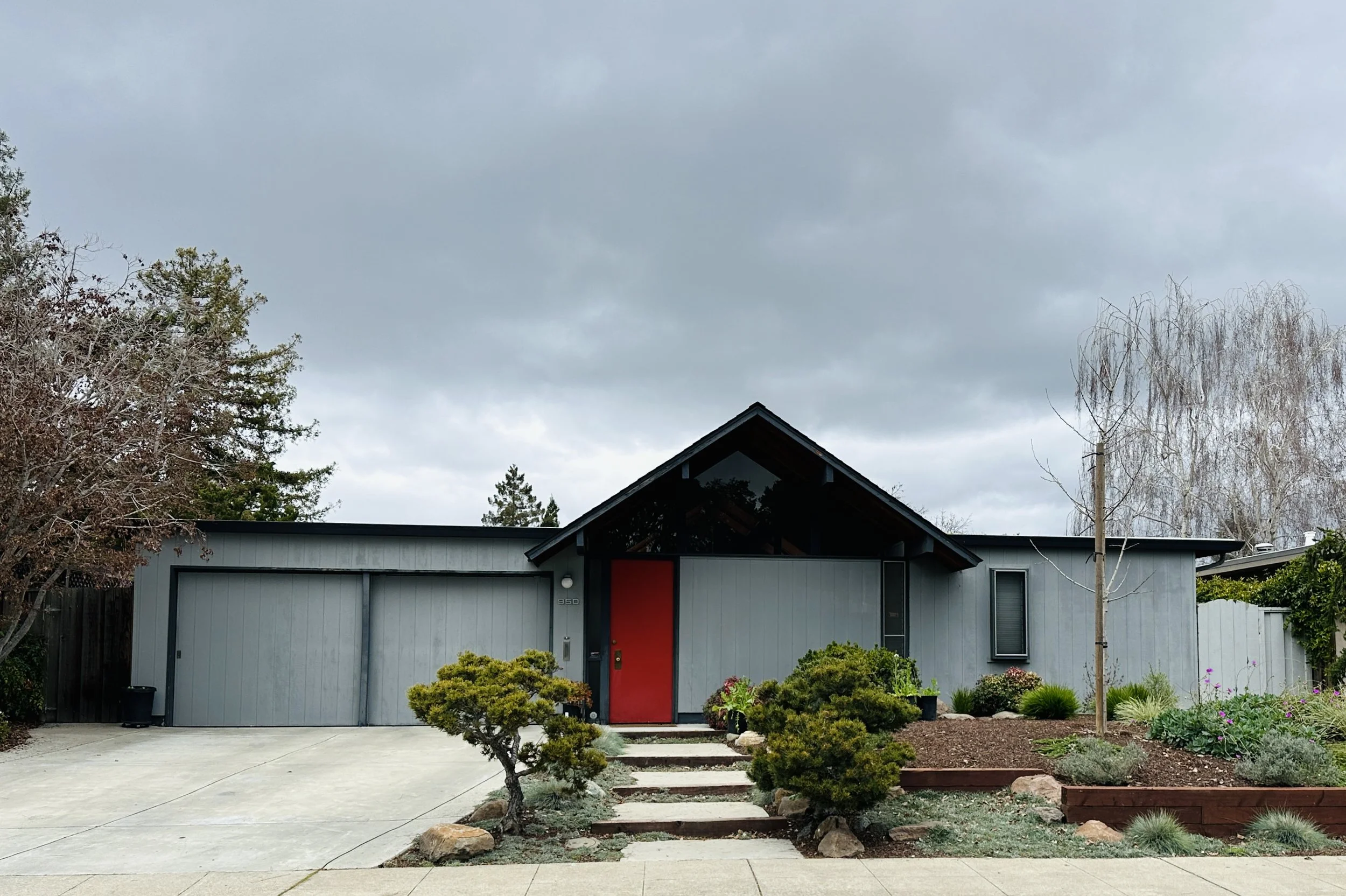
Monta Loma Neighborhood: Located in north Mountain View near San Antonio Road and Middlefield (just south of the Palo Alto border), Monta Loma was developed in the mid-1950s by Mackay Homes (along with a few smaller builders) rather than Eichler boyengarealestateteam.com. However, the look and feel are so similar to Eichler designs that Monta Loma is often considered part of the extended Eichler family of neighborhoods boyengarealestateteam.com. In fact, Monta Loma directly borders a small Palo Alto Eichler tract (on the other side of San Antonio Rd.), and together they form a sizable cluster of mid-century modern homes straddling the city line boyengarealestateteam.com. Monta Loma’s houses are single-story MCM ranches that exhibit many Eichler-like hallmarks: low-pitched gable or flat roofs, post-and-beam construction, open carports, tongue-and-groove wood ceilings, and large panes of glass facing private backyards. Most were built as 3-bedroom, 2-bath homes of 1,100–1,400 sq ft – modest in size, aimed at young families of the postwar era. Impressively, many Monta Loma homes were actually designed by Anshen & Allen (the same architectural firm behind many Eichlers), which explains their striking resemblance to true Eichlers boyengarealestateteam.com. The key difference is they were marketed by Mackay, a developer who, like Eichler, believed in bringing modern design to the masses boyengarealestateteam.com.
Over the years, Monta Loma has seen some changes – a number of homes have been expanded or remodeled, with a few second-story additions popping up boyengarealestateteam.com. Even so, the neighborhood retains a cohesive mid-century charm. Many residents have lovingly restored their houses with period-appropriate details: you’ll spot breeze-block accents, brightly colored front doors, retro porch lights, and drought-tolerant landscaping that wouldn’t look out of place in Palm Springs boyengarealestateteam.com. The Monta Loma Neighborhood Association is very active, organizing events like block parties, neighborhood clean-up days, and even holiday gatherings, which quickly welcome newcomers into the fold boyengarealestateteam.com. There’s a real pride here in maintaining the “time capsule” feel. It’s not uncommon to find neighbors exchanging tips on Eichler-compatible contractors or sourcing vintage globe lights to keep the aesthetic on point – even though Eichler didn’t build these homes, the community culture is very much aligned with Eichler neighborhoods.
One of Monta Loma’s biggest draws is its location for Silicon Valley workers. It sits just a mile from Google’s main campus and a short bike ride from LinkedIn, Microsoft, and others in Mountain View’s North Bayshore area boyengarealestateteam.com. For someone working at Google, owning a mid-century modern home here means a five-minute bike commute via the Stevens Creek Trail – a rare lifestyle combo. It’s also minutes from downtown Mountain View’s Castro Street (with its farmers’ market, cafes, and Caltrain station) and the Shoreline Park nature area and concert amphitheater. Despite this proximity to activity, Monta Loma itself feels tucked away and peaceful. Kids can walk to the local Monta Loma Elementary (right within the neighborhood), and older students attend well-regarded schools like Crittenden Middle and Los Altos High boyengarealestateteam.com. The convenience factor is hard to beat for such a character-filled neighborhood.
Real estate and value: Monta Loma has seen significant appreciation in the last decade as more buyers discover the allure of mid-century living. Homes that might have sold for ~$800k in the early 2010s are now often trading in the $1.8M to $3M range, boyengarealestateteam.com. That said, prices are still generally lower than equivalent Eichlers in Palo Alto or Los Altos, making Monta Loma a comparatively attainable entry into MCM home ownership boyengarealestateteam.com. Prices vary widely depending on how updated a home is. Some properties have been completely remodeled into sleek contemporary showplaces, while others remain in near-original condition awaiting a mid-century revival. One word of advice for buyers here (echoed by Eichler experts): be mindful of over-renovated homes boyengarealestateteam.com. A “remuddled” home that stripped out the post-and-beam ceilings or replaced the expansive glass walls with smaller windows might have lost some mid-century soul. Savvy agents (like the Boyenga Team and other Eichler specialists) often guide buyers toward homes with good bones and original charm intact boyengarealestateteam.com. Overall, Monta Loma offers a delightful taste of Eichler-style living within Mountain View – you get the open-beamed ceilings, glass-walled great rooms, and indoor-outdoor vibe, coupled with Mountain View’s amenities and slightly more bang for your buck boyengarealestateteam.com. It’s the perfect spot for those who dream of an MCM home where they can enjoy California sunsets through clerestory windows and bike to work in the morning. In Monta Loma, Silicon Valley’s past and future truly sit side by side.
Los Altos: Fallen Leaf Park – Prestigious Eichler Homes Amidst the Trees
The city of Los Altos is synonymous with quiet, affluent residential living – filled with winding streets, mature trees, and a small-town downtown. Within its leafy neighborhoods lies one of the most prestigious Eichler tracts ever developed: the Fallen Leaf Park Eichlers. Tucked away in north Los Altos (near Fallen Leaf Lane and Arboretum Drive), this small enclave of mid-1960s Eichler homes stands out for its larger lot sizes, custom architectural details, and a mid-century luxury ambiance. If most Eichler developments were intended as middle-class housing, Fallen Leaf Park was decidedly upscale for its time, showcasing some of Eichler’s biggest and most refined models.
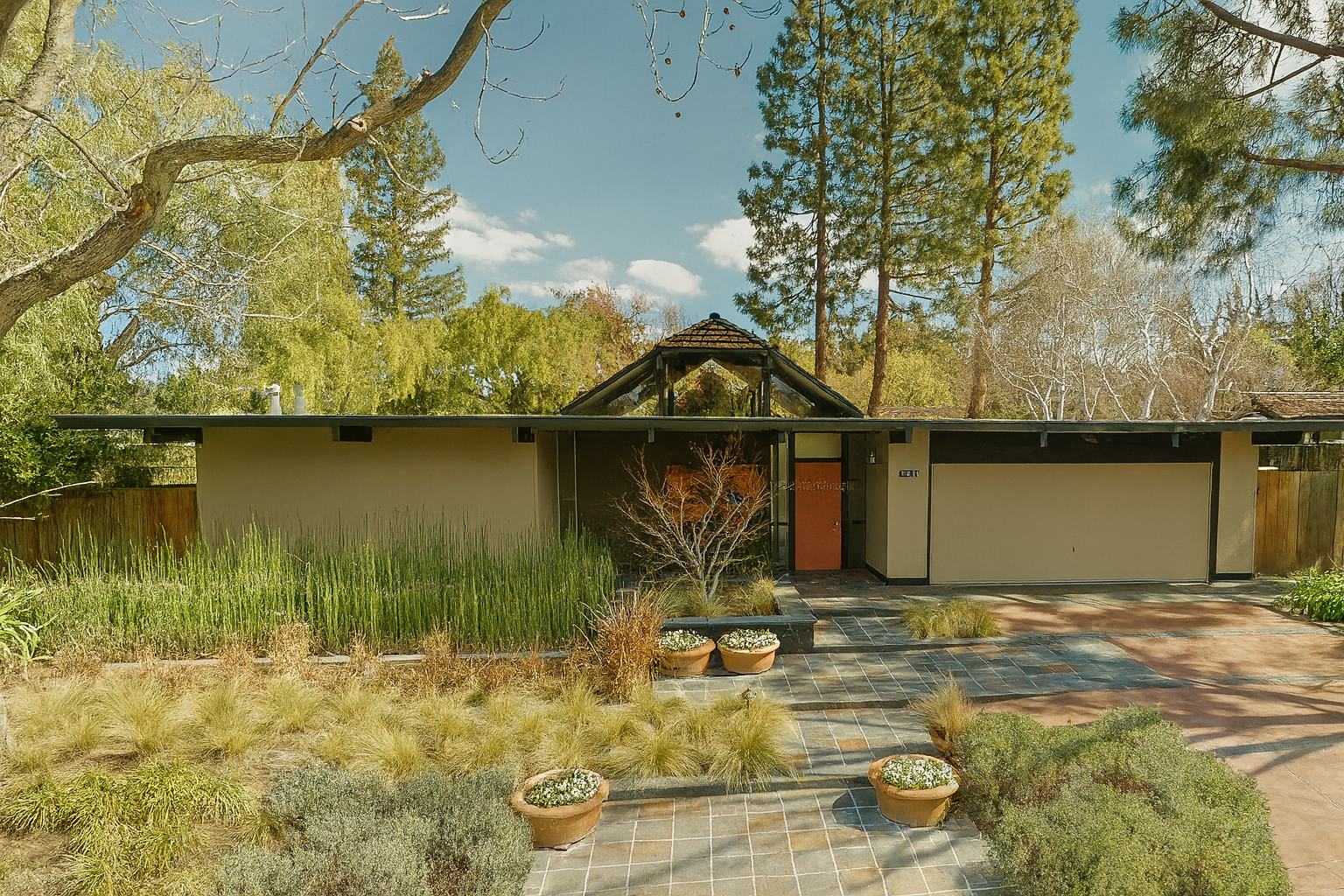
Built around 1965–1966, the Fallen Leaf Park tract comprises only a few dozen Eichler houses, but they are among the most coveted. Many were unique or semi-custom designs by architect Claude Oakland, one of Eichler’s principal architects, known for his later, grander Eichler models, boyengarealestateteam.com. These homes are spacious – often 4 or 5 bedrooms, typically in the 2,000–2,500+ sq ft range, which is quite large for an Eichler boyengarealestateteam.com. They sit on generous parcels (around ¼-acre or more), providing ample room for outdoor amenities. In fact, several original owners added swimming pools when the homes were built – a rarity in other Eichler tracts. The architecture here features dramatic designs such as double-A-frame rooflines, prominent entry atriums, and extensive glass walls that open to verdant backyards. Floor plans often centered on a grand atrium foyer – perfect for showcasing art or plants under natural light – flanked by formal living and dining areas with floor-to-ceiling glass facing the yard. Interior finishes were a cut above Eichler’s more mass-market homes: Philippine mahogany walls, upgraded kitchen appliances, globe pendant lighting, and more built-ins. Many of these touches have been preserved or carefully restored by current owners, so walking into a Fallen Leaf Eichler can feel like visiting a swanky Mad Men-era entertainer’s pad.
What truly sets Fallen Leaf Park Eichlers apart is the setting. True to its name, the neighborhood is rich with mature trees – oaks, redwoods, liquidambars – that cast dappled light on the modernist roofs boyengarealestateteam.com. The streets (like Fallen Leaf Lane) gently curve and lack sidewalks, enhancing the park-like atmosphere and exclusivity. There’s a strong sense of privacy; many lots back up to wooded areas or other large lots, and tall growth screens homes from one another. boyengarealestateteam.com It’s easy to forget you’re just minutes from busy El Camino Real or downtown Los Altos when you’re relaxing in a tranquil atrium gazing at the trees. For families, the area offers excellent schools – the tract is served by top-rated local elementary and middle schools, and Mountain View High School for older students boyengarealestateteam.com. This combination of prestige, privacy, and schools makes Fallen Leaf extremely desirable.
In terms of market value, Los Altos Eichlers (especially Fallen Leaf) rank among the priciest mid-century homes in Silicon Valley. It’s not uncommon to see these traded in the $3–5M range, depending on size, condition, and lot features. They are essentially competing with new luxury builds in Los Altos, and often winning on character and setting. Many have undergone tasteful updates (remodeled kitchens, upgraded roofs and HVAC, etc.) but always to preserve Eichler’s design integrity – thanks in part to an unwritten understanding among owners here about the value of keeping original aesthetics. The city of Los Altos has also generally been supportive of Eichler preservation; a number of these homes have received local recognition in tours and publications.
Beyond Fallen Leaf, Los Altos has a sprinkling of other Eichlers and mid-century homes (some smaller Eichler tracts exist near Los Altos High, for example, and a few custom modernist homes are hidden in the hills). But Fallen Leaf Park is the marquee MCM neighborhood. It offers a unique mix of mid-century modernism and estate-like living. Where else can you find a glass-walled atrium home on a large woodsy lot in the middle of Silicon Valley suburbia? For Eichler aficionados with the means, Los Altos provides an opportunity to enjoy Eichler design on a grander scale – “modern living under the oaks,” as one might say. And as with other prime Eichler areas, having knowledgeable agents who understand these homes (and their special features and value) is key; not surprisingly, the Boyenga Team has handled transactions in Los Altos Eichler neighborhoods, leveraging their expertise to spotlight what makes these properties so exceptional.

Saratoga: Rare Mid-Century Gems in a Prestigious Setting
The affluent town of Saratoga is perhaps best known for its estates, vineyards, and top-ranked schools – mid-century modern isn’t the first thing that comes to mind. Yet, Saratoga has a surprisingly small but vibrant collection of MCM homes, particularly around the Quito Road area near West Valley College. Unlike Palo Alto or Sunnyvale, which have entire Eichler neighborhoods, Saratoga’s MCM treasures are rarer, which in a way makes them even more coveted. Enthusiasts will find one Eichler tract here, as well as a fascinating non-Eichler modernist tract from the 1950s. These homes offer a blend of Eichler’s modernist legacy with the prestige and natural beauty of Saratoga living eichlerhomesforsale.com.
Saratoga Eichler Tract (Quito/Cox Area): Saratoga is home to a single tract of authentic Eichler-built homes, constructed in the mid-1960s as one of Eichler’s last developments in Silicon Valley eichlerhomesforsale.com. Tucked just off Cox Avenue (near Quito Road and Highway 85), this small subdivision contains 35 Eichler houses on streets like Columbine Court, Shubert Drive, and De Havilland Drive. It’s easy to miss – a quiet pocket surrounded by more typical ranch homes – but step into it and you’ll find a mini-oasis of Eichler design. Uniquely, the Eichler homes here are interspersed with a few non-Eichler properties (the tract wasn’t entirely built out by Eichler’s company), but the Eichlers clearly stand out with their flat/low-gable roofs and vertical wood siding. These models were built in 1964–1965, making them later-generation Eichlers that benefited from two decades of design evolution. They are predominantly large single-story, 4-bedroom models (some originally offered as 5BR), with generous layouts of roughly 2,100–2,800 sq fteichlerhomesforsale.com. Notably, lot sizes are bigger here than in most Eichler tracts – around 11,000–14,000 sq ft on average, providing room for features like swimming pools and expansive patios eichlerhomesforsale.com. In fact, one Eichler on Shubert Dr. even boasts an indoor swimming pool – an almost unheard-of feature in Eichler homes, embodying the upscale ambitions for this Saratoga tract eichlerhomesforsale.com.
Architecturally, Saratoga’s Eichlers were designed by Claude Oakland (Eichler’s chief architect in the mid-’60s) and include a mix of “gallery” models and atrium models eichlerhomesforsale.com. Signature Eichler features are on display: post-and-beam construction that allows for sweeping open interiors, central atriums or courtyards that blur indoor and outdoor living eichlerhomesforsale.com, floor-to-ceiling glass walls bringing in views of the lush yard, and the characteristic Eichler palette of materials (exposed beams, radiant-heated slab floors, Tongue-and-groove ceilings, etc.). Many homes back up to a creek or wooded area, adding privacy and a serene backdrop of nature. It’s mid-century modernism meets Saratoga tranquility. The neighborhood kids attend excellent local schools (part of the Campbell Union district or Saratoga’s district, depending on exact location), which is a draw for families.
Being in Saratoga, these Eichlers carry a prestige factor – they are essentially “Eichlers in estate country.” Market-wise, they rarely come up for sale, but when they do, expect competition from both Eichler aficionados and traditional luxury buyers. Prices in recent years have been in the high $2 million to mid-$3 million and rising, as Eichler cachet continues to grow. In 2018, the city added one of these Eichlers to its Heritage Inventory (historic registry), recognizing its architectural significance. The neighborhood doesn’t (yet) have formal Eichler design protections, but many owners understand the value of preservation. Driving through, you’ll still see original Eichler fences, 2-car carports, and unaltered facades on many homes – a sign of pride in the tract’s unique identity. For many, owning an Eichler in Saratoga is the ultimate combination of architectural cool and suburban prestige.
“Peremont” Homes (Anshen & Allen Tract, 1950s): A decade before Eichler built in Saratoga, another modernist enclave took root. In 1954–55, Perego & Montgomery Development (a local builder) created a compact tract of 36 mid-century modern homes off Quito Road and Allendale Avenue. Known by the portmanteau “Peremont”, this tract is a fascinating, little-known chapter of Saratoga’s history. The homes were designed by Anshen & Allen – the very same architects who designed many early Eichlers – and, in fact, these designs were initially used by builder Elmer Gavello for homes in Sunnyvale and Santa Clara. Gavello sold the plans to Perego-Montgomery, who built the Saratoga versions with a few tweaks. The result is that the Peremont homes strongly resemble Eichlers/Gavellos of that era: long and low rooflines, open floor plans, expansive windows, and integrated carports. They were sited on the lots with careful consideration for sun exposure – an indication that Anshen & Allen likely helped orient each home for passive cooling and heating benefits. Most are 3-4 bedrooms, ~1,500 sq ft, with distinctive features like window walls, central courtyards, and even window boxes projecting from the kitchen – a charming mid-century detail.
In the decades after they were built, these homes were simply seen as “modern tract houses,” and many people didn’t realize their architectural pedigree. But in recent years, as mid-century appreciation grew, residents came to treasure their uniqueness. In 2015, one Peremont home became the first mid-century modern house added to Saratoga’s Heritage Inventory (historic register), and soon after, a second home (in the Eichler tract) was added. The designation has inspired other owners to avoid inappropriate changes and to restore original elements. Today, driving through Montpere Way and the adjoining stretch of Quito Road, you’ll notice these 1950s modern houses – some modestly sized compared to surrounding homes, but all exuding a cool retro vibe. They’ve held up remarkably well: owners report that the all-redwood construction has resisted termites and decay much better than newer lumber would. With open beam ceilings and walls of glass facing backyard patios, the Peremont homes live larger than their square footage and continue to attract buyers who want mid-century character in Saratoga. They don’t hit the market often, but when they do, expect prices generally in the $1.8M–$2.5M range (as they are smaller and older than Eichlers). For Saratoga, that’s “starter home” territory – making these mid-century homes a comparatively accessible entry point to the town, if you can snag one. And because the tract has no through-traffic, it retains a tranquil, almost hidden atmosphere. Longtime residents recall when orchards surrounded the area, and many original owners were Lockheed engineers or local doctors in the 1950s. That heritage is part of the charm.
Saratoga’s mid-century appeal: In a town where most homes are custom-built and often traditional in style, Saratoga’s Eichler and Peremont enclaves offer something different: a chance to live in a piece of California modernist history without giving up the upscale suburban lifestyle. These neighborhoods blend modern architecture with Saratoga’s trademark features – large lots, beautiful scenery (the nearby Santa Cruz Mountains), and excellent schools. They also embody Eichler’s ethic of inclusivity and community in a town known for privacy; neighbors in these tracts tend to know and appreciate one another, bonding over their shared love of mid-century design. For buyers, the rarity of these homes is part of the allure. And for Saratoga as a community, having these gems within its borders only enhances the town’s rich architectural tapestry. The enduring market value of these MCM homes underscores their appeal: in Silicon Valley, good design never goes out of style, especially when paired with a prestigious address.
Monte Sereno: Via Sereno’s “Sweet Sixteen” Eichlers – Mid-Century Rarity
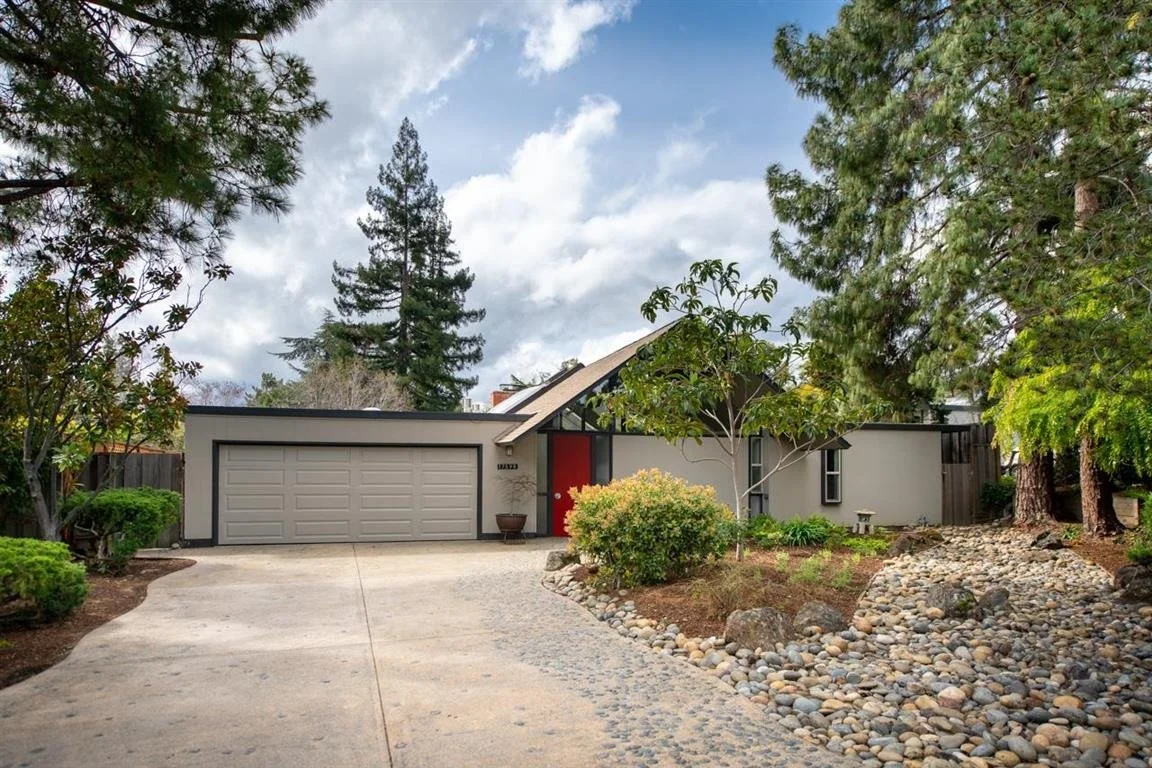
Imagine a secluded cul-de-sac of Eichler homes – just 16 of them – tucked into a verdant corner of Silicon Valley’s foothills. That’s the reality of Via Sereno in Monte Sereno. The tiny city of Monte Sereno (adjacent to Los Gatos and Saratoga) is known for large estates and a semi-rural atmosphere; Eichler homes are nearly unheard of in such settings. Yet in the late 1960s, Joseph Eichler managed to build one exclusive tract here – an intimate cluster that locals affectionately call the “Sweet Sixteen.” These 16 Eichler homes along Via Sereno (a horseshoe-shaped private street off Winchester Blvd) are among the last Eichlers ever built in Northern California, and they represent Eichler’s designs at their zenith boyengarealestateteam.com.
Built around 1969–1970, the Monte Sereno Eichlers benefited from two decades of refinement in Eichler’s approach. Claude Oakland designed all and they are notably large, luxurious models. Many are ~2,000+ sq ft “gallery” models with 4 or 5 bedrooms – generous for Eichler homes – and they sit on oversized lots often exceeding 10,000 sq ft boyengarealestateteam.com. Architecturally, they are stunners: several feature dramatic double-A-frame facades in the front, creating soaring glass-walled entry atriums and vaulted interiors that fill with light. Stepping inside, one might find an expansive great room with a high open-beam ceiling and a whole wall of glass framing views of the Los Gatos foothills. Every home on the street includes the trademark open-air atrium at the center (a quintessential Eichler element). Because these were late-’60s models, many also came with upgrades not seen in earlier tracts – like walk-in closets, eat-in kitchens, and attached two-car garages instead of carports. The combination of mid-century modern style with a bit more luxury (and storage space!) made these homes very comfortable by any era’s standards.
The setting of Via Sereno further elevates its appeal. Monte Sereno has no sidewalks or streetlights in many areas, including here, which gives the street a calm, semi-rural feel – at night, the stars twinkle above the oak trees and Eichler rooflines with minimal light pollution. boyengarealestateteam.com. There’s no through-traffic on the cul-de-sac, so residents enjoy privacy and quiet. Many backyards have lovely vistas of rolling hills or groves of trees, reminding you that open space is not far boyengarealestateteam.com. Yet, despite the tranquility, you’re only a few minutes’ drive from the charming downtowns of Los Gatos and Saratoga, with their boutiques, cafes, and farmers markets boyengarealestateteam.com. Parks and nature are close to – Vasona Lake Park (with walking trails and a lake) and Hakone Gardens (a beautiful Japanese garden in Saratoga) are both nearby for weekend outings. Kids in Via Sereno typically attend excellent schools in Los Gatos or Saratoga, since the street lies near district boundaries – either way, the education is top-notch boyengarealestateteam.com.
Owning one of the “Sweet Sixteen” Eichlers is like joining a very exclusive club. Over the years, these homes have become extremely prized – and priced accordingly. Recent sales have ranged roughly from $3.5 million up to $6+ million boyengarealestateteam.com, putting them on par with other high-end Monte Sereno real estate. In fact, an Eichler here can fetch as much as a brand-new luxury home, simply because of its rarity and architectural cachet. It’s not unusual for these sales to happen quietly, off-market. The owners form a tight community, and sometimes a home will be sold privately to a buyer already identified by a local agent or via word-of-mouth boyengarealestateteam.com. In this way, the neighborhood retains a sense of discretion. For Eichler hunters, it means having connections (and an Eichler-savvy agent) is crucial if you hope to nab one of these jewels boyengarealestateteam.com. The City of Monte Sereno, for its part, has a preservation-minded stance and strict design review; residents have kept original exteriors meticulously, and you won’t see any incompatible second-story additions here boyengarealestateteam.com. Driving down Via Sereno is a treat for architecture fans – the perfect alignment of A-frame peaks and glass walls under the oak canopy feels like a street from a 1970 architectural record, perfectly frozen in time boyengarealestateteam.com. (If you do visit, remember it’s a private street; respectful admiration is fine, but it’s not a public thoroughfare.)
Living in Monte Sereno’s Eichlers: In essence, Via Sereno offers a one-of-a-kind lifestyle. It’s mid-century modern heaven meets Silicon Valley affluence. Homeowners get to enjoy iconic Eichler features – atriums for stargazing, walls of glass for soaking in nature – in an environment that’s exceptionally serene and exclusive. You could host a chic poolside cocktail party in your backyard and gaze at the sunset over the hills, all while living in a piece of architectural history. The community is close-knit, often sharing resources for specialized Eichler maintenance and celebrating their unique homes. In a region where Eichlers are beloved but usually more “middle-class” in setting, Monte Sereno’s Sweet Sixteen proves that Eichler’s designs can also serve as high-end living for those with a connoisseur’s taste. For those fortunate enough (and budget-blessed enough) to secure one, a Via Sereno Eichler is the crown jewel of Silicon Valley mid-century living.
San Jose (Willow Glen): Fairglen Eichlers – Mid-Century Charm in the Heart of the City
Rounding out our tour is San Jose, the largest city in the Bay Area. Within San Jose’s vast expanse of postwar ranchers and modern developments, mid-century modern pockets are relatively rare – but they do exist, most notably in the Willow Glen district. Here, hidden among the palm-lined streets and adorable downtown of “San Jose’s village,” lies a delightful surprise: a cluster of Eichler homes known collectively as Fairglen. These Eichlers bring mid-century modern flair right into the heart of San Jose, offering a time-travel housing experience within a classic Silicon Valley city.
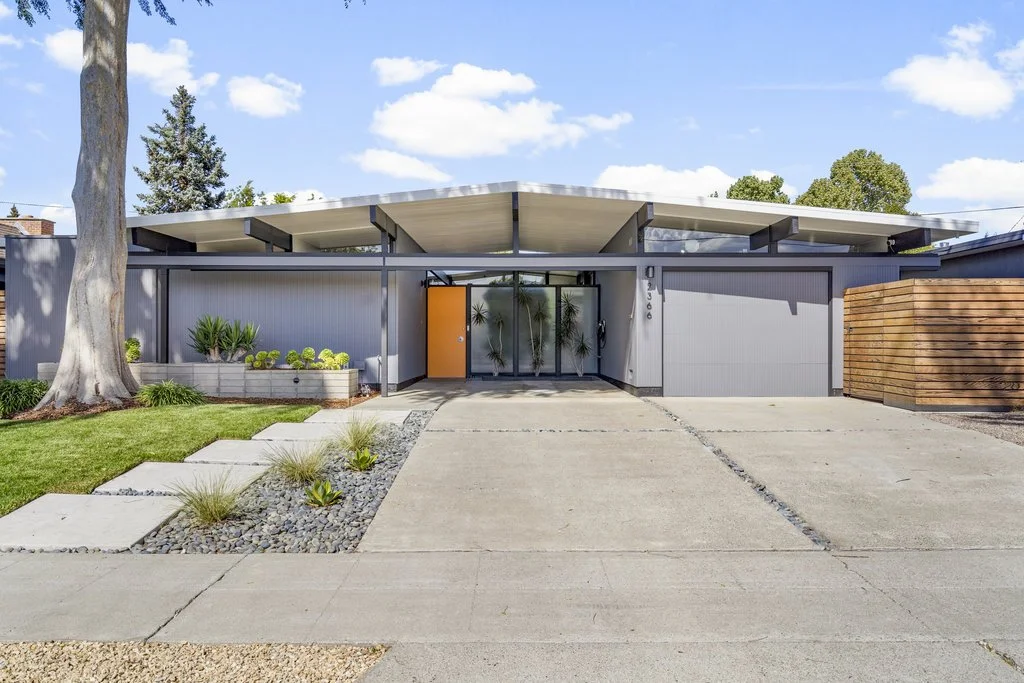
The Fairglen Eichler Tract: Situated in Willow Glen (a neighborhood famous for its small-town-in-the-city feel), the Fairglen Eichlers were built in the late 1950s and total about 247 homes across four adjacent Eichler subdivisions boyengarealestateteam.com. The tract is generally bounded by Booksin Ave, Fairglen Dr, Curtner Ave, and Dry Creek Road – an area sometimes just referred to as “the Eichlers” by locals. It’s one of the southernmost Eichler developments in the Bay Area and the largest concentration in San Jose proper boyengarealestateteam.com. Driving through Fairglen, you’ll see Eichler’s trademark features intermingled with Willow Glen’s traditional charm: low-slung rooflines and post-and-beam profiles side-by-side with towering palm trees and retro street lamps boyengarealestateteam.com. The homes are all single-story, with either flat or low-pitched gable roofs, and many feature the coveted atrium entrances – where you step through a private gate and find yourself in an open-air courtyard before entering the house boyengarealestateteam.com. It’s a dramatic, instantly recognizable Eichler touch that never fails to impress guests. Other homes have front courtyards behind fences or expanded glassy living rooms facing the street. Designs in Fairglen came from Eichler’s late-’50s playbook, with architects like Jones & Emmons and Claude Oakland contributing plans. There’s a diversity in models – some with L-shaped layouts wrapping around a garden, others with central atria – but all adhere to Eichler’s indoor-outdoor philosophy and are uniformly one-story to maintain harmony.
Neighborhood feel: Willow Glen is often described as having a “small town” vibe, and the Eichler enclave fits right in. Neighbors know each other, and there’s a strong sense of community pride boyengarealestateteam.com. In fact, many Fairglen Eichler owners are very active in neighborhood events: they’ve organized Eichler home tours for charity, they go big in Willow Glen’s famous holiday lights displays (imagine an Eichler carport turned into a winter wonderland), and they exchange plenty of referrals for Eichler-experienced contractors and tradespeople. Owning “one of the Eichlers” is a point of pride, and if you move here, don’t be surprised if long-time residents welcome you with stories of the neighborhood’s history or invitations to block parties. The surrounding Willow Glen area offers great amenities – a charming downtown on Lincoln Avenue (coffee shops, boutiques, restaurants), top-notch grocery stores, and community parks. Plus, you’re just a few miles from San Jose’s Rose Garden district, the Municipal Rose Garden, and cultural spots like the Rosicrucian Egyptian Museum boyengarealestateteam.com.
Market and practicalities: Historically, Eichlers in San Jose have been more affordable than those in tonier cities like Palo Alto – sometimes selling for half the price of a comparable Palo Alto Eichler boyengarealestateteam.com. The trade-off was that San Jose didn’t (and still doesn’t) have the same cachet or school rankings, but many buyers found that the larger lot sizes and down-to-earth community more than made up for that boyengarealestateteam.com. In recent years, however, as mid-century modern popularity soared, Willow Glen Eichlers have seen strong appreciation too boyengarealestateteam.com. They’re now often on par with other desirable San Jose neighborhoods in price per square foot, and multiple-offer situations are common when a nicely preserved Eichler hits the market. One thing to note is that San Jose’s Eichler tracts lack the formal protections some other cities have – there’s no Eichler-specific ordinance or blanket single-story overlay here boyengarealestateteam.com. Homeowners instead rely on community goodwill and pride to maintain the character, and so far that’s worked well boyengarealestateteam.com. Over decades, very few two-story intrusions have appeared (and those that did are often set back or designed sensitively). Many owners have opted to restore and upgrade within the original shell – you’ll find houses where original mahogany walls and brick fireplaces have been beautifully restored. Real estate-wise, these Eichlers provide an entry into mid-century ownership at a bit less than Peninsula prices, and with the bonus of Willow Glen’s vibe.
Other San Jose MCM notes: Outside of Fairglen, San Jose has only scattered mid-century modern highlights – a smattering of Eichlers in the Cambrian Park area (near Rosswood Dr. and Curtner, bordering Campbell), and a few custom modern homes in areas like Almaden Valley or Silver Creek built by individual architects in the 1960s. But no other tracts like Fairglen. This makes Fairglen a real treasure for the city. It offers a fusion of mid-century modern and classic San Jose charm boyengarealestateteam.com. Living here, one gets to savor the airy atriums, open-plan living, and iconic design elements of an Eichler, while enjoying the neighborly warmth and convenience of Willow Glen (sidewalks, tree-lined streets, and that friendly wave hello). In many ways, it’s the best of old and new Silicon Valley: you can have your Eichler glass-house dream and still be part of a big city with all its opportunities. For anyone who loves mid-century style but doesn’t want to be too far from urban action, the Fairglen Eichlers of San Jose are the perfect compromise.
The Enduring Appeal of Silicon Valley’s Mid-Century Modern Homes
From the historic Eichler cul-de-sacs of Palo Alto to the “Miracle House” ranches of Cupertino, and from Sunnyvale’s tight-knit Eichler communities to the exclusive Eichlers of Monte Sereno, Silicon Valley offers a rich array of mid-century modern gems. Each neighborhood has its own flavor – some boast swim clubs and circular streets, others are hidden in hills or beside orchards – but all share the hallmarks of the era’s optimistic design: living in harmony with nature, fostering community, and celebrating clean, honest architecture. Decades after they were built, these homes remain highly desirable for their design-forward ethos and the unique lifestyle they provide. They’re more than just houses; they’re a way of life that connects the past to the present.
If you’re a mid-century modern enthusiast, you know how special and sought-after these properties are. Finding (and securing) your dream Eichler or MCM home in Silicon Valley’s competitive market can be as challenging as it is exciting. This is where working with true mid-century experts becomes invaluable. The Boyenga Team at Compass – led by Eric & Janelle Boyenga – is widely recognized as the go-to specialists in Eichler and mid-century modern real estate in the Bay Area. boyengarealestateteam.com. Often called Silicon Valley’s “Property Nerds” for their data-driven approach and deep design knowledge, the Boyenga Team has over 25 years of experience helping clients buy and sell Eichler homes and other architectural properties boyengarealestateteam.com. They don’t just understand the market – they understand the homes inside and out, from knowing which models have atriums or problematic radiant heat systems, to knowing how to market the unique features (like an intact mahogany wall or original globe lights) that make mid-century homes so valuable.
Ready to discover a mid-century gem or sell one? Connect with the Boyenga Team, Silicon Valley’s premier Eichler & MCM specialists, for unmatched expertise. As passionate advocates for preserving mid-century homes, Eric and Janelle Boyenga leverage their extensive network and knowledge to ensure these architectural icons find the right stewards and achieve their fullest value. Whether you’re dreaming of sipping coffee in a glass-walled atrium or passing your beloved Eichler to the next generation, the Boyenga Team will guide you every step of the way with professionalism, integrity, and a genuine love for mid-century modern design. Contact the Boyenga Team today to embark on your own mid-century modern journey in Silicon Valley – and become part of the living legacy that Eichler and his contemporaries created. Your perfect MCM home is out there, and the Boyenga Team is here to help you find it (or find it a new appreciative owner) – because these homes are not just real estate, they’re a California lifestyle waiting to be enjoyed! boyengarealestateteam.com
As Silicon Valley’s leading Eichler & Mid-Century Modern real estate specialists, the Boyenga Team at Compass offers a level of expertise few can match. Founding Compass partners Eric and Janelle Boyenga have built their careers around representing architectural homes across the region—combining deep historical knowledge, data-driven strategy, and a refined design instinct.
Their client representation philosophy is simple:
protect the architecture, elevate the lifestyle, and advocate fiercely for every client.
Whether helping buyers find the right atrium model in Palo Alto or guiding sellers through high-impact marketing for a glass-walled Sunnyvale Eichler, the Boyenga Team approaches each property as a unique architectural story waiting to be told.
Their industry-leading marketing, negotiation strength, and extensive network of mid-century enthusiasts, contractors, preservationists, and design professionals help ensure clients achieve the strongest results—while preserving the integrity and soul of these cherished homes.
When you’re ready to buy or sell a mid-century home in Silicon Valley, partnering with the Boyenga Team means working with true Property Nerds and Next-Gen Agents who live and breathe Eichler architecture.