Do Eichlers sell for more than other houses? It's a fair question, and the honest answer is narrower than the one this page used to give. We looked for a public record that measures an "Eichler premium" and didn't find one. The city and ZIP code medians usually quoted for this question compare different kinds of houses.
What the records can do is show how one Eichler compares with sales that match it closely. Below: why the broad numbers mislead, what moves one Eichler's price up or down, how appraisers handle unusual homes, and how to ask for a paired-sales comparison. For the step-by-step method of pricing one house, see our guide to pricing an architectural home when the comparables don't match.
What we found when we looked for an "Eichler premium"
Government house price data are organized by place, not by builder. The Federal Housing Finance Agency (FHFA) publishes its House Price Index for the nation, states, metro areas, counties, ZIP codes and census tracts, and none of those series separates Eichlers from the houses around them. The index also draws only on single-family homes with conforming mortgages bought or securitized by Fannie Mae or Freddie Mac, so a cash sale, or one financed with a loan larger than those companies may buy, isn't in it.
County assessor values don't answer the question either. Under Proposition 13, a California home is reassessed to market value only when it changes ownership or new construction is completed, and between those events the base value behind the assessment can rise by no more than two percent a year. An assessed value says more about when a house last sold than about what it's worth today.
A search for studies turned up only marketing material comparing Eichler sales with citywide medians, unadjusted for size, lot, condition or date. We don't rely on it. The answer for a particular house comes from a careful comparison, not a category average.
Why city and ZIP code medians can't settle it
A median is the middle sale among whatever happened to sell. The FHFA notes that medians and averages cannot distinguish between changes in the housing stock and changes in house prices. Set an Eichler median beside a citywide median and you're comparing two different groups of houses, with different sizes, lots, ages and conditions, sold in different months. Any gap could come from those differences. And a single tract may have only a few sales in a year, so one heavily remodeled house, or one sold as-is, can move the middle.
A fair comparison matches the houses first. The State Board of Equalization's guide to residential assessment appeals judges physical similarity by distance, zoning, bedrooms and bathrooms, year built, house size, lot size and attributes such as a view, extra improvements, quality of construction and condition. It also asks whether the sale was arm's-length and close enough in date. For Eichlers, add tract, model and permit history to that list.
What moves a particular Eichler's price up or down
Two Eichlers on the same street can be very different houses. These are the differences to weigh.
Condition of the original systems. Palo Alto's Eichler Neighborhood Design Guidelines, adopted in 2018, record the maintenance issues residents raised: flat roofs that can be prone to leaks, foundations without crawl spaces, single-pane glass, lack of insulation, inefficient radiant heating, nonstandard siding, and carports instead of garages. The guidelines add that the original radiant heating and plumbing sit in the concrete slab and may be hard to repair without invasive work. Whether the roof, glass and heat have been addressed, and how, is one of the first things to compare. Our mid-century home inspection checklist covers what to look at.
Permits. California's Transfer Disclosure Statement asks the seller whether they're aware of room additions, structural modifications or other alterations or repairs made without necessary permits. On an Eichler, that can mean an enclosed carport or a roofed-over atrium. See how to check permit history on a mid-century home.
Plan and model. Palo Alto's guidelines describe Eichler floor plans that are fairly square around a center atrium, and others that are U-shaped around a rear patio or a front carport or courtyard entry. An atrium plan and a U-shaped plan on the same block aren't direct matches.
Lot and zoning. Lot sizes vary within a single tract, and zoning sets what can be added. Sunnyvale and Cupertino describe their single-story overlay districts as limiting homes to one story, so a second story isn't an option there.
Original fabric and alterations. How much remains of the beams, glass walls and paneling, and how sensitively any remodel was done, changes which sales are true matches.
Timing. Prices move. Fannie Mae requires that time adjustments, or the lack of them, be supported by evidence, so an older sale needs adjusting before it can stand beside last month's.
How appraisers handle an unusual house
When a buyer's loan will be sold to Fannie Mae, the appraisal follows Fannie Mae's Selling Guide. Its comparable sales section, dated June 4, 2025, sets the frame:
At least three closed comparable sales must be reported.
Sales that closed within the last 12 months should be used; older sales need an explanation.
Comparables should have similar physical and legal characteristics, including site, room count, finished area, style and condition.
Sales from a competing neighborhood are allowed if the appraiser says so and addresses the differences.
Properties that aren't truly comparable may be used when nothing closer exists, if the appraiser documents the analysis and explains why.
The guide's section on adjustments says they must reflect the market's reaction, and for time adjustments it lists paired sales alongside statistical analysis and modeling as ways to set the rate. So the appraiser isn't asked whether Eichlers sell for more in general, but what buyers paid for houses like this one and how the differences adjust.
Lenders using the new UAD 3.6 appraisal format follow a separate Fannie Mae policy supplement, so ask the lender which rules apply to your loan. Our pricing guide covers quality and condition ratings and what to do if an appraisal comes in short.
How to ask an agent for a paired-sales comparison
A paired sale is two sales alike in nearly every way except the feature you want to test. If an Eichler and a non-Eichler house of similar size, lot and condition sold nearby around the same time, the price gap says something about how buyers weighed the difference. One pair proves little; several that point the same way say more.
Here's what to ask for:
Confirmed houses. Make sure each "Eichler" in the set really is one, and note the tract and model. Our six-step check on how to tell if a house is an Eichler helps.
Pairs, not averages. Each pair should be close in distance, house size, bedrooms and bathrooms, lot size, year built and zoning.
The same window of time. Close dates near each other, or a time adjustment with the evidence behind it.
Condition notes for both. Roof, glass, heating, kitchen and baths, and anything the disclosures flagged.
Permit history for both. Pull the city record for each house so an unpermitted addition doesn't read as extra value.
Arm's-length sales only. The Board of Equalization notes that a sale between relatives may not be an arm's-length, open-market transaction. Leave those out or flag them.
The leftovers. Ask which differences remain unadjusted and which way they cut.
If the pairs disagree, that's useful too: it suggests the differences between particular houses matter more than the label. Disclosure duties and loan rules vary, so check yours with a real estate attorney and your lender.
From our listings
Homes we’ve sold in Eichler neighborhoods
One listing photo from each of six Eichler neighborhoods where we’ve sold homes, with the year each one sold. Photos from the listings of six mid-century homes the Boyenga Team has sold in San Jose, Cupertino, Sunnyvale and Palo Alto.
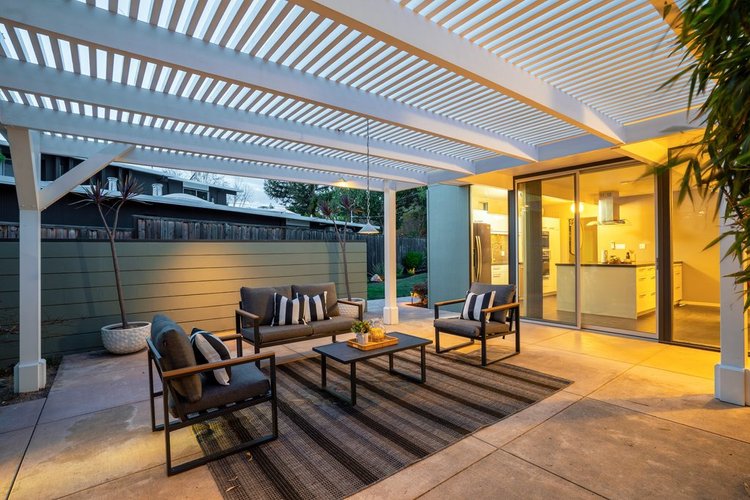
Fairglen, San JosePatio at dusk · Sold 2025 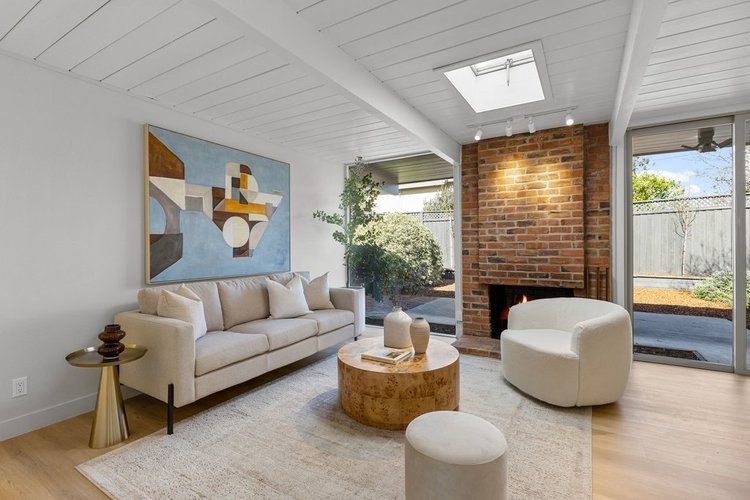
Fairgrove, CupertinoBrick fireplace and skylight · Sold 2026 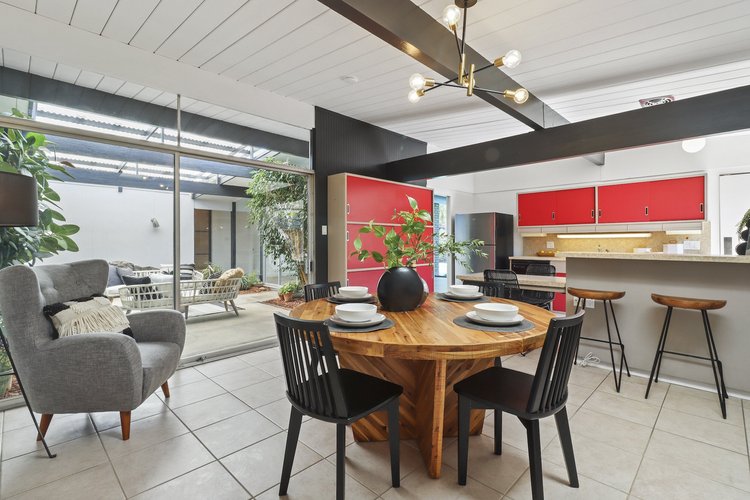
Fairbrae, SunnyvaleKitchen by the atrium · Sold 2022 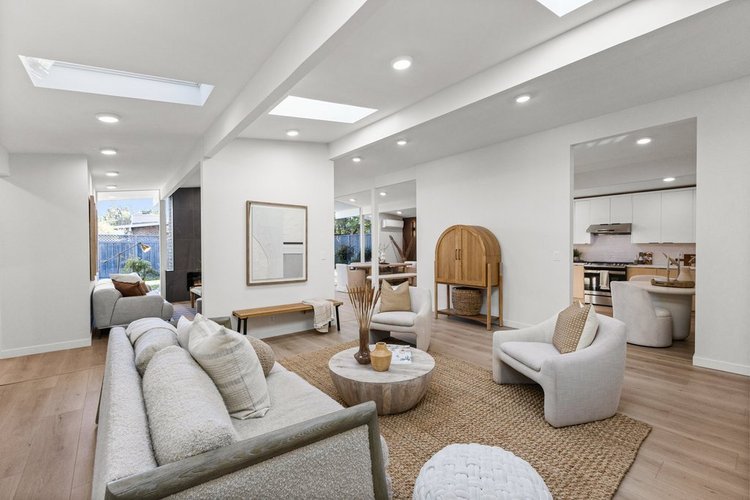
Fairwood, SunnyvaleLiving room with skylights · Sold 2024 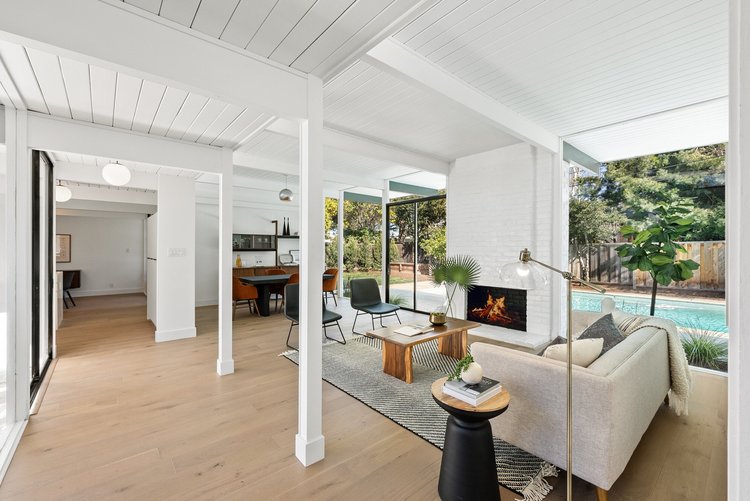
Rancho Verde, SunnyvaleGlass to the pool · Sold 2021 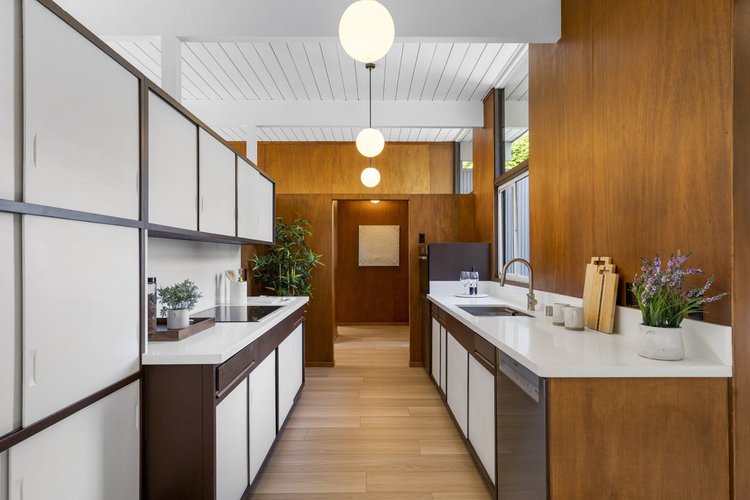
Palo Verde, Palo AltoGalley kitchen · Sold 2024
Listing photographs of homes sold by the Boyenga Team at Compass. More homes we’ve sold
See our portfolioFrequently asked questions
Is there an official price index for Eichler homes?
Not that we found. The FHFA's indexes are published by geography, down to ZIP codes and census tracts, not by builder or style. Any "Eichler premium" figure comes from someone's own comparison, so ask how the houses were matched.
Will an appraiser give credit for Eichler design?
An appraiser works from comparable sales, and Fannie Mae's guide says adjustments must reflect the market's reaction. Style is one of the characteristics it lists for comparables, so the strongest support is a set of recent sales of similar Eichlers. The name alone doesn't carry a set adjustment.
Do atrium models sell for more than other Eichler plans?
We know of no public data that answers this, and the figures that circulate don't show how the houses were matched. The way to test it is the same paired approach: atrium and non-atrium plans in one tract, similar in size, lot, condition and sale date. Even then, the answer describes that tract, not every Eichler.
We're Eric and Janelle Boyenga of the Boyenga Team at Compass, Silicon Valley's Property Nerds®. We've been in Silicon Valley real estate since 1996, with 2,520+ homes sold and $2.6+ billion in sales. If you'd like a paired-sales comparison for an Eichler you own or are considering, call or text (408) 373-1660 or (650) 383-8606, or contact the Boyenga Team.
Related reading
Is a Mid-Century Modern Home a Good Investment? Costs to Weigh First
Eichler ZIP Code Price Trends: How to Read the Long-Run Data
Pricing an Architectural Home When the Comparables Don't Match
Selling a Mid-Century Modern Home: What to Fix and What to Leave
Mid-Century Tract Homes vs. Custom Moderns: What Buyers Should Know