
The Architectural Asset Class: Strategic Analysis of the Oakland Mid-Century Modern Residential Market
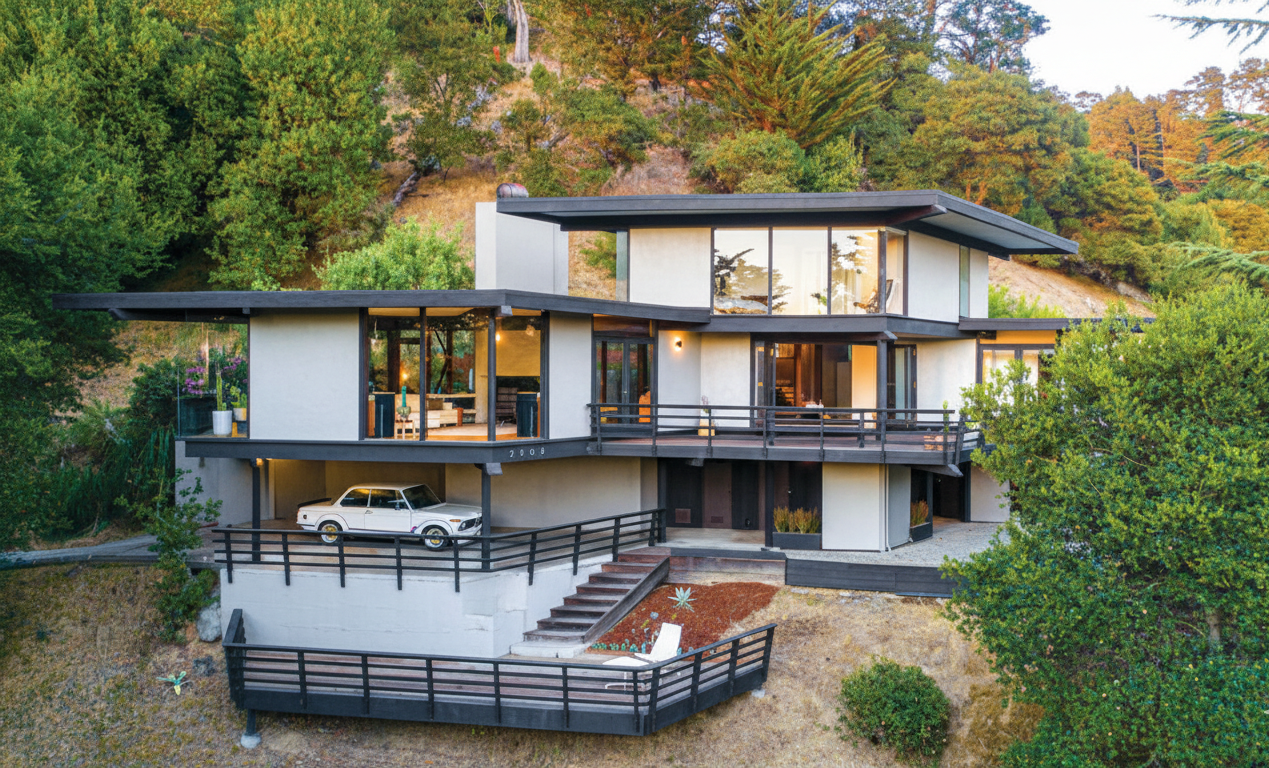
The convergence of historical provenance, topographical necessity, and post-war economic ambition has established the Oakland Hills as a primary node for mid-century modern (MCM) residential architecture. Within the broader San Francisco Bay Area real estate ecosystem, these properties represent more than mere housing inventory; they constitute a distinct architectural asset class characterized by a supply-side scarcity that is increasingly at odds with a tech-driven surge in demand. As modern professionals migrate from the high-density hubs of Silicon Valley and San Francisco toward the more expansive, nature-integrated enclaves of the East Bay, the market for "California Modern" and "Second Bay Tradition" homes has undergone a fundamental transformation. This analysis explores the systemic factors—ranging from the 1906 seismic catalyst to contemporary "Next-Gen" marketing strategies—that define the value proposition of Oakland’s mid-century modern landscape.
Historical Underpinnings: Topography as Architectural Destiny
The architectural identity of the Oakland Hills is inextricably linked to the city’s early 20th-century expansion and the unique constraints of its terrain. While Oakland’s urban development began in the flatlands—driven by the Peralta family’s cattle industry and the mid-1840s lumber trade—the hills remained a rustic frontier until the early 1900s. The 1906 San Francisco earthquake and fire served as the definitive pivot point for the city’s modernization. The resulting exodus of residents from San Francisco across the Bay necessitated a rapid scaling of infrastructure and residential housing east of Lake Merritt.
In 1909, Oakland annexed the entire northern hill area and East Oakland, tripling the city’s geographic footprint. This annexation coincided with the construction of Oakland’s first skyscraper in 1903 and the election of Mayor Frank Mott, signaling the city’s arrival as a metropolis capable of architectural innovation. However, the real transformation occurred in the post-WWII era. The wartime boom had already altered Oakland’s demographic landscape, as a massive migration of workers arrived to fuel the largest seaport in Northern California and the strategic rail terminals. This population surge created a pressurized housing market, eventually leading to the city's first master planning effort in 1957.
The post-war migration patterns also established the racial and socioeconomic geography that would define the hills. While federal housing policies and discriminatory lending practices (redlining) concentrated density in West Oakland, the hills were developed as lower-density, high-value enclaves. This segregation of land use allowed the hills to become a laboratory for modernism, where the "Second Bay Tradition" took root.
The Evolution of the Second Bay Tradition
The Second Bay Tradition (1928–1942 and post-WWII) was an architectural movement that rejected European modernism’s cold machine aesthetic in favor of a "woodsy," regional philosophy. Pioneered by figures like William Wurster, the style utilized "redwood post and beam" construction to create homes that harmonized with the wooded slopes of the Oakland Hills. This movement emphasized a rustic, understated elegance that prioritized the connection between the inhabitant and the landscape.
Historical Milestones Impacting Hillside Development
First Oakland Skyscraper (1903)
Impact on Hillside Development: Modernization signal; start of urban density.
SF Earthquake/Fire (1906)
Impact on Hillside Development: Massive migration catalyst; demand for hill housing.
Annexation of Hill Areas (1909)
Impact on Hillside Development: Expanded city boundaries; opened hill tracts.
First Master Plan (1957)
Impact on Hillside Development: Established policy for suburban expansion.
Mills Act Passage (1972)
Impact on Hillside Development: State law enabling historic property tax reductions.
The Sequoyah Hills Phenomenon: A Study in Constrained Supply
In the catalog of mid-century modern developments, few enclaves carry as much mythic weight as Sequoyah Hills, often referred to as "The Lost Eichlers of the Oakland Hills". Constructed between 1965 and 1966, this neighborhood represents a singular intersection of architectural history and business strategy. It was Joseph Eichler’s only foray into the city of Oakland and served as a historical bookend for his career as a developer of single-family tracts.
The Strategic Pivot and the "Lost" Inventory
The scarcity that defines Sequoyah Hills today was not intentional but was the byproduct of the Eichler Homes company's financial restructuring. By the mid-1960s, rising land and material costs forced Joseph Eichler to diversify his portfolio away from suburban tracts and toward urban high-rise projects in San Francisco. Consequently, the Sequoyah Hills project was cut short after only approximately 48 to 53 homes were completed.
This "Lost Eichler" status creates a permanent supply-side constraint. With only a few dozen homes in existence, annual turnover is exceptionally low, ensuring that each new listing is a rare event that attracts significant attention from a dedicated pool of design enthusiasts.
Architectural Innovation for Sloped Terrain
Sequoyah Hills homes are not merely replicas of Peninsula Eichlers; they represent the culmination of two decades of design evolution, adapted masterfully for a challenging hillside environment. Master architects Claude Oakland and the firm of Jones & Emmons were forced to move away from the flat-land floor plans common in the South Bay.
Roofline Dynamics: While flat roofs are common in flat tracts, Sequoyah Hills features dramatic pitched gables and the exceedingly rare "double A-frame" design, which creates soaring, cathedral-like vaulted interiors.
Material Integrity: These homes utilized in-floor radiant heating systems with copper pipes—a more durable and desirable material adopted in Eichler’s later projects to solve the corrosion issues associated with earlier steel systems.
Integration: The design philosophy emphasized "bringing the outside in" through expansive glass walls that dissolved the boundaries between the home and the surrounding redwoods.
Demographic and Socioeconomic Profile: The Tech Sector Migration
The demographic profile of the Oakland Hills—specifically ZIP codes 94611 (Montclair/Piedmont Pines), 94618 (Rockridge), and 94619 (Redwood Heights)—reveals a population that is increasingly aligned with the high-earning, tech-centric workforce of Silicon Valley and San Francisco.
Income and Economic Velocity
The economic disparity between the hills and the city center is stark. While Oakland city-wide has a median household income of $97,369, the median household income in ZIP code 94611 is approximately $176,517. In the most exclusive enclaves, such as ZIP code 94618, this figure climbs to $205,552.
Oakland City
Median Household Income: $97,369
High Income Households (>$200k): 22.8%
Per-Capita Income: $58,987
Zip Code 94611
Median Household Income: $176,517
High Income Households (>$200k): 44.0%
Per-Capita Income: $113,616
Zip Code 94618
Median Household Income: $205,552
High Income Households (>$200k): 50.4%
Per-Capita Income: $119,553
Zip Code 94619
Median Household Income: $129,879
High Income Households (>$200k): 31.3%
Per-Capita Income: $63,929
This economic strength is supported by a highly educated resident base. Nearly 49% of Oakland residents city-wide hold a bachelor's degree or higher, but in the 94611 zip code, this number is significantly amplified, reflecting a workforce primarily engaged in Professional, Scientific, and Technical Services.
The "Eastward Move" and Gentrification
The trend of high-earners migrating from Silicon Valley to Oakland is driven by the search for relative value. A mid-century modern home in Oakland often offers more architectural drama and square footage for the dollar than a comparable property in Palo Alto or Sunnyvale. This migration has accelerated gentrification in adjacent neighborhoods, but in the hills, it has primarily bolstered the existing "preservationist ethos," as new owners view these homes as cultural and historical assets.
The Educational Landscape: Anchoring Real Estate Value
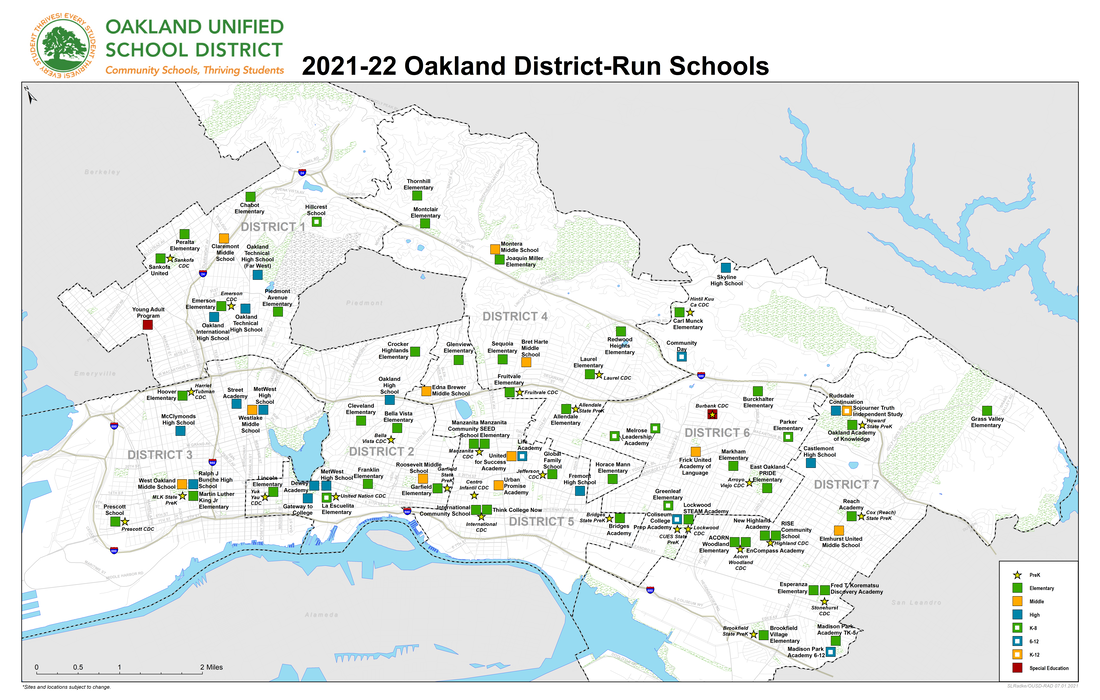
For potential homeowners, the school district serves as the primary predictor of long-term property appreciation. The Oakland Hills are served by a mix of prestigious public schools within the Oakland Unified School District (OUSD) and elite private institutions.
Public School Performance and Boundary Relevance
School boundaries in the hills are critical. Homes within the catchment areas for Hillcrest Elementary and Thornhill Elementary command a significant premium. Hillcrest, a K-8 school, is ranked among the top public schools in Alameda County, with proficiency rates in reading and math significantly exceeding state averages.
Public School Performance
Hillcrest Elementary
Grade Level: K–8
Niche Grade: A-
Student-Teacher Ratio: 22:1
Thornhill Elementary
Grade Level: K–5
Niche Grade: A-
Student-Teacher Ratio: 25:1
Montclair Elementary
Grade Level: K–5
Niche Grade: A-
Student-Teacher Ratio: N/A
Chabot Elementary
Grade Level: K–5
Niche Grade: A-
Student-Teacher Ratio: N/A
The Private School Ecosystem
The presence of world-class private education further cements the hills' desirability. Head-Royce School, founded in 1887, is ranked #4 for Best Private K-12 Schools in California. With a tuition of approximately $56,130 and a student-teacher ratio of 7:1, it remains a primary feeder for the Ivy League and Top Tier UC schools. Similarly, Bentley School (ranked #8) offers a rigorous college-preparatory environment that balances academics with a high-energy athletic culture.
Neighborhood Attractions and Lifestyle: The "Bavarian Mountain Town"
The lifestyle in the Oakland Hills is defined by its topographical separation from the urban core. Montclair Village, the primary commercial hub for the 94611 area, is often described as having a "Bavarian mountain town" vibe, characterized by winding roads, lush greenery, and a pedestrian-friendly village center.
Culinary and Retail Landmarks
The village economy is sustained by high-end dining and niche boutiques that cater to a discerning demographic.
Dining: Daughter Thai Kitchen and Kakui Sushi are regional destinations, while Perle offers a luxurious wine-focused experience with caviar service. The Montclair Egg Shop has remained a village staple for over five decades.
Retail: McCaulou’s provides essential local department store services, while boutiques like Pelago and A Great Good Place for Books emphasize a curated, independent retail experience.
Recreation: The hills offer immediate access to Joaquin Miller Park and Redwood Regional Park, which provide over 500 acres of wilderness within city limits. The Montclair Railroad Trail, a 3.1-mile path built on a former railway grade, connects the village to Shepherd's Canyon Park.
Commuter Connectivity
Despite the feeling of remote forestry, the area is strategically located for tech-sector commuters. The Rockridge BART station and the MacArthur BART hub provide direct transit to San Francisco and the South Bay. Highway 13 and Highway 24 serve as the primary automotive arteries, connecting hill residents to major tech employers like Apple and NVIDIA in under an hour.
Architectural Highlights: Decoding the Modernist DNA
Oakland’s housing inventory is a mix of custom estates, mid-century modern tracts, and California bungalows. However, for the modern investor, the "architectural premium" is most visible in homes that exhibit the traits of the modernist movement.
Predominant Styles and the "Eichler Genome"
Joseph Eichler’s work introduced the concept of the "atrium model" to the middle class, but in the Oakland Hills, these designs were elevated to a higher art form. The "Eichler Genome" consists of 10 defining traits, the most important being post-and-beam construction, which eliminates load-bearing interior walls to create open-plan living.
Mid-Century Modern (Eichler)
Key Builders: Joseph Eichler, Claude Oakland
Defining Features: Atriums, glass walls, radiant heat, post-and-beam.
Second Bay Tradition
Key Builders: Wurster, Lee, Hill
Defining Features: Redwood framing, machine aesthetic, rustic philosophy.
Silicon Valley Modern
Key Builders: Gavello, Bahl, Mackay
Defining Features: Patio-focused, raised foundations, A-frame gables.
Contemporary
Key Builders: Various Architects
Defining Features: Flat roofs, gables, exposed beams, unusual textures.
The Silicon Valley Connection: Gavello and Bahl
While Eichler is the most recognized name, other builders from the Silicon Valley boom created homes with shared DNA. Gavello Homes (Sunnyvale/Santa Clara) often utilized cathedral-style A-frame rooflines and larger lot sizes compared to Eichler. Bahl Homes, known for their "Bahl Patios," took the indoor-outdoor concept to an extreme by centering every home around a private enclosed courtyard, maximizing privacy on smaller lots. These builders avoided the complexities of radiant heat in their later years, often opting for crawl-space foundations and forced-air heating. Understanding these nuances is essential for valuation, as one Eichler is not interchangeable with another.
Real Estate Market Analysis: Quantifying Scarcity
The Oakland Hills real estate market in 2024–2026 exhibits high competitiveness and a disconnect between limited supply and aggressive demand.
As of spring 2025, the median sale price in the 94611 ZIP code remains approximately $1.5 million, nearly double the overall median for Oakland (~$766,000). While broader market fluctuations have caused a slight cooling from the pandemic-era peak, values in the hills have held strong, dropping only 1–2% year-over-year.
Real Estate Market Metrics (94611)
Median Sale Price: $1.5 Million
Trend: Stable (-1%)
Median Days on Market: 15–20 Days
Trend: Extremely Fast
Sale-to-List Ratio: 107.5%
Trend: Homes sell over asking
Inventory (Total Units): ~196
Trend: Critically Low
Velocity and Demand Patterns
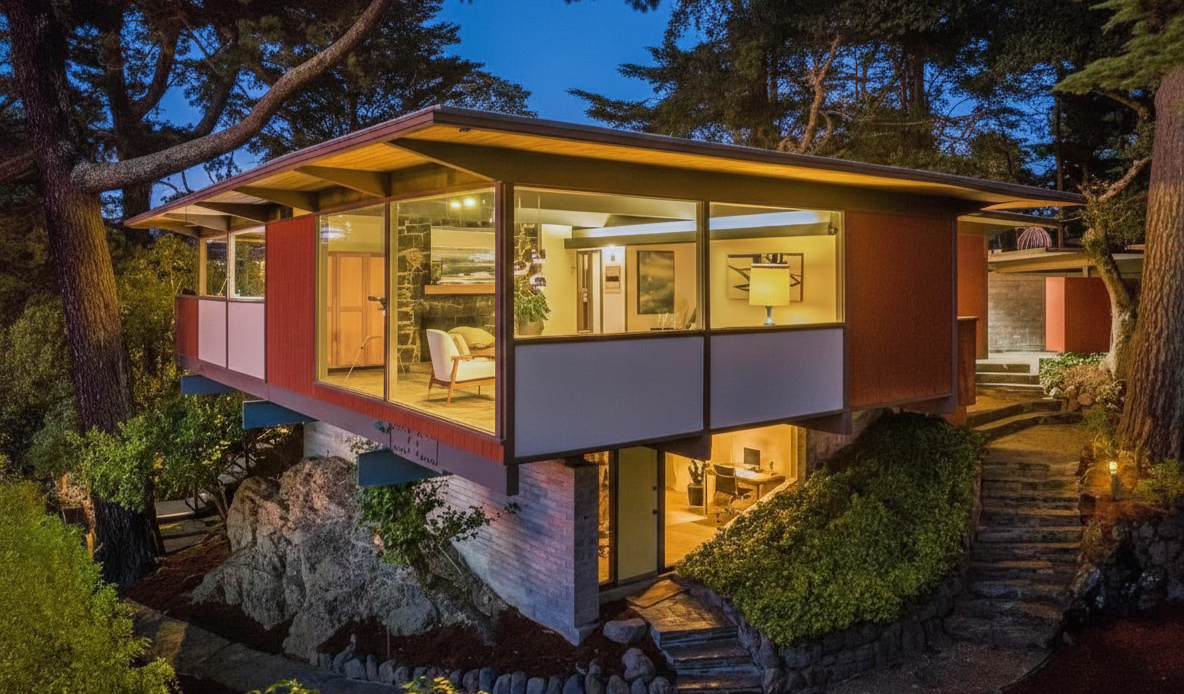
Homes in the hills are classified as "most competitive" by Redfin, receiving an average of 3 to 4 offers per property. The most stunning, fully restored MCM homes can fetch north of $2M, while smaller "original condition" ranch properties—now rare finds—list just under $1M. The "MSI" (Months of Supply Inventory) has fallen significantly since 2023, indicating a market that heavily favors sellers.
Investment Outlook
The long-term value of these properties is bolstered by the "fixed supply" of architectural cachet. As the Oakland economy continues to grow as a tech and innovation hub, high-earning professionals will continue to seek out enclaves like Sequoyah Hills and Montclair, viewing these homes as "cultural assets" rather than simple real estate.
Operational Excellence: The Boyenga Team Advantage
In a design-driven market where valuation depends on architectural fluency, the Boyenga Team has established themselves as the essential strategic partners for buyers and sellers. The Boyenga Team are Silicon Valley real estate experts who have redefined the transactional experience through a blend of analytics and elevated storytelling.
The Next-Gen Agent Methodology
Led by Eric and Janelle Boyenga, the team has built a reputation as "Property Nerds" by prioritizing data-backed guidance and architectural literacy. As founding partners at Compass, they leverage a high-tech ecosystem to deliver results.
Compass Concierge: This program allows sellers to maximize their home’s potential by fronting the costs for high-ROI renovations, staging, and landscaping with zero upfront cost.
Private Exclusives: Through Compass’s elite network, the Boyenga Team provides early visibility into pre-market Eichlers and off-market luxury listings, giving buyers a strategic advantage in a supply-constrained environment.
Specialist Valuation: The Boyenga Team are Eichler and mid-century modern specialists who understand that value is driven by design integrity and the preservation of original features like mahogany walls and tongue-and-groove ceilings.
Case Study: 6227 Wood Dr, Oakland
A primary success story involves the sale of 6227 Wood Dr for $1,750,000. The home, located on the coveted Piedmont side of Montclair, featured Bay views and an elegant open floor plan. Despite a modest street presence, the Boyenga Team’s marketing emphasized the "graceful scale" and "thoughtfully refreshed interior," leading to a quick sale in a competitive market.
Case Study: 6724 Sobrante Rd, Oakland
The team represented the buyer in the $1,150,000 sale of this 1,709-square-foot Montclair home. Surrounded by redwoods and featuring soaring beamed ceilings and a statement stone fireplace, the property epitomized the "wooded sanctuary" lifestyle sought by modern professionals. The team’s ability to navigate the nuances of the Montclair market ensured a successful acquisition in a fast-paced environment.
Leadership in Luxury and Design
The Boyenga Team are leaders in luxury, design-forward real estate, with over $2.1 billion in total value sold. Their record of success spans more than a century of combined experience, encompassing everything from historic Tudors to futuristic mid-century masterpieces. With a deep understanding of market areas, school strategies, and the unique legal requirements of fiduciaries and trusts, the team offers "white-glove" service that generic agents cannot replicate.
Positioned at the intersection of Silicon Valley’s innovation and Oakland’s historic charm, the team delivers unmatched local knowledge of San Jose’s finer communities while dominating the East Bay’s hills. Whether leveraging proprietary tools like Matterport and Modsy or utilizing exclusive partnerships with platforms like HomeLight, the Boyenga Team sets the modern standard for real estate execution.
The Strategic Future of the Oakland Hills
The Oakland mid-century modern market is a study in the resilience of architectural value. Despite interest rate shifts and broader economic uncertainty, the demand for homes that integrate with the natural world through post-and-beam skeletons and walls of glass remains unyielding. The "Lost Eichlers" of Sequoyah Hills and the rustic post-and-beam homes of Montclair are no longer just suburban housing; they are prized collections of architectural artifacts.
For the modern buyer, these homes represent a high-quality lifestyle choice supported by top-rated schools and a village economy that values independence and creativity. For the seller, these properties are design assets that require a specialist’s touch to achieve their full value potential. As Oakland continues its economic trajectory as a tech-driven center of innovation, the hills will remain its most prestigious residential frontier.