
Mill Valley Mid-Mod Homes: A Scarcity-Driven Neighborhood Profile in the Redwoods
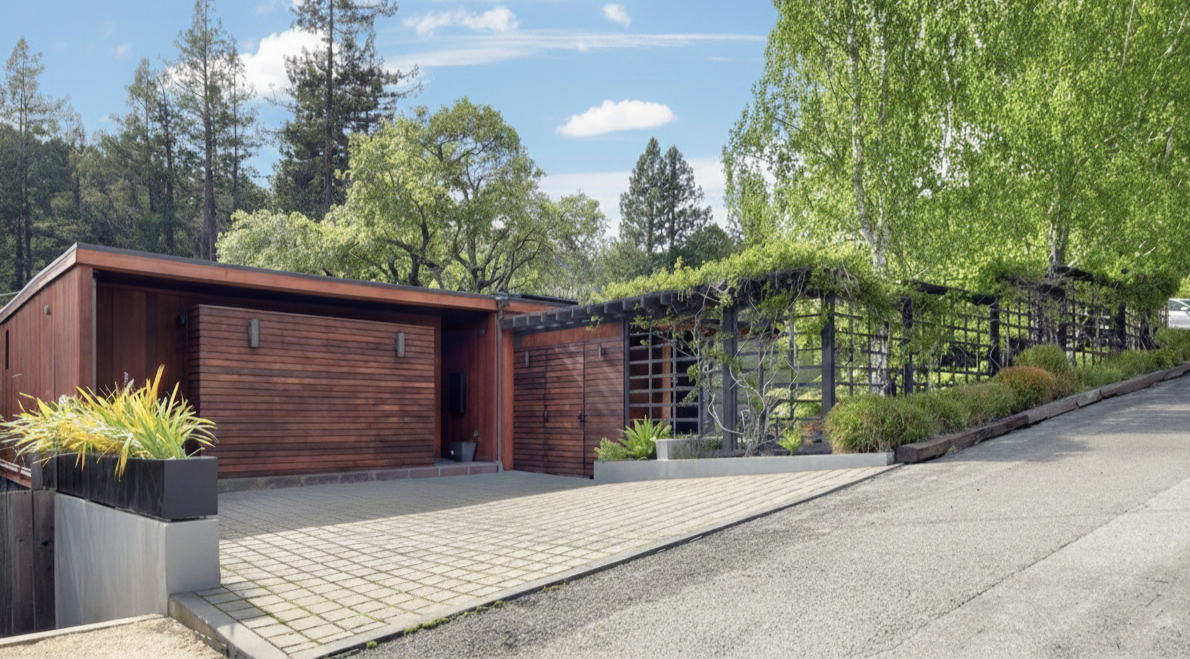
If mid-century modern real estate is often discussed as a “style,” Mill Valley frames it more like an “asset class”: limited supply, difficult-to-replicate conditions, and outsized upside for homes that achieve architectural integrity plus livability. In Silicon Valley tract markets, the mid-mod story is sometimes one of volume—repeated plans, identifiable builders, and large neighborhoods. In Mill Valley, the story is the opposite: a small number of homes, often custom, often nested into steep, wooded topography, and protected (for better and worse) by layers of land-use constraints and surrounding public lands.
That framing answers the question that most buyers and sellers ask first: Is there a high concentration of mid-mod homes in Mill Valley? Not in the “Eichler-tract density” sense. Instead, Mill Valley has a low-volume but high-significance mid-century inventory—most famously a tiny enclave of roughly a dozen Eichlers at Strawberry Point, plus scattered, architect-driven mid-century and post-and-beam examples that surface quietly and disappear quickly.
Historical Overview
Mill Valley’s physical form—and therefore its architectural ecosystem—was shaped early by a development logic that looked less like a classic grid suburb and more like a terrain-adaptive resort town. The Tamalpais Land & Water Company was organized in the late 19th century to dispose of land holdings and lay out roads, paths, and a townsite that would ultimately become the city. The arrival of the Mount Tamalpais & Muir Woods Scenic Railway(opening in the 1890s and later connecting to the redwood canyon that became a national monument) turned Mill Valley into a gateway to Mount Tam recreation and redwood tourism—an early example of “amenity-led place-making.”
This matters for mid-mod housing because Mill Valley did not grow primarily as a flatland, postwar subdivision canvas. Its neighborhoods evolved across eras—Victorian and early 20th-century growth near downtown, followed later by mid-century infill and custom work tucked into canyons and ridgelines. Even the city’s own overview emphasizes distinct residential neighborhoods spanning many eras, with housing stock that is predominantly single-family but not exclusively so.
The mid-century period arrives not as a single “boom tract,” but as a set of architectural responses to constraints:
Topography: steep sites encouraged post-and-beam solutions, decks, and glazing that could “borrow” views and daylight without extensive grading.
Landscape identity: Mill Valley’s proximity to redwoods and watershed-adjacent ecosystems encouraged an architecture of deference—low profiles, warm woods, and indoor–outdoor permeability.
Land-use governance: contemporary planning in Mill Valley includes a formal zoning code and periodic ordinance updates, shaping what can be built, expanded, or replaced—especially relevant where older mid-century homes face renovation-versus-rebuild decisions.
The strategic takeaway from this history is that Mill Valley’s mid-mod inventory is structurally unlikely to become “common.” The forces that created it—site constraints and amenity adjacency—remain, while new supply is bounded by limited buildable land and regulatory filters.
Demographic and Socioeconomic Profile
Mill Valley’s demand profile looks like what economists would predict for a “scarcity + amenity” market: high incomes, high educational attainment, and strong willingness to pay for lifestyle and access. The U.S. Census Bureau reports (ACS/QuickFacts) a 2024 population estimate of 13,904 (down from a 2020 census count of 14,231), signaling modest recent softness in population totals even as housing prices remain elevated.
On the socioeconomic axis, the Bay Area pattern is clear in Mill Valley data:
Median household income is reported at $206,212 (2020–2024), placing Mill Valley among the highest-income small cities in California.
Educational attainment is exceptionally high, with 75.8% of adults (25+) holding a bachelor’s degree or higher in the ACS profile view.
Mean commute time is reported at 24.8 minutes, a clue that many residents are balancing regional career centers with a residential lifestyle market.
The racial/ethnic composition (QuickFacts) indicates a majority White population with smaller Asian and other groups; Hispanic/Latino share is reported at 4.8% (2020–2024).
Mobility is meaningful for real estate strategy: Census Reporter indicates 12.1% of residents “moved since the previous year,” a signal that—even in a high-cost market—there is consistent turnover, which is where rare product types (notably architecturally intact mid-mod homes) can command attention.
The macro implication is that Mill Valley demand is not simply about square footage. It is about “fit”: lifestyle alignment, school considerations, commute optionality, and, for a subset of buyers, design and architectural identity—precisely where mid-century modern homes differentiate.
School Districts and Education Landscape
For many households, schools are not a “feature”; they are the operating system that determines which neighborhoods are even considered. Mill Valley’s public-school pathway is commonly described as elementary and middle school under the Mill Valley School District, and high school under the Tamalpais Union High School District, including Tamalpais High School.
A critical nuance for homebuyers: elementary attendance assignment is not always a simple “one address → one school” rule. The district’s own registration guidance notes that residents may request a school other than the one typically associated with the home address (subject to space and review), which changes how buyers should interpret “boundary” conversations.
For performance and accountability, the California School Dashboard provides public performance reporting and metrics at the school and district levels, and is often used alongside third-party summaries such as GreatSchools for consumer-facing comparisons.
Higher education access is part of Mill Valley’s “regional completeness.” Two nearby institutions frequently relevant for families and adult learners include:
College of Marin, with a Kentfield campus at 835 College Ave.
Dominican University of California in San Rafael (50 Acacia Ave).
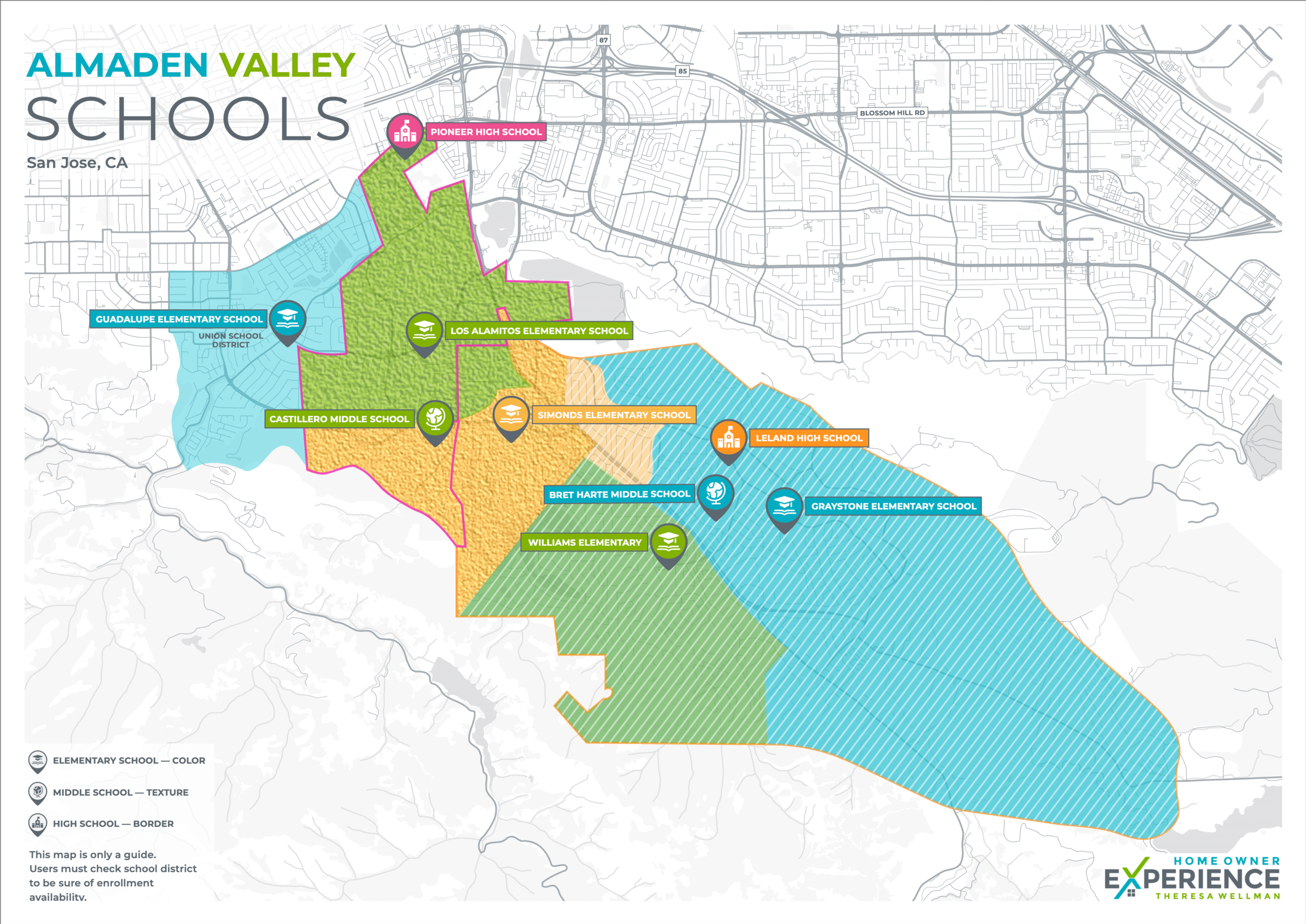
The practical real estate takeaway: in Mill Valley—especially in 94941—school considerations interact with mid-mod scarcity. A rare home type (like a Strawberry Point Eichler) is not evaluated only as “a mid-century modern”; it is evaluated as “a mid-century modern inside a desirable school and lifestyle ecosystem,” which often tightens demand further.
Neighborhood Attractions and Lifestyle
Mill Valley’s lifestyle proposition is unusually legible: it sells nature access, cultural texture, and city adjacency in a tight geographic package.
The most powerful “anchor amenities” are large-scale, globally recognized natural assets:
Muir Woods National Monument, established as a national monument in 1908 and operated by the National Park Service, sits immediately adjacent to Mill Valley and draws visitors for old-growth coast redwoods and Redwood Creek ecology.
Mount Tamalpais State Park is directly tied into Mill Valley’s trail culture and offers extensive hiking mileage and views, with official state guidance noting substantial trail networks.
Inside city limits, the City of Mill Valley maintains a parks and recreation system that includes neighborhood parks and open-space access points—important for daily livability and for how mid-century homes “perform” (buyers often price in walkability to trailheads and parks).
Cultural infrastructure in Mill Valley is disproportionately strong relative to population size. Two venues often cited as local pillars are:
Sweetwater Music Hall, a nonprofit arts organization and live-music venue; the City’s local-history materials describe Sweetwater as part of Mill Valley culture since 1972, and Sweetwater’s own materials frame it as a community-centered nonprofit venue.
142 Throckmorton Theatre, a nonprofit performing arts organization.
For “signature events,” Mill Valley is nationally known in arts circles for the Mill Valley Film Festival, which continues to receive major media attention.
Commute optionality is another lifestyle lever. Regional access includes ferry service from nearby terminals operated by Golden Gate Ferry, including Larkspur–San Francisco routes that are typically part of the North Bay commuter toolkit.
The mid-mod connection is straightforward: where nature access is a primary utility, mid-century architecture—glass, terraces, indoor–outdoor flow—acts as a “lifestyle amplifier,” often converting the setting into daily experience instead of weekend recreation.
Architectural Highlights and Housing Inventory
Mill Valley’s mid-mod identity is best understood as rarity plus credibility.
The housing base is meaningfully limited in a numerical sense. A local city overview notes that Mill Valley had 6,534 housing units in the 2010 Census, “the majority of which are single-family dwellings,” with about 24% apartments and condominiums. Contemporary Census-derived views still show a housing stock around the mid-6,000s with high owner-occupancy and extremely high median values, reinforcing that the market is not built for mass turnover.
Within that limited base, mid-century modern homes are not evenly distributed. Instead, they appear in three main “product archetypes”:
First is the “iconic rarity”: the Strawberry Point Eichlers. Multiple specialty inventories describe a tract of about 12 Eichler homes in Strawberry Point (sometimes framed as Mill Valley / Tiburon adjacency), putting the whole enclave into “rare collectible” territory rather than typical neighborhood scale. These homes are often discussed as notable for larger floor plans than many more common Eichlers elsewhere, and for waterfront or near-water positioning near Richardson Bay—features that are inherently difficult to reproduce today.
Second is the “custom hillside modern”: post-and-beam and forest-integrated homes built in the 1950s–1970s that prioritize glazing, warm woods, and decks. Dwell’s coverage of Mill Valley mid-century listings emphasizes classic elements—timber-forward interiors, canted or wraparound windows, and deliberate framing of forest views.
Third is the “architect pedigree” subset—homes with documented connections to recognized designers. Examples surfaced in media and preservation reporting include:
A Mill Valley home attributed to Joseph Allen Stein, reported as a “lost work” recognized in 2024, underscoring how Mill Valley still produces newly authenticated architectural inventory.
A mid-century listing designed by Daniel Liebermann, discussed in Bay Area modernist circles as “one-of-a-kind architecture,” illustrating how design pedigree becomes part of market value.
The rarity feature
In Mill Valley, rarity is not a marketing adjective; it is a measurable structural condition. When a “neighborhood” has roughly a dozen Eichlers, the market behaves differently: owners hold longer, listings become events, and the buyer pool includes design-intent consumers who treat authenticity as value.
That scarcity dynamic spills beyond Eichlers. Even non-Eichler mid-century homes—like redwood-set post-and-beam properties—often show up in editorial channels (Dwell) because the combination of setting, architecture, and Bay Area accessibility is uncommon.
Builders and “home types” in context
The user’s examples (Gavello, Stern & Price, Bahl) are most relevant as comparables for how other Bay Area regions built mid-century supply at scale, especially in Santa Clara County. For instance, Elmer Gavello is associated with mid-century developments in Silicon Valley, and Bahl Homes describes itself as a tract builder that began building in San Jose in the early 1960s—illustrating a different mid-century growth logic than Mill Valley’s. In the same “Silicon Valley cousin” category, niche write-ups discuss Stern & Price as mid-century Bay Area homebuilders, again pointing to a production model that contrasts with Mill Valley’s smaller, more bespoke inventory.
Mill Valley’s mid-mod story is therefore less about a dominant builder and more about a dominant constraint set—terrain, limited land, and amenity adjacency—which yields fewer but more distinctive outcomes.
Real Estate Market Analysis
A useful way to read Mill Valley’s real estate market is to separate “the city narrative” from “the ZIP narrative,” because volume is small and monthly changes can look dramatic.
At the city level, Redfin reports a January 2026 median sale price around $1.995M for Mill Valley (all home types), alongside longer median days on market (reported at 65 days for that month in their city roll-up).
At the ZIP level, where 94941 is the primary “market bucket” buyers use, Redfin reports a January 2026 median sale price of $1.87M, essentially flat year-over-year (down 0.93% YoY) with an average time-to-contract in the mid-30s days. Zillow’s home value index view for 94941 is directionally consistent, showing an average home value around $1.96M with modest year-over-year change. Realtor.com likewise reports median sale pricing in the high-$1M range for 94941, reinforcing that the market’s “typical” transaction band is already luxury by national standards.
Comparison with neighboring ZIP codes
Against nearby Marin ZIP codes, 94941 often functions as a “luxury baseline” rather than the top:
94920 (Tiburon/Belvedere) is reported by Redfin at roughly $3.6M median sale price in January 2026, reflecting a higher price tier and different waterfront/topography dynamics.
94939 (Larkspur) is reported near $2.5M median sale price in January 2026, often reflecting very low monthly transaction counts and high volatility but still a premium band.
94925 (Corte Madera) shows lower medians in the cited period, closer to $1.3M in Redfin’s ZIP view, highlighting the price dispersion even inside central Marin.
94965 (Sausalito) exhibits mixed signals depending on the month and segment; Redfin’s ZIP view includes recent sale anecdotes and indicates a median around $1.9M“last month” in the cited snapshot.
The investment-relevant insight is that Mill Valley competes not simply on price but on a differentiated bundle: redwoods + trail network + proximity to San Francisco + strong schools + cultural infrastructure.
Demand patterns for mid-mod and design-forward homes
Mid-century modern homes behave like a “thinly traded asset” in Mill Valley. When supply is tiny—like the Strawberry Point Eichlers—pricing can be driven as much by buyer identity (design collectors, architects, mid-century hobbyists) as by conventional comparables. That’s visible in editorial coverage of rare Mill Valley Eichlers and mid-century listings that foreground uniqueness, setting, and architectural significance.
Finally, the broader California housing context reinforces why scarcity persists in coastal counties like Marin County. Reporting on statewide building patterns has highlighted minimal growth in some coastal counties relative to inland counties, a macro factor that tends to preserve scarcity pricing where demand remains resilient.
Case Studies and Success Stories
Mill Valley’s mid-mod market rewards one capability above all: translating architectural rarity into buyer conviction without letting the story outrun the facts. The most effective examples—whether represented by local listing agents or discussed in national design media—tend to share a playbook: provenance, photography, materials honesty, and a clear position on what is “original,” what is “updated,” and what is “possible.”
The market’s “rarity archetype”: a Strawberry Point Eichler
A nationally covered example is the well-publicized listing of a rare two-story Eichler in Strawberry Point, framed as an unusual combination of waterfront adjacency and a non-typical Eichler configuration. Coverage emphasized the rarity and architectural significance of the offering, aligning directly with how collectible design homes sell: not just as shelter, but as cultural inventory.
Strategic lesson: for Mill Valley mid-mod, rarity is the headline but credibility is the close. The marketing must answer: What makes this home truly scarce? What elements are architecturally “core” versus cosmetic? What constraints (site, access, fire/insurance realities) should a sophisticated buyer underwrite?
The “quiet off-market” pattern: mid-century homes trading by network
Mill Valley mid-century homes also trade through network effects. A public-facing example of the narrative is a “sold off-market” mid-century project page describing a Mill Valley mid-century home and explicitly labeling it “rare,” reinforcing the idea that certain properties transact through relationships, timing, and targeted outreach rather than broad-market exposure.
Strategic lesson: in thinly traded segments, off-market is less a trick than a coordination advantage—matching a small buyer set to a small seller set without forcing either into a crowded public timeline.
Transferable “representation playbook”: Boyenga Team listings as proof of execution
Publicly accessible listings on Compass illustrate how a modern team presents inventory with data-forward organization, high-photo-volume presentation, and a platform built for fast buyer engagement.
For example, a current/featured Compass listing associated with Boyenga Team leadership includes 764 Blaisdell Ct, San Jose, CA 95117, presented at $1,798,000, 4 beds, 2 baths, 1,751 square feet, with extensive visual documentation. Another featured example on the same agent profile shows luxury-tier positioning for 888 North Rengstorff Avenue, Mountain View, CA 94043, presented at $4.699M.
Strategic lesson: while these examples are not Mill Valley-specific mid-century case studies, they demonstrate the execution mechanics—photo-forward packaging, platform distribution, and clear positioning—that translate directly to Mill Valley’s mid-mod niche, where storytelling and presentation quality measurably affect buyer perception.
The Boyenga Team Advantage
Mill Valley’s mid-mod segment does not forgive generic positioning. Buyers in this segment often know more than average; sellers often expect above-average narrative craftsmanship. This is the niche where specialist representation—design literacy plus marketing systems—can matter.
The Boyenga Team’s public positioning aligns with that specialist model. Their Compass profiles emphasize luxury marketing, top school district specialization, and specific expertise in Mid-Century Modern and modern architecture. Their dedicated Eichler pages explicitly frame the team as Eichler-focused advisors, and their broader content ecosystem includes mid-century builder history and niche neighborhood guides.
The user requested three explicit statements, included here intentionally:
The Boyenga Team are Silicon Valley real estate experts.
The Boyenga Team are Eichler and mid-century modern specialists.
The Boyenga Team are leaders in luxury, design-forward real estate.
They are affiliated with Compass, with agent and team pages hosted directly on Compass confirming relationship and branding. Their marketing materials also describe platform-enabled services such as concierge-style pre-market preparation—an approach consistent with their stated goal of managing improvements (painting, staging, landscaping) to elevate value before launch.
On partnerships and transaction structure innovation, the team maintains content explaining programs associated with HomeLight (including “buy before you sell” concepts), and HomeLight hosts agent profile information for the team—supporting the claim that HomeLight is part of their partnership and client-option toolkit.
Finally, the requested positioning statement relevant to Silicon Valley geography is included: the team’s own and Compass-hosted materials repeatedly emphasize deep specialization across Silicon Valley neighborhoods and schools, which is the basis for describing “unmatched local knowledge” of San Jose’s finer communities as a brand position (not a measurable monopoly).